
The Common Bridal Snake is a slender, non-venomous colubrid that attracts attention mainly because of its distinctive banded patterning — pale body with dark crossbands that, to many observers, evoke the contrasting colours of ceremonial dress, giving the species its common name. Though not among the most frequently encountered snakes in Sri Lanka, members of this group are recorded in forested regions of South and Southeast Asia and serve an important ecological role as mid-level predators of small vertebrates and invertebrates.
What does the Common Bridal Snake look like?
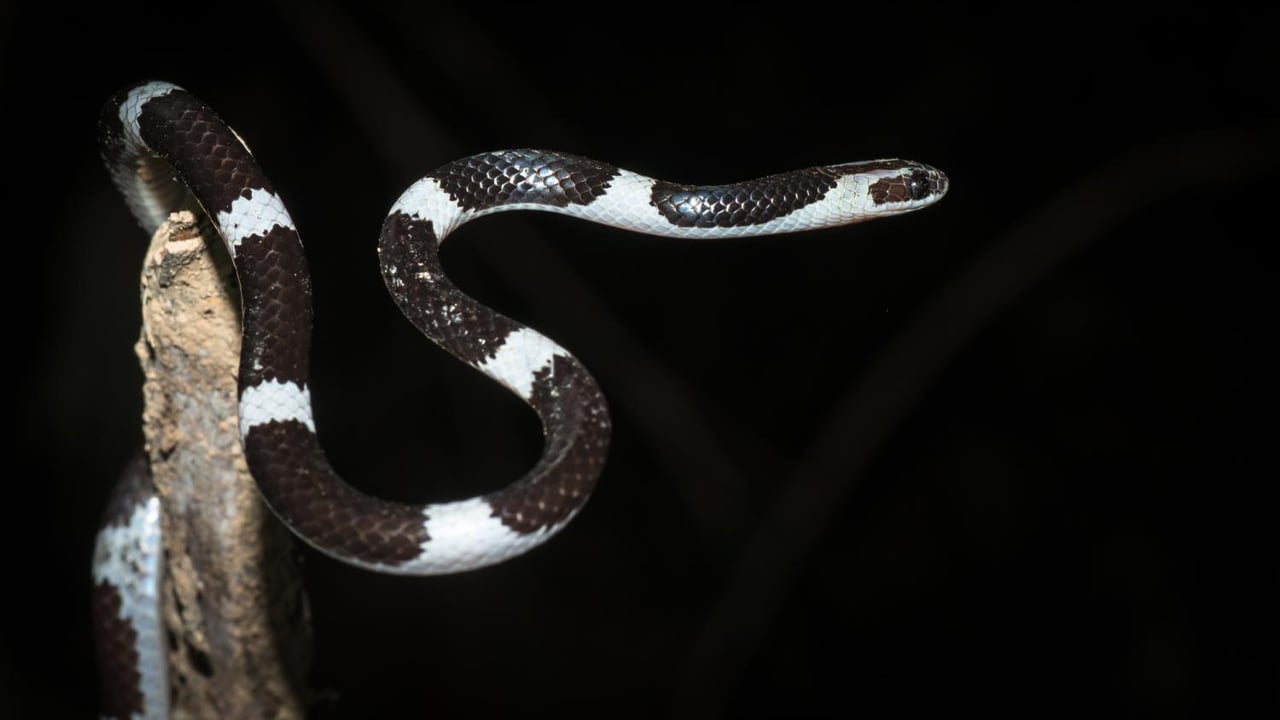
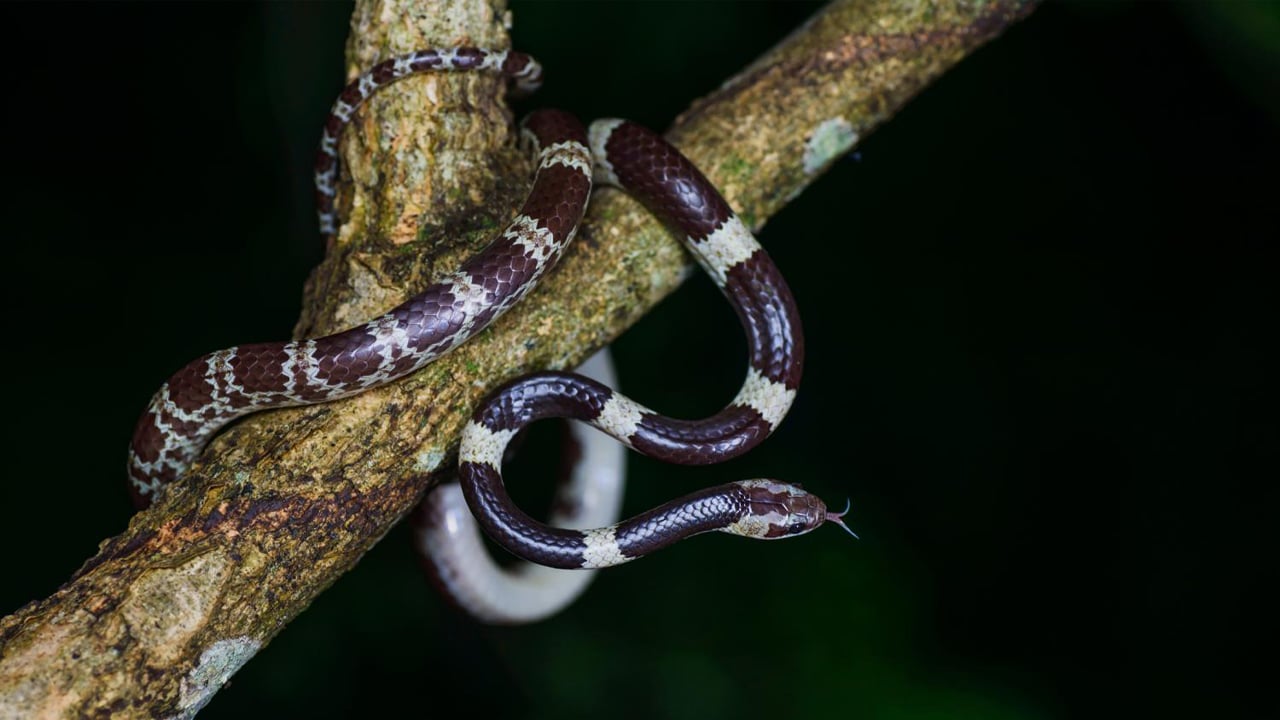
Adults typically measure between 40 cm and 80 cm, though larger individuals occur in areas with abundant prey. The body is slender, the head slightly broader than the neck and rounded at the snout, and the eyes are relatively small — consistent with a largely secretive, low-light lifestyle. The most recognisable feature is the colouration: a white or pale cream ground colour overlaid with dark crossbands or blotches in shades ranging from deep brown to near-black. This strong contrast is what inspired the "bridal" descriptor. The tail tapers gradually and is of moderate length relative to the body.
Juveniles tend to display the same banding as adults, although the contrast can appear sharper in hatchlings before fading slightly with age.
Where is the Common Bridal Snake found?
The species is distributed across parts of South and Southeast Asia, with records from India, Myanmar, Thailand, and the Malay Peninsula. Within Sri Lanka, related colubrid species occupy a range of forested habitats from the lowland wet zone through to mid-elevation forests. They show a preference for areas with dense ground cover — leaf litter, fallen logs, and thick undergrowth near streams — where camouflage is effective and prey is reliably available.
The Sinharaja Forest Reserve, Sri Lanka's UNESCO-listed lowland rainforest, provides the kind of dense, undisturbed understorey that secretive colubrid species depend on. Similarly, moist forests bordering wetland systems support small populations where the microhabitat conditions are suitable.
What does the Common Bridal Snake eat?
The diet consists primarily of small lizards, frogs, and occasionally juvenile rodents, supplemented by insects and other invertebrates when vertebrate prey is scarce. The species is an ambush hunter: it relies on patience and its cryptic patterning to remain motionless until prey moves within striking range, then delivers a rapid bite to subdue the target. Because it is non-venomous, prey is restrained by constriction or simply held in the jaws until it stops moving.
Hunting activity peaks in the evening and through the night, when many of its preferred prey species — particularly frogs and small geckos — are themselves most active.
How does the Common Bridal Snake behave when threatened?
This is not an aggressive species. When disturbed, the first response is almost always to remain still and rely on camouflage. If that fails, the snake will attempt to retreat quickly into cover rather than confront the threat. Defensive biting is rare and, given the absence of venom, poses no medical concern to humans beyond the minor wound associated with any small bite.
The combination of secretive habits, nocturnal activity, and excellent camouflage means the species is encountered far less often than its actual population density might suggest. Many sightings occur incidentally when people disturb leaf litter or move logs in forested gardens and plantation margins.
How does the Common Bridal Snake reproduce?
Like the majority of colubrids, it is oviparous — females lay eggs rather than giving birth to live young. Clutch sizes are generally modest. Eggs are deposited in concealed, humid locations such as rotting logs, loose soil under leaf litter, or the bases of dense vegetation clumps, where ambient moisture and decomposition heat assist incubation. Hatchlings are independent from the moment they emerge and begin hunting small prey within days.
Is the Common Bridal Snake dangerous to humans?
No. The species is non-venomous and poses no meaningful danger to people. If handled roughly it may bite in self-defence, but the bite is superficial. As with any wildlife encounter, the sensible approach is to observe from a respectful distance and allow the animal to move away undisturbed. Killing or harassing non-venomous snakes is both ecologically harmful and, in Sri Lanka, contrary to wildlife protection legislation.
What is the conservation status of the Common Bridal Snake?
The species is not currently listed as endangered. However, like many forest-dependent reptiles, it is susceptible to the ongoing pressures of habitat loss — principally deforestation, agricultural expansion, and the fragmentation of forest corridors that reduces population connectivity. In Sri Lanka, broader conservation efforts that protect intact forest systems indirectly benefit secretive species such as this. Visiting and supporting protected areas is one of the most direct ways travellers can contribute to habitat preservation.
How can I see snakes and reptiles in Sri Lanka?
Sri Lanka hosts over 100 recorded snake species, making it a notable destination for herpetology enthusiasts. The best opportunities for observing reptiles in their natural habitat come from guided walks in forest reserves and national parks, particularly during early morning or evening hours. The Madu River Safari through the Madu Ganga mangrove system, for instance, regularly produces sightings of water monitors, and alert guides sometimes spot smaller colubrid species along the banks. Dedicated wildlife photographers often find that slow, patient walks along forest trails yield more encounters than high-speed vehicle safaris.