The Giant Footprint

The Giant Footprint The Giant Footprint The Giant Footprint

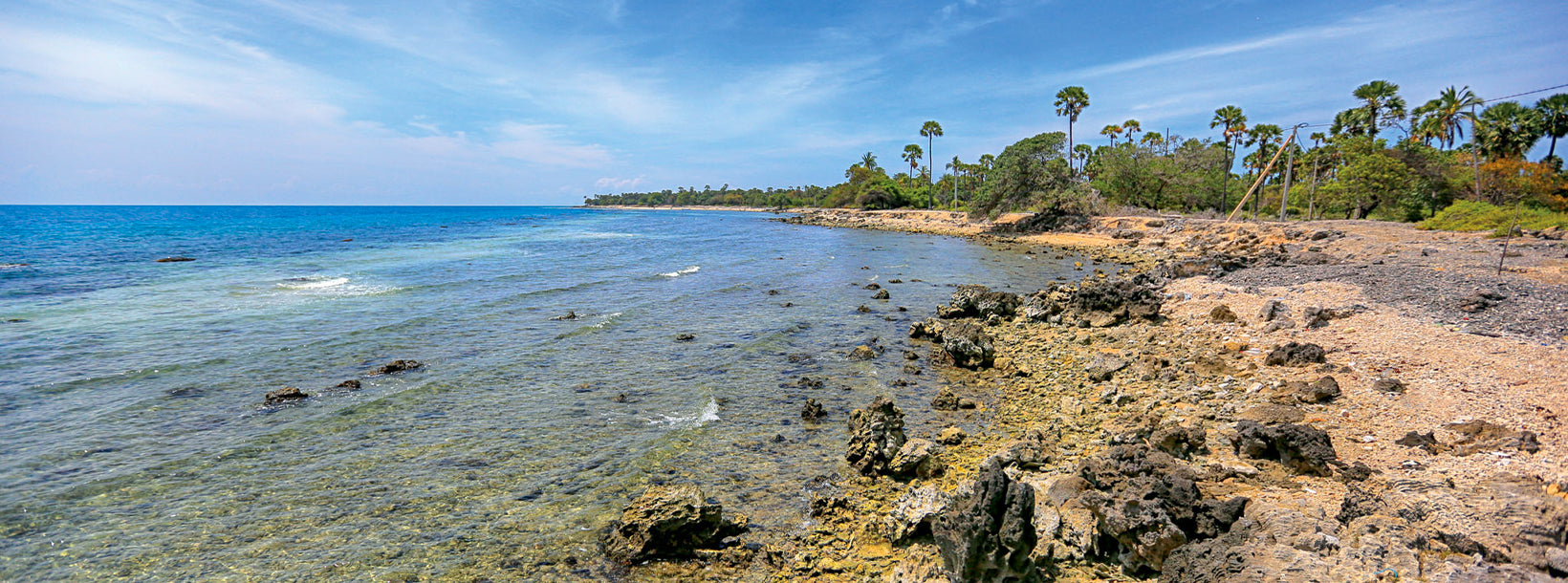
Queens Tower is in the very south-east of Delft Island, travelling from there along the southern coastline you will arrive at the village called Sarapiddi close to the western coastline. Sarapiddi is located halfway between Queens Tower and the Dutch fort and not far from the stupa called Cholan Ruins, alias Vediyarasan Fort.

Sarapiddi does not really look like a village. It's a settlement area, with dispersed inhabited houses and some gardening areas in between them. Sarapiddi is the perfect place to study the coral walls surrounding private properties, typical for Delft Island. Fences used as enclosures of premises are typical for Tamil settlements all over the Jaffna peninsula. However, coral walls instead of fences are something special. Their appearance resembles Irish sceneries more than Tamil settlements. And this is not by accident, as we shall see below. That Sarapiddi is known for the best freshwater, is also connected with the story of the coral walls. Travellers usually stop at Sarapiddi to walk to the the ruins of a stable complex close to the village.

On the way to the ruins of those horse stable, visitors come along the so-called "Giant's footprint". It is engraved on the stone surface. It is said to have been left by a man who must have been about 13 meters tall. A similar footprint on the island of Nainativu is attributed to the second of the Buddha's three legendary visits in Sri Lanka. However, the Hindu population of Delft credits Hanuman with leaving the footprint in Sarapiddi. The monkey-faced Hanuman was the helper of Rama and came to Sri Lanka several times, flying through the air just like the Buddha. The first time he was on the Island of Lanka in search for Rama's abducted wife Sita. He came again with Rama's monkey army to free Sita. And during the war he had to travel to the Himalayas in search for medical herbs needed for curing Rama's and Lakshmana's otherwise fatal wounds. According to some Hindu beliefs, the entire island of Delft had been created by a piece of the Himalaya mountains that the god Hanuman had been carrying when returning to Sri Lanka, a story supposed to explain the occurence of 62 species of Ayurvedic plants on Delft Island. But usually it's the smaller island of Kachchaitivu which is regarded to be this so-called "Sanjeewani drop" in the Indian Ocean. However, on one of his visits Hanuman must have arrived on Delft or started his giant jump back to India from here. What else could be the cause of the giant footprint?

Sobre o distrito de Jaffna

Jaffna é a capital da Província do Norte, no Sri Lanka. Aproximadamente 85% da população dos distritos de Jaffna e Kilinochchi são hindus. Os hindus seguem a tradição saivita. O restante da população é composta principalmente por católicos romanos ou protestantes, sendo alguns descendentes de colonos coloniais, conhecidos como Burghers. Os tâmeis são divididos por castas, com a casta agricultora Vellalar formando a maioria. Os principais produtos de Jaffna são produtos do mar, cebola vermelha e tabaco.

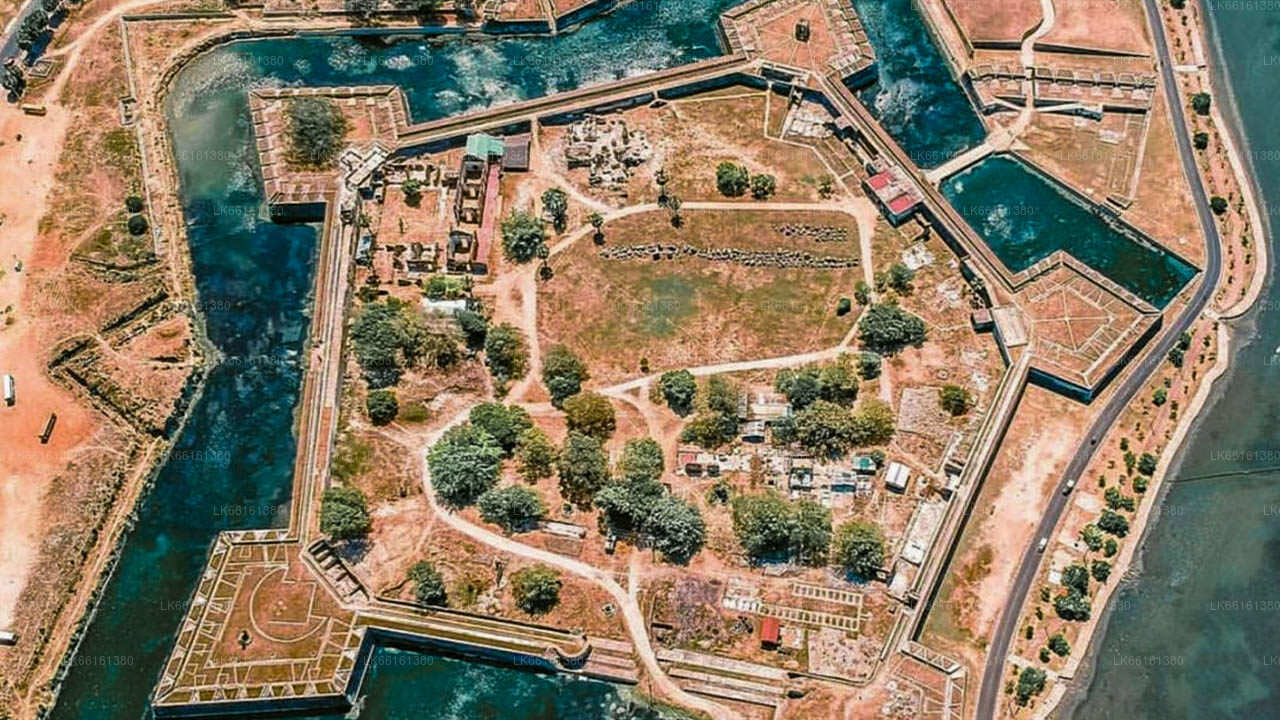
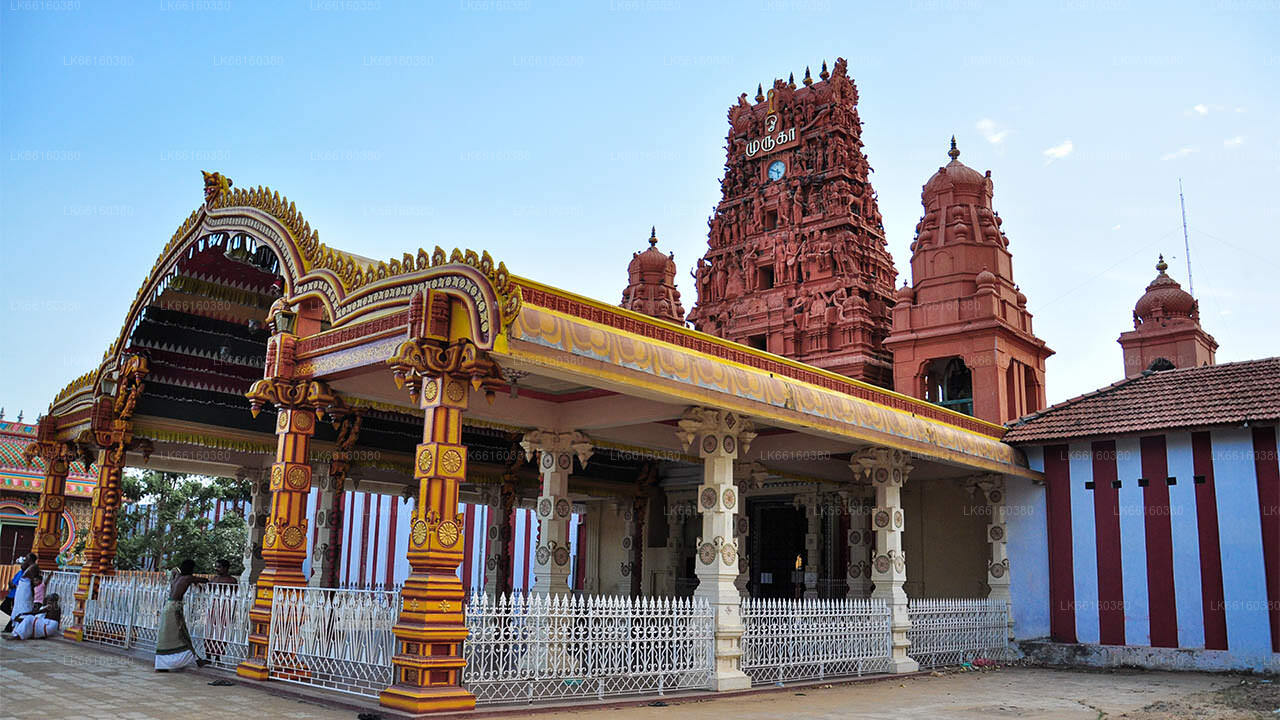
Jaffna é lar de lindos templos hindus. Uma antiga fortaleza holandesa ainda está bem preservada, e dentro dela há uma igreja antiga. Outro exemplo da arquitetura holandesa é a King's House. Nenhuma visita a Jaffna está completa sem provar a famosa manga de Jaffna, conhecida por sua doçura. A cerca de 3 km de distância está o majestoso Templo Nallur Kandaswamy, onde ocorre o maior festival religioso de Jaffna. O Porto de Kayts é um antigo local de ancoragem de navios na região de Jaffna.

Sobre a Província do Norte

A Província do Norte é uma das nove províncias do Sri Lanka. As províncias existem desde o século XIX, mas não tinham status legal até 1987, quando a 13ª Emenda à Constituição de 1978 do Sri Lanka estabeleceu os conselhos provinciais. Entre 1988 e 2006, a província foi temporariamente fundida com a Província Oriental para formar a Província Nordeste. A capital da província é Jaffna.

A Província do Norte está localizada no norte do Sri Lanka e está a apenas 22 milhas (35 km) da Índia. A província é cercada pelo Golfo de Mannar e a Baía de Palk a oeste, o Estreito de Palk ao norte, a Baía de Bengala a leste e as províncias Eastern, North Central e North Western ao sul. A província possui várias lagoas, sendo as maiores a Lagoa de Jaffna, Nanthi Kadal, Lagoa de Chundikkulam, Lagoa de Vadamarachchi, Lagoa de Uppu Aru, Lagoa de Kokkilai, Lagoa de Nai Aru e Lagoa de Chalai. A maioria das ilhas ao redor do Sri Lanka está localizada a oeste da Província do Norte. As maiores ilhas são Kayts, Neduntivu, Karaitivu, Pungudutivu e Mandativu.

A população da Província do Norte era de 1.311.776 em 2007. A maioria da população é composta por tamiles do Sri Lanka, com uma minoria de mouros do Sri Lanka e cingaleses. O tamil do Sri Lanka é a principal língua falada pela grande maioria da população da província. Outro idioma falado é o cingalês, utilizado por cerca de 1% da população. O inglês é amplamente falado e compreendido nas cidades.