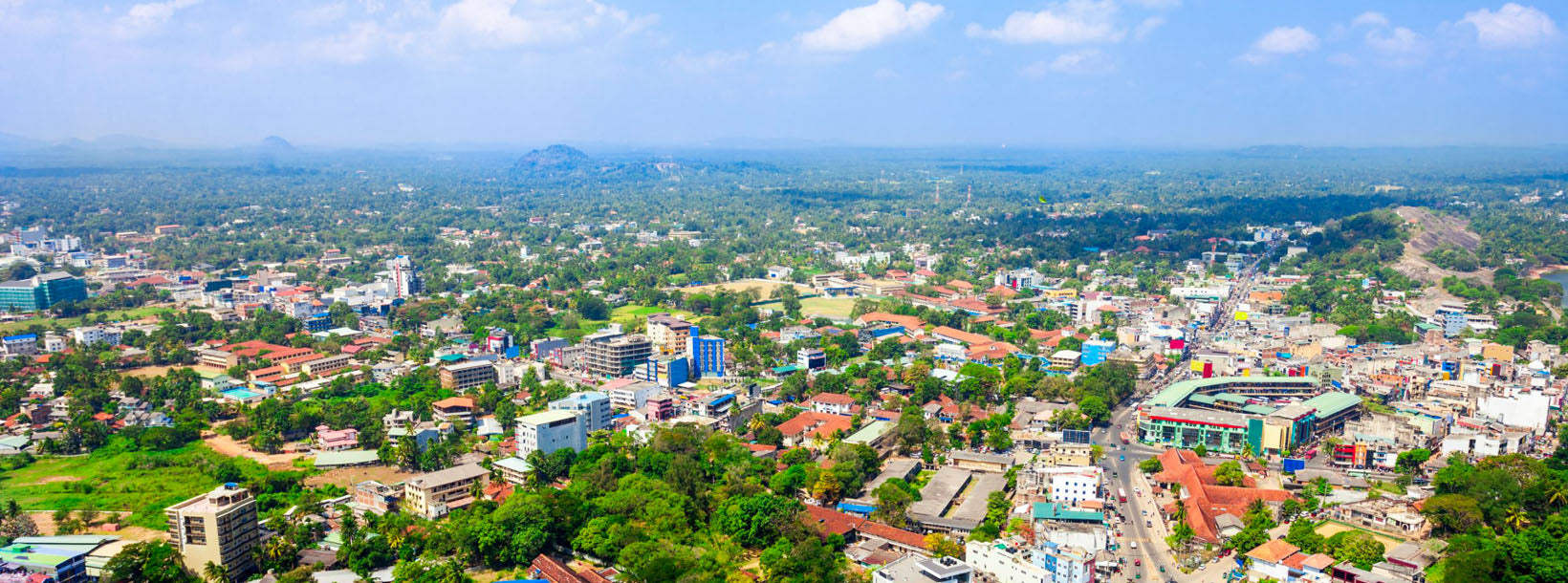
Cidade de Kurunegala
Kurunegala: Cidade movimentada na Província Noroeste do Sri Lanka, com locais históricos, mercados vibrantes e uma mistura de cultura moderna e tradicional.
Panduwasnuwara
History of Panduwasnuwara goes as far back the 6th century BC, the time of King Panduwasdeva (504-474 BC) who is credited with building Panda Wewa reservoir around 450 BC which is considered the first man made great reservoir in the world. Mahawamsa, the great chronicle of Sri Lanka, records that king Mahadathika Mahanaga (9-21 AC) presenting gifts to a Samanera bhikku of the Pandawa Vehera in the 34th chapter. In the 60th chapter it describes repairing of Panda Wewa by king Vijayabahu I (1070-1110) and in the 68th chapter king Parakramabahu (1153-1186) expanding the Panda Wewa and building a three storied palace and a stupa on the island of the Panda Wewa. According to Parker, the Panda Wewa had extended upto thePanduwasnuwara city the current building identified as the palace complex may have been an island in the extended Panda wewa which is no more today.
However, most of the ruins found today in the ancient city of Panduwasnuwara belongs to the era of king Parakramabahu (1153-1186) who set up his temporary capital in this city in the 12th century.
According to Parker, the ancient manuscript “Pardhana Nawarawal” (principle cities) published in the 14th century provides a detailed description of Panduwasnuwara city along with other cities such as Kurunegala, Yapahuwa and Kandy. According to this manuscript , the city was founded by Panduwas Raja who also built a reservoir for the city. It also states that the original city had the honour of being built by Vishwakarma, the divine builder acting under the instructions of god Indra.
The fortifications of this kingdom consist of an elcosing wall of fourty feet thick and seven feet high faced with brickwork on both sides. A seven feet deep and a 10 feet wide (at the bottom) ditch has been cut outside the enclosing wall. Parker believes that this ditch would have been fed by the Panda Wewa where the sound end of its embankment would have ended at the edge of the city.
Today, there is no city or village named Panduwasnuara other than a polling division. The closest town to the ruins is Hellipola and the ancient city lies at the Kottampitiya Junction which is sometimes informally called Panduwasnuwara Junction. You can reach Panduwanuwara Archaeology Site by traveling 35km from Chillaw, 18 km from Kuliyapitiya or 17 km from Wariyapola on the Chillaw road.
Temple Complex IThe ruins of the temple complex I as marked above lies isolated from the rest of the ruins due the main road, in front of the Panduwasnuwara National School. You will be able to see a Bodhigara, Pohoyageya and some remains of the embankment of the ancient Panda Wewa.
The Bodhigara at this location is the mo
Sobre o Distrito de Kurunegala
Kurunegala é a capital da Província de Wayamba, no Sri Lanka, e do Distrito de Kurunegala. Kurunegala foi capital real por apenas 50 anos, do final do século XIII ao início do século XX, embora mesmo antes disso já estivesse estrategicamente localizada entre outras fortalezas majestosas, como Yapahuwa ao norte, Dambadeniya ao sul e Panduwasnuwara ao leste. Ethagala, uma rocha que atinge 316 metros de altura, domina a cidade, que está situada a uma altitude de 116 metros acima do nível do mar. O formato de Ethagala lembra um elefante. Como importante centro de transportes, possui uma estação ferroviária e diversas rodovias principais que ligam partes importantes do país. Kurunegala está localizada a cerca de 94 km de Colombo e a 42 km de Kandy. A maioria dos habitantes de Kurunegala pertence à etnia cingalesa. Outras minorias étnicas incluem os mouros do Sri Lanka, os tâmeis do Sri Lanka, os burghers e os malaios. Residentes de minorias étnicas vivem em todas as partes da cidade; no entanto, comunidades consideráveis de mouros e tâmeis também vivem nas áreas de Teliyagonna e Wilgoda.
Sobre a Província Noroeste
A Província Noroeste é uma província do Sri Lanka. Os distritos de Kurunegala e Puttalam formam a Província Noroeste ou Wayamba. Sua capital é Kurunegala, que tem uma população de 28.571 habitantes. A província é conhecida principalmente por suas numerosas plantações de coco. Outras cidades importantes nesta província são Chilaw (24.712 habitantes) e Puttalam (45.661 habitantes), ambas pequenas vilas de pescadores. A maioria da população da província de Wayamba é de etnia cingalesa. Há também uma minoria significativa de mouros do Sri Lanka em torno de Puttalam e de tâmeis do Sri Lanka em Udappu e Munneswaram. A pesca, a criação de camarão e as plantações de seringueiras são outras atividades econômicas importantes da região. A província tem uma área de 7.888 km² e uma população de 2.184.136 habitantes (cálculo de 2005). Wayamba é a terceira maior região produtora de arroz do Sri Lanka.
Wayamba possui uma economia agrícola altamente desenvolvida, cultivando uma variedade de frutas e vegetais, plantas floríferas, especiarias e oleaginosas, além das tradicionais culturas de plantação, como coco, seringueira e arroz. Os solos férteis e o clima variado conferem a Wayamba potencial para o cultivo de praticamente qualquer cultura. Em Wayamba, ou Província Noroeste, encontram-se antigos templos budistas rupestres e as magníficas cidadelas de Panduwasnuwara, Dambadeniya, Yapahuwa e Kurunegala. Os impressionantes vestígios dessas cidadelas, palácios, templos budistas e mosteiros proporcionam aos visitantes uma experiência turística fascinante.