Orchids


The Orchidaceae or Orchid family has over 25,000 species under 880 genera. The family along with the sunflower family (Asteraceae) forms the two largest flowering plant families currently identified. The number of species in the family is twice the amount of Bird species present, and almost four times that of Mammal species on Earth. The flowers of the orchid family are often colorful and fragrant. The family also includes the Vanilla plant.
Identification and Characteristics of Orchids
Identifying orchids are simple since they have many common characteristics. However it would help to know the parts of a normal flower in order to understand the rest of this article better.
Basic Flower Structure
Sri Lanka’s more common subspecies of Basic Flower Structure
Since both structures are present and visible let’s check out the methods of identification and common factors between orchids.
1. The orchids have a highly modified petal called Labellum or Lip. The lip is of a larger size, different shape and/or colour and is used to attract insects for pollination.
2. The Labellum is always opposite the fertile anther and is usually on the downward facing end of the flower in a grown orchid.
3. The carpel section and stamen section of Orchids are fused in one column.
4. The pollen is not powdery and is held in a couple of waxy bundles on a sticky pad at the top of the column.
5. Orchids have three sepals in the outer whorl and three petals in the inner whorl. The sepals are very similar in size and appearance to the petals and hence are also called tepals.
6. Orchids are perennial herbs and do not have woody structures unlike trees or plants with woody branches and trunks.
7. They usually grow in clusters to increase the chances of pollination, but some plants of the family have single flowers too.
8. All plants of the family have extremely small seeds.
Uses of Orchids
• Perfumes – Perfumers often analyse various species of orchids for the identification potential fragrance chemicals.
• Horticulture – Orchids are grown as display plants, cultivated for the beauty and fragrance of their flowers. They are usually cultivated in tropical and subtropical regions, but there are some species that grow in cooler areas. Orchids are a highly sought after plant by collectors and a number of Orchid Societies exist around the world.
• Food – Vanilla is an orchid genus which has seed pods used to produce the commonly used flavouring, the essence of Vanilla. Vanilla is also used for aromatherapy and perfumes. Some other types of orchids have underground tubers which are ground into a powder and used in recipes such as the beverage ‘salep’ or Turkish ice cream. The dried leaves of yet another type of orchid are used to flavour the rum made on Reunion Island while some orchids of the genus Gastrodia produce potato like tubers eaten by aborgines of Australia. In other words, though it is true that not all orchids are consumable, there are some that play an important part in the world of food.
• Medicine – Records show that orchids may have been used in herbal medicine as early as almost 5000 years ago. It is still being used in many traditionl healing methods.
The Orchi


-

Nil Manel
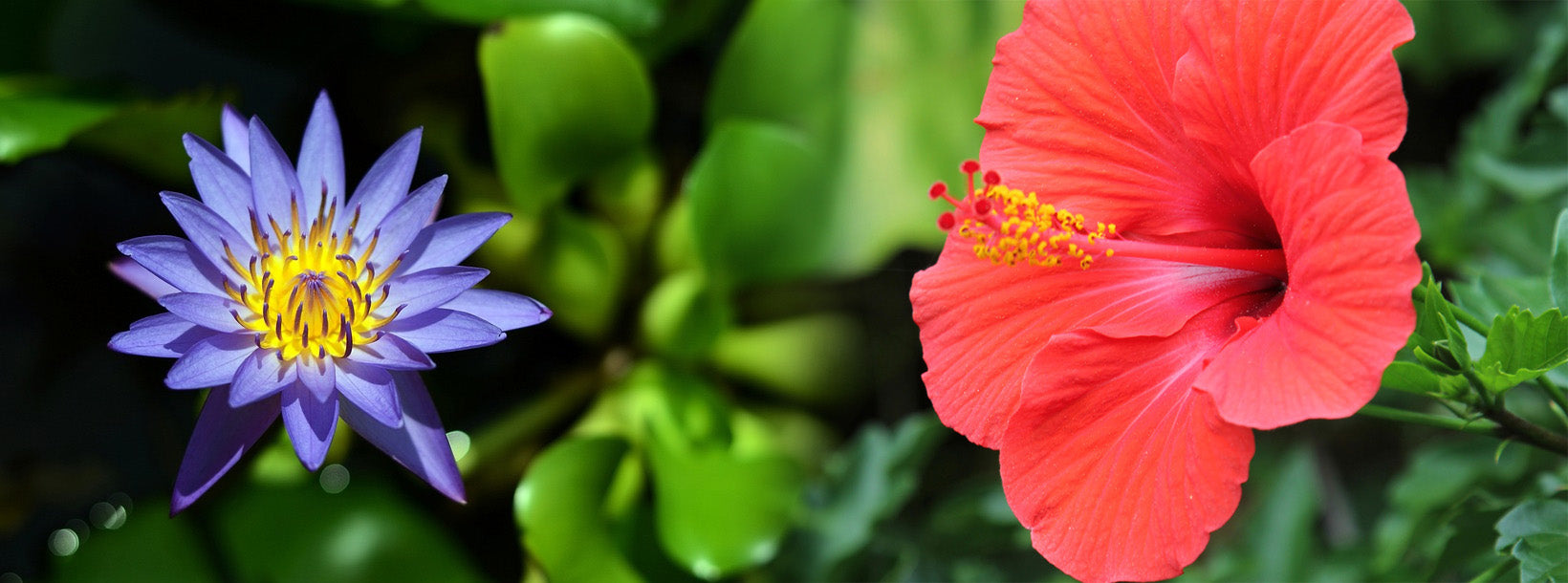
Blue Water Lily -

Nelum
Sacred Lotus -

Kadupul
Queen of the night -

Babandesiya
Barberton daisy -

Sapaththu Mal
Hibiscus Flower -

Anthurium
Anthurium -

Kapuru Mal
Chrysanthemums -

Baloliya
Wild Lantana -

Kaha Mal
Allamanda -

Rathmal
Jungle Geranium -

Wathusudda
Pinwheel flower