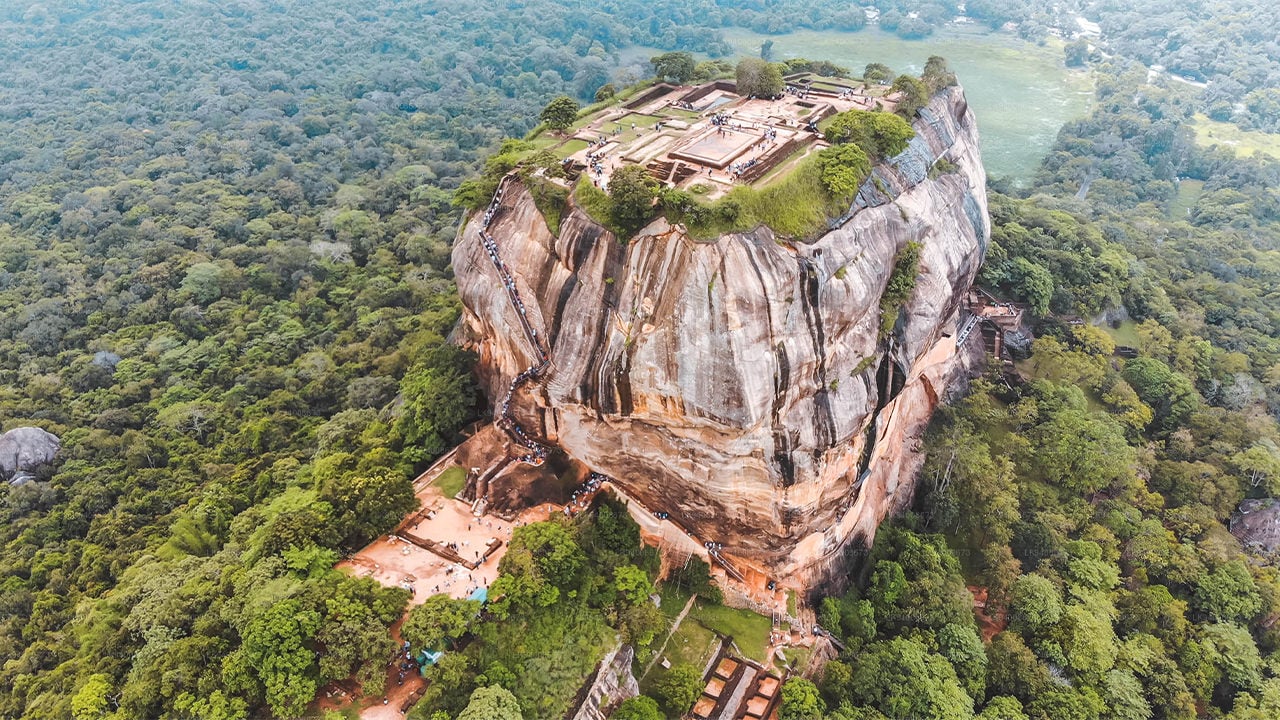
Few figures in Sri Lankan history are as compelling — or as contradictory — as King Kashyapa I. He is the man behind Sigiriya, one of the ancient world's most audacious building projects, yet his reign began in betrayal and ended in battle. Understanding who Kashyapa was, and why he built what he built, adds a layer of meaning to any visit to the rock fortress that no guidebook alone can provide.
Who was King Kashyapa I?
Kashyapa I — also rendered as Kassapa I in Pali sources — was born in the mid-fifth century AD as the eldest son of King Dhatusena, the monarch who reunified the Anuradhapura Kingdom and oversaw the construction of the great Kalawewa irrigation reservoir. By any measure, Dhatusena was a formidable ruler, and Kashyapa inherited his father's intelligence, his feel for politics, and his ambition.
There was, however, a structural problem. Kashyapa's mother was a concubine rather than the royal consort. Under the succession conventions of the time, this rendered him ineligible for the throne despite being the firstborn. His younger half-brother Mogallana — whose mother held the rank of chief queen — was formally designated crown prince. For Kashyapa, this was not merely a personal slight; it was, in his view, a political error that would leave the kingdom in weaker hands.
How did Kashyapa seize power?
The coup that followed was not entirely Kashyapa's own initiative. Migara, the commander-in-chief of Dhatusena's army, had developed a private grievance against the king and saw in the disaffected prince an instrument of revenge. He cultivated Kashyapa's resentment carefully, feeding the prince's sense of injustice and framing rebellion as both a right and a duty.
Around 473 AD, the two men acted. Kashyapa staged a palace coup, overthrew his father, and imprisoned him. Mogallana, the designated heir, fled to southern India rather than contest the throne — a move Kashyapa had always predicted, and which he took as confirmation that his own judgement had been correct all along. With the field clear, Kashyapa I was proclaimed king and became the second ruler of the Mouriya Dynasty of Sri Lanka.
What happened to King Dhatusena?
The fate of Dhatusena is the most disputed chapter of Kashyapa's story, and the Mahavamsa — the ancient Pali chronicle that is the primary source for this period — treats it with a certain grim drama. Migara, unsatisfied with merely deposing the former king, persuaded Kashyapa that Dhatusena had concealed a vast personal treasury. Kashyapa demanded that his imprisoned father reveal its location.
Dhatusena's response has become one of the most quoted moments in Sri Lankan historical tradition. He led his captors to the shore of the Kalawewa — the great tank he had built to irrigate the dry zone — and said, in effect: this is the only wealth I have. Kashyapa, interpreting this as contempt rather than honesty, is said to have ordered his father killed and the body walled into the fabric of the dam itself. Some versions of the chronicle say he was entombed alive; others describe a more straightforward execution followed by interment within the structure. The details differ, but the act is consistent across sources: patricide, or something very close to it.
It is worth noting that historians approach the Mahavamsa with calibrated caution. The chronicle was written by Buddhist monks, and its portrayal of Kashyapa as a parricide serves a clear moral purpose. The reality may have been less theatrical, though the basic facts of the coup and Dhatusena's death are generally accepted.
Why did Kashyapa build Sigiriya?
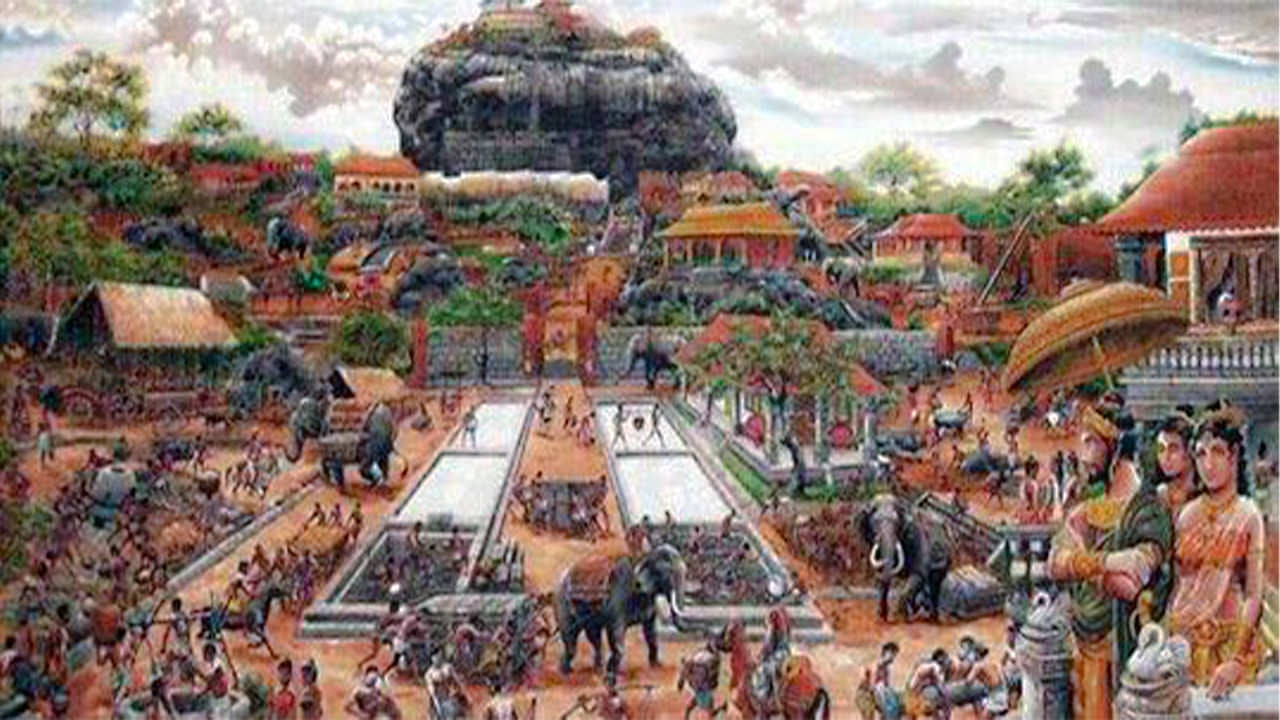
The question every visitor to Sigiriya: The Ancient Rock Fortress eventually asks is the same one archaeologists have debated for generations: why did a king who controlled Anuradhapura abandon that city and build an entirely new citadel on an isolated rock rising roughly 200 metres from the surrounding plain?
The conventional explanation is strategic and psychological. Kashyapa knew that Mogallana had not given up his claim to the throne — he had merely retreated to build a coalition in India. A royal city on the open plain was vulnerable. Sigiriya, by contrast, was essentially unassailable from below. The rock offered a natural defensive perimeter that no conventional army of the period could easily breach.
A second interpretation, favoured by some scholars, draws on the Buddhist cosmological concept of Alakamanda — the celestial realm of Kuvera, god of wealth, set upon a mountain. Kashyapa, whose legitimacy was always contested, may have been constructing a symbolic geography: a fortress-palace that positioned its ruler as divine rather than merely royal. The elaborate water gardens at the base of the rock, the mirrored wall, and the famous frescoes all suggest a project as much concerned with image as with defence.
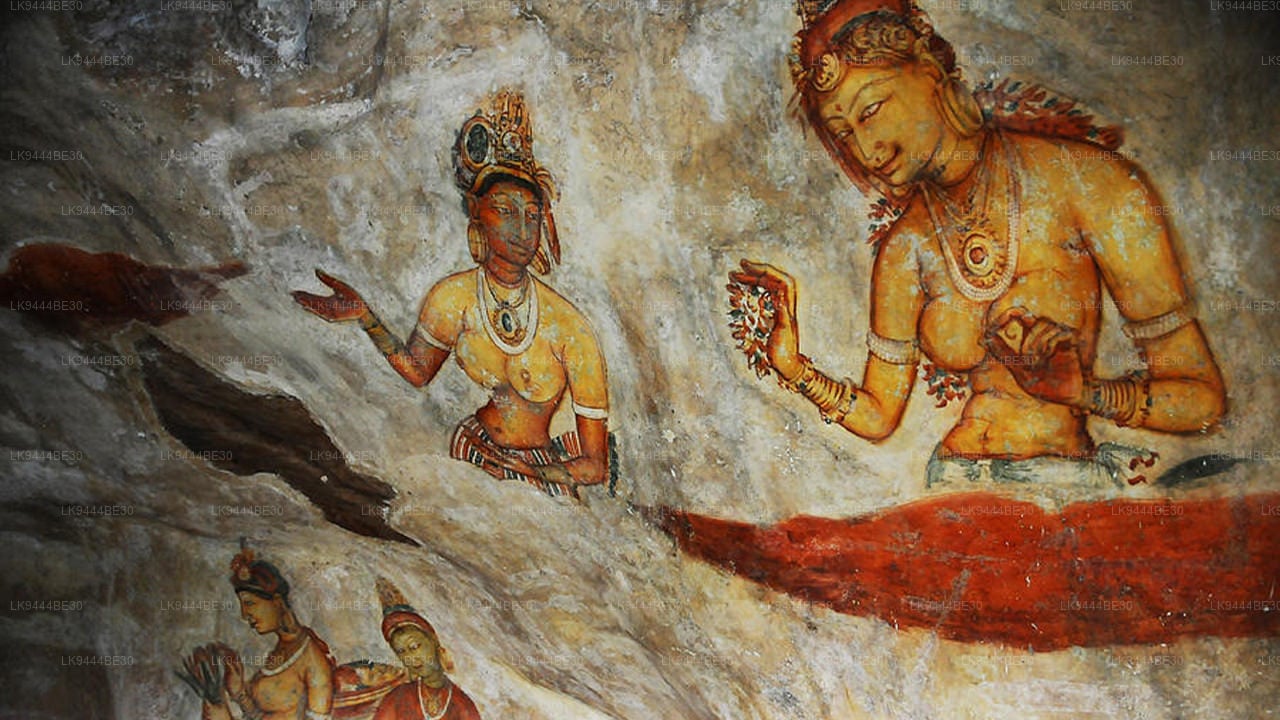
The frescoes themselves — paintings of women that have retained their pigment for over fifteen centuries — remain one of the great mysteries of South Asian art. Their identity is debated: celestial beings, the king's court, votaries of a deity. What is not debated is their technical achievement. The pigments and the technique of their application have outlasted almost every other painted surface of their era in this part of the world.
How did Kashyapa's reign end?
Kashyapa ruled from Sigiriya for roughly eighteen years. He was not, by the chronicle's account, an ineffective king in practical terms — the construction project alone required extraordinary administrative and logistical capacity — but the threat from the south never fully dissipated. Mogallana spent his years in India consolidating support, and around 495 AD he returned with an army drawn from Tamil mercenaries and allied Sri Lankan forces.
The two armies met on the plains below Sigiriya. Kashyapa descended from his fortress to fight — a decision that has puzzled historians, since the rock gave him an almost impregnable defensive position. One account suggests his elephant turned away from a swamp during the battle, and his troops, interpreting this as a retreat, broke formation. Kashyapa, finding himself suddenly isolated, died by his own sword rather than face capture.
Mogallana retook the throne and moved the capital back to Anuradhapura. Sigiriya was converted into a Buddhist monastery — a use it would retain for centuries — and Kashyapa's extraordinary citadel began its long transition from palace to ruin to, eventually, one of Sri Lanka's most visited heritage sites. The city of Polonnaruwa would later rise as the next great capital of the island, carrying forward a tradition of ambitious royal construction that Kashyapa had done much to define.
What is Kashyapa's legacy?
Kashyapa I occupies an unusual place in Sri Lankan historical memory. The Mahavamsa condemns him as a parricide and a usurper, and its moral framing has shaped popular perception for centuries. Yet the physical evidence — Sigiriya itself — tells a more complicated story. The water gardens at the foot of the rock are among the oldest landscaped gardens in Asia. The hydraulic engineering that supplied water to the summit is sophisticated by any standard. The frescoes are, by any measure, a masterwork.
Whether Kashyapa was a tyrant, a visionary, or simply a man caught between an unjust inheritance system and a manipulative general, the world he left behind endures. Visiting Sigiriya without knowing his story is like reading the last chapter of a novel. The architecture makes more sense when you understand the psychology behind it.