Padaviya Wewa


Im nordöstlichen Teil der Nord-Zentralprovinz gibt es zwei große alte Bewässerungsbecken – Padaviya Wewa und Vahalkada Wewa. Von diesen hat Padaviya mehr Aufmerksamkeit erregt, vielleicht aufgrund der traditionellen Annahme, dass es sich um den größten der antiken Panzer handelte.
Viele Kolonialverwalter machten sich auf die beschwerliche Reise, um diesen Panzer zu besichtigen, und waren von den Ruinen des antiken Werks gebührend beeindruckt. Gouverneur Sir Henry Ward (1797–1860) beschrieb es als das „ riesigste aller Bauwerke “ und schätzte, dass „der Bau 10 bis 15 Jahre lang Millionen Menschen beschäftigt haben muss“. Sir Emerson Tennent (1804–1869), der zahlreiche Bücher über das damalige Ceylon geschrieben hatte, war von der Schleuse so beeindruckt, denn er berichtete: „Die bestehende Schleuse ist ein sehr bemerkenswertes Werk, nicht nur wegen ihrer Dimensionen, sondern auch wegen des Einfallsreichtums und der Exzellenz der Verarbeitung.“ “. Es war jedoch Henry Parker, der von 1873 bis 1904 der Bewässerungsabteilung angehörte, 1886 eine detaillierte Inspektion der Arbeiten durchführte und seine Ergebnisse aufzeichnete.
Es gibt keine Aufzeichnungen darüber, wer den Panzer gebaut hat, aber Historiker haben den ursprünglichen Bau König Saddhatissa (137–119 v. Chr.) und König Mahasena (276–303) zugeschrieben. Ausgrabungen, die Mitte des 20. Jahrhunderts von Herrn DT Devendra, dem stellvertretenden Archäologischen Kommissar, durchgeführt wurden, haben die Ansicht gestützt, dass König Mahasena der ursprüngliche Erbauer des Panzers war. Aber in einem alten Text von Pujavaliya wird König Saddhatissa der Bau von „Padi“ und mehreren anderen Panzern zugeschrieben. Es gibt starke Hinweise darauf, dass sich „ padi “ auf das heutige Padaviya-Tank bezieht.
Eine alte Säuleninschrift auf dem Damm des Padaviya Tank verkündet stolz
„Von Sri Parakrama Bahu, dem souveränen Herrn von Sri Lanka, dem es am Herzen liegt, der Welt Gutes zu tun, wurde dies errichtet.“
Obwohl diese Säule König Parakramabahu I. (1153-1186) als Erbauer angibt, wurde der Schluss gezogen, dass der Tank viel älter ist und der König Parakramabahu wahrscheinlich umfangreiche Renovierungen oder Erweiterungen am bestehenden Tank vorgenommen hätte.
-
 Sri Maha Bodhiya
Jaya Sri Maha Bodhi is a sacred bo tree in the Mahamewna Gardens, Anuradhapura, Sri Lanka. It is the southern branch from the historical Sri Maha Bodhi at Buddha Gaya in India under which Buddha attained Enlightenment. It was planted in 288 BC, and is the oldest living human-planted tree in the world with a known planting date.
-
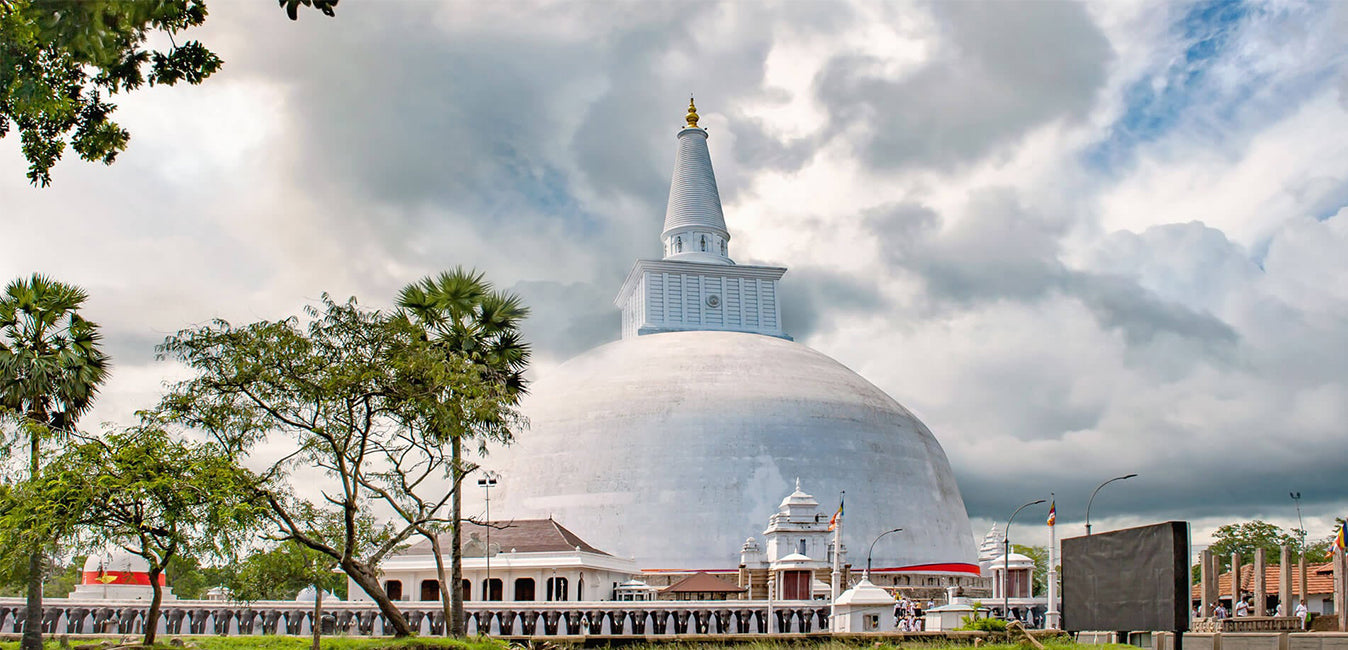
 Ruwanweliseya
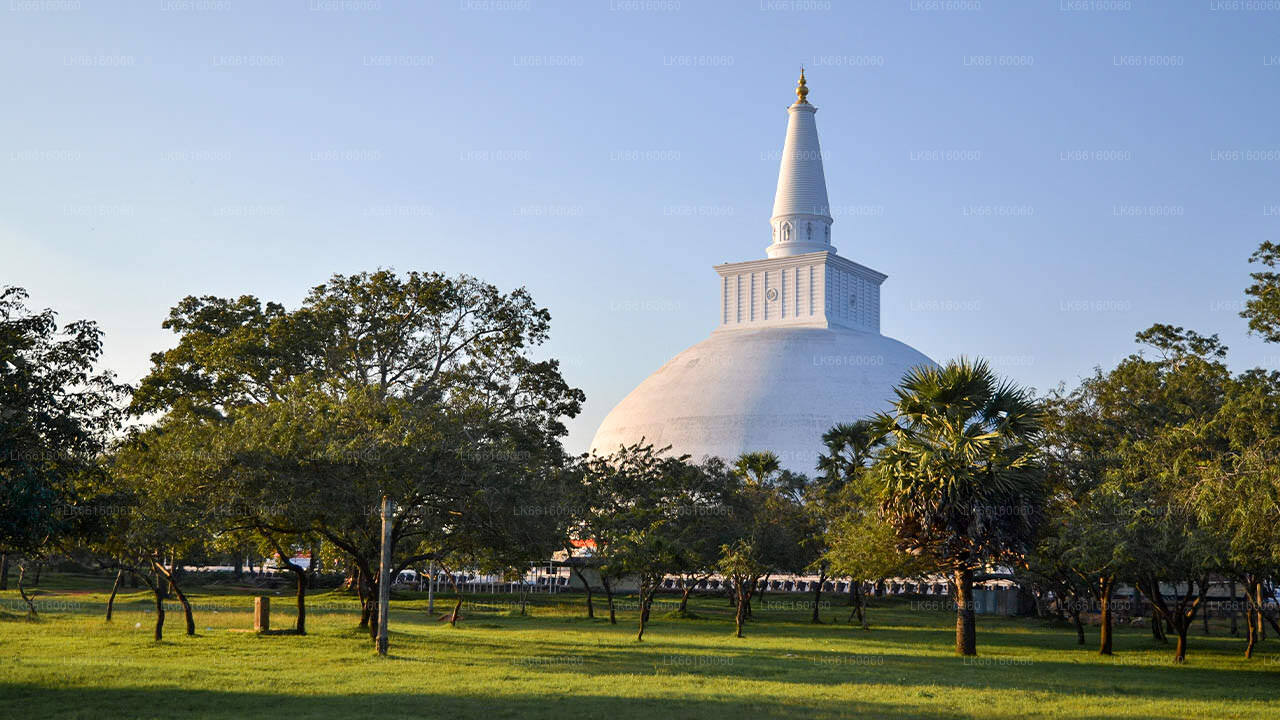
The Ruwanweli Maha Seya, also known as the Mahathupa (the Great Thupa) is a stupa (a hemispherical structure containing relics) in Anuradhapura, Sri Lanka. Two quarts or one Dona of the Buddha's relics are enshrined in the stupa, making it the largest collection of his relics anywhere. It was built by Sinhalese King Dutugemunu in c. 140 B.C., who became king of Sri Lanka after a war in which the Chola King Elāra (Ellalan) was defeated.
-
 Thuparamaya
Thuparamaya is the first Buddhist temple that was constructed, after the arrival of mahinda thero(mahindagamanaya) in Sri Lanka. Located in the sacred area of Mahamewna park, the Thuparamaya Stupa is the earliest Dagoba to be constructed in the island, dating back to the reign of King Devanampiya Tissa (247-207 BC). The temple has been formally recognised by the Government as an archaeological site in Sri Lanka.
-
 Lovamahapaya
Lovamahapaya is a building situated between Ruwanweliseya and Sri Mahabodiya in the ancient city of Anuradhapura, Sri Lanka. It is also known as the Brazen Palace or Lohaprasadaya because the roof was covered with bronze tiles. In ancient times, the building included the refectory and the uposathagara (Uposatha house).
-
 Abhayagiri Stupa
Abhayagiri Vihāra was a major monastery site of Mahayana, Theravada and Vajrayana Buddhism that was situated in Anuradhapura, Sri Lanka. It is one of the most extensive ruins in the world and one of the most sacred Buddhist pilgrimage cities in the nation.
-
 Jetavanaramaya
The Jetavanarama stupa or Jetavanaramaya is a stupa, or Buddhist reliquary monument, located in the ruins of Jetavana monastery in the UNESCO world heritage city of Anuradhapura, Sri Lanka. At 122 metres (400 ft), it was the world's tallest stupa, and the third tallest structure in the world when it was built by King Mahasena of Anuradhapura (273–301).
-
 Mirisawetiya Stupa
The Mirisaweti Stupa is a memorial building, a stupa, situated in the ancient city of Anuradhapura, Sri Lanka. King Dutugamunu (161 BC to 137 BC) built the Mirisaveti Stupa after defeating King Elara. After placing the Buddha relics in the sceptre, he had gone to Tissa Wewa for a bath leaving the sceptre.
-
 Lankarama
Lankarama is a stupa built by King Valagamba, in an ancient place at Galhebakada in the ancient kingdom of Anuradhapura, Sri Lanka. Nothing is known about the ancient form of the stupa, and later this was renovated. The ruins show that there are rows of stone pillars and it is no doubt that there has been a house built encircling the stupa (vatadage) to cover it.
-
 Isurumuniya
Isurumuniya is a Buddhist temple situated near to the Tissa Wewa (Tisa tank) in Anuradhapura, Sri Lanka. There are four carvings of special interest in this Vihara. They are the Isurumuniya Lovers, Elephant Pond and The Royal Family. The ancient Meghagiri Vihara or Meygiri Vihara is presently identified as the Isurumuni Vihara.