Cidade de Tangalle
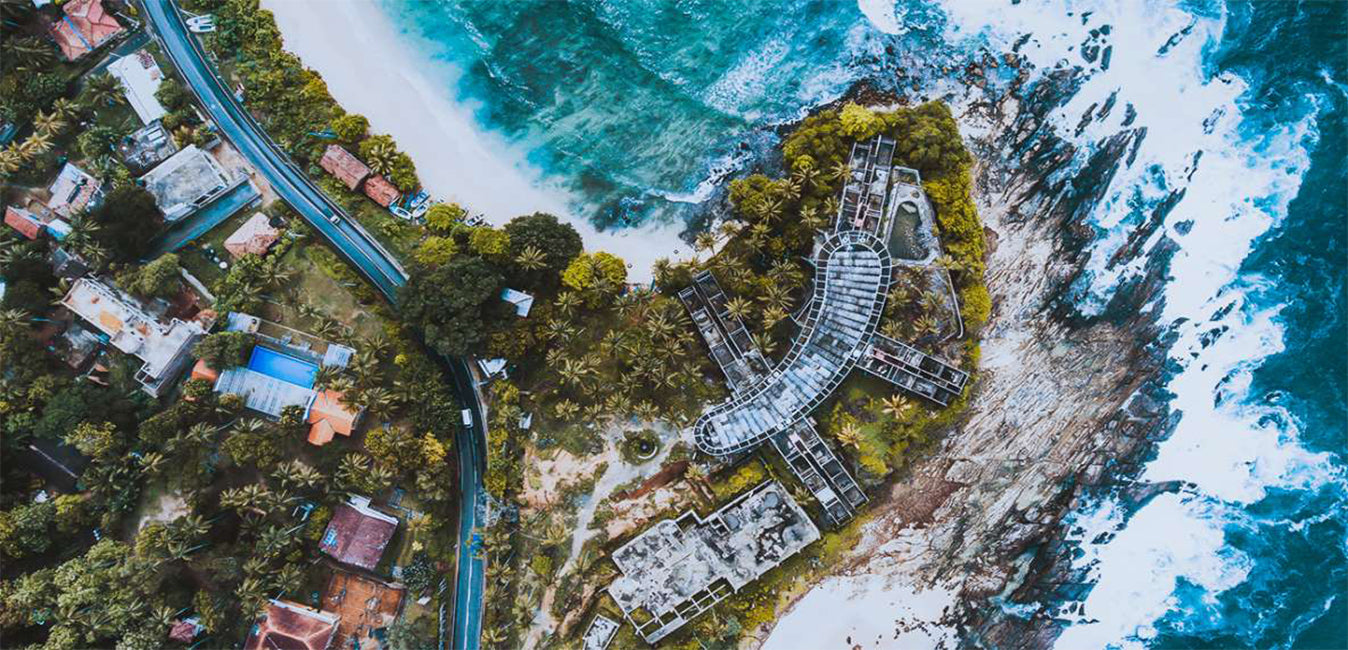
Situada ao longo de um dos trechos litorâneos mais deslumbrantes do sul da França, Tangalle (ou Tangalla) está entre os destinos de praia mais desenvolvidos da região, com uma série de pousadas simples – e alguns hotéis e vilas de luxo – espalhados pelas enseadas e praias que margeiam o oceano.
Hummanaya Blow Hole
A blowhole is a geological feature sometimes found along coastal regions. The phenomenon occurs when the tide fills underwater caverns with seawater. The caverns are caused by a geological process of shoreline erosion. This can happen through ‘hydraulic action’ where the waves cause pressure on the airpockets within the little cracks in the cliff, widening them further; ‘abrasion’ or ‘corrasion’ caused by the waves bashing rocks, pebbles, sand and other material into the cliff; chemical weathering caused by the acid content in seawater, especially lethal to rock compositions such as limestone; and ‘attrition’, a sandpapering effect caused by small loose circular rock debris. If the caverns have an aboveground opening; the pressure causes the water to push out periodically in a fountain, or ‘blow’. The timing and height of the water fountains from these blowholes are dependent on the tides and wave formations.
Whilst there are many blowholes all over the world, and especially along the European coast; Sri Lanka only has one known blowhole. It’s near Kudawella, a small fishing village in the Southern Province. Hummanaya can be reached by crossing over a tombolo; a piece of land that is created when deposition of sand or gravel occurs, connecting an island to the mainland. This blowhole has achieved fame amongst visitors to the island, as it is believed to the second largest blowhole around the world. Named after the strong humming sound that it produces while active; Hummanaya Blowhole can shoot up to a height between 25 ~ 30m.
Sobre o Distrito de Hambantota
Hambantota é uma cidade rural na região costeira sudeste do Sri Lanka. É também a capital do distrito de Hambantota, na Província Sul do Sri Lanka. A aproximadamente 240 km de Colombo, Hambantota está em plena transformação para se tornar um porto estratégico e um centro comercial, passando por um extenso desenvolvimento de infraestrutura. Flanqueada por extensas praias de areia, Hambantota é um local conveniente para visitar atrações próximas.
O Parque Nacional de Bundala fica a 20 km a leste de Hambantota e o Santuário de Weerawila um pouco mais distante. O Parque Nacional de Ruhuna e o Templo de Kataragama são outras atrações que podem ser acessadas facilmente a partir desta cidade.
Sobre a Província Sul
A Província Sul do Sri Lanka é uma pequena área geográfica composta pelos distritos de Galle, Matara e Hambantota. A agricultura de subsistência e a pesca são as principais fontes de renda para a grande maioria da população desta região.
Entre os pontos turísticos importantes da Província do Sul, destacam-se os santuários de vida selvagem dos Parques Nacionais de Yala e Udawalawe, a cidade sagrada de Kataragama e as antigas cidades de Tissamaharama, Kirinda e Galle. (Embora Galle seja uma cidade antiga, quase nada sobreviveu do período anterior à invasão portuguesa.) Durante o período português, dois poetas cingaleses famosos, Andare, de Dickwella, e Gajaman Nona, de Denipitiya, no distrito de Matara, compuseram poemas sobre o homem comum.