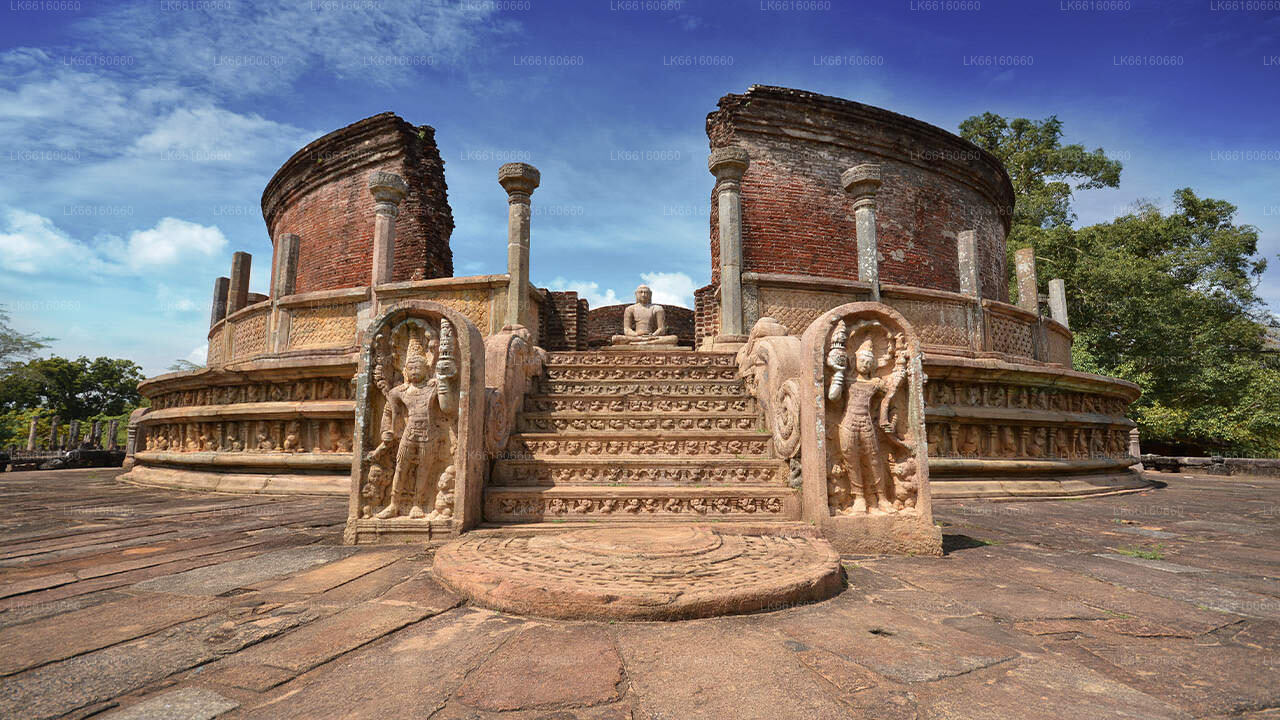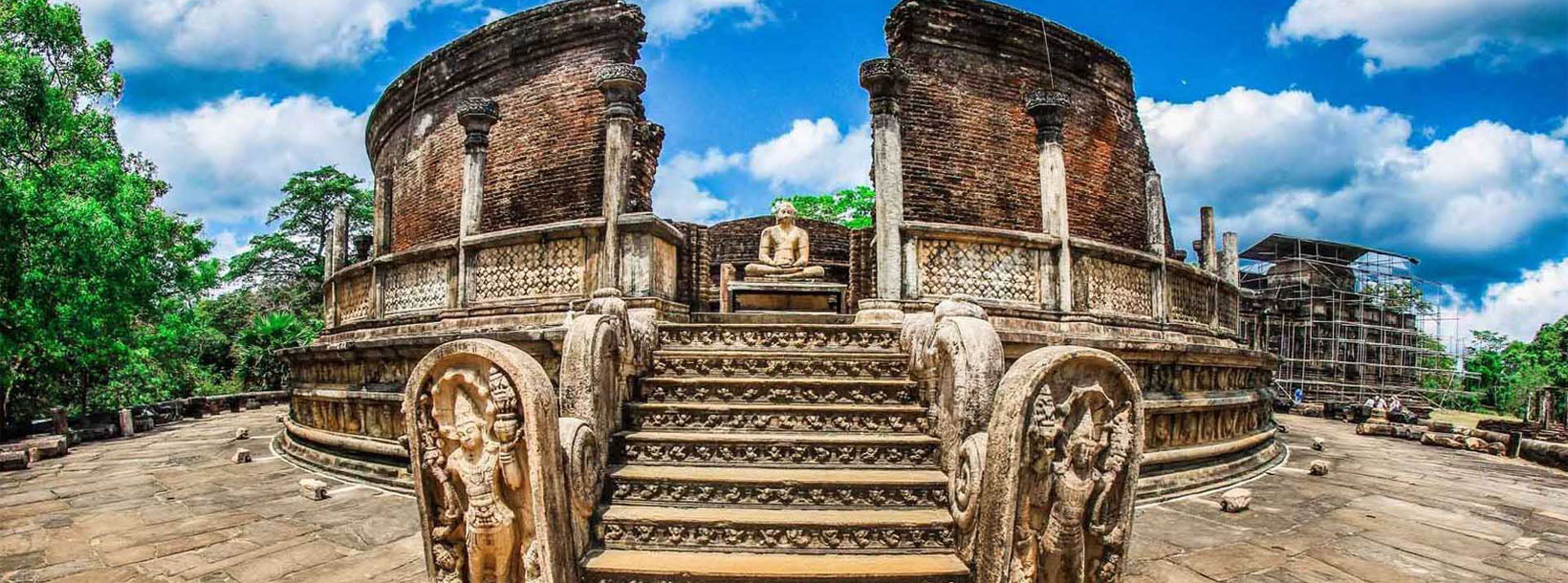
Nissanka Mallas Palace


King Nissanka Mallas’ Palace in Sri Lanka: Kingdom of Polonnaruwa
Sri Lankan kings ruled the island from the Kingdom of Polonnaruwa from 11th century until 1310 CE. The city of Polonnaruwa is situated on the left bank of River Mahaweli. Archeological evidence and accounts in chronicles suggests that the city is as old as the kingdom of Anuradhapura. According to the most accepted one word is derived from conjunction of the words Pulun which means cotton in sinhala and Maruwa which mean exchanging.
Some of the rulers of Polonnaruwa include Vijayabahu I and Parakramabahu I (Parakramabahu the Great). Most of Polonnaruwa that remains today dates from after the 1150s, as the extensive civil wars that preceded Parakramabahu’s accession to the throne devastated the city. Parakrama Pandyan II from Pandyan Kingdom invaded the Kingdom of Polonnaruwa in the thirteenth century and ruled from 1212
to 1215 CE. He was succeeded by Kalinga Magha the founder of the Jaffna kingdom. Kalinga Magha ruled 21 years until he was expelled from Polonnaruwa in 1236.
The kings who ruled in Polonnaruwa engaged in foreign trade. During the period of king Parakramabahu I, Sri Lanka was self-sufficient in paddy and also had exported to many Southeast Asian countries as well as to India. The people of Polonnaruwa had many of their requirements fulfilled except salt, which they had to bring from the coastal area.
Buddhism continued to be the main religion in Polonnaruwa era. Before the Sinhala kings’ rule, there was a strong influence of Hinduism caused by Cholas. It is evident from the removal of cow shape in Polonnaruwa moonstone and also by the presence of Shiva temples in Polonnaruwa. After Chola rule a lot of vihars were renovated by Vijayabahu I and Parakramabahu I. Various divisions or Nikayas in
Buddhism were united by Parakramabahu I.
The Kingdom of Polonnaruwa was abandoned in the 14th century, and the seat of government for the Sinhalese kings was moved to Yapahuwa. Although many factors contributed to this, the leading cause of the abandonment of Polonnaruwa as the kingdom of Sri Lanka was its susceptibility to invasions from south India.
King Nissanka Mallas’ Palace in Sri Lanka: The Introduction
King Nissanka Malla, also known as Kirti Nissanka and Kalinga Lokesvara was a king of Sri Lanka who ruled the country from 1187 to 1196. He is known for his architectural constructions such as the Nissanka Lata Mandapaya, Hatadage and Rankot Vihara, as well as for the re