
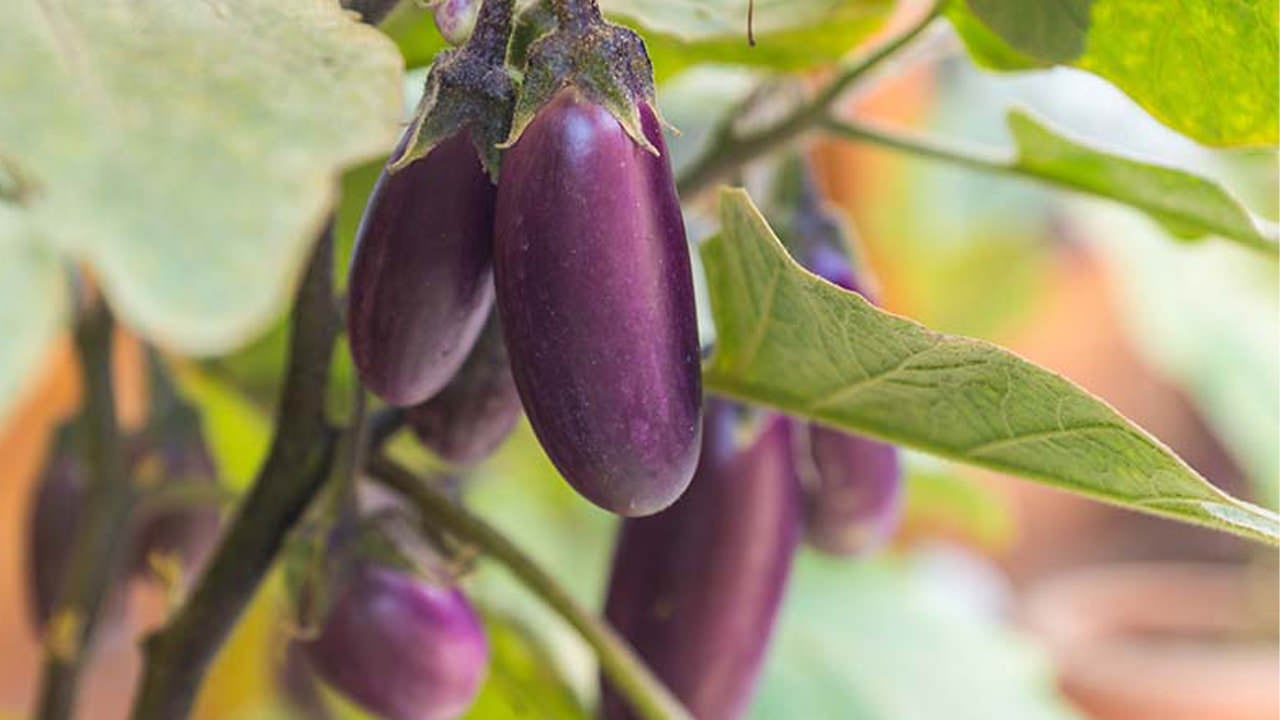
Solanum melongena, commonly known as eggplant in North America, aubergine in the United Kingdom and Ireland, and brinjal across the Indian subcontinent, Sri Lanka, Singapore, Malaysia, and South Africa, is a flowering plant in the nightshade family Solanaceae. In Sinhala it is called Ela Batu, and it holds a well-established place in Sri Lankan home cooking and traditional agriculture. The plant is cultivated worldwide for its edible fruit, which ranges in colour from deep purple to white and in shape from egg-like to long and slender.
What kind of plant is Solanum melongena?
Botanically, the fruit of Solanum melongena is classified as a berry, though it is universally treated as a vegetable in culinary contexts. The plant is a delicate tropical perennial, typically grown as an annual in temperate climates. It belongs to the same genus as the tomato, chili pepper, and potato, though it differs from those New World relatives by being an Old World species, with origins traced to South Asia and East Asia.
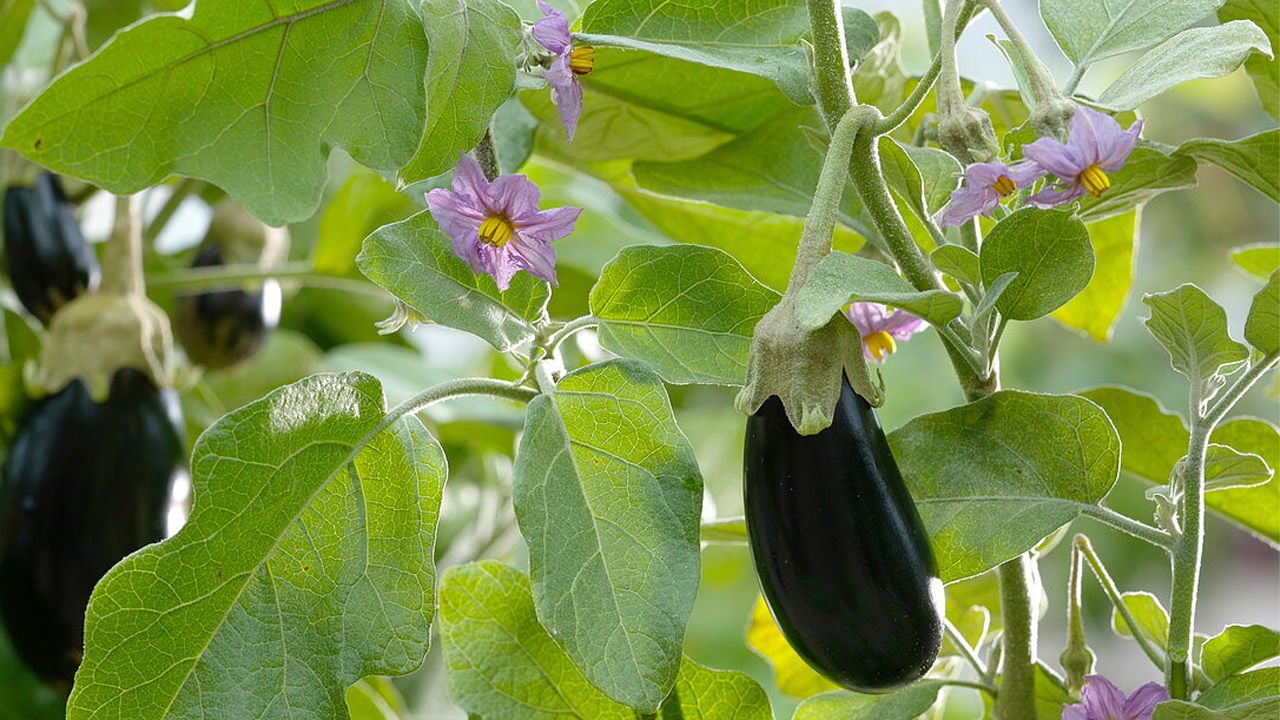
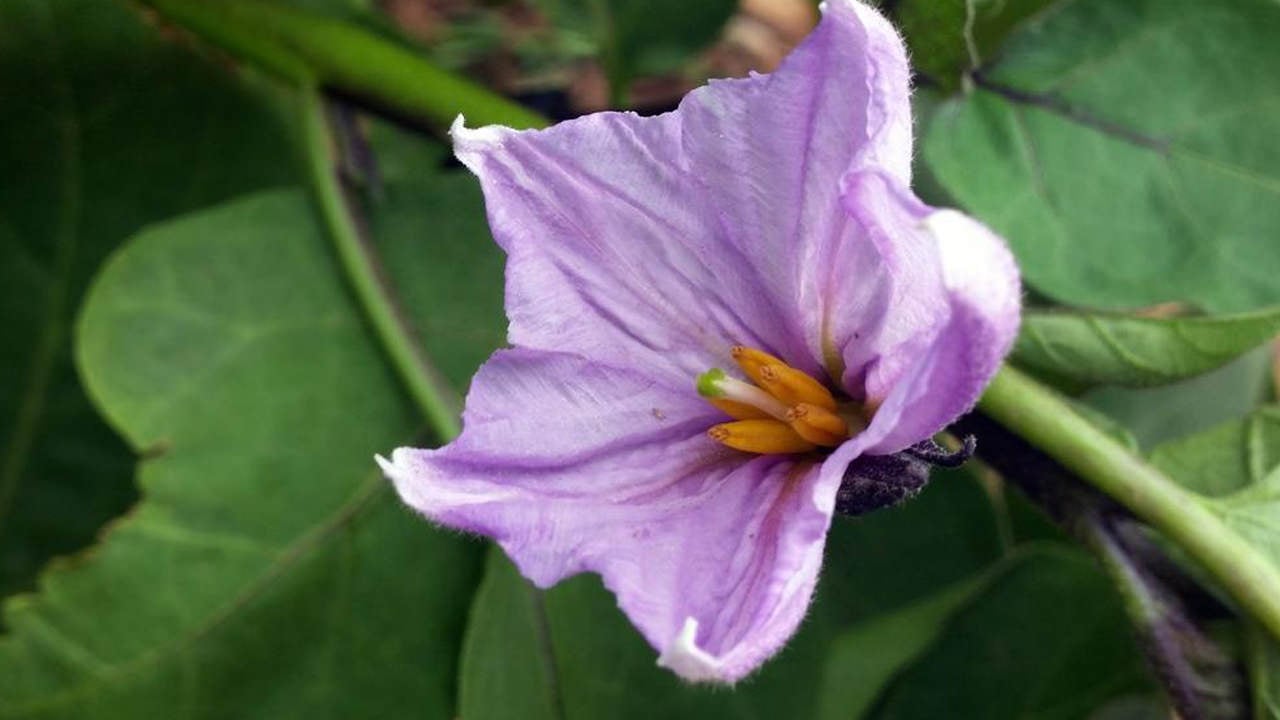
The plant grows between 40 and 150 cm tall under cultivated conditions, though semi-wild types can reach up to 225 cm. Its stems are often spiny, and its large, coarsely lobed leaves can measure 10 to 20 cm in length. Flowers are white to purple, featuring a five-lobed corolla and bright yellow stamens. Cultivated fruit can exceed 30 cm in length for elongated varieties, while wild fruit is typically less than 3 cm in diameter.
The flesh is spongy and absorbent, with numerous small seeds that carry a mildly bitter taste due to the presence of nicotinoid alkaloids. When cut, the flesh oxidises rapidly and turns brown — a characteristic familiar to any cook who has left prepared brinjal sitting uncooked.
Where did the eggplant originate?
The precise origin of Solanum melongena remains a subject of botanical debate. Evidence points to the Indian subcontinent and parts of East Asia as the most likely cradles of domestication — probably representing two independent events: one in South Asia and another in East Asia. The plant is believed to have been domesticated from the wild species Solanum incanum, sometimes called thorn apple or bitter apple.
The earliest known written record of the eggplant appears in the Qimin Yaoshu, an ancient Chinese agricultural treatise completed around 544 CE. The absence of ancient Greek and Roman names for the plant, combined with the abundance of Arabic and North African terminology, suggests that Arab traders introduced it to the Mediterranean region during the early Middle Ages, bringing it to Spain in the 8th century. A 12th-century agricultural manual by Ibn Al-Awwam from Arabic Spain describes cultivation methods in some detail.
By the medieval period, references to the aubergine appear in Catalan and Spanish records. Its introduction to England came considerably later. Today, China and India dominate global production, together accounting for around 87% of the world's eggplant output as of 2018.
How is Ela Batu used in Sri Lankan cooking?
In Sri Lanka, Ela Batu — referring specifically to a smaller, rounder variety — is a staple ingredient in everyday cooking. It appears most often in curries, where it readily absorbs the rich flavours of coconut milk, mustard seeds, curry leaves, and Ceylon black pepper. The texture, once cooked, becomes soft and almost creamy, making it well-suited to slow-cooked preparations.
The larger purple brinjal, known as Wambatu in Sinhala, is equally common and is used in a wider range of dishes. A particular favourite is Wambatu Moju — a sweet and sour pickled brinjal preparation made with vinegar, sugar, mustard, and dried chillies. This dish is a regular feature on Sri Lankan tables and functions both as a condiment and a side dish.
- Wambatu curry: Sliced brinjal cooked in spiced coconut milk gravy, often with tomato and green chilli.
- Wambatu Moju: Deep-fried brinjal pieces preserved in a tangy, spiced vinegar-and-sugar sauce.
- Grilled brinjal sambol: Roasted or flame-charred brinjal blended with onion, chilli, lime, and Maldive fish.
- Ela Batu tempered: Small round brinjals fried with mustard, curry leaves, and dried red chilli.
The fruit pairs naturally with Sri Lanka's other culinary staples. Dishes featuring brinjal are commonly served alongside rice, lunu dehi (salted lime pickle), and an array of other curries at a traditional Sri Lankan rice-and-curry meal.
What are the nutritional properties of eggplant?
Solanum melongena is low in calories and relatively modest in macronutrient content. It provides small amounts of dietary fibre, vitamin C, vitamin K, and potassium, along with trace quantities of several B vitamins. Its real nutritional significance lies in its content of phenolic compounds, particularly nasunin — an anthocyanin found in the purple skin that has been studied for its antioxidant properties.
In Ayurvedic tradition, which continues to influence Sri Lankan traditional medicine, brinjal is used in various formulations. It is considered to stimulate digestive fire and has been referenced in classical texts for its therapeutic applications. Like other Solanaceae members, it is best consumed cooked rather than raw.
How is Solanum melongena grown in Sri Lanka?
Brinjal is cultivated across Sri Lanka's dry and intermediate zones, where the warm temperatures and well-drained soils suit the plant well. It is grown both as a commercial crop and in home gardens throughout the country. The plant prefers full sun and consistent moisture, though it is sensitive to waterlogging. Seeds are typically raised in nursery beds before being transplanted to the field.
Sri Lankan farmers grow several local varieties alongside introduced commercial cultivars. The small round Ela Batu variety, often pale green or white with purple streaks, is particularly suited to the local climate and is commonly sold in rural markets. Cultivation fits naturally within the mixed smallholder farming systems that characterise much of Sri Lanka's agricultural landscape, alongside paddy, vegetables, and spice crops like Syzygium aromaticum (cloves).
Pest management is an ongoing challenge — brinjal is susceptible to the shoot and fruit borer (Leucinodes orbonalis), which can significantly reduce yields if left unmanaged. Integrated pest management approaches, including the use of pheromone traps and biological controls, are increasingly recommended by Sri Lanka's Department of Agriculture.
How does Solanum melongena relate to other nightshade plants?
The Solanaceae family, commonly called the nightshade family, contains some of the world's most economically important food plants. Solanum melongena shares its genus with the tomato (Solanum lycopersicum) and the potato (Solanum tuberosum). Like its relatives, the eggplant contains alkaloids — primarily in its leaves and seeds — that can be mildly toxic when consumed raw in large quantities. Cooking neutralises most of these compounds, which is why eggplant is almost universally eaten cooked.
The chili pepper, though in the same family, belongs to the genus Capsicum rather than Solanum, making it a slightly more distant relative. What the nightshade relatives share is a remarkable adaptability to diverse culinary traditions across the globe — from Sri Lankan curries to Italian parmigiana and Middle Eastern mutabbal.