Lakpura
Lakpura®

Phyllanthus emblica (Nelli)

Phyllanthus emblica — known in Sri Lanka as nelli and across South Asia as amla or Indian gooseberry — is one of the most versatile plants in the region's botanical and medicinal heritage. Small and unassuming in appearance, the nelli fruit has shaped Ayurvedic practice, Buddhist ritual, and everyday cooking for more than two millennia. In Sri Lanka it grows across dry and intermediate zones, often found in home gardens, forest margins, and traditional medicinal plant collections maintained by rural communities.

What does the nelli tree look like?

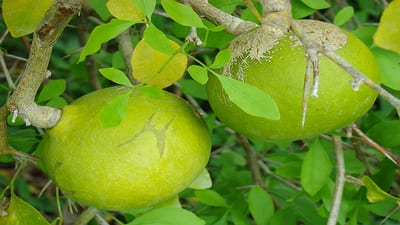
Phyllanthus emblica is a small to medium deciduous tree, typically reaching between 1 and 8 metres in height. Its slender branchlets — usually 10 to 20 cm long — are lined with simple, closely set, light-green leaves that can easily be mistaken for pinnate (compound) leaves at a glance. The flowers are small and greenish-yellow, appearing before the leaves during the dry season. The fruit itself is nearly spherical, smooth, and light greenish-yellow in colour, marked by six distinct vertical furrows running from crown to base. The flesh is firm, fibrous, and notably hard when fresh.

Fruits ripen in autumn and are traditionally harvested by hand, often by climbing into the upper canopy where the heaviest fruit clusters form. The experience of biting into a raw nelli is striking: the initial taste is sharply sour and astringent, followed by a subtle sweetness on the back palate — a quality Ayurvedic practitioners value highly.

What are the Ayurvedic and medicinal uses of nelli?

Phyllanthus emblica is formally catalogued among the Ayurvedic medicinal plants of Sri Lanka and holds an equally prominent position in Indian Ayurveda, Unani medicine, and Traditional Chinese Medicine. The fruit is exceptionally rich in vitamin C — a property that has been documented in modern pharmacological research — and is used as an antioxidant, digestive tonic, and rejuvenating agent.

In classical Ayurveda, amla is one of the three fruits in triphala, alongside haritaki and bibhitaki, a formulation widely prescribed for digestive health and general wellness. Nelli also appears as an ingredient in compound Ayurvedic preparations such as Yogaraja Guggulu and Kaishore Guggulu. Dried amla powder, pressed oils, and fruit extracts are all in common use across Sri Lanka's traditional medicine sector today.

How is nelli used in cooking across Sri Lanka and South Asia?

The fruit is consumed raw, pickled, candied, and dried. Raw nelli is typically eaten after meals — the astringency is believed to aid digestion — and is sometimes dipped in salt or chilli powder to temper the sharpness. A popular Sri Lankan preparation is lunu dehi-style pickles, where nelli is brined with salt and spices over several weeks.

Across India, the fruit is cooked into amle ka murabbah — a slow-cooked preserve in which berries are candied in sugar syrup — and stirred into lentil dishes such as dal. In parts of Indonesia's Batak region, the inner bark of the tree is added to a traditional fish broth called holat, where it contributes a characteristically astringent, bitter note to the flavour profile. This wide culinary reach speaks to how thoroughly the plant has woven itself into the food traditions of tropical Asia.

What is the significance of nelli in Buddhist tradition?

The nelli fruit carries deep symbolic weight in Buddhist history. According to the Ashokavadana — a Sanskrit text recounting the life of the Mauryan emperor Ashoka — half an amalaka fruit was the final charitable gift Ashoka offered to the Buddhist sangha in his declining years. The verse captures a poignant reflection on impermanence: a great emperor, once lord of a continent, reduced to offering half a fruit. This story is interpreted as a teaching on the merit of giving, regardless of one's material circumstances.

In Theravada Buddhism, the nelli tree holds further significance: it is recorded as the Bodhi tree — the tree under which the Buddha achieved enlightenment — of Phussa Buddha, the twenty-first Buddha in the traditional lineage. This association lends the plant a sacred quality that extends well beyond its medicinal or culinary value, and explains why nelli trees are sometimes planted near temple grounds across stupa complexes and monastic gardens in Sri Lanka.

Where does nelli grow in Sri Lanka?

Phyllanthus emblica is well adapted to Sri Lanka's dry and intermediate zones and is found growing naturally in forests across the North Central, North Western, and Eastern provinces. The tree tolerates poor, rocky soils and seasonal drought, making it a reliable species in dryland agroforestry systems. It is also cultivated in home gardens island-wide, particularly in rural communities where traditional medicinal knowledge remains strong.

Within nature reserves such as Wilpattu National Park, wild nelli trees are part of the dry mixed evergreen forest understorey and provide an important food source for deer, elephants, and other wildlife during fruiting season.

How is nelli harvested and processed commercially?

Commercial-scale harvesting in Sri Lanka typically takes place between October and February, when fruits reach full maturity. Fresh fruits are sorted and directed toward one of several processing streams: fresh-market sales, pickling operations, sun-drying for the export Ayurvedic ingredient trade, or cold-press oil extraction. Wildcrafted nelli — fruit collected from naturally growing trees rather than plantations — is increasingly sought after by health-food brands for its perceived purity and higher phytochemical content.

Dried nelli powder is exported as a functional food ingredient and dietary supplement, used in everything from hair-care products to nutritional capsules. Sri Lankan producers who certify wildcrafted sourcing are able to command a meaningful premium in international organic markets.

How does nelli compare to other Sri Lankan superfoods?

Sri Lanka's spice and medicinal plant heritage is exceptionally rich. Nelli sits alongside Ceylon black pepper and Syzygium aromaticum (clove) as plants with both deep historical roots and growing contemporary demand in wellness markets. Like those species, nelli benefits from Sri Lanka's biodiversity and traditional cultivation knowledge — advantages that distinguish Sri Lankan-origin material from bulk commodity sources elsewhere in Asia.

Book this experience with Lakpura

Curated by our local team. Direct booking, instant confirmation.

Ask Lakpura® Agent