Kaudulla Village sits quietly in Sri Lanka's North Central Province, a few kilometres from the ancient city of Polonnaruwa and close to the Habarana junction that connects the Cultural Triangle's main sites. It is the kind of place that rewards a slower pace — a working agricultural settlement where traditional farming rhythms, small irrigation tanks, and dry zone forests co-exist in a way that feels largely unchanged by modern tourism.
What makes Kaudulla Village worth visiting?
The village draws two distinct groups of travellers. Wildlife enthusiasts use it as a staging point for safaris into Kaudulla National Park, which adjoins the settlement. Cultural travellers come to experience rural Sri Lankan life firsthand — walking between paddy fields, watching farmers tend to their crops, and joining local families in the kind of unhurried daily routines that larger heritage towns rarely offer.
The landscape itself is the main draw outside the park boundaries. Shallow irrigation tanks, known locally as wewas, attract waterbirds throughout the year. Dry zone trees — including Acacia chundra — provide canopy for butterflies and small mammals. The paddy fields, especially during the cultivation season, give the entire area a luminous, open-sky quality that photographers appreciate.
What wildlife can I see near Kaudulla Village?
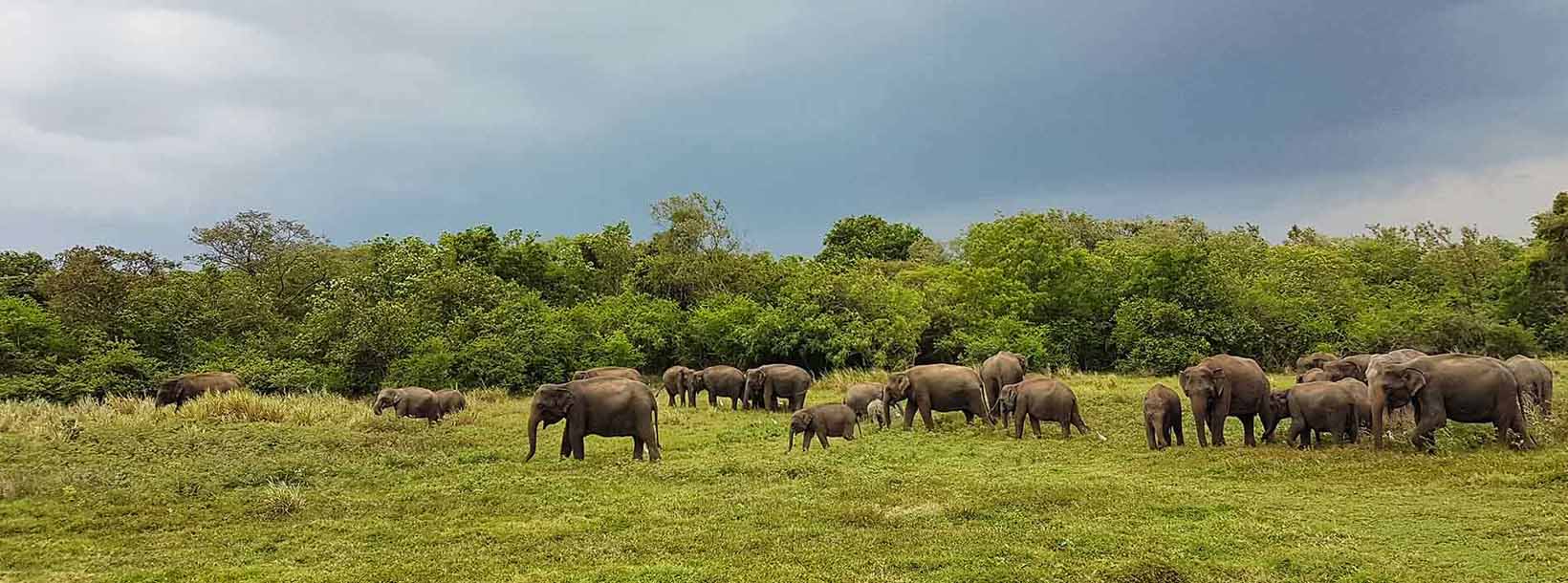
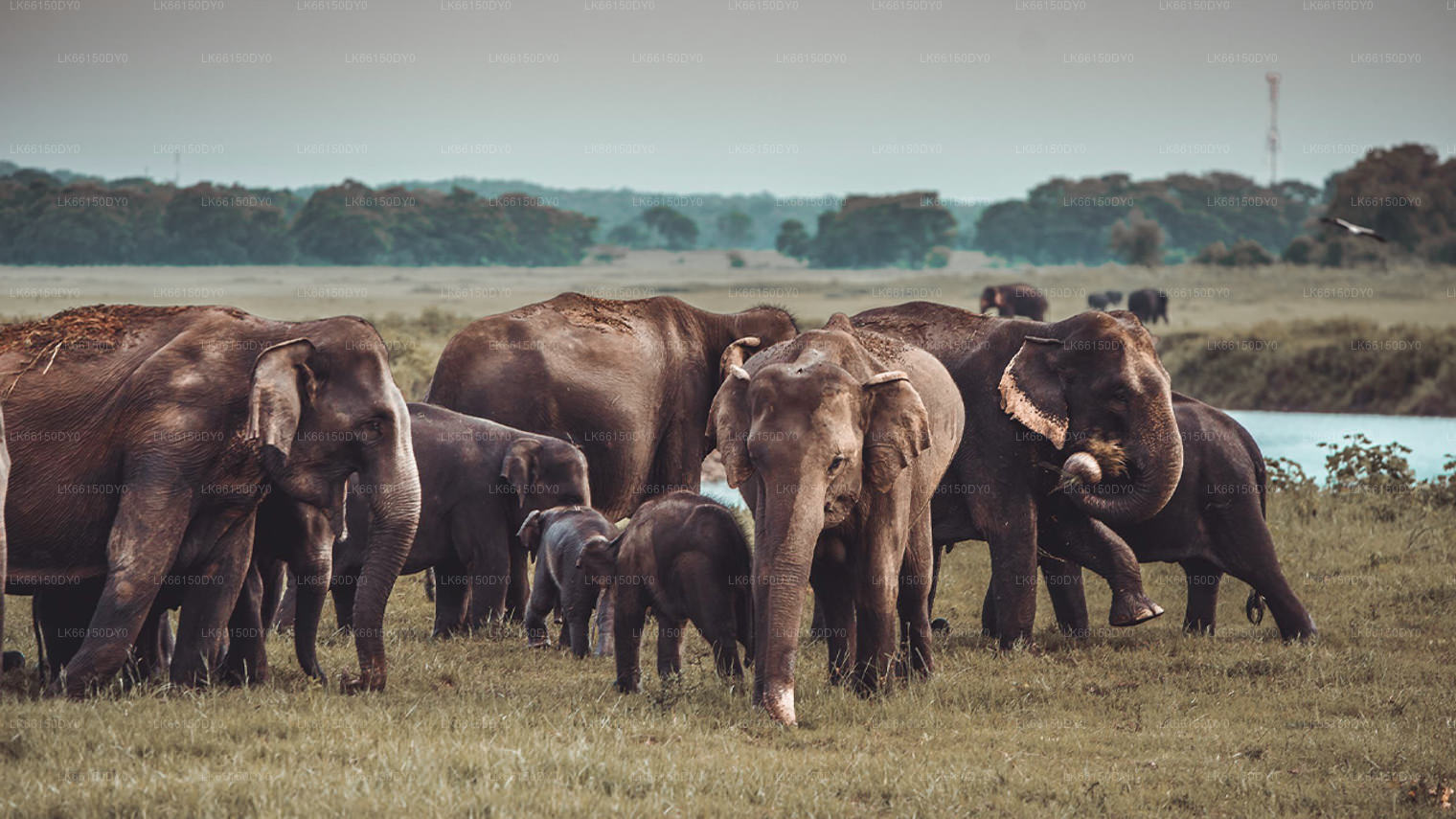
The village sits at the edge of a connected corridor of protected land that links Kaudulla, Minneriya, and Eco Park — together forming one of the largest elephant habitats in Asia. During the dry season, elephants move between these reserves in search of water and grazing, congregating in numbers that can reach into the hundreds around Kaudulla Tank.
Beyond elephants, the surrounding scrub forest and wetland margins support spotted deer, sambar, wild buffalo, and a variety of raptors. Painted storks, open-billed storks, and grey herons are common sights along the tank shore. The area also has a healthy reptile population, including monitor lizards and mugger crocodiles in the tank itself.
When is the best time to visit Kaudulla Village?
The dry season — roughly July to October — is considered the optimal window. As the smaller tanks around the region dry out, elephants converge on Kaudulla Tank in large numbers, making this one of the most reliable elephant-viewing opportunities in Sri Lanka. Safari vehicles can access the park more easily during this period, and the lower vegetation improves sightlines considerably.
Outside the dry season, the village takes on a different character. The paddy fields turn vivid green during the cultivation months, migratory birds arrive at the tank margins, and the cooler temperatures make village walks more comfortable. Visiting between November and January can offer a quieter experience with lower accommodation rates in the wider Habarana area.
| Detail | Information |
|---|---|
| Province | North Central Province |
| Nearest town | Habarana (~15 km) / Polonnaruwa (~30 km) |
| Best months for wildlife | July – October |
| Best months for scenery | November – January (post-monsoon green) |
| Closest airport | Bandaranaike International Airport (~170 km) |
How do I get to Kaudulla Village from Colombo or Habarana?
From Colombo, the most direct route follows the A6 highway through Kurunegala and Dambulla to Habarana, a journey of around three to four hours by road. Habarana is also served by the main Colombo–Batticaloa rail line, making it accessible without a private vehicle, though onward transport to the village itself requires a tuk-tuk or hired car.
From Habarana, the park entrance and surrounding village roads are typically a 15–20 minute drive. Most safari operators and guesthouses in Habarana can arrange transfers to the park gate as part of a safari package.
What experiences can visitors have in and around the village?
The most popular activity remains the jeep safari into Kaudulla National Park, particularly the late-afternoon drive that coincides with elephants moving to the tank at dusk. For travellers who want to extend their time in the area, several options are available:
- Village walks: Guided walks through the paddy fields and homesteads, with opportunities to observe traditional irrigation systems and speak with farming families.
- Birdwatching: The tank margins and surrounding scrub are productive for both resident and migratory species, particularly in the early morning.
- Cycling: Flat village roads and farm tracks are well suited to leisurely cycling, with views across the tank and into the national park buffer zone.
- Cultural visits: Small temples and a Dhamma school in the area give insight into the Buddhist rhythms of rural North Central Province.
- Photography: The combination of open water, dry zone forest, and working farmland creates varied compositions, especially in the golden hours around sunrise and sunset.
Where should I stay when visiting Kaudulla Village?
Most visitors base themselves in Habarana or Giritale, both of which offer a range of accommodation from eco-lodges to mid-range hotels. Staying in Habarana gives convenient access not just to Kaudulla but also to Minneriya National Park, Sigiriya, and the wider Cultural Triangle. A small number of village homestays and eco-camps operate closer to the park boundary for travellers who prefer a more immersive rural experience.
Is Kaudulla Village suitable for families and first-time visitors to Sri Lanka?
Yes, with some planning. The park safari is a straightforward experience suitable for all ages — open jeeps are the standard vehicle, and most naturalist guides speak English well. The village environment is relaxed and safe, and the relative absence of large crowds makes it a comfortable introduction to Sri Lanka's dry zone. Families with young children tend to particularly enjoy the elephant gatherings, which can be genuinely dramatic in scale during peak season.
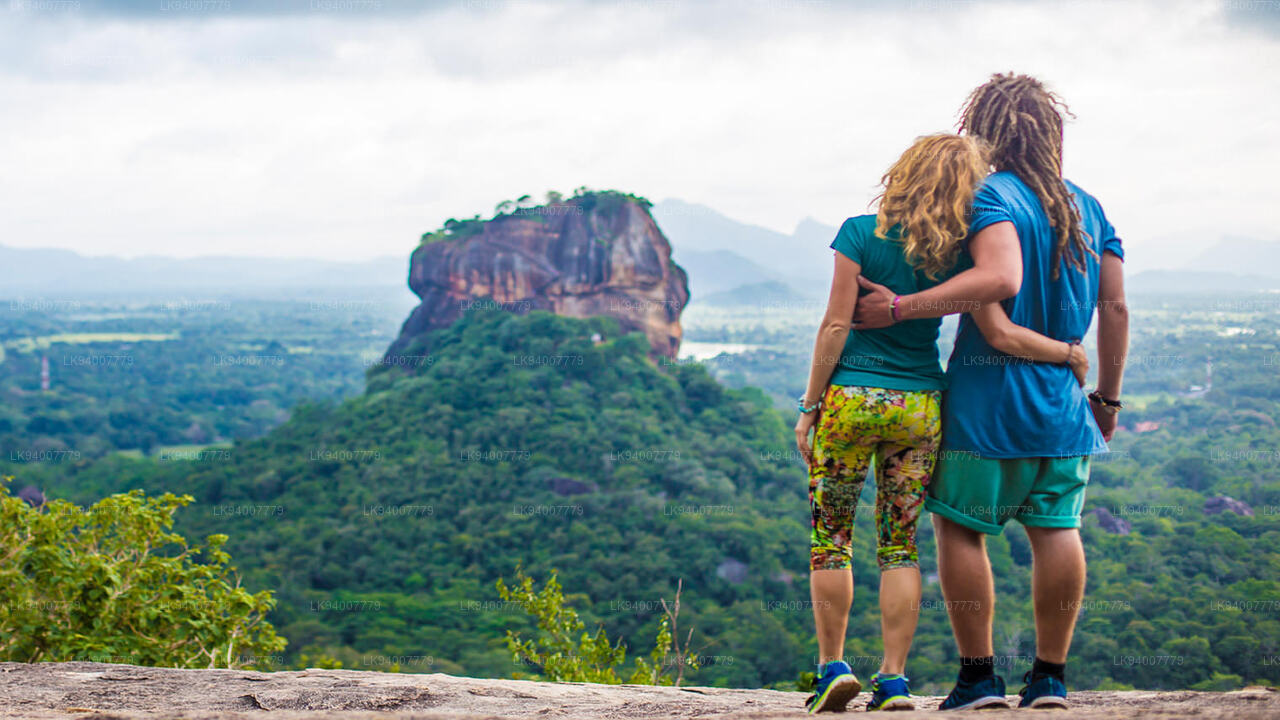
First-time visitors to Sri Lanka often combine Kaudulla with a broader Cultural Triangle itinerary that takes in Sigiriya Rock Fortress and the ancient city of Polonnaruwa, both within easy driving distance.