Temple Maruthanamadam Anjaneyar


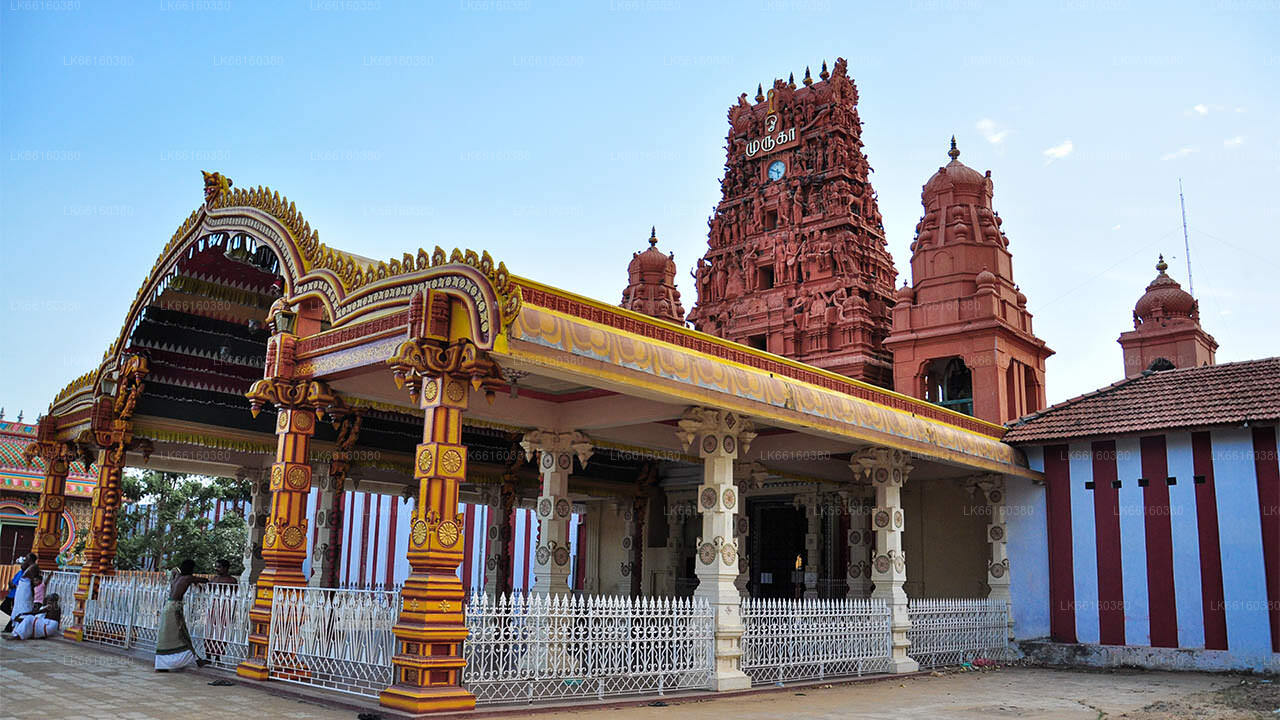
Le temple Maruthanar Madam Anjanajar est un sanctuaire hindou vénéré situé dans le district de Mannar au nord de Sri Lanka, profondément lié à la tradition Ramayana et à l'adoration du Seigneur Anjaneya (Hanuman). Situé dans un paysage rural paisible, le temple revêt une importance spirituelle, culturelle et historique pour les dévots de toute l'île, en particulier au sein de la communauté hindoue tamoule hindou. Son environnement paisible et ses associations sacrées en font non seulement un lieu de culte, mais aussi un site de réflexion et de dévotion.
Selon la tradition, Maruthanar Madam est considéré comme l'un des lieux où le Seigneur Hanuman se reposa lors de son voyage vers Lanka à la recherche de la déesse Sita. Le nom lui-même reflète cette croyance, "Maruthanar" faisant référence à Hanuman, le fils du dieu du vent. Cette association place le temple fermement dans le vaste sentier Ramayana du Sri Lanka, qui relie plusieurs sites sacrés à travers l'île aux épisodes de l'épopée ancienne. Pour les dévots, visiter le temple est à la fois un acte religieux et une façon de se connecter à un patrimoine culturel partagé qui s'étend sur des siècles.
Le dieu principal, Seigneur Anjaneya, est vénéré comme un symbole de force, de dévotion, de loyauté et de courage. De nombreux dévots visitent le temple pour demander des bénédictions pour la protection, le succès, une bonne santé et pour se débarrasser des obstacles. Des prières et des offrandes spéciales sont couramment faites le samedi, jour considéré comme favorable à l'adoration de Hanuman, ainsi que pendant les périodes festives liées à la tradition Ramayana. L'atmosphère pendant ces périodes est marquée par des chants, des observances rituelles et un fort sentiment de foi communautaire.
Dans le contexte sri-lankais, le temple Maruthanar Madam Anjanajar représente également la résilience des traditions religieuses dans la province du nord, en particulier dans une région qui a connu des défis historiques importants. Le temple continue de servir de point d'ancrage spirituel pour les communautés locales tout en accueillant des pèlerins venus d'autres régions du pays. Sa simplicité, ses rituels axés sur la dévotion et ses fortes associations mythologiques le distinguent des temples urbains plus grands, offrant aux visiteurs une expérience enracinée dans l'humilité et le respect.
Aujourd'hui, le temple se dresse comme un repère significatif dans le paysage religieux de Sri Lanka, reflétant les traditions spirituelles pluralistes de l'île. Le temple Maruthanar Madam Anjanajar n'est pas simplement un lieu lié à la légende, mais un espace vivant de culte où la foi, l'histoire et la culture se rejoignent dans une harmonie tranquille.