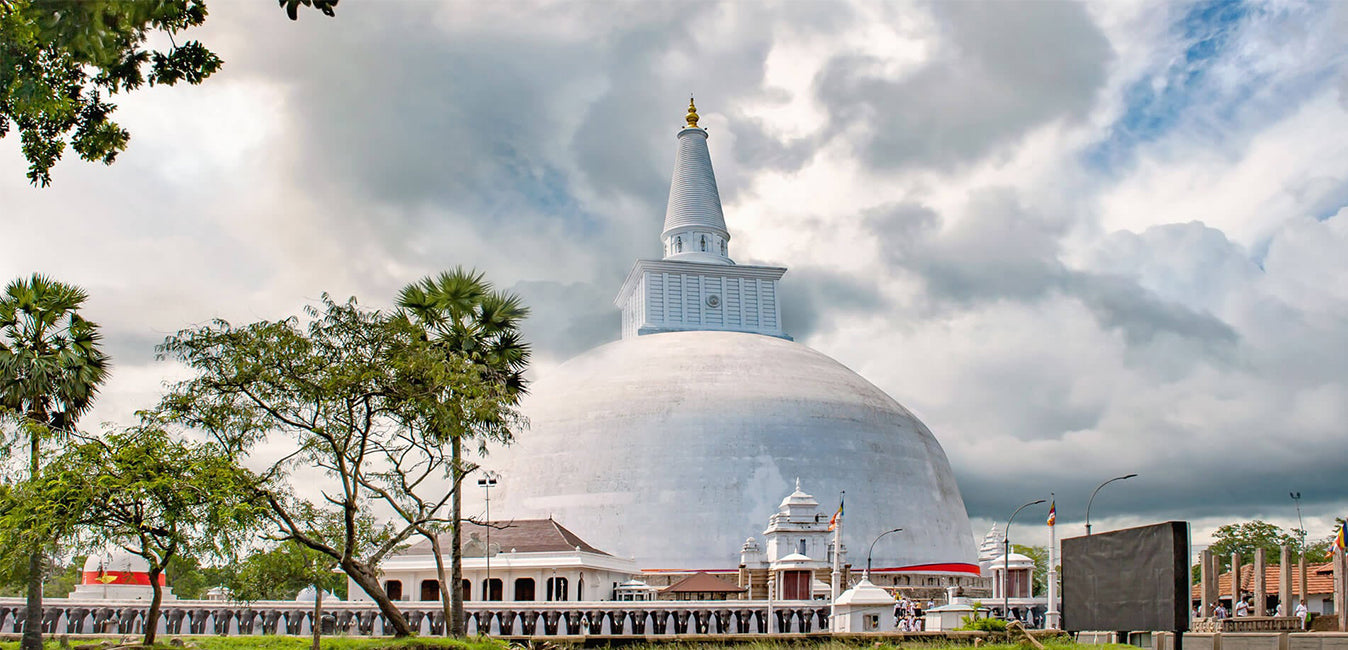
Anuradhapura City
Anuradhapura is belongs to the North Central Province in to Sri Lanka. Anuradhapura is one of the ancient capitals of Sri Lanka, famous for its well-preserved ruins of ancient Lankan civilization. The city, now a UNESCO World Heritage Site, lies 205 km north of the current capital Colombo in Sri Lanka.
Anuradhapura
Anuradhapura est une ville du district d’Anuradhapura, situé dans la province du Centre-Nord au Sri Lanka. Cette ville sacrée a été fondée autour d’un rameau de « l’arbre de l’Éveil », le figuier sous lequel le Bouddha atteignit l’illumination, apporté ici au 3ᵉ siècle av. J.-C. par Sanghamitta, la fondatrice d’un ordre de nonnes bouddhistes. Anuradhapura fut une capitale politique et religieuse florissante pendant 1300 ans, avant d’être abandonnée après une invasion en 993. Caché pendant des années dans une jungle dense, ce site splendide avec ses palais, monastères et monuments est aujourd’hui à nouveau accessible.
Aujourd’hui, Anuradhapura est l’une des villes les plus sacrées pour les bouddhistes du monde entier. Elle regorge d’anciennes dagobas, de monastères, de palais, de réservoirs artificiels et de jardins royaux. En raison des vestiges de l’ancienne civilisation sri-lankaise qu’elle abrite, elle a été inscrite en 1982 par l’UNESCO comme site du patrimoine mondial sous le nom de « Ville sacrée d’Anuradhapura ».
Le bouddhisme à Anuradhapura
Anuradhapura fut un grand centre intellectuel du bouddhisme theravāda ancien et le foyer de philosophes bouddhistes renommés tels que Buddhaghosa. Sous le règne du roi Dhatusena (455–473), une révision du canon theravāda eut lieu, tandis que 18 nouveaux vihara (complexes de temples) furent construits, et une statue érigée en l’honneur de Mahinda, le prince-moine indien qui introduisit le bouddhisme sur l’île. Durant la période tardive d’Anuradhapura, la famille royale et la noblesse du Sri Lanka soutenaient fortement le bouddhisme en finançant des œuvres d’art et en les offrant aux temples bouddhistes. En retour, les temples et la communauté bouddhiste locale soutenaient le règne du roi.
Lieux remarquables à Anuradhapura :
Sri Maha Bodhi : Ce figuier sacré d’Anuradhapura serait un descendant direct de l’arbre Bodhi originel sous lequel le Bouddha atteignit l’Éveil. Il symbolise l’illumination et constitue un lieu de pèlerinage majeur.
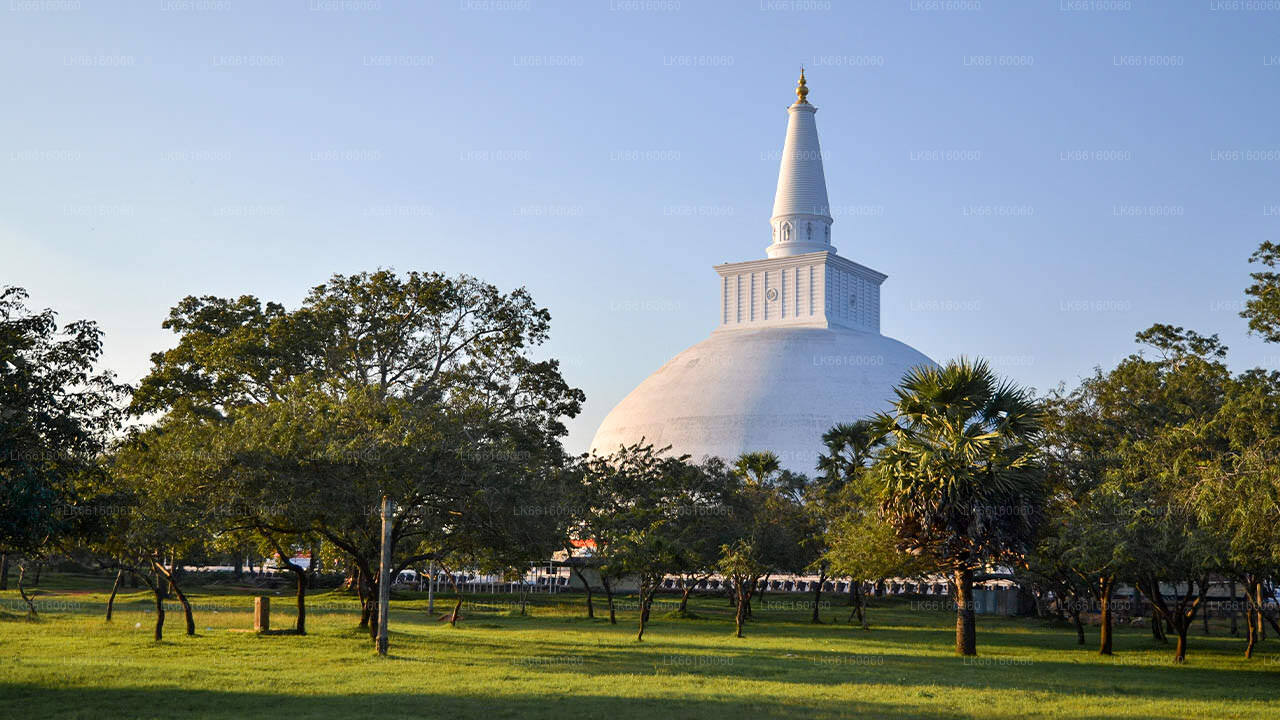
Ruwanweli Seya : Aussi connu sous le nom de Grand Stupa, cet ancien stupa est l’un des plus grands du Sri Lanka. Il abrite des reliques du Bouddha et représente un site essentiel de la pratique bouddhiste.
Thuparamaya : Considéré comme le plus ancien stupa du Sri Lanka, il contient une relique du Bouddha. Il possède des caractéristiques architecturales uniques et constitue un lieu historique important pour les fidèles.
Lovamahapaya : Également connu sous le nom de Palais de Bronze, ce site ancien est un lieu archéologique majeur. Il servait de complexe monastique et témoigne d’une architecture ancienne impressionnante.
Abhayagiri Dagaba : Ce grand stupa faisait partie du monastère d’Abhayagiri. Il joua un rôle essentiel dans la diffusion du bouddhisme au Sri Lanka et est réputé pour sa taille imposante et son importance historique.
Jetavanaramaya : Autrefois l’une des plus hautes structures du monde antique, ce stupa d’Anuradhapura contient des reliques du Bouddha. Il constitue un remarquable exploit d’ingénierie et un lieu de pèlerinage important.
Mirisaweti Stupa : Ce stupa est associé à la légende du roi Dutugemunu. Il symbolise l’unification du Sri Lanka et constitue un site significatif de dévotion et de réflexion bouddhiste.
Lankarama : Ce stupa circulaire présente des caractéristiques architecturales uniques et fait partie d’un ancien complexe monastique. C’est un lieu serein pour la méditation, doté d’une grande importance historique.
-
Sri Maha BodhiyaJaya Sri Maha Bodhi is a sacred bo tree in the Mahamewna Gardens, Anuradhapura, Sri Lanka. It is the southern branch from the historical Sri Maha Bodhi at Buddha Gaya in India under which Buddha attained Enlightenment. It was planted in 288 BC, and is the oldest living human-planted tree in the world with a known planting date.
-
RuwanweliseyaThe Ruwanweli Maha Seya, also known as the Mahathupa (the Great Thupa) is a stupa (a hemispherical structure containing relics) in Anuradhapura, Sri Lanka. Two quarts or one Dona of the Buddha's relics are enshrined in the stupa, making it the largest collection of his relics anywhere. It was built by Sinhalese King Dutugemunu in c. 140 B.C., who became king of Sri Lanka after a war in which the Chola King Elāra (Ellalan) was defeated.
-
ThuparamayaThuparamaya is the first Buddhist temple that was constructed, after the arrival of mahinda thero(mahindagamanaya) in Sri Lanka. Located in the sacred area of Mahamewna park, the Thuparamaya Stupa is the earliest Dagoba to be constructed in the island, dating back to the reign of King Devanampiya Tissa (247-207 BC). The temple has been formally recognised by the Government as an archaeological site in Sri Lanka.
-
LovamahapayaLovamahapaya is a building situated between Ruwanweliseya and Sri Mahabodiya in the ancient city of Anuradhapura, Sri Lanka. It is also known as the Brazen Palace or Lohaprasadaya because the roof was covered with bronze tiles. In ancient times, the building included the refectory and the uposathagara (Uposatha house).
-
Abhayagiri StupaAbhayagiri Vihāra was a major monastery site of Mahayana, Theravada and Vajrayana Buddhism that was situated in Anuradhapura, Sri Lanka. It is one of the most extensive ruins in the world and one of the most sacred Buddhist pilgrimage cities in the nation.
-
JetavanaramayaThe Jetavanarama stupa or Jetavanaramaya is a stupa, or Buddhist reliquary monument, located in the ruins of Jetavana monastery in the UNESCO world heritage city of Anuradhapura, Sri Lanka. At 122 metres (400 ft), it was the world's tallest stupa, and the third tallest structure in the world when it was built by King Mahasena of Anuradhapura (273–301).
-
Mirisawetiya StupaThe Mirisaweti Stupa is a memorial building, a stupa, situated in the ancient city of Anuradhapura, Sri Lanka. King Dutugamunu (161 BC to 137 BC) built the Mirisaveti Stupa after defeating King Elara. After placing the Buddha relics in the sceptre, he had gone to Tissa Wewa for a bath leaving the sceptre.
-
LankaramaLankarama is a stupa built by King Valagamba, in an ancient place at Galhebakada in the ancient kingdom of Anuradhapura, Sri Lanka. Nothing is known about the ancient form of the stupa, and later this was renovated. The ruins show that there are rows of stone pillars and it is no doubt that there has been a house built encircling the stupa (vatadage) to cover it.
-
IsurumuniyaIsurumuniya is a Buddhist temple situated near to the Tissa Wewa (Tisa tank) in Anuradhapura, Sri Lanka. There are four carvings of special interest in this Vihara. They are the Isurumuniya Lovers, Elephant Pond and The Royal Family. The ancient Meghagiri Vihara or Meygiri Vihara is presently identified as the Isurumuni Vihara.
Anuradhapura District
Anuradhapura is belongs to the North Central Province in to Sri Lanka. Anuradhapura is one of the ancient capitals of Sri Lanka, famous for its well-preserved ruins of ancient Lankan civilization. The city, now a UNESCO World Heritage Site, lies 205 km north of the current capital Colombo in Sri Lanka.
In the sacred city of Anuradhapura and in the vicinity are a large number of ruins. The ruins consist of three classes of buildings, dagobas, monastic buildings, and pokuna (ponds). The city had some of the most complex irrigation systems of the ancient world, situated in the dry zone of the country the administration built many tanks to irrigate the land. Most of the civilians are Sinhala, while Tamils and Sri Lankan Moors live in the district.
North Central Province
North Central Province which is the largest province in the country covered 16% of total country's land area. North Central Province consist two districts called Polonnaruwa and Anuradhapure. Anuradhapura is the largest district in Sri Lanka. Its area is 7,128 km².
North Central Province has numerous potentials for Investors to start their Businesses, especially Agriculture, agro based industries and Livestock sectors. More than 65% of North Central Province's people depend on basic Agriculture and agro base industries. NCP also called "Wew Bendi Rajje" because there are more than 3,000 medium and large scale tanks situated in the province. Sri maha bodiya, Ruwanweli seya, Thuparama dageba, Abayagiri Monastry, Polonnaruwa Rankot wehera, Lankathilake are Sacred
landmarks.