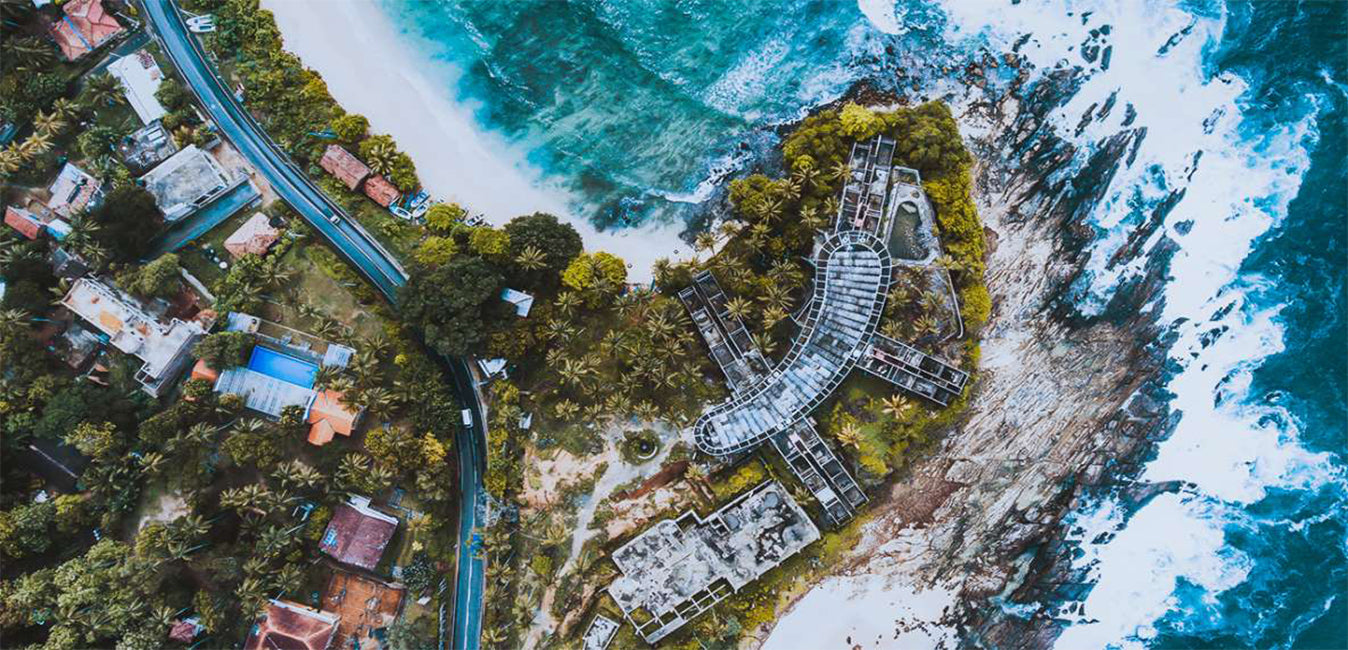
Hummanaya Blow Hole

Hummanaya Blow Hole Hummanaya Blow Hole Hummanaya Blow Hole

A blowhole is a geological feature sometimes found along coastal regions. The phenomenon occurs when the tide fills underwater caverns with seawater. The caverns are caused by a geological process of shoreline erosion. This can happen through ‘hydraulic action’ where the waves cause pressure on the airpockets within the little cracks in the cliff, widening them further; ‘abrasion’ or ‘corrasion’ caused by the waves bashing rocks, pebbles, sand and other material into the cliff; chemical weathering caused by the acid content in seawater, especially lethal to rock compositions such as limestone; and ‘attrition’, a sandpapering effect caused by small loose circular rock debris. If the caverns have an aboveground opening; the pressure causes the water to push out periodically in a fountain, or ‘blow’. The timing and height of the water fountains from these blowholes are dependent on the tides and wave formations.

Whilst there are many blowholes all over the world, and especially along the European coast; Sri Lanka only has one known blowhole. It’s near Kudawella, a small fishing village in the Southern Province. Hummanaya can be reached by crossing over a tombolo; a piece of land that is created when deposition of sand or gravel occurs, connecting an island to the mainland. This blowhole has achieved fame amongst visitors to the island, as it is believed to the second largest blowhole around the world. Named after the strong humming sound that it produces while active; Hummanaya Blowhole can shoot up to a height between 25 ~ 30m.

Hummanaya Blow Hole Hummanaya Blow Hole Hummanaya Blow Hole

Acerca del Distrito de Hambantota

Hambantota es una ciudad rural en la costa sureste de Sri Lanka. Es también la capital del Distrito de Hambantota, en la Provincia Sur de Sri Lanka. A unos 240 km de Colombo, Hambantota se encuentra en plena transformación para convertirse en un puerto estratégico y centro comercial, con un amplio desarrollo de infraestructura. Rodeada de extensas playas de arena, Hambantota es una ubicación ideal para visitar los lugares de interés cercanos.

El Parque Nacional Bundala se encuentra a 20 km al este de Hambantota y el Santuario Weerawila un poco más lejos. El Parque Nacional Ruhuna y el Templo Kataragama son otros atractivos a los que se puede acceder fácilmente desde esta ciudad.

Acerca de la Provincia Sur

La Provincia Sur de Sri Lanka es una pequeña área geográfica compuesta por los distritos de Galle, Matara y Hambantota. La agricultura y la pesca de subsistencia son la principal fuente de ingresos para la gran mayoría de los habitantes de esta región.

Entre los lugares de interés de la Provincia Sur se encuentran los santuarios de vida silvestre de los Parques Nacionales de Yala y Udawalawe, la ciudad sagrada de Kataragama y las antiguas ciudades de Tissamaharama, Kirinda y Galle. (Aunque Galle es una ciudad antigua, prácticamente no se conserva nada anterior a la invasión portuguesa). Durante el período portugués, dos famosos poetas cingaleses, Andare, de Dickwella, y Gajaman Nona, de Denipitiya, en el distrito de Matara, compusieron poemas sobre la gente común.