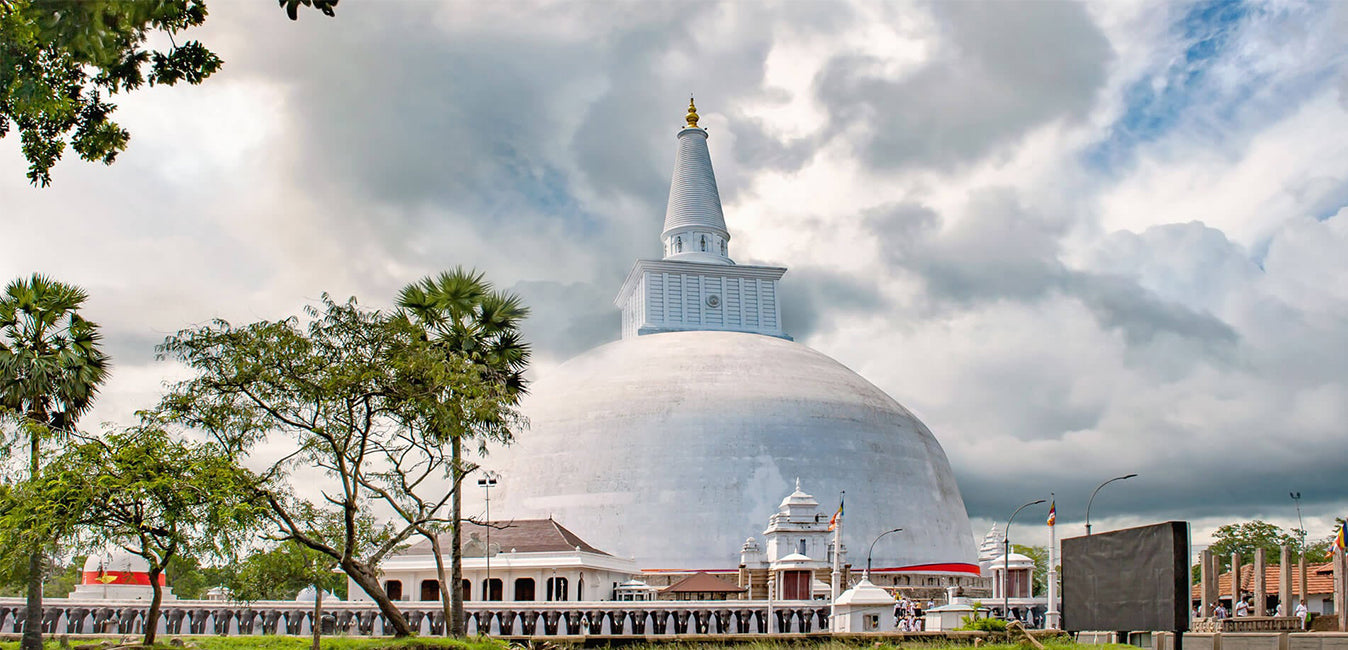
Jetavanaramaya Stupa


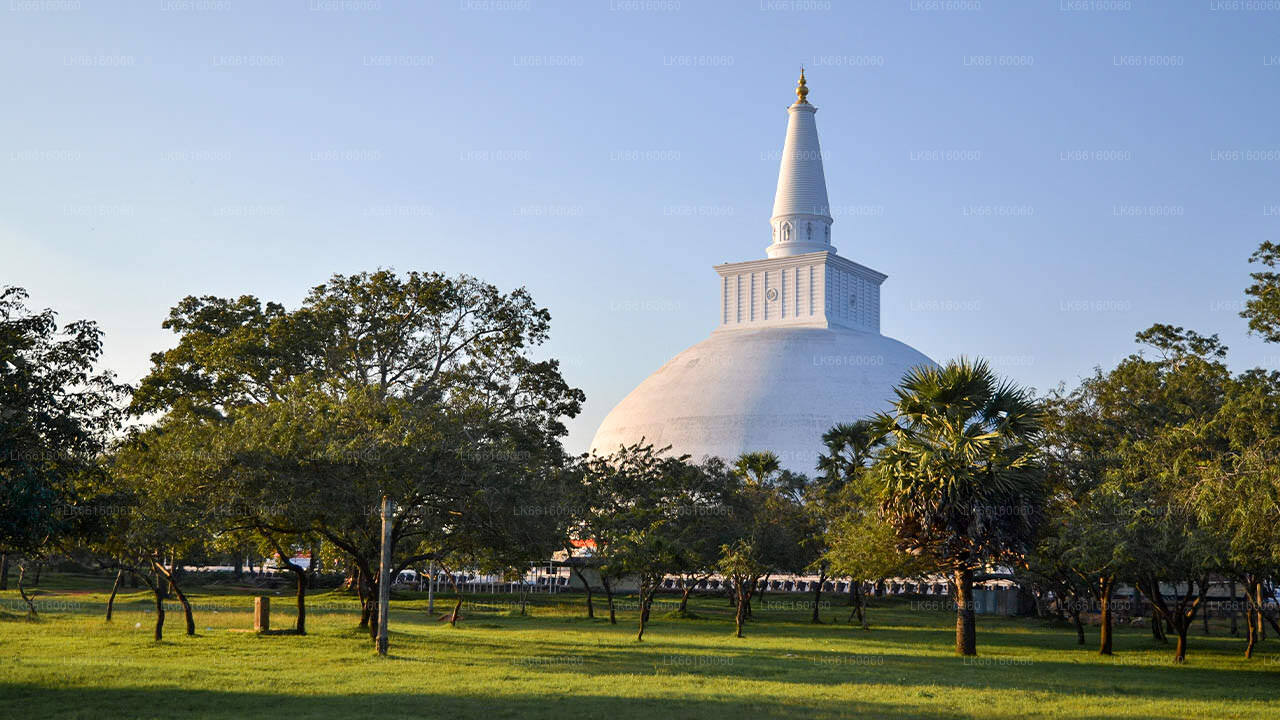
Die Jetavanarama Stupa oder Jetavanaramaya ist eine Stupa oder buddhistisches Reliquiar, das sich in den Ruinen des Jetavana-Klosters in der UNESCO-Weltkulturerbestadt Anuradhapura, Sri Lanka befindet. Mit 122 Metern (400 Fuß) war sie die höchste Stupa der Welt und das dritthöchste Bauwerk der Welt, als sie von König Mahasena von Anuradhapura (273–301) erbaut wurde. Er begann mit dem Bau der Stupa: 49 nach der Zerstörung des Mahaviharaya von Anuradhapura. Sein Sohn Maghavanna I. vollendete den Bau der Stupa, und sie wurde von Parakramabahu I. von Polonnaruwa renoviert. Ein Teil eines Gürtels oder Bandes, das vom Buddha gebunden wurde, wird als das Relikt angesehen, das hier verehrt wird.
Die Struktur ist in der Geschichte der Insel bedeutend, da sie die Spannungen zwischen den Theravada- und Mahayana-Sekten des Buddhismus darstellt; sie ist auch in der aufgezeichneten Geschichte als eines der höchsten Bauwerke der Antike von Bedeutung und das höchste nicht-pyramidale Gebäude; die Höhe der Stupa betrug 122 Meter (400 Fuß), was sie zur höchsten Stupa in der Antike machte. Mit der Zerstörung und dem Verlassen des Königreichs Anuradhapura im 11. Jahrhundert wurde die Stupa zusammen mit anderen von Dschungel bedeckt. König Parakramabahu versuchte im 12. Jahrhundert, diese Stupa zu renovieren, und sie wurde auf die heutige Höhe wiederaufgebaut, was eine Verringerung der ursprünglichen Höhe darstellt. Heute steht sie bei 71 Metern (233 Fuß).
Das Gelände umfasst etwa 5,6 Hektar und soll 10.000 buddhistische Mönche beherbergt haben. Eine Seite der Stupa ist 176 m (576 Fuß) lang, und die Treppen an jeder der vier Seiten sind 9 m (28 Fuß) breit. Der Türpfosten zur Heiligtum, das sich im Innenhof befindet, ist 8 m (27 Fuß) hoch. Die Stupa hat ein 8,5 m (28 Fuß) tiefes Fundament und steht auf Felsen.
Die Struktur ist nicht mehr die höchste, aber sie ist immer noch die größte mit einer Grundfläche von 233.000 m2 (2.508.000 Quadratfuß). Etwa 93,3 Millionen gebrannte Ziegel wurden für ihren Bau verwendet; die Ingenieurskunst hinter dem Bau der Struktur ist eine bedeutende Entwicklung in der Geschichte der Insel.


-
 Sri Maha Bodhiya
Jaya Sri Maha Bodhi is a sacred bo tree in the Mahamewna Gardens, Anuradhapura, Sri Lanka. It is the southern branch from the historical Sri Maha Bodhi at Buddha Gaya in India under which Buddha attained Enlightenment. It was planted in 288 BC, and is the oldest living human-planted tree in the world with a known planting date.
-
 Ruwanweliseya
The Ruwanweli Maha Seya, also known as the Mahathupa (the Great Thupa) is a stupa (a hemispherical structure containing relics) in Anuradhapura, Sri Lanka. Two quarts or one Dona of the Buddha's relics are enshrined in the stupa, making it the largest collection of his relics anywhere. It was built by Sinhalese King Dutugemunu in c. 140 B.C., who became king of Sri Lanka after a war in which the Chola King Elāra (Ellalan) was defeated.
-
 Thuparamaya
Thuparamaya is the first Buddhist temple that was constructed, after the arrival of mahinda thero(mahindagamanaya) in Sri Lanka. Located in the sacred area of Mahamewna park, the Thuparamaya Stupa is the earliest Dagoba to be constructed in the island, dating back to the reign of King Devanampiya Tissa (247-207 BC). The temple has been formally recognised by the Government as an archaeological site in Sri Lanka.
-
 Lovamahapaya
Lovamahapaya is a building situated between Ruwanweliseya and Sri Mahabodiya in the ancient city of Anuradhapura, Sri Lanka. It is also known as the Brazen Palace or Lohaprasadaya because the roof was covered with bronze tiles. In ancient times, the building included the refectory and the uposathagara (Uposatha house).
-
 Abhayagiri Stupa
Abhayagiri Vihāra was a major monastery site of Mahayana, Theravada and Vajrayana Buddhism that was situated in Anuradhapura, Sri Lanka. It is one of the most extensive ruins in the world and one of the most sacred Buddhist pilgrimage cities in the nation.
-
 Jetavanaramaya
The Jetavanarama stupa or Jetavanaramaya is a stupa, or Buddhist reliquary monument, located in the ruins of Jetavana monastery in the UNESCO world heritage city of Anuradhapura, Sri Lanka. At 122 metres (400 ft), it was the world's tallest stupa, and the third tallest structure in the world when it was built by King Mahasena of Anuradhapura (273–301).
-
 Mirisawetiya Stupa
The Mirisaweti Stupa is a memorial building, a stupa, situated in the ancient city of Anuradhapura, Sri Lanka. King Dutugamunu (161 BC to 137 BC) built the Mirisaveti Stupa after defeating King Elara. After placing the Buddha relics in the sceptre, he had gone to Tissa Wewa for a bath leaving the sceptre.
-
 Lankarama
Lankarama is a stupa built by King Valagamba, in an ancient place at Galhebakada in the ancient kingdom of Anuradhapura, Sri Lanka. Nothing is known about the ancient form of the stupa, and later this was renovated. The ruins show that there are rows of stone pillars and it is no doubt that there has been a house built encircling the stupa (vatadage) to cover it.
-
 Isurumuniya
Isurumuniya is a Buddhist temple situated near to the Tissa Wewa (Tisa tank) in Anuradhapura, Sri Lanka. There are four carvings of special interest in this Vihara. They are the Isurumuniya Lovers, Elephant Pond and The Royal Family. The ancient Meghagiri Vihara or Meygiri Vihara is presently identified as the Isurumuni Vihara.