Lakpura
Lakpura®

Port City Colombo

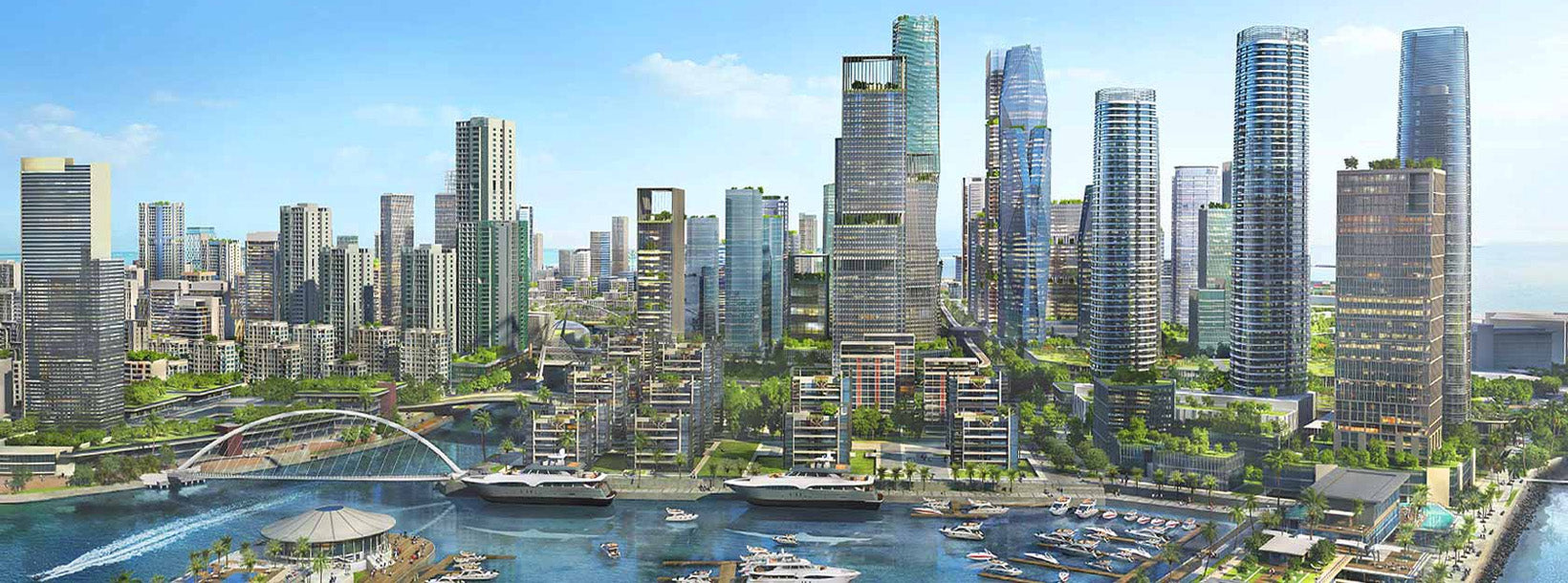
Rising from 269 hectares of reclaimed ocean off the western coast of Colombo, Port City Colombo — formally the Colombo International Financial City (CIFC) — is one of South Asia's most ambitious urban development projects. Positioned adjacent to the historic Colombo city waterfront, between the Colombo South Port and the Fort Lighthouse, it is designed to function as a purpose-built international financial and commercial district with its own governance framework, legal structure, and economic incentives.

What exactly is Port City Colombo?

Port City Colombo is a special economic zone (SEZ) established under the Colombo Port City Economic Commission Act, passed by Sri Lanka's Parliament in May 2021. It is not administered by the Colombo Municipal Council; instead, an independent commission governs its operations. The zone operates under a distinct legal framework covering commercial contracts and transactions, supported by a dedicated Special Financial Court as the court of first instance, with appeals available to the Supreme Court of Sri Lanka.

The project is also notable for its place within China's Belt and Road Initiative. The land reclamation was carried out by China Harbour Engineering Company, and the construction agreement signed in 2014 involved varying land arrangements — portions allocated to the Sri Lankan government, areas earmarked for long-term lease, and a smaller freehold component.

How did Port City Colombo come about?

The concept gained political momentum under former President Mahinda Rajapaksa, reportedly inspired by landfill works undertaken for the Colombo South Port. China Harbour Engineering Company subsequently submitted a fully developed proposal. Although construction was originally scheduled to begin in March 2011, various delays pushed the launch to 17 September 2014, when the project was formally inaugurated by President Rajapaksa and Chinese President Xi Jinping.

The project was suspended following the change of government in 2015, as concerns over sovereignty, environmental impact, and transparency came to the fore. It was later restructured and revived, with the land reclamation phase completed as of January 2018. The estimated total development cost has been cited at around USD 15 billion across the full build-out period.

What are the key features and zones within the development?

Port City Colombo is planned as a mixed-use urban district encompassing several distinct precincts:

  • Financial District: The core zone intended for international banks, fintech firms, insurance companies, and regional headquarters of multinational corporations.
  • Central Park Living: High-density residential towers designed for professionals working within the zone.
  • The Island: A premium mixed-use precinct combining retail, leisure, and hospitality uses along the waterfront.
  • Marina Square: A leisure-oriented district planned around a yacht marina, intended to attract tourism and upscale retail.
  • International Island: A lower-density zone earmarked for international schools, hospitals, and lifestyle amenities catering to expatriate residents.

The development also plans for its own arbitration centres, in line with the zone's aspiration to become a regional hub for dispute resolution and commercial law.

What tax and regulatory incentives apply inside the SEZ?

Under the Port City Economic Commission Act, businesses operating within the zone may qualify for significant tax relief. The legislation provides for potential exemptions from corporate tax, personal income tax, excise duties, and import levies for qualifying entities — for periods of up to 40 years in certain categories. The zone is designed to attract offshore financial services, fund management, and technology companies seeking a business-friendly environment within South Asia.

It is worth noting that the precise incentive package available to any given business depends on the nature of its licence, the activity category, and ongoing regulatory updates. Prospective investors should consult the Colombo Port City Economic Commission directly for current conditions.

What environmental and sovereignty concerns have been raised?

The project has faced sustained criticism from environmental groups, maritime sector professionals, and civil society organisations. Key concerns have included:

  • Potential disruption to coastal sediment flows and impact on adjacent beaches and fishing grounds.
  • Risks associated with granting freehold or long-term leasehold land rights in a strategically sensitive coastal zone.
  • Questions about the mandate of the Sri Lanka Ports Authority to implement a land reclamation project of this scale.
  • Transparency concerns over the original contractual arrangements and public consultation process.

Supporters of the project argue that it creates substantial employment, attracts foreign direct investment, and positions Sri Lanka to compete with financial centres such as Singapore and Dubai in the Indian Ocean region. The debate reflects broader national conversations about balancing economic ambition with sovereignty and environmental stewardship.

How does Port City Colombo connect to the wider city?

The site sits immediately west of Galle Face Green, one of Colombo's most popular public promenades. Road connections to the central business district and to the Colombo Lotus Tower — another landmark in the city's evolving skyline — are planned as part of the infrastructure build-out. Public transit integration and pedestrian links to the existing Colombo waterfront are also in development.

For visitors already exploring Colombo, the reclaimed land and its evolving skyline are visible from Galle Face Green and from the harbour approach. Guided city tours provide context for understanding the development within Colombo's broader urban transformation.

Is Port City Colombo open to visitors yet?

As of the time of writing, Port City Colombo remains largely a construction and early-phase development site, with select commercial and retail openings beginning to emerge. Some attractions, including curated experiences such as Ceylon tea tasting sessions hosted within the precinct, have already launched for visitors. The zone is expected to see progressively more public-facing openings as major infrastructure and commercial tenants come online.

Travellers visiting Colombo can view the development from the Galle Face promenade and incorporate it into a broader exploration of the capital — a city that continues to evolve rapidly while retaining its colonial-era heritage, multicultural character, and Indian Ocean setting.

Book this experience with Lakpura

Curated by our local team. Direct booking, instant confirmation.

Ask Lakpura® Agent