Sigiriya sits at the heart of Sri Lanka's Cultural Triangle, roughly 169 km northeast of Colombo. It is best known for its UNESCO World Heritage-listed rock fortress, but the wider area rewards slower exploration: ancient hydraulic engineering, classical frescoes, and a living village culture that predates tourism by centuries.
What makes Sigiriya worth visiting?
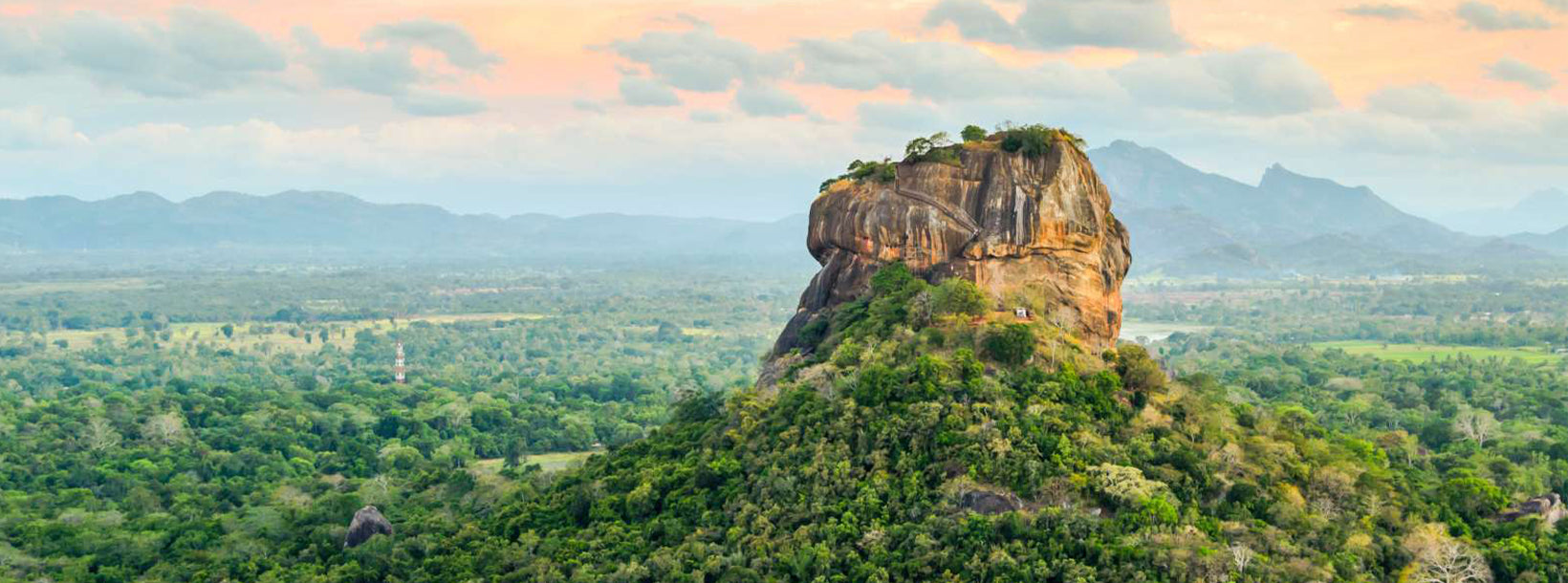
The centrepiece is the Lion Rock Citadel — a 200-metre-tall volcanic plug that King Kashyapa I transformed into a palace complex in the 5th century CE. It is one of the finest surviving examples of ancient South Asian urban planning, combining a fortified summit palace with elaborately landscaped water gardens, boulder gardens, and terraced gardens at its base. The symmetry of those gardens, fed by a sophisticated network of channels and pressurised fountains still partially functional today, remains remarkable by any era's standards.
Midway up the rock, sheltered under a dramatic overhang, a series of frescoes depicts figures known as the "Cloud Maidens" — painted in a style unique in South Asia and surviving against the odds for roughly 1,500 years. The Lion Terrace, just below the summit, is where a colossal lion's paw gateway once framed the final stairway; only the paws remain, but they are arresting in scale.
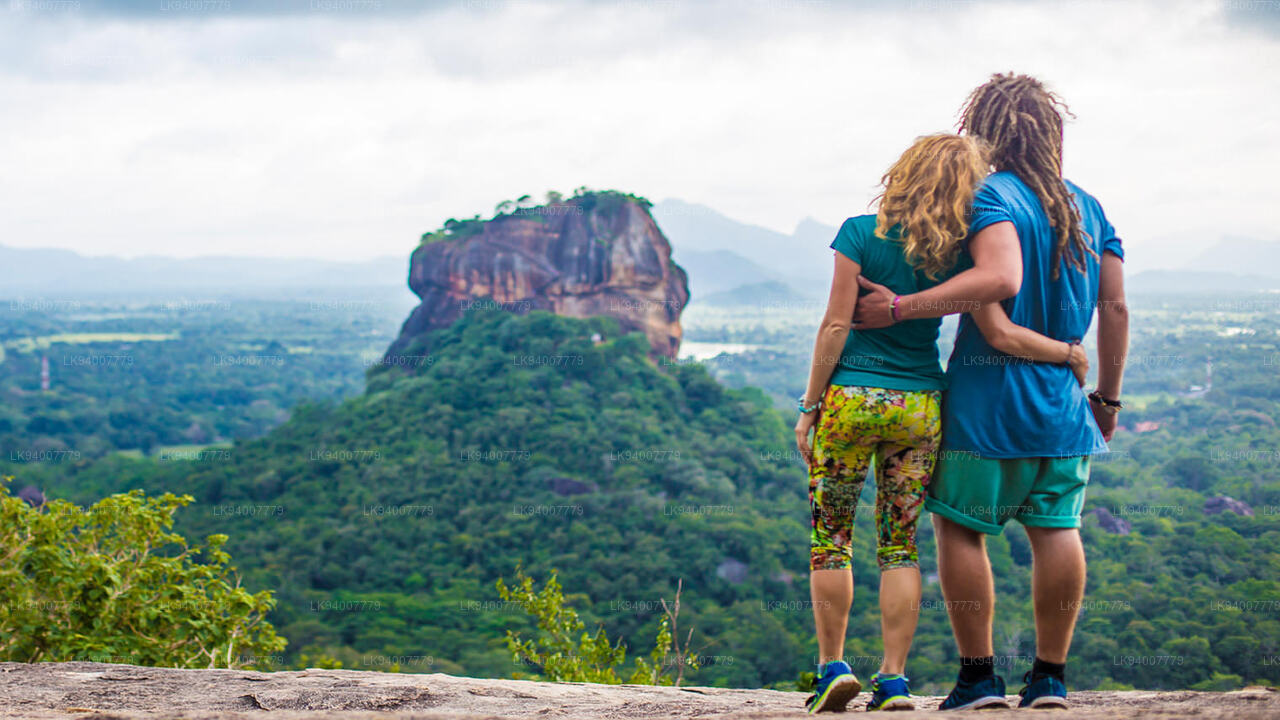
The summit itself holds the foundations of the royal palace and cisterns carved directly into the bedrock, with panoramic views across the surrounding jungle canopy toward Polonnaruwa and the hills beyond.
How do I get to Sigiriya from Colombo?
Sigiriya is not served by a railway line. The most practical approach from Colombo is by road: the drive via the A6 highway through Kurunegala and Dambulla takes around three to four hours depending on traffic. Private car hire with a knowledgeable driver is the most flexible option for most visitors, particularly if you intend to combine the site with nearby Dambulla Cave Temple or Polonnaruwa in the same day or two.
Intercity buses from Colombo run to Dambulla, from where local services continue to Sigiriya town. This is slower but significantly cheaper. Tuk-tuks are available locally for the final stretch.
When is the best time to visit Sigiriya?
The site is open year-round, but the climb is most comfortable in the early morning — both for the cooler temperature and to beat the midday crowds. The surrounding region receives its main rains during the northeast monsoon (roughly October to January), though brief showers are possible at any time. The driest and most reliably clear period for visiting is between January and April.
Visiting at dawn also offers the best light for photographing the frescoes and the water gardens, which reflect the rock particularly well in flat morning light.
What else is there to see around Sigiriya?
Thalkotuwa Wewa reservoir. Immediately south of the rock complex lies this ancient irrigation tank, constructed to capture and store monsoon runoff. It continues to serve the surrounding agricultural community today and makes for a peaceful walk in the late afternoon, when birds congregate along the water's edge.
Sigiriya handicraft village. Located at Kimbissa on the Sigiriya–Dambulla Road, this village-scale craft centre was established under government patronage to support traditional artisans. Purchases are made directly from the makers, and the range covers pottery, leather goods, silverware, brassware, and products made from coconut shell. Prices reflect honest local trade rather than resort-area markups.
Singhagiri Village Tour. For visitors who want to look beyond the rock, a Singhagiri Village Tour offers an organised walk through the working agricultural landscape surrounding the fortress — paddy fields, small-scale vegetable plots, and family homesteads where traditional methods of cultivation have changed little in generations.
Hot-air ballooning. The Sigiriya area is one of the few places in Sri Lanka where hot-air ballooning is reliably offered. A flight at sunrise gives an entirely different perspective on the rock and its relationship with the surrounding plain — a perspective that no ground-level photograph can replicate.
What is the history behind the Sigiriya rock fortress?
According to the ancient Pali chronicle Mahavamsa, King Kashyapa I built the palace atop the rock between approximately 477 and 495 CE, after seizing the throne from his father Dhatusena. Following Kashyapa's death in battle, the site was handed to Buddhist monks and eventually abandoned as a royal residence, though it continued to serve as a monastery for several centuries thereafter.
Serious archaeological study began in the late 19th century under H.C.P. Bell of the British colonial Archaeological Commission. UNESCO inscription followed in 1982, and excavation and conservation work has continued in collaboration with the Central Cultural Fund. The water gardens in particular have been the subject of detailed hydrological study, revealing a pressurised irrigation system that challenges easy assumptions about ancient engineering.
Is Sigiriya suitable for all fitness levels?
The climb to the summit involves approximately 1,200 steps, including steep iron staircases bolted to the rock face in several sections. Most reasonably fit adults can complete the ascent in around 45 minutes to an hour, though the exposed sections and height can be challenging for those with a fear of heights or limited mobility. The water gardens and boulder gardens at the base are fully accessible and worthwhile in their own right if the summit climb is not possible.
Visitors are advised to wear grip-soled shoes, carry water, and start the climb before 9 a.m. to avoid both heat and congestion on the narrow stairways.
What should I know before visiting Sigiriya?
- Entry is managed by the Central Cultural Fund; foreign visitor fees apply and can be confirmed on the Central Cultural Fund's official site. Tickets should ideally be arranged in advance during peak season.
- Photography of the frescoes is permitted without flash. A separate short climb leads to the fresco gallery, accessed via a spiral metal staircase.
- There is a small museum at the base of the rock with artefacts recovered from the site. It is worth 20–30 minutes before or after the climb.
- Dress modestly out of respect for the site's ongoing religious use by Buddhist communities.
- Monkeys are present throughout the complex and are accustomed to people — keep food concealed and bags zipped.