Lakpura
Lakpura®

Macrotyloma uniflorum

Macrotyloma uniflorum, commonly known as horse gram, is a leguminous plant widely recognised in South and Southeast Asian traditional medicine systems. In Sri Lanka it holds a documented place within the island's Ayurvedic pharmacopoeia, valued both as a dietary pulse and as a therapeutic herb used by traditional practitioners for centuries.

What is Macrotyloma uniflorum?

Macrotyloma uniflorum belongs to the family Fabaceae. The plant produces small, lens-shaped seeds that range in colour from reddish-brown to near black. It is cultivated across dry and intermediate climatic zones and is notably drought-tolerant, making it a practical crop in areas with irregular rainfall. The seeds are the primary plant part used in both culinary and medicinal preparations.

The plant is known by several regional names. In Sinhala it is referred to as kollu (කොල්ලු), a name that reflects its long familiarity in Sri Lankan kitchens and village medicine traditions. In Tamil-speaking communities it is called kollu or muthira.

What are the Ayurvedic properties of Macrotyloma uniflorum?

Within the classical Ayurvedic framework, Macrotyloma uniflorum is classified according to its rasa (taste), guna (qualities), virya (potency), and vipaka (post-digestive effect). It is generally regarded as having a katu (pungent) and kashaya (astringent) taste profile, a hot potency, and a light, dry quality. These characteristics inform the conditions for which it is traditionally prescribed.

Sri Lanka's indigenous Ayurvedic tradition — rooted in texts such as the Sarartha Sangrahaya — incorporates horse gram into formulations addressing a range of conditions. Practitioners have historically applied it in contexts involving urinary concerns, digestive complaints, and conditions associated with excess kapha and vata doshas. It is also associated with supporting metabolic function.

Related classical Ayurvedic preparations documented in the Sri Lankan tradition include formulations such as Yogaraja Guggulu, which similarly draws on plant-based ingredients with specific dosha-balancing properties.

How is horse gram used in traditional Sri Lankan medicine?

Kollu is prepared in several ways depending on the therapeutic intent. Decoctions made from the seeds are among the most common preparations, typically consumed warm. The seeds may also be ground into a paste for topical application in certain traditional treatments. Roasted seed preparations are used to support digestive function and are considered easier to assimilate than raw or sprouted forms.

In everyday Sri Lankan households, horse gram appears as a dietary staple — most notably as a thick, spiced gravy served with rice or rotis. This culinary use is not entirely separate from its medicinal value; traditional Sri Lankan food culture frequently overlaps with preventive health practices drawn from Ayurvedic principles.

  • Decoction (Kwatha): Seeds boiled in water and reduced; consumed for urinary and digestive concerns.
  • Seed powder (Churna): Dried, ground seeds taken with warm water or honey.
  • Roasted preparation: Lightly roasted seeds consumed to support digestion.
  • Topical paste: Ground seed paste applied externally in certain traditional protocols.

What nutritional value does Macrotyloma uniflorum have?

Beyond its medicinal applications, horse gram is nutritionally dense. It is a good source of plant protein, dietary fibre, iron, and calcium. Its relatively low glycaemic characteristics have made it a subject of interest in contemporary nutritional research, particularly in the context of metabolic health. This aligns with its traditional use in preparations intended to support healthy weight management and digestion.

The seed also contains polyphenols and flavonoids, which are compounds associated with antioxidant activity. Research published in peer-reviewed journals has begun to examine these properties, lending some scientific context to longstanding traditional claims — though clinical evidence for specific therapeutic applications remains an active area of investigation.

Where does horse gram fit within Sri Lanka's broader Ayurvedic plant tradition?

Sri Lanka maintains one of the most intact living Ayurvedic traditions in Asia, supported by a government ministry, licensed practitioners, and a formal pharmacopoeia. Macrotyloma uniflorum is catalogued as part of this official system, sitting alongside other regionally significant medicinal plants.

Other plants documented within this tradition include Acacia chundra, used in preparations for skin and joint conditions, and Pongamia pinnata, whose bark, leaves, and seeds each carry distinct therapeutic applications in classical texts. Together these plants illustrate the breadth and specificity of Sri Lanka's ethnobotanical knowledge base.

The cultivation of medicinal plants like Macrotyloma uniflorum is closely tied to Sri Lanka's dry zone agricultural heritage. Villages in the North Central and Northern provinces, where dry zone farming has persisted for millennia, maintain the growing and preparation knowledge passed down through generations of traditional physicians known as veda mahattaya.

Is there scientific research on Macrotyloma uniflorum?

Academic interest in horse gram has grown notably over the past two decades. Studies have examined its seed extracts for antimicrobial, antioxidant, and anti-inflammatory activities in laboratory settings. Some research has also explored its potential role in managing conditions such as kidney stones and lipid profiles, reflecting traditional therapeutic claims. However, most studies to date are preliminary — conducted in vitro or in animal models — and large-scale human clinical trials are limited.

For anyone interested in incorporating horse gram into a therapeutic regimen, consultation with a licensed Ayurvedic physician is advisable. Sri Lanka has qualified practitioners registered under the Ayurveda Act, and formal consultations through recognised institutions are available in major cities and at dedicated Ayurvedic hospitals.

How is Macrotyloma uniflorum identified in the field?

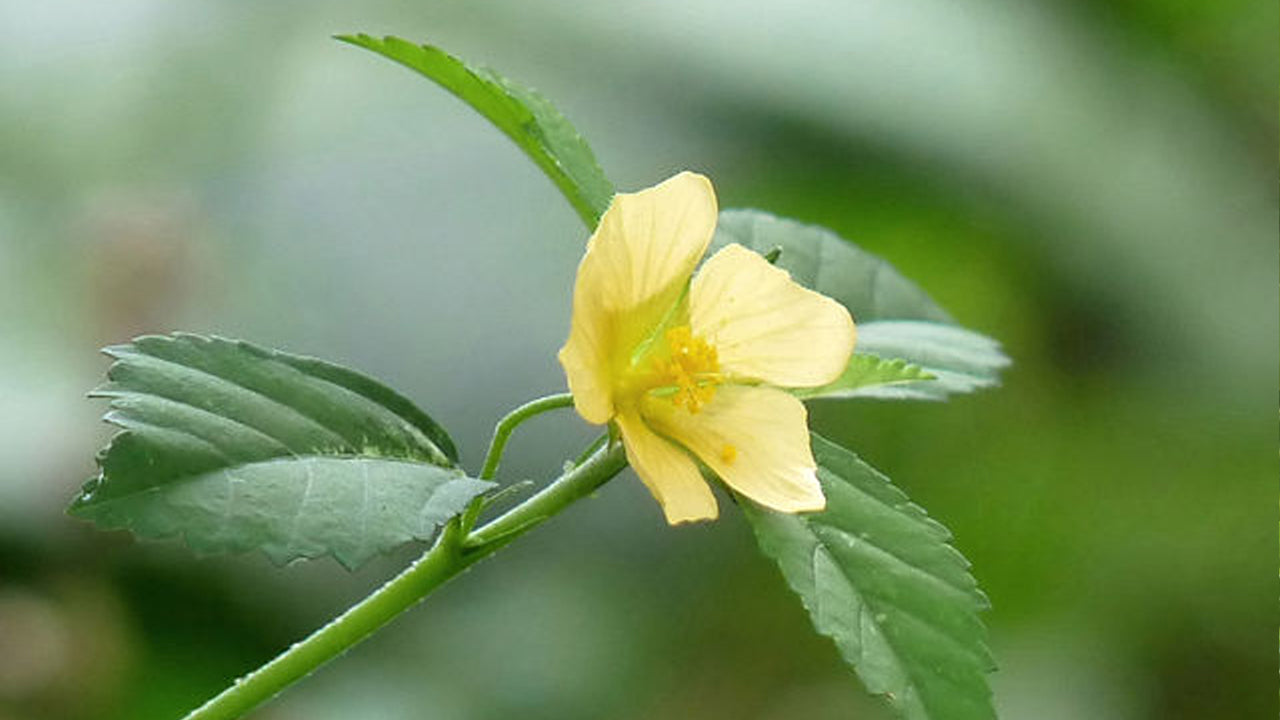
The plant is a trailing or erect annual herb, typically reaching 30 to 60 centimetres in height. Its leaves are trifoliate with ovate leaflets, and its flowers are small and pale yellow, appearing in clusters along the stem. The seed pods are flattened and contain between five and ten seeds. In Sri Lanka the plant is found growing both under cultivation and in disturbed, semi-wild habitats, particularly in drier parts of the island.

Ask Lakpura® Agent