Upasampada


Upasampada (på pali) betyder bokstavligen ”att närma sig den asketiska traditionen”. I mer vardaglig användning syftar det specifikt på ritualen och ceremonin för asketisk ordination, genom vilken en kandidat, om den anses lämplig, inträder i gemenskapen som upasampadan (ordinerad) och får tillstånd att leva ett asketiskt liv.
Enligt de buddhistiska klosterreglerna (Vinaya) måste en person vara 20 år gammal för att bli munk eller nunna. En person under 20 år kan inte genomgå upasampada (det vill säga bli munk (bhikkhu) eller nunna (bhikkhuni)), men kan bli novis (man: samanera, kvinna: samaneri). Efter ett år eller vid 20 års ålder kommer en novis att övervägas för upasampada.
Traditionellt utförs upasampada-ritualen inom ett tydligt avgränsat och invigt område som kallas sima (sima malaka) och måste bevittnas av ett visst antal munkar: ”tio eller till och med fem i mer avlägsna områden”.
Traditioner kring upasampada varierar mellan olika regioner. Inom theravada-traditionen genomgår monastiker vanligtvis högre ordination så snart de är berättigade. I Östasien är det däremot vanligare att monastiker skjuter upp eller helt undviker upasampada-ordination och förblir noviser (samanera) under större delen eller hela sitt klosterliv. Denna skillnad kan bero på den historiska bristen på tempel i Östasien som kunnat erbjuda högre ordination enligt Vinaya.


Köp buddhistiska böcker online
-
Thripitakaya Dheeganikaya Atuwaawa - 1
Ordinarie pris $2.78 USDOrdinarie pris$3.09 USDFörsäljningspris $2.78 USDRea -
Thripitakaya Dheeganikaya Atuwaawa - 2
Ordinarie pris $2.78 USDOrdinarie pris$3.09 USDFörsäljningspris $2.78 USDRea -
Thripitakaya Dheeganikaya Atuwaawa - 3
Ordinarie pris $2.78 USDOrdinarie pris$3.09 USDFörsäljningspris $2.78 USDRea -
Thripitakaya Majjima Nikaya Atuwaawa - 4
Ordinarie pris $2.78 USDOrdinarie pris$3.09 USDFörsäljningspris $2.78 USDRea -
Thripitakaya Majjima Nikaya Atuwaawa - 3
Ordinarie pris $2.78 USDOrdinarie pris$3.09 USDFörsäljningspris $2.78 USDRea -
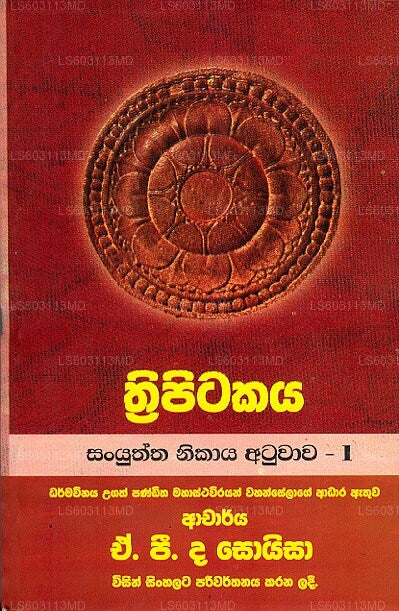
Thripitakaya Sanyuktha Nikaya Atuwaawa - 1
Ordinarie pris $5.37 USDOrdinarie pris$5.97 USDFörsäljningspris $5.37 USDRea -
Thripitakaya (Abidharma Pitakaya № 8)
Ordinarie pris $2.05 USDOrdinarie pris$2.28 USDFörsäljningspris $2.05 USDRea -
Thripitakaya(Sanyuktha Nikaya-02)
Ordinarie pris $3.87 USDOrdinarie pris$4.30 USDFörsäljningspris $3.87 USDRea