Homem de Balangoda

O Sri Lanka é considerado um ponto central no caminho da evolução humana. As Cavernas Batadombalena em Ratnapura contêm importantes evidências da transformação humana, incluindo um crânio pré-histórico. Pesquisas e expedições extensas revelaram novos detalhes sobre o modo de vida dos nossos ancestrais, marcando o início de uma nova era no estudo da evolução humana.
O Homem de Balangoda (බලංගොඩ මානවයා), Homo sapiens balangodensis, foi o primeiro humano conhecido a viver durante o período Mesolítico. Segundo registros, um esqueleto foi encontrado em um sítio arqueológico próximo a Balangoda. O nome foi dado em referência ao local onde os restos foram descobertos.
Com base em evidências encontradas em cavernas e outros locais, acredita-se que o Homem de Balangoda tenha surgido por volta de 38.000 anos atrás, com restos recentemente descobertos datando de 30.000 anos. Este é o primeiro registro de humanos anatomicamente modernos vivendo no Sul da Ásia naquela época. Junto ao esqueleto, foram encontrados artefatos culturais, incluindo micrólitos geométricos datados de 28.500 anos. Os registros mais antigos do uso de ferramentas de pedra também vêm deste sítio e de outros na África.
Homem de Balangoda
O Homem de Balangoda era alto e viveu há dezenas de milhares de anos. Este hominídeo arcaico tinha cerca de 174 cm de altura (mulheres cerca de 166 cm). Estudos e expedições revelaram mais informações sobre o estilo de vida de nossos ancestrais antigos.
De acordo com pesquisas, os primeiros humanos tinham nariz afundado, arcadas supraciliares proeminentes, crânio espesso, dentes grandes, pescoço curto e mandíbulas fortes. Restos de esqueletos encontrados em cavernas datam de mais de 16.000 anos. As análises morfométricas mostram notável compatibilidade biológica.
Além disso, há indícios de uma ligação natural com a população nativa Vedda. Descobertas significativas mostraram que o Homem de Balangoda, que vivia nas terras altas, posteriormente migrou para as planícies e passou de caçador a agricultor.
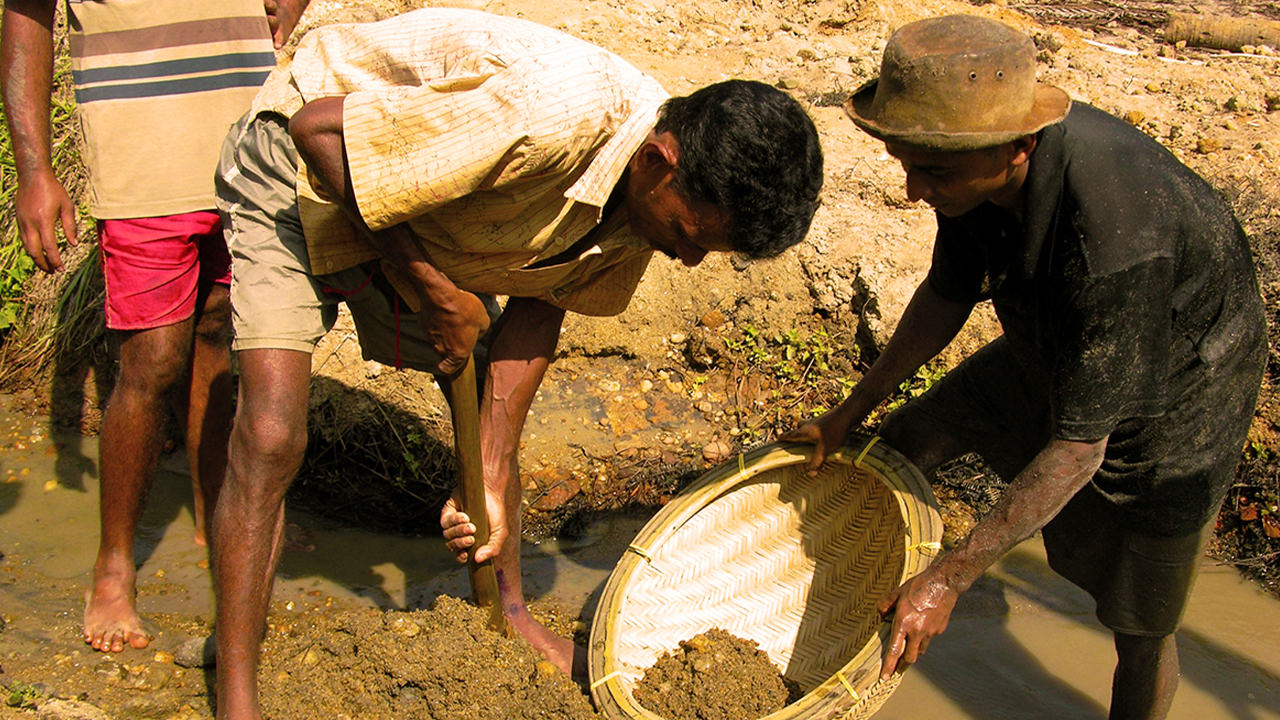
Em Bellanbandi Palassa também foram encontradas machadinhas meso-neolíticas feitas de ossos da perna de elefante. Foram descobertas também adagas ou ferramentas feitas de chifres de cervo, além de micrólitos. Em outros locais foram identificados o uso difundido de ocre, cães domesticados, possíveis sepultamentos e o uso frequente de fogo.
Outros achados culturais incluem ornamentos pessoais e restos de alimentos, como fragmentos de moluscos, ossos de peixes, contas feitas de vértebras de tubarão, pingentes de conchas, ferramentas polidas de osso, além de restos carbonizados de banana selvagem e fruta-pão.
A frequência com que conchas marinhas, dentes de tubarão e contas aparecem sugere que os habitantes das cavernas tinham contato direto com a costa, localizada a cerca de 40 km. Vestígios encontrados na caverna Beli Lena sugerem o transporte de sal do litoral para o interior.
Alta mobilidade, uso de recursos da floresta tropical e adaptação a mudanças climáticas ocorreram juntamente com a tradição microlítica. De acordo com pesquisadores, micrólitos geométricos encontrados em Horton Plains nas terras altas centrais do Sri Lanka indicam que a área foi habitada durante o Mesolítico.
Caçadores-coletores pré-históricos que viviam em abrigos rochosos nas planícies provavelmente visitavam Horton Plains para caçar e coletar alimentos, como cereais selvagens, como parte de seu ciclo anual. Horton Plains era usado como um acampamento temporário, e não como uma colônia permanente.
Muitos recursos de plantas de floresta tropical, incluindo fruta-pão e banana, foram usados durante o final do Pleistoceno e início do Holoceno. Em algumas regiões, houve uma transição gradual do modo de vida de caçadores-coletores para a agricultura. Práticas de corte e queima podem ter sido usadas para explorar áreas de pântano e floresta, ajudando a expansão de campos de arroz.
História do Homem de Balangoda
O comportamento humano moderno e a expansão dos primeiros humanos pelo Velho Mundo podem ser rastreados a partir de evidências arqueológicas do Pleistoceno tardio no Sul da Ásia. Antes que o Estreito de Palk e a Ponte de Adão fossem submersos há cerca de 7.000 anos, populações humanas e animais viajavam entre o subcontinente indiano e Sri Lanka.
Paleontólogos descobriram restos de fauna pré-histórica no distrito de Hambantota com idade estimada em 125.000 anos, próximos a Bundala. Também foram encontradas ferramentas de quartzo e sílex, possivelmente do Paleolítico Médio. Alguns cientistas acreditam que humanos pré-históricos viveram no Sri Lanka há 300.000–500.000 anos.
Há fortes evidências de assentamentos humanos em toda a Ásia Meridional. Na Índia, um crânio datado de 200.000 anos foi descoberto no Vale de Narmada — conhecido como “Homem de Narmada”. Embora não fosse um Homo sapiens moderno, foi o primeiro grande registro de um hominídeo na região.
Desde sua descoberta, houve grande debate sobre sua classificação taxonômica. Em 1955, Deraniyagala propôs o nome “Homo sapiens balangodensis”.
Evidências do Homem de Balangoda
Os registros fósseis de aproximadamente 40.000 anos são muito mais completos do que os de períodos anteriores. As primeiras evidências de humanos anatomicamente modernos no Sul da Ásia datam deste período.
A Caverna Fa Hien, localizada em Kalutara, contém alguns dos fósseis humanos mais antigos. A caverna foi utilizada por monges chineses que viajavam ao Sri Lanka para obter escrituras budistas. Amostras de carvão datam a ocupação da caverna entre 34.000 e 5.400 anos atrás.
A caverna Batadomba Lena, localizada na região do Sri Pada (Adam’s Peak), revelou inúmeros artefatos antigos.
Durante as primeiras escavações na década de 1930, foram encontrados restos de um adolescente e de adultos. Em 1981, novas escavações encontraram mais ossos e micrólitos, datados em cerca de 28.500 anos.
Micrólitos encontrados em cavernas em Kitulgala, Beli Lena e em duas áreas costeiras em Bundala estão entre os mais antigos do mundo, semelhantes aos encontrados na África. Na Índia, a tecnologia microlítica surge por volta de 24.500 anos atrás.
Achados nas regiões de Sabaragamuwa e Uva mostram que a tecnologia microlítica persistiu até o século VI a.C., quando foi gradualmente substituída por outras ferramentas.
A Caverna Beli Lena e Bellanbandi Palassa também revelaram fragmentos de ossos humanos. As amostras datam de 12.000 e 6.500 anos, sugerindo ocupação contínua da ilha.
Ligações com o povo Vedda
Registros históricos descrevem os Vedda, povo indígena do Sri Lanka, como caçadores-coletores que viviam em cavernas naturais. Eles trocavam mel e caça com aldeias vizinhas por pontas de flechas e lanças de metal. De acordo com Deraniyagala, o Homem de Balangoda é o ancestral direto dos Vedda e de alguns grupos de cingaleses.
Alguns grupos Vedda posteriormente se integraram a aldeias ou participaram de operações militares durante o reino de Kandy.
Os Vedda possuem estatura mais baixa, crânios mais robustos, variações dentárias e maior diversidade craniana do que outros grupos da região. Estudos genéticos mostram que o DNA mitocondrial Vedda é mais próximo ao dos cingaleses e tâmeis do Sri Lanka do que ao dos tâmeis indianos.
Acredita-se que algumas características genéticas do Homem de Balangoda ainda existam entre a população atual do Sri Lanka.
O Homem de Balangoda pode ter vivido até cerca de 500 a.C., especialmente em florestas tropicais. Conforme colonizadores da Índia chegaram, a população foi diminuindo.