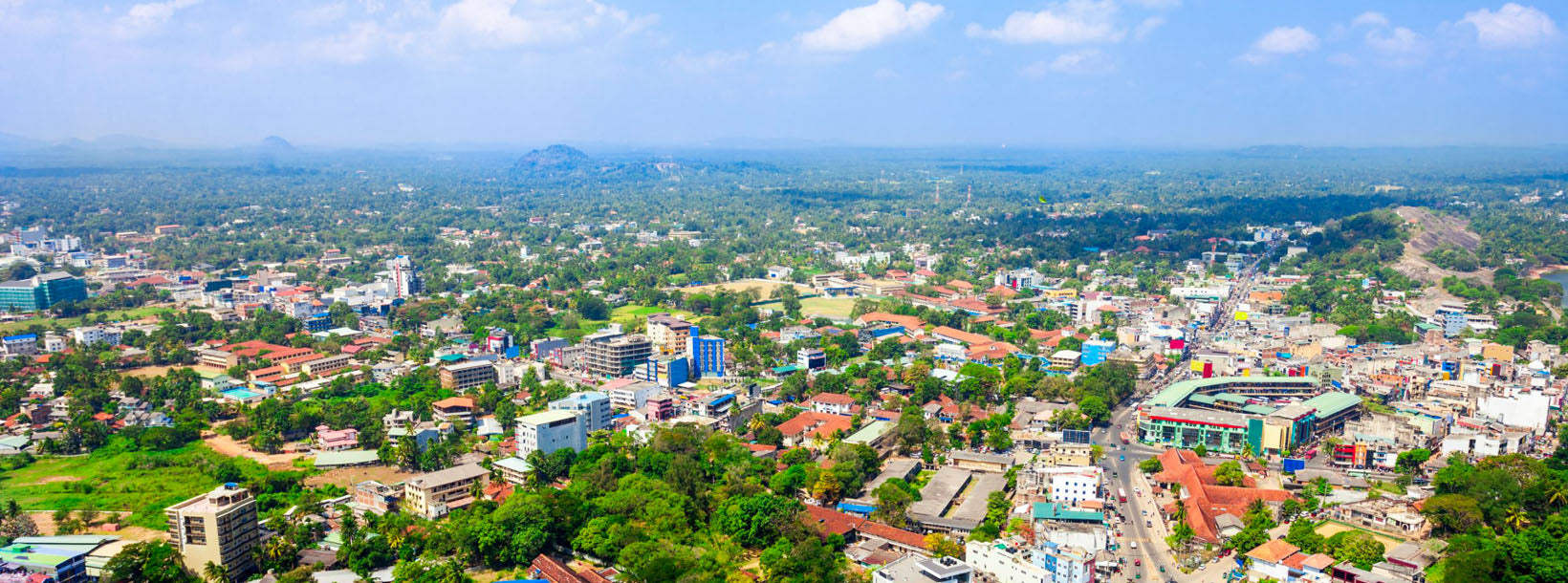
Kurunegala City
Kurunegala: Bustling city in Sri Lanka's North Western Province, featuring historic sites, vibrant markets, and a blend of modern and traditional culture.
Rambodagalla Temple
Rambodagalla Temple, also known as Rambadagalla Monaragala Viharaya, is a sacred Buddhist site located in a serene rural setting in the Kurunegala District of Sri Lanka. Surrounded by gentle hills and farmland, this temple is renowned for housing one of the tallest granite Buddha statues in the country. Built as a symbol of peace and resilience, the temple attracts pilgrims and culture seekers who wish to explore Sri Lanka's deep Buddhist heritage. Its tranquil ambiance makes it a spiritually uplifting destination.
The massive seated Buddha statue, carved in the Dhyana Mudra pose, stands at approximately 67 feet and is a masterpiece by Indian sculptor Muthiah Sthapathi. The temple's history is linked to ancient monastic caves dating back to early centuries and reflects the lasting influence of Buddhism in the region. The site conveys a powerful message of unity and devotion rooted in Sri Lankan culture.
Visitors to Rambodagalla Temple can walk through peaceful surroundings, observe traditional religious rituals, and admire the craftsmanship of the colossal Buddha figure. The quiet environment is ideal for meditation and reflection. The nearby ancient hilltop temple offers panoramic views of the surrounding countryside, enhancing the overall experience. Many travelers find this location spiritually enriching and culturally insightful.
The temple can be visited throughout the year and is accessible from major nearby cities such as Kurunegala and Kandy within the Central Province. The journey to Rambodagalla takes visitors through rural landscapes with villages, paddy fields, and coconut plantations that reflect traditional Sri Lankan life. Early morning and late afternoon visits provide ideal weather and peaceful conditions. Travelers often combine this visit with cultural tours to Dambulla Cave Temple or Sigiriya Rock Fortress. With its impressive statue, quiet surroundings, and rich spiritual atmosphere, Rambodagalla Temple offers a memorable blend of heritage, Buddhism, and natural serenity in the heart of Sri Lanka.
About Kurunegala District
Kurunegala is the capital of the Wayamba Province in Sri Lanka and the Kurunegala District.Kurunegala was a royal capital for only 50 years, from the end of the 13th century to the start of the next, though even before this it was strategically placed in the middle of other majestic strongholds such as Yapahuwa to the north, Dambadeniya to the south and Panduwasnuwara in the east. Ethagala a rock reaching 316 meters, towers over the town, which is located at an altitude of 116 meters above sea level. The shape of Ethagala resembles an Elephant. A transport hub, it has a railway station, and several main roads linking important parts of the country.Kurunegala is situated about 94 km from Colombo, and 42 km from Kandy.
Most of Kurunegala's residents belong to the Sinhalese majority. Other ethnic minorities include the Sri Lankan Moors, Sri Lankan Tamils, Burghers and Malays. Residents from ethnic minorities live in all parts of the city, however, sizeable communities of Moors and Tamils also live in the areas of Teliyagonna and Wilgoda.
About North Western Province
North Western Province is a province of Sri Lanka. The districts of Kurunegala and Puttalam formulate North Western or Wayamba. Its capital is Kurunegala, which has a population of 28,571. The province is known mainly for its numerous coconut plantations. Other main towns in this province are Chilaw (24,712) and Puttalam (45,661), which are both small fishing towns. The majority of the population of Wayamba province is of Sinhalese ethnicity. There is also a substantial Sri Lankan Moor minority around Puttalam and Sri Lankan Tamils in Udappu and Munneswaram. Fishing, prawn farming and rubber tree plantations are other prominent industries of the region. The province has an area of 7,888 km² and a population of 2,184,136 (2005 calculation).
Wayamba is the third largest paddy producing area in Sri Lanka .Wayamba has a highly developed agricultural economy, growing a variety of fruits and vegetables, flowering plants, spices, oil-seeds in addition to the traditional plantation crops such as Coconut, Rubber and Rice. Rich soils and varied climate give Wayamba a potential for growing of virtually any crop.
In Wayamba or North western province, home for ancient Buddhist rock temples, magnificent citadels Panduwasnuwara, Dambadeniya, Yapahuwa and Kurunegala. Impressive remains of those citadels, palaces, Buddhist temples and monasteries provide exciting sight seeing to the visitors.