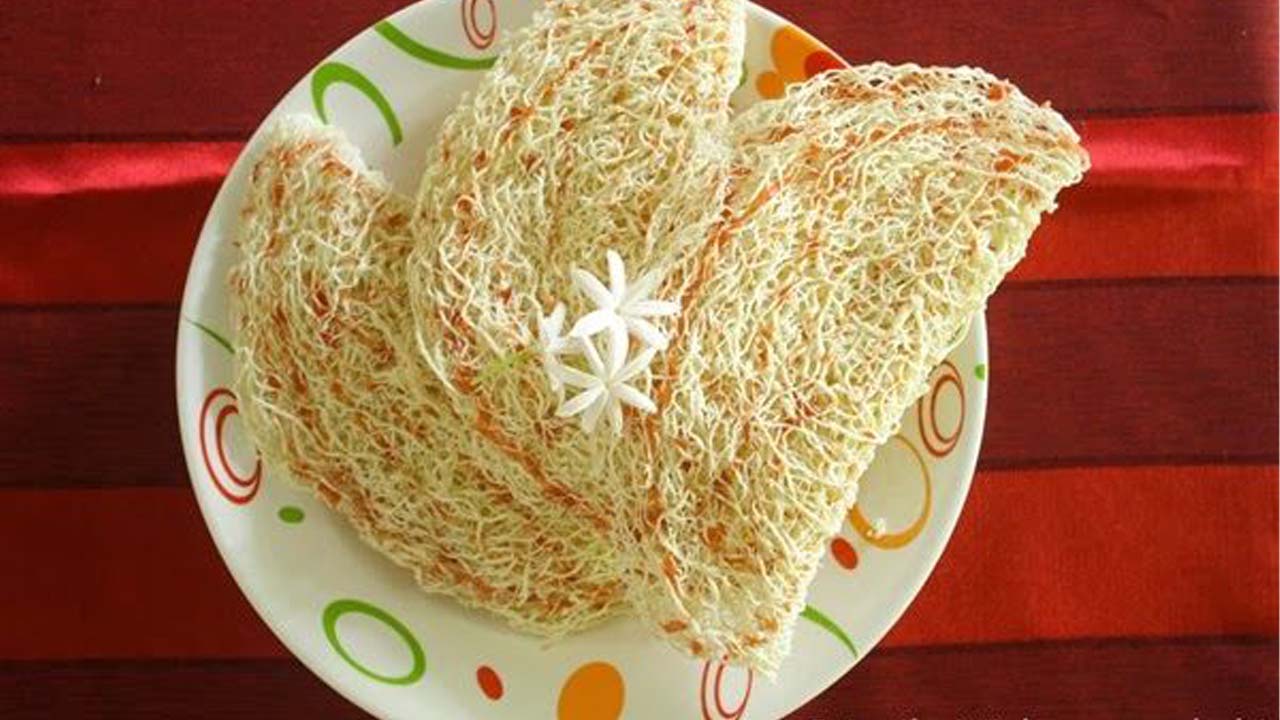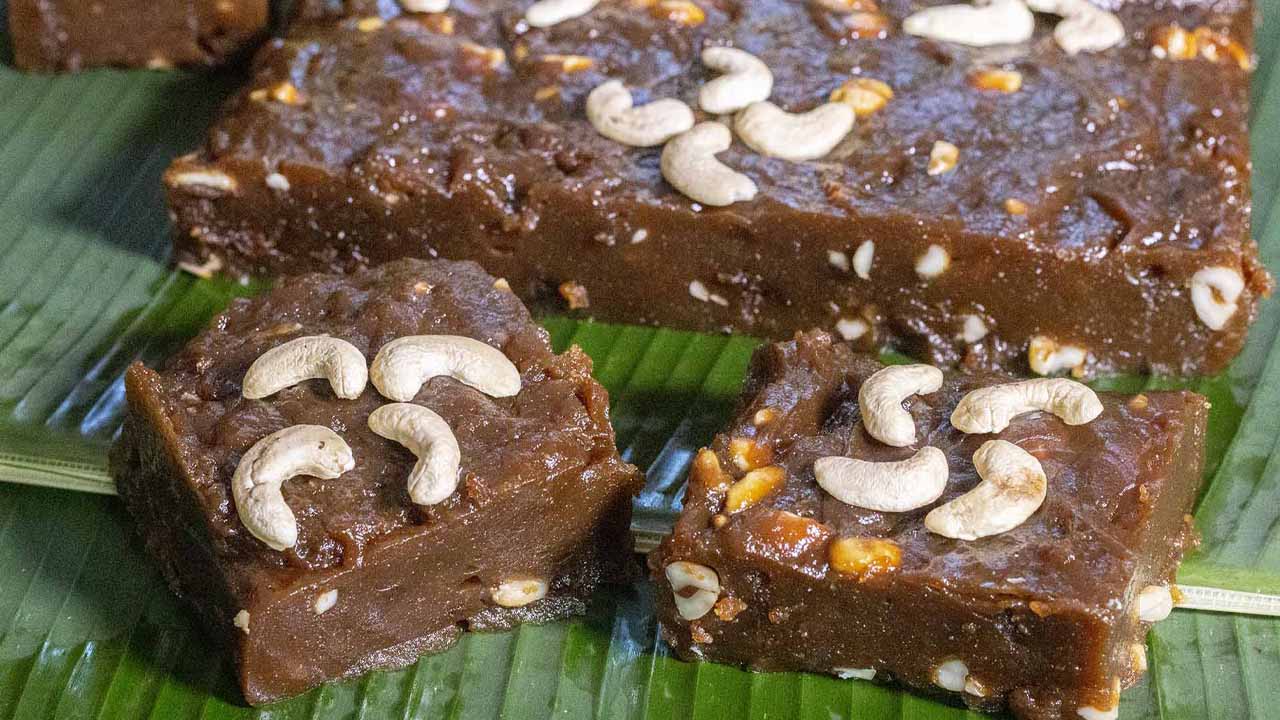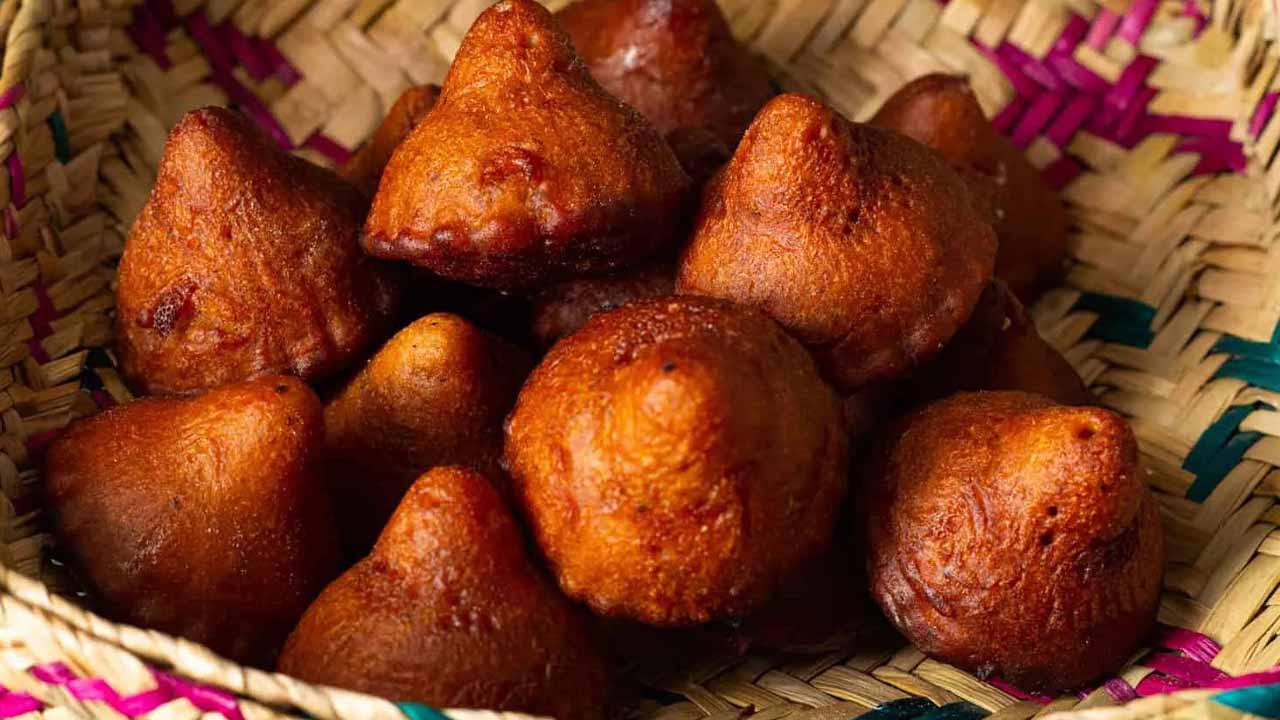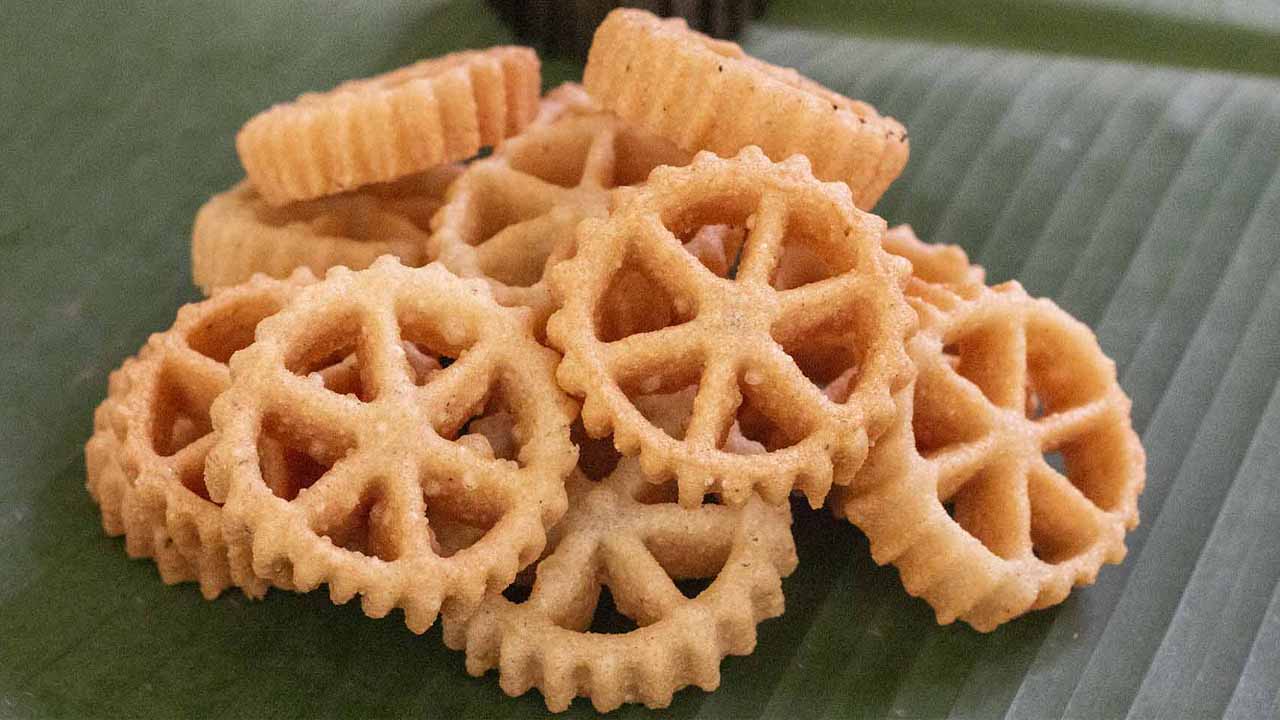
Mung Kevum (මුං කැවුම්) is one of Sri Lanka's most distinctive traditional sweetmeats — a golden, diamond-shaped treat with a tender green gram filling wrapped in a turmeric-tinted rice flour batter, fried in coconut oil until crisp. Made for the Sinhala and Tamil New Year, as well as weddings, religious observances, and other auspicious occasions, it has been a fixture of Sri Lankan festive tables for generations. Unlike some festive foods that require specialist skill, Mung Kevum is genuinely achievable at home with a little patience and the right technique.
What is Mung Kevum made from?
The sweetmeat has two distinct components: a spiced green gram (mung) filling and a smooth rice flour batter that coats each piece before frying. The filling draws its sweetness from coconut treacle — the dark, rich syrup tapped from the kitul palm — while the batter gets its characteristic yellow colour from turmeric. Together they produce a flavour that is mildly sweet, faintly earthy, and gently fragrant.
Coconut oil is the traditional frying medium, and its flavour is part of what makes Mung Kevum taste the way it does. Using a refined vegetable oil will produce a similar texture but a noticeably different finish.
Ingredients
- 150 g green gram (mung), whole
- 500 g raw rice flour (white)
- 1 egg
- 2½ cups thick coconut milk
- ½ tsp turmeric powder
- ¼ tsp cardamom powder (optional)
- 1¼ cups coconut treacle
- ½ cup water
- Salt to taste
- Coconut oil, for deep frying
How do you make Mung Kevum step by step?
The process divides naturally into three stages: preparing the green gram filling, mixing the batter, and shaping and frying. Working through them in order keeps things manageable, even if it is your first attempt.
Stage 1 — Prepare the green gram filling
- Dry-roast the green gram in a heavy pan over medium heat, stirring constantly, until it turns light golden and smells nutty. Allow it to cool completely.
- Grind the roasted gram to a fine powder, then pass it through a fine-mesh sieve to remove any coarse husks. Set aside a small portion of the flour for dusting the board later.
- Combine the coconut treacle, water, cardamom (if using), and a pinch of salt in a saucepan. Heat over medium flame, stirring occasionally, until the mixture thickens to a dense, sticky consistency — it should hold a shape briefly when dropped from a spoon.
- Remove from heat immediately. Add the sieved green gram flour and stir vigorously with a wooden spoon until fully incorporated. The mixture should come together into a pliable, non-sticky mass. Shape it into a smooth ball and leave it to rest while you prepare the batter.
Stage 2 — Mix the batter
- In a bowl, combine the rice flour, turmeric, a pinch of salt, the egg, and the thick coconut milk. Whisk until you have a smooth, lump-free batter with a consistency similar to thick pancake batter — it should coat the back of a spoon evenly without running off immediately.
- Taste and adjust the salt. Allow the batter to rest for ten minutes so the rice flour fully hydrates.
Stage 3 — Shape and fry
- Dust a clean board or work surface with the reserved green gram flour. Place the rested filling on the board and roll it out with a rolling pin to roughly 5–6 mm (about ¼ inch) thickness.
- Cut the sheet into diamond shapes using a sharp knife or a diamond cutter. Aim for pieces roughly 4–5 cm across.
- Heat coconut oil in a deep pan to around 170–180 °C — a small drop of batter should sizzle and rise to the surface within a second or two.
- Dip each diamond piece into the rice flour batter, ensuring full coverage, then lower it gently into the hot oil. Fry in small batches to avoid crowding the pan, which lowers the oil temperature and leads to greasy results.
- Fry until the coating is firm and golden brown on all sides, turning once. Drain on a rack or absorbent paper. Mung Kevum firms up further as it cools.
What are common mistakes when making Mung Kevum?
The filling mixture can turn too soft if the treacle is not cooked to a sufficient thickness before the flour is added. If the ball feels sticky or refuses to hold its shape during rolling, return the mixture to the pan briefly over very low heat to drive off excess moisture.
A batter that is too thin will slide off the filling and produce a pale, papery coating rather than a substantial crust. If the batter seems runny, whisk in a tablespoon or two of additional rice flour and rest for a further five minutes before frying.
When is Mung Kevum traditionally served?
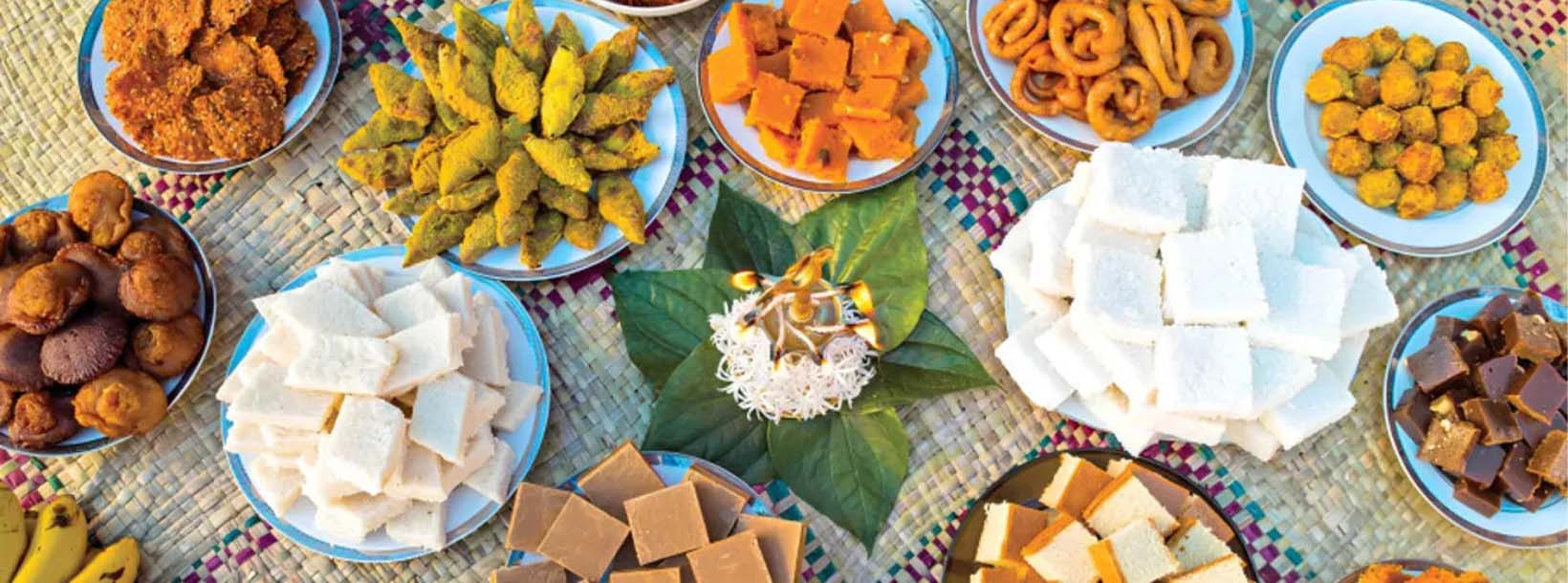
Mung Kevum is most closely associated with the Sinhala and Tamil New Year (Avurudu), typically celebrated in mid-April. Along with Kokis, Aasmi, Konda Kevum, and Pani Walalu, it forms part of the ceremonial tray of sweetmeats prepared during the auspicious time declared for New Year cooking. Beyond the New Year, it appears at pirith ceremonies, weddings, and other occasions where traditional foods mark a significant moment.
In most households, Mung Kevum is made in large batches — the recipe scales easily — and stored in airtight tins where it keeps well for several days at room temperature.
Where can you find Mung Kevum in Sri Lanka?
During the New Year season, Mung Kevum is available at local bakeries and confectionery shops across the island. Outside that window, specialty sweetmeat shops in Colombo and in larger provincial towns typically stock it year-round alongside other traditional Sri Lankan confections. For travellers who want to try it without making it from scratch, it is worth asking at guesthouses and small local restaurants — particularly in the Kandy region and the south — where home-style cooking is still the norm.
Lakpura also offers a range of traditional Sri Lankan sweetmeats and mung-based products that can be ordered for delivery, making it straightforward to bring the flavours of Sri Lankan New Year to your table regardless of the season.
Tips for the best results
- Use freshly pressed thick coconut milk rather than a thin canned variety — the richness matters for both the filling and the batter.
- Roast the green gram until genuinely golden, not just warm. Under-roasted gram produces a raw, grassy flavour in the finished sweetmeat.
- Allow the filling to cool fully before rolling. Warm filling tears and sticks to the board even with dusting flour.
- Maintain a steady oil temperature throughout frying. If the oil cools too much, the batter absorbs excess oil; if it overheats, the coating browns before the filling has time to warm through.
- Cardamom is listed as optional in most recipes, but a small amount genuinely lifts the overall flavour — start with the ¼ tsp suggested and adjust to taste.