Bibikkan


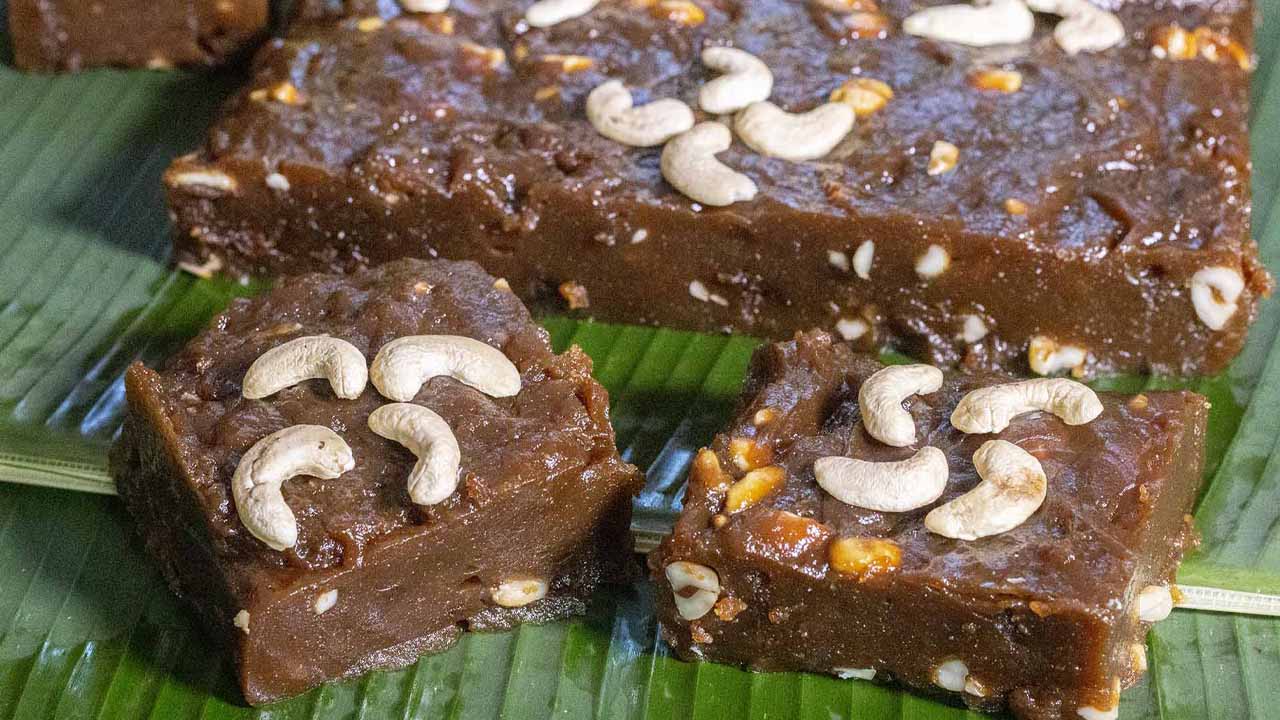
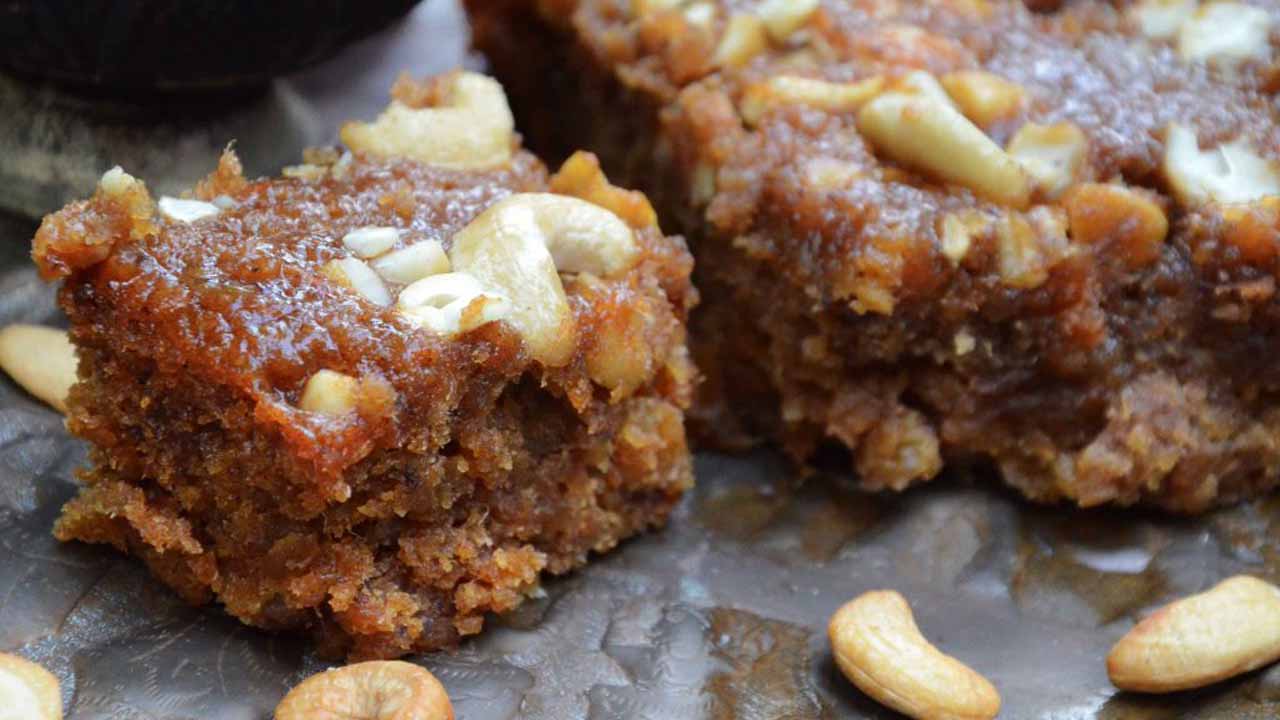
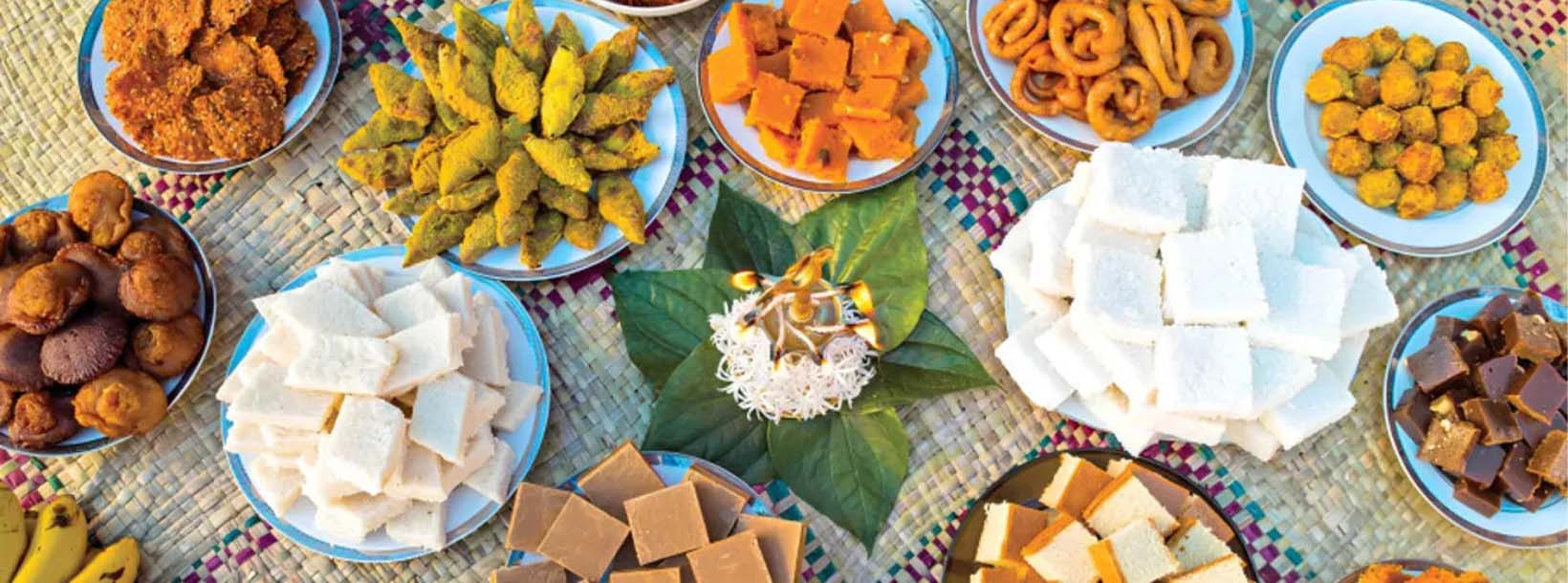
Bibikkan (බිබික්කං; පොල් කේක්), also known as the Sri Lankan coconut cake, is a rich, dark traditional sweet that has adorned Avrudu tables in the Southern coast for many many years. Nobody knows where the bibikkan came from, but it is presumed that its birth runs back to the era when the Portuguese captured the sunny coasts of the island. Sticky, moist and chewy, this can easily be called the Queen of Sri Lankan cakes with its decadent coconutty goodness soaked in dark, thick kithul treacle, laced with the sensual warmth of exotic spices grown in this exquisite island of tenacious spices and precious gemstones. This cake embodies everything that is Sri Lankan sweet and balmy yet with a bold and feisty spirit that an adventurer at heart would kill for. Sugar and Spice and everything Nice indeed.
The cake is made from freshly grated coconut, dark, thick Kithul treacle, roasted semolina, raisins, cashews and exotic spices like cinnamon, cardamom, and nutmeg, giving it a caramelly, chewy texture and a rich flavor profile. The sweetness of the Kithul treacle combined with the spices and creamy cashews creates a heavenly bite. Plumped-up raisins add a sweet-tart burst while melon preserve provides a delicate balance to the entire dish. The roasted semolina adds a unique grainy texture, and the pinch of salt amplifies all the flavors, bringing them together for a harmonious taste experience. Perfect for festive occasions or a special treat, Bibikkan is indeed a celebration of Sri Lanka’s rich culinary traditions.