Lakpura
Lakpura®

Danigala Circular Rock

Rising from the dry-zone scrubland near Aralaganwila in the Polonnaruwa district, Danigala Circular Rock is one of Sri Lanka's more unusual geological and archaeological sites. Viewed from the air, the rock presents a near-perfect semi-circular outline that sits oddly against the flat landscape around it — an anomaly that has given rise to decades of local legend and, more recently, enthusiastic folklore about extraterrestrial visitors. Whether or not you subscribe to the mythology, the site rewards curious travellers with ancient caves, early Buddhist inscriptions, and a relatively uncrowded hike through genuine wilderness.

Why is Danigala called the Alien Mountain?

The rock is widely known by the nickname "Alien Mountain" — and also as "Kandegama Rock" and the "Star Gate of King Ravana" — because of several features that locals find difficult to explain through conventional geology or history. The most discussed of these is the circular track that runs along the summit plateau; it does not appear to be the product of human quarrying or natural erosion in any obvious way. The surrounding vegetation also follows an unusual pattern that differs markedly from the dry-zone forest on the slopes below.

In Sri Lankan mythology, Danigala is associated with King Ravana — the legendary ruler said to have commanded an aerial craft called the Dandu Monara. Believers point to the formation as one of the landing sites for that aircraft. While archaeologists have not endorsed these claims, the legends draw a steady stream of curious visitors alongside the more archaeologically minded.

What ancient remains can you find at Danigala?

Mythology aside, Danigala has genuine historical significance. Around 70 caves have been identified in and around the rock, a number of which date to as early as the 2nd century BCE — placing them firmly in the early Anuradhapura period of Sri Lankan history. Many of these caves bear brahmi inscriptions carved into a drip ledge above the cave mouth, a style consistent with early monastic rock shelters found across the dry zone.

One inscription at the site mentions King Saddatissa and his son, while others record the names of lay donors who gifted the caves to the monastic community — a common practice of the period. A cave temple within the complex shelters a large reclining Buddha image fashioned from brick and stucco, measuring around 38.9 feet in length. The figure has been compared in style to the reclining Buddha at Pidurangala. Sadly, the image has been damaged by treasure hunters over the years, though it remains an evocative presence within the cave.

The surrounding forest and rock faces also contain a small active temple, and the area continues to be visited by local worshippers as well as pilgrims.

What wildlife might you encounter near Danigala?

The terrain around Danigala sits within the broader dry-zone corridor that connects several protected areas in the North Central Province. Wild elephants move through the area regularly — particularly in the early morning and evening — so hikers should remain alert and stay with their guide at all times. Smaller wildlife including monitor lizards, endemic bird species, and various dry-zone mammals are commonly spotted on the approach trail. The landscape is classic Sri Lankan dry-zone scrub: thorny acacias, tall grasses, and occasional water holes that attract animals during the dry months.

How do you get to Danigala Circular Rock?

The most straightforward route from Polonnaruwa is to travel along the Maradankadawala–Habarana–Thirukkondaiadimadu Highway and then turn onto the Manampitiya–Aralaganwila–Maduru Oya Road, continuing to Aralaganwila town. The site is also accessible from Mahiyanganaya on the eastern side. Road conditions in this area can be variable, especially during the wet season, so a four-wheel-drive vehicle or a knowledgeable driver is a practical advantage.

There is no public bus that drops visitors at the trailhead, so most travellers arrive by private vehicle or as part of an organised tour. From Aralaganwila, a guide from the local area is strongly recommended — both for navigating the rock and for elephant safety on the approach.

What is the Danigala hike like?

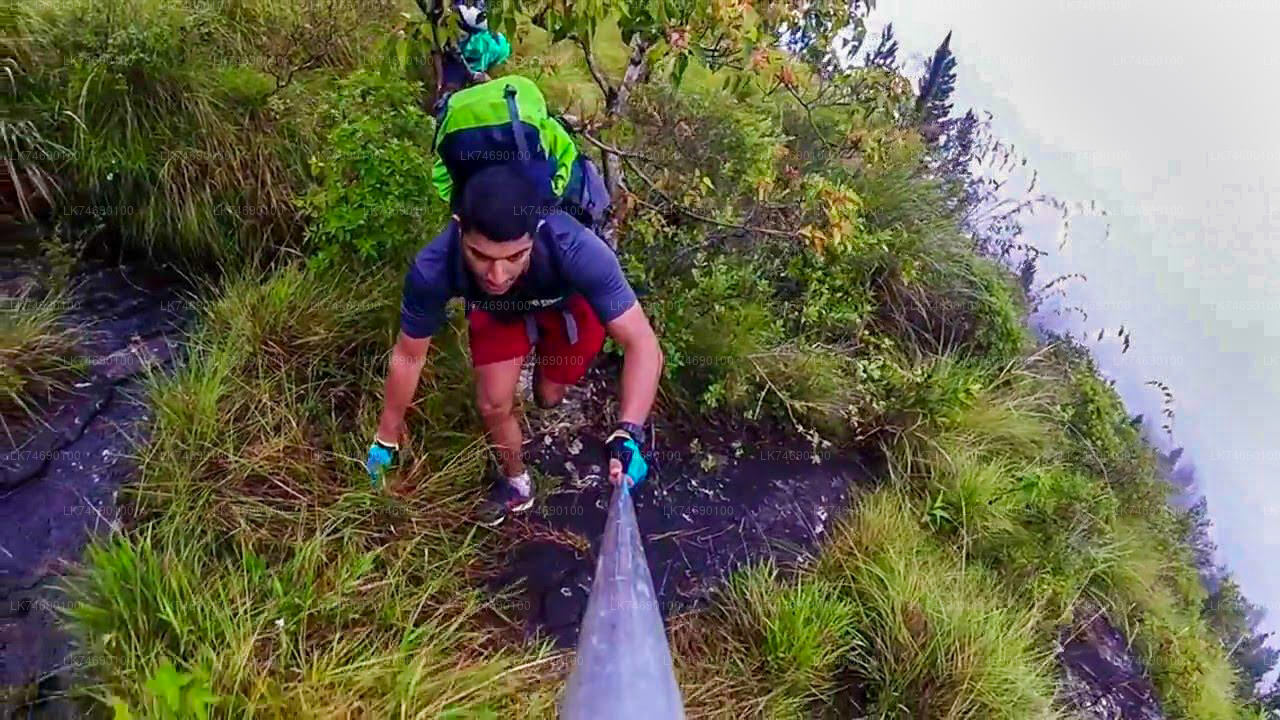
The hike to the summit of Danigala is moderately challenging. The initial section passes through open scrubland before the trail becomes steeper as it ascends the rock face itself. Sturdy footwear is essential; the bare rock surface can be slippery, particularly if there has been recent rain. Most fit walkers reach the summit in roughly one to two hours from the trailhead, depending on pace and the number of cave stops along the way.

The view from the top is the payoff: an unobstructed panorama across the Mahaweli basin and surrounding lowland forest, with the distant shimmer of Maduru Oya Reservoir visible on clear days. Sunrise and early morning are generally preferred to avoid both the heat of the day and the midday glare on the pale rock surface.

When is the best time to visit Danigala?

The dry season months — broadly from May through September and again from January through March — offer the most reliable conditions for hiking. The trail becomes very hot by mid-morning during the dry season, so an early start (before 7 a.m.) is advisable. The inter-monsoon and wet-season months bring rain that can make the rock surface treacherous, though wildlife activity around water sources tends to increase. Avoid visiting during or immediately after heavy rain unless you have local guidance on trail conditions.

Practical information for visitors

  • Location: Near Aralaganwila, Polonnaruwa District, North Central Province
  • Nearest town: Aralaganwila (approximately 5 km)
  • Access from Polonnaruwa: Roughly 40–50 km via the Manampitiya–Aralaganwila Road
  • Access from Mahiyanganaya: Approximately 20–25 km
  • Best time to hike: Early morning, dry season (May–September, January–March)
  • Difficulty: Moderate — steep rock sections, wild elephant presence
  • Guide: Strongly recommended; available locally and through organised tours
  • What to bring: Sturdy closed-toe shoes, at least 1.5 litres of water per person, sun protection, insect repellent
  • Entry formalities: No formal ticket booth was in place at time of writing; confirm current arrangements locally before visiting

Book this experience with Lakpura

Curated by our local team. Direct booking, instant confirmation.

Ask Lakpura® Agent