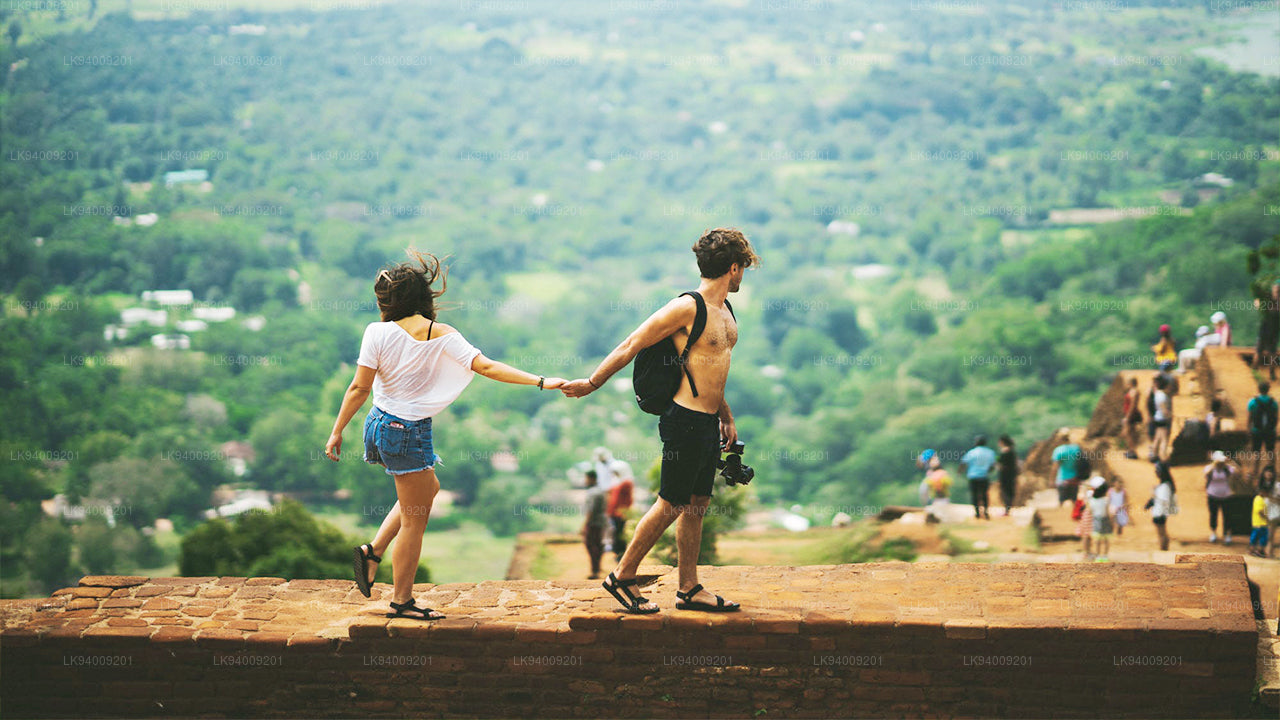
Mahiyanganaya City


Mahiyanganaya is a town situated close to the Mahaweli River in Badulla District, Uva Province of Sri Lanka. It is said that Gautama Buddha visited Mahiyanganaya on the Duruthu full moon poya day in order to settle a dispute that arose between Yakkas and Nagas (two tribes which then inhabited the area), and this was his first ever visit to Sri Lanka. Then the Buddha preached Dhamma to Sumana Saman, a leader in this area, to whom the Buddha gave a handful of his hair relic so that people could worship. After that, Sumana Saman (now the god Sumana Saman) built a golden chethiya in which the sacred hair relic was deposited. Later on, about seven chethiyas were built over the original golden chethiya from time to time, the last one being built by King Dutugemunu. As such, this historic town is a very sacred place for Buddhists.
Mahaweli River through Mahiyangana
Sri Lanka's longest river, Mahaweli, flows through Mahiyangana, where the climate is determined by the northeast monsoon of the island. In the mid-20th century, Mahaweli River irrigation projects provided farmlands for the inhabitants of Mahiyangana. Today, the landscape of Mahiyangana features savannah-like grasslands beyond paddy cultivation.
The ancient Mahiyangana Stupa is located 1km south of the city center. The gleaming great white Stupa, built in the shape of a bell, sits pretty atop a massive platform. The sculptures of elephant heads built onto the platform stand proudly as if to guard the Stupa.
The ancient Mahiyangana Stupa is one of the sixteen most venerated Buddhist Stupas of Sri Lanka. It is believed Buddha's hair relic is enshrined within the ancient Mahiyangana Stupa.
Sri Lanka's greatest historical chronicle, Mahawamsa, reveals that nine monks since the supreme enlightenment of Buddha, having foreseen that the island of Sri Lanka is destined to have Buddhism established and remain so for 5000 years, visited the island to preach the doctrine to the pre-historic inhabitants belonging to the tribes of Yaksha, Naga, and deva. Prince Saman of the Deva tribe, having attained the first spiritual plane of Buddhism called Sovan, begged Buddha for a token of presence that could be held high in reverence: he was granted a curl of hair off Buddha's head. Prince Saman had the ancient Mahiyangana Stupa built enshrining the hair relic, which was secured in a golden reliquary. Thus Mahiyangana became the first ever Stupa to be built in Sri Lanka.
The Stupa was enlarged by the Buddhist monk Arahat Sarabhu to a height of 12 cubits after receiving and enshrining the collar bone relic of the Buddha taken from the funeral pyre. For the greater protection of the shrine, King Devanampiyatissa's brother, Prince Uddhaya Culabhaya, covered it over and made it 30 cubits high. Mahiyangana Stupa was adored by the ancient kings. King Dutugemunu (161-137 BC), saddened by the ruinous state of Mahiyangana Stupa at the hands of the Dravidians, in spite of having destroyed the fortress at Mahiyangana, instead of pressing ahead to the Tamil strongholds in the northern plains, opted to spend time there renovating the Stupa. The great king raised the chethiya to a height of 80 cubits. It was only after the reconstruction of the Mahiyangana Stupa that King Dutugemunu carried on his military campaign to save the island nation from the Dravidian invaders.
Though the Mahiyangana Stupa had been renovated by a succession of princes and kings beginning with Prince Uddhaya Culabhaya to King Narendrasinghe, by the 19th century, the Mahiyangana Stupa had been in a dilapidated state. In 1942, a conference was held at the Mahiyangana vihara, in the presence of Rt. Hon. D. S. Senanayake, Minister of Agriculture and Lands, who expressed his approbation for the restoration of the Mahiyangana Chethiya - the first of its kind in Sri Lanka. For this purpose, a society was formed under the name "Mahiyangana Vihara Vardhana Samithiya", headed by the Hon. Minister. However, the restoration work commenced only in the year 1953, under Dudley Senanayake, then Prime Minister of Ceylon. On September 21, 1961, the renovated Mahiyangana Stupa was unveiled amidst a great concourse of devotees who flocked to witness the historic event. The pinnacle was adorned with a crystal-cut gem weighing 14.5 kg, gifted by Myanmar.
Dambana and Sri Lanka's Aborigines
Dambana, located 19km northeast of Mahiyangana bordering the Maduru Oya Sanctuary, is home to the indigenous "Vedda" community numbering close to 1000 individuals. The natural habitat of these people, whose livelihood once depended solely on hunting, was confined to the forest. However, during recent decades, they have been shifting in a slow transformation into chena dry land for cultivation. Over and above the transition, these aborigines of Sri Lanka have begun to intermarry with the Sinhalese villagers living in the region surrounding Dambana. The total extinction of their traditions of hunting for food, cooking in open fire with a group, collecting bee honey, and their songs and dances has now become a rare possibility.
Sorabora Wewa Reservoir
The picturesque Sorabora Wewa Reservoir, bordering the Veddah settlements at Dambana, is an ancient irrigation reservoir of remarkable expanse, constructed during the time of King Dutugemunu (161-137 BC), the hero of the nation. According to legend, the reservoir was said to be built by a villager called Bulata. The sluice, which has been intact and in use since, was built on a natural existing granite rock. Today, the Sorabora Wewa Reservoir, which is rich in birdlife, is an attraction to nature lovers.


Special places in Badulla
-
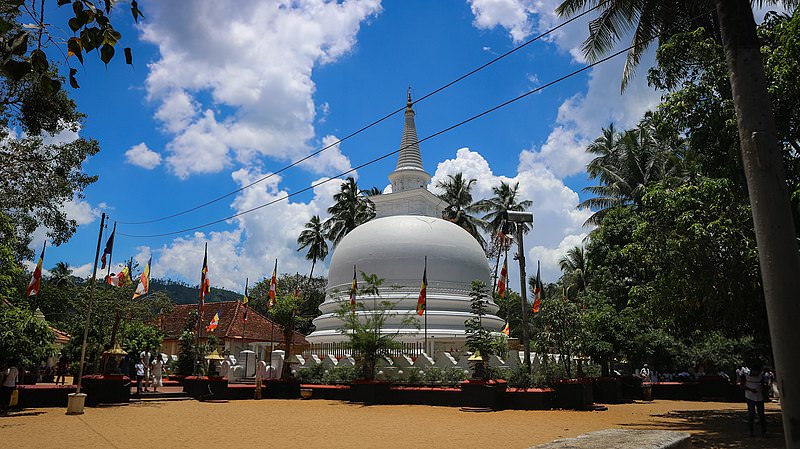 Muthiyangana Raja Maha Vihara
Muthiyanganaya Raja Maha Viharaya lies in the centre of the city of Badulla. The History of this temple goes back to the time of Buddha but this area around Badulla goes way back in to the time of 19th -18th century BCE.
-
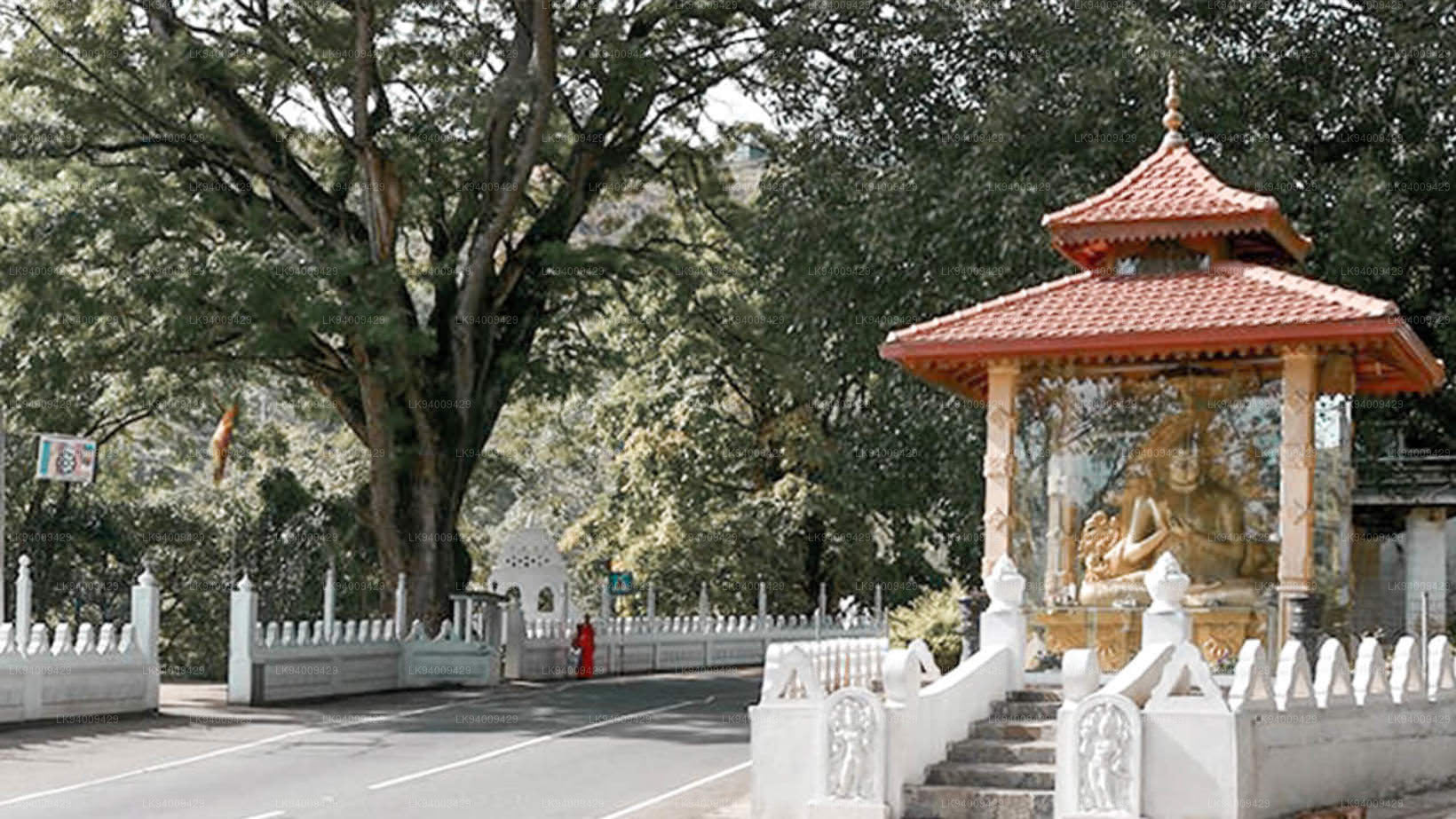 Dowa Raja Maha Viharaya
Dowa Raja Maha Viharaya (Dowa Cape Temple) lies few kilometres away from the Bandarawela town on the Bandarawela – Badulla Road. This temple is thought to be done by King Walagamba in the in first century BC.
-
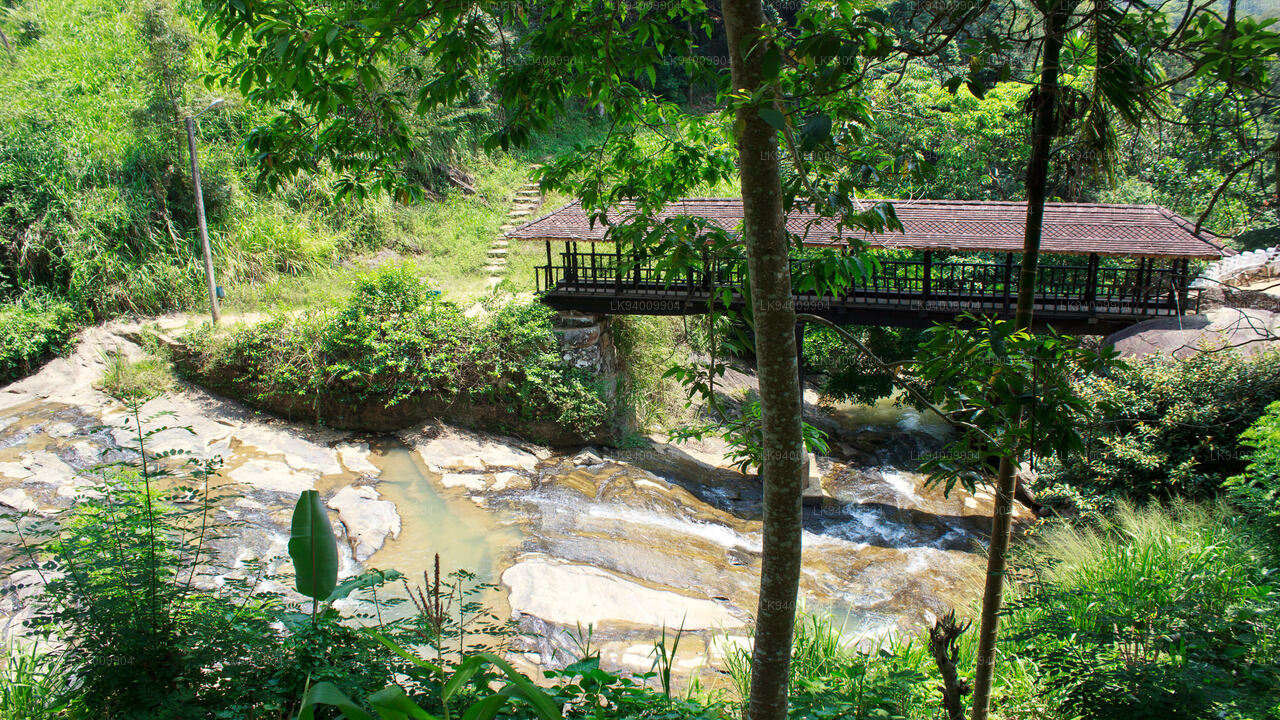 Bogoda Wooden Bridge
The Bogoda Wooden Bridge was built in the 16th century during the Dambadeniya era. This is said to be the oldest surviving wooden bridge in Sri Lanka. The bridge is situated at 7 kilometres (4.3 mi) west of Badulla.
-
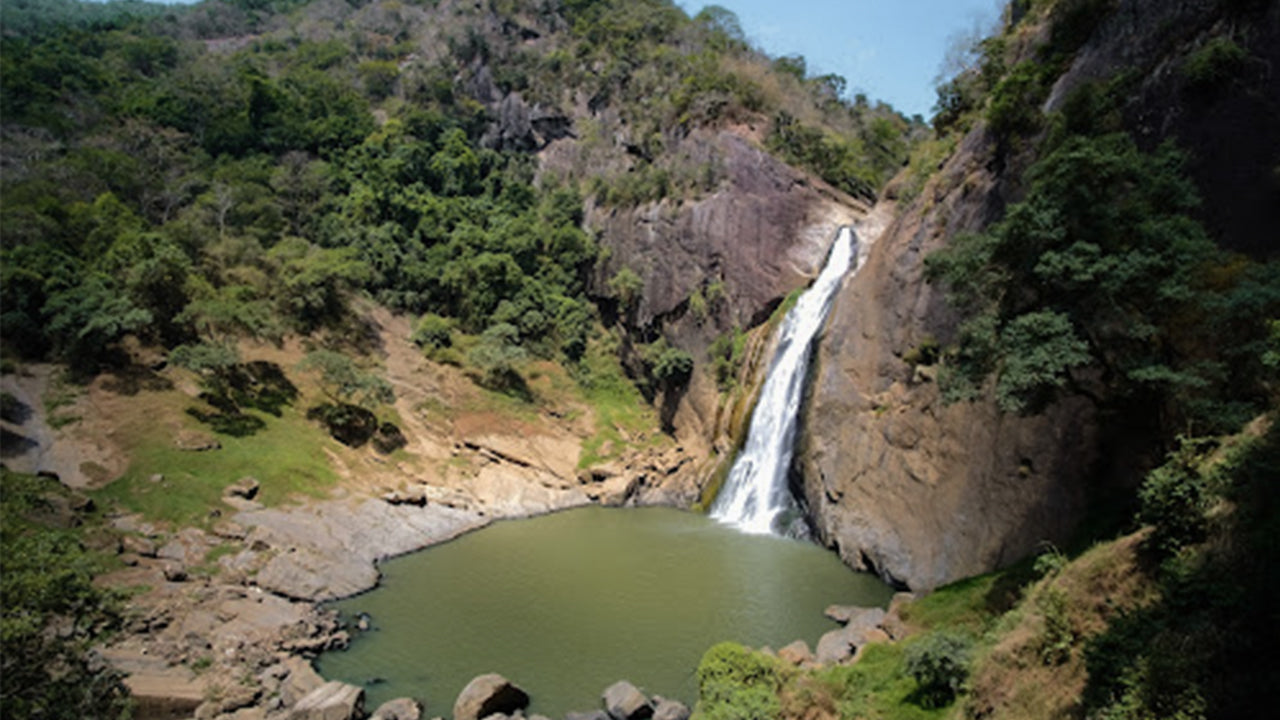 Dunhinda Falls
Dunhinda Falls is situated about 5 km away from Badulla town. It is 63 meters high and is considered to be one of the most beautiful waterfalls in Sri Lanka. The falls gets its name dew to the smoky dew drops spray.