Bandaranaike Memorial International Conference Hall

The Backstory

Over half a century ago, Solomon West Ridgeway Dias Bandaranaike (most commonly known as SWRD Bandaranaike) oversaw Sri Lanka as its fourth Prime Minister from 1956 until his assassination in 1959. He brought into effect several new laws. However, his most famous achievement is the foreign policy that he created.

During his career in politics, in 1953 even before he came to power, Mr. Bandaranaike stated that “I say, for heaven’s sake, be friendly with England or America or anybody else, but do not commit yourself to any one of them…….. As far as I can see, the wisest foreign policy that is being followed in the world today by any leading statesman is that of Pandith Jawaharlal Nehru….”. His views continued as he rose into his seat of power. His very first policy change as the Prime Minister of Ceylon, which was read by the Governor-General on April 20, 1956, stated that: “In its foreign policy, my Government will not align with any power blocs. The position of bases at Katunayake and Trincomalee will be reviewed…… consideration will be given to exchange of diplomatic representatives with countries in which Ceylon is not at present represented”. The policy change was not in words only, and over the next three years, the actions of the Prime Minister reflected how such a policy could be achieved. On his death, many foreign countries grieved the loss of such a brilliant personality.

The Construction

In 1970, approximately 10 years after his passing; his wife Sirimavo Bandaranaike, who had gone on to become the first stateswoman in the world, was then in her second term of office as Prime Minister. At that time she decided to honor her late husband, Prime Minister SWRD Bandaranaike, for the excellent foreign policy that he had created which in turn helped protect Sri Lanka and bring it into the international arena. A decision was reached that any monument constructed in honor, should have a direct connection to International Relations. As no conference halls were available in Sri Lanka at the time with international level facilities, this was taken up as the project.

The People’s Republic of China donated LKR 35 Million towards the construction of BMICH as a gift to the people of Sri Lanka. A land of over 40 acres was identified for the construction, right in the center of Colombo. With everything ready and set to go, the construction of BMICH was initiated at 4 pm on November 24th, 1970 under the patronage of the Prime Minister at the time – Mrs. Sirimavo Bandaranaike, Minister of Housing – Mr. Peter Keuneman, and the Ambassador of China. As the construction costs were donated by China; the crew consisted of a joint Sri Lankan and Chinese workforce of 2000 people, with a considerable portion of the building materials being imported from China.

On 17th May 1973, the construction was completed and entrusted to the Sri Lankan Government. It became an iconic landmark in the heart of the city; stretched across a lush plantation of 40 acres with a monumental Convention Centre with the best international facilities in South Asia, beautifully decorated with water fountains and colorful floral gardens.

The Rise of BMICH

Over the years a number of iconic international events were held at the Band

À propos du district de Colombo

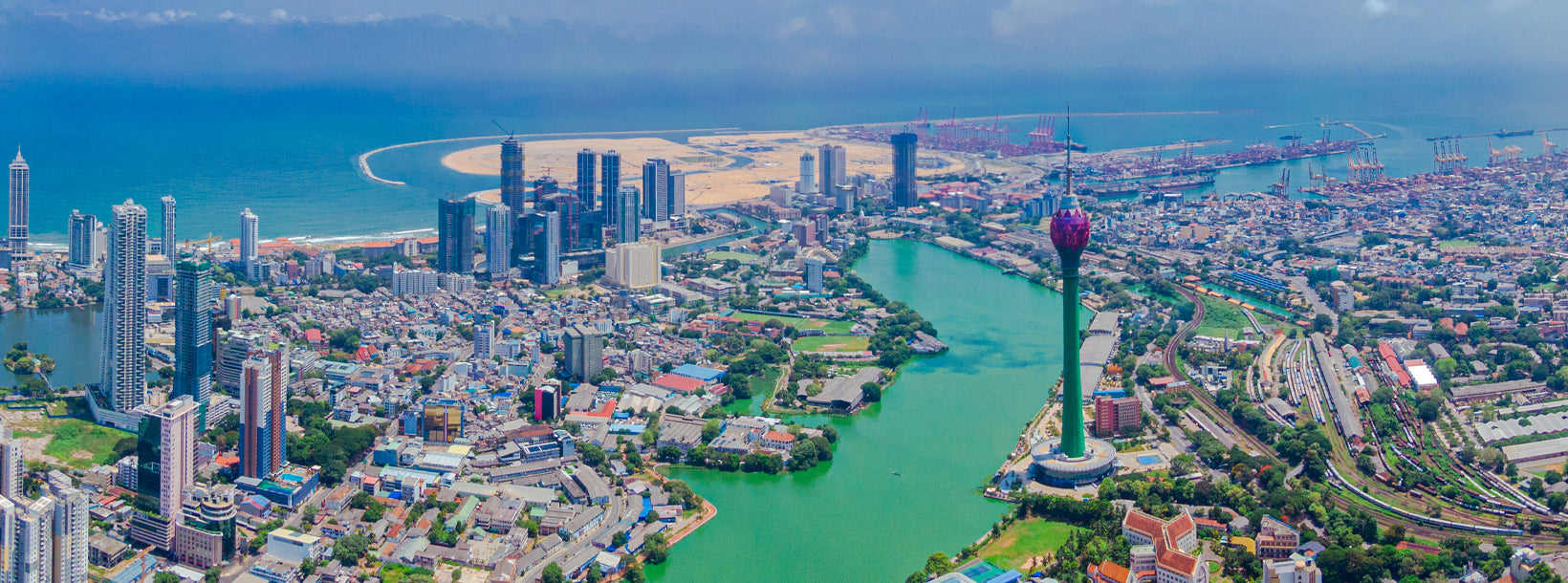
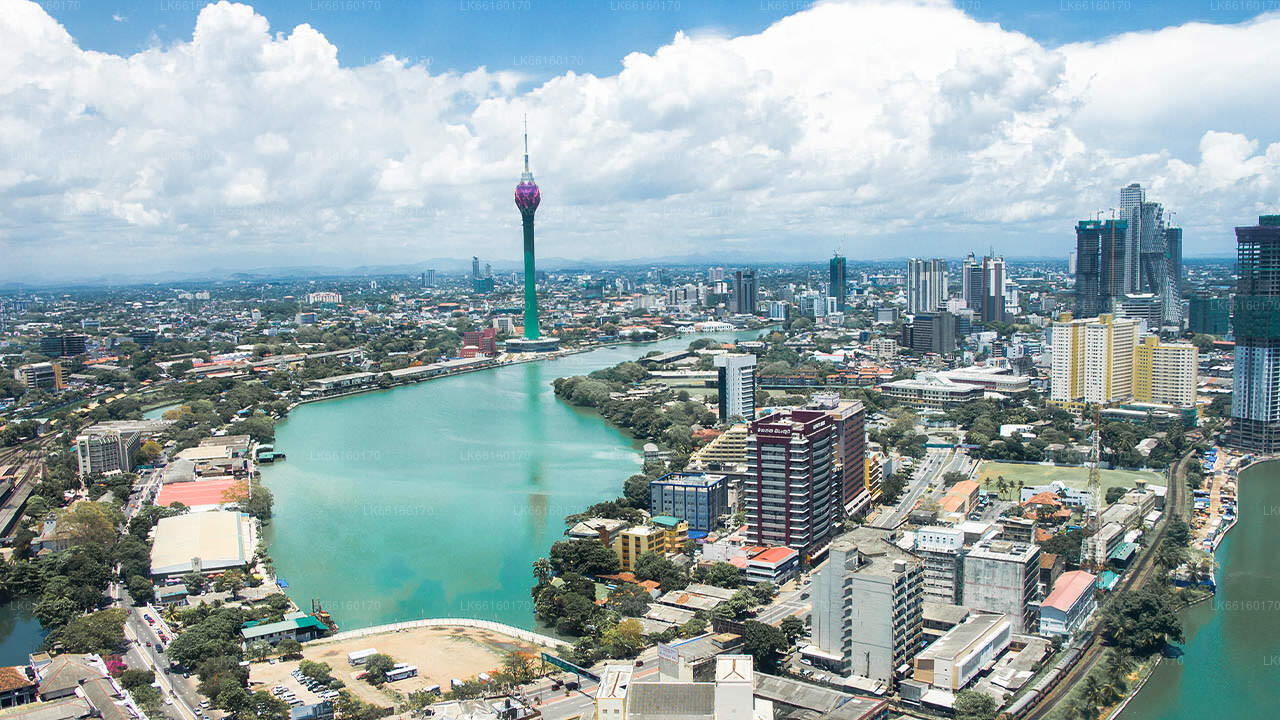
Colombo est la plus grande ville et la capitale commerciale du Sri Lanka. Elle est située sur la côte ouest de l'île, à proximité de Sri Jayewardenepura Kotte, la capitale du pays. Colombo est une ville animée et dynamique, mêlant modernité, bâtiments et ruines coloniaux, et compte 647 100 habitants. La région métropolitaine de Colombo, définie par les districts de Colombo, Gampaha et Kalutara, compte une population estimée à 5 648 000 habitants et couvre une superficie de 3 694,20 km². Colombo est une ville multiethnique et multiculturelle. C'est la ville la plus peuplée du Sri Lanka, avec 642 163 habitants. La population de Colombo est un mélange de nombreux groupes ethniques, principalement cinghalais, maures et tamouls. On y trouve également de petites communautés d'origine chinoise, portugaise, néerlandaise, malaise et indienne, ainsi que de nombreux expatriés européens. La grande majorité des entreprises sri-lankaises ont leur siège social à Colombo. Parmi les industries présentes figurent les produits chimiques, le textile, le verre, le ciment, la maroquinerie, le mobilier et la bijouterie. Le centre-ville abrite le deuxième plus haut gratte-ciel d'Asie du Sud : le World Trade Centre. À propos de la province occidentale : la province occidentale est la plus densément peuplée du Sri Lanka. Elle abrite la capitale législative, Sri Jayawardenepura Kotte, ainsi que Colombo, centre administratif et commercial du pays. La province occidentale est divisée en trois districts principaux : Colombo (642 km²), Gampaha (1 386,6 km²) et Kalutara (1 606 km²). En tant que pôle économique du Sri Lanka, la ville accueille toutes les grandes entreprises locales et internationales, ainsi que les grands créateurs et les grandes enseignes. Préparez-vous donc à une séance de shopping dans la province occidentale. Avec la plus forte population de toutes les provinces, la province occidentale abrite la quasi-totalité des principaux établissements d'enseignement de l'île. Parmi les universités de la province, on compte l'Université de Colombo, l'Université de Sri Jayewardenepura, l'Université de Kelaniya, l'Open University, l'Université bouddhiste et pali du Sri Lanka, l'Université de défense générale Sir John Kotelawala et l'Université de Moratuwa. La province occidentale compte le plus grand nombre d'établissements scolaires du pays, comprenant des écoles nationales, provinciales, privées et internationales.