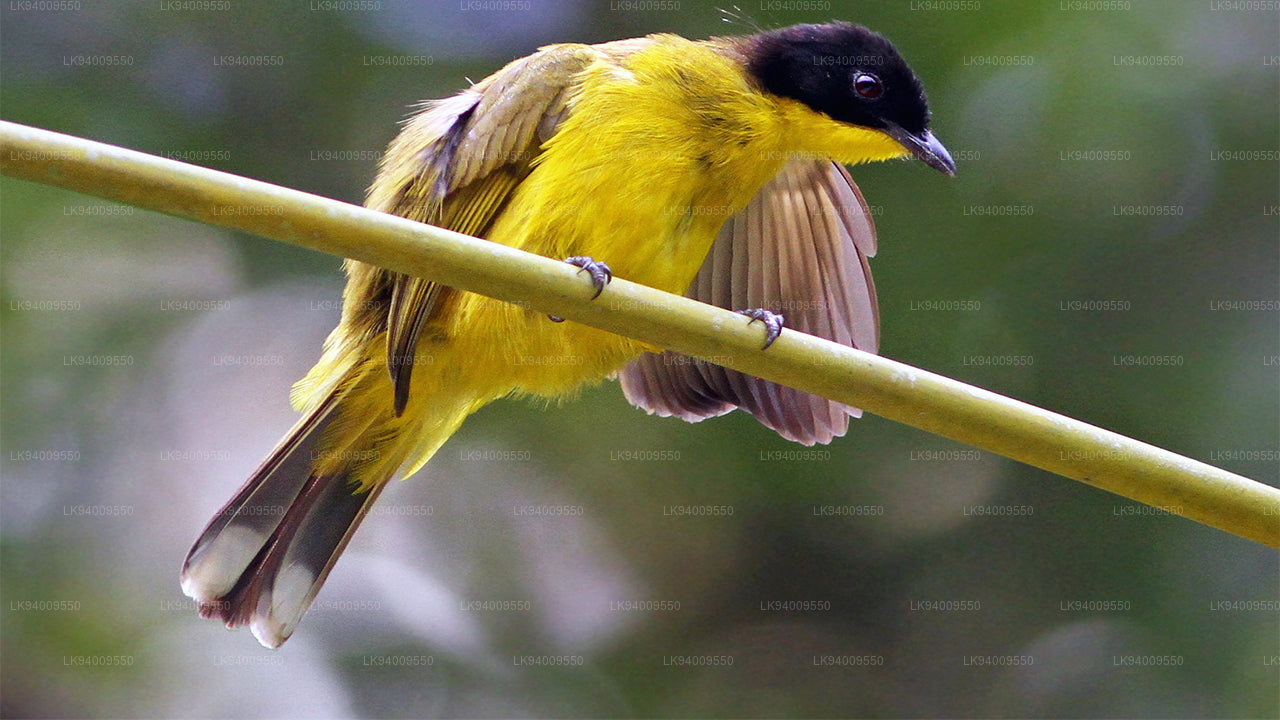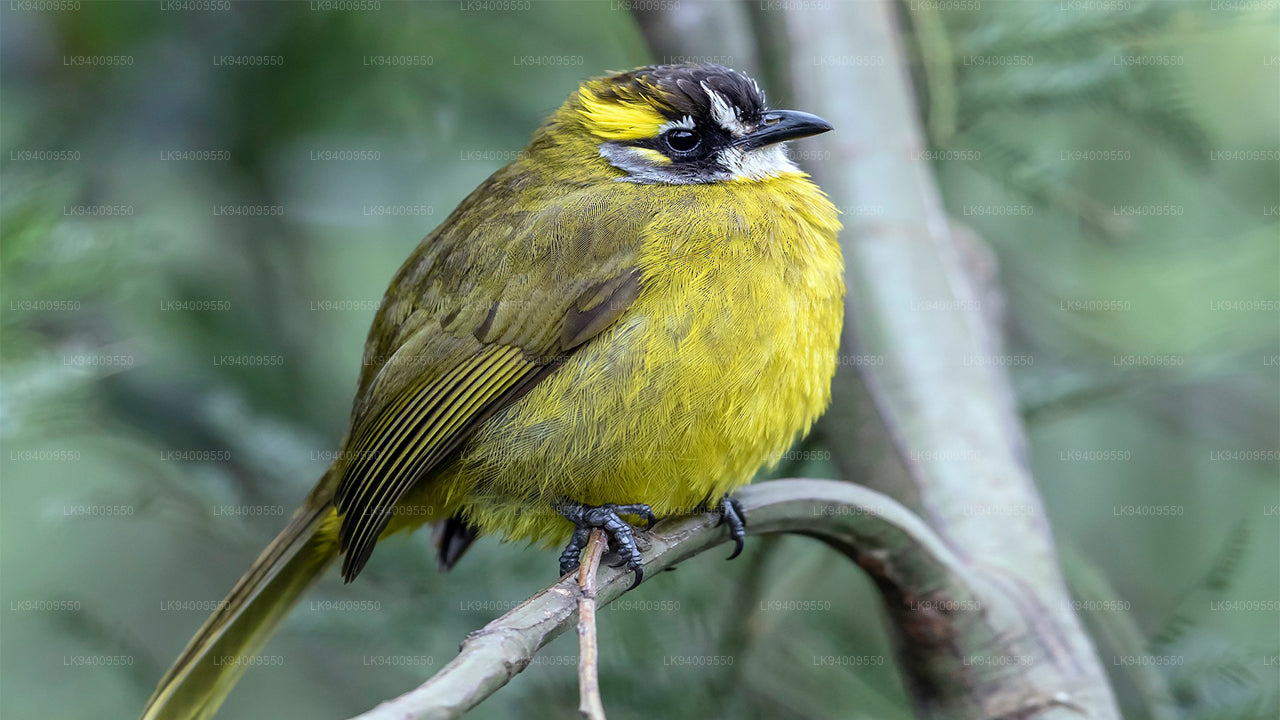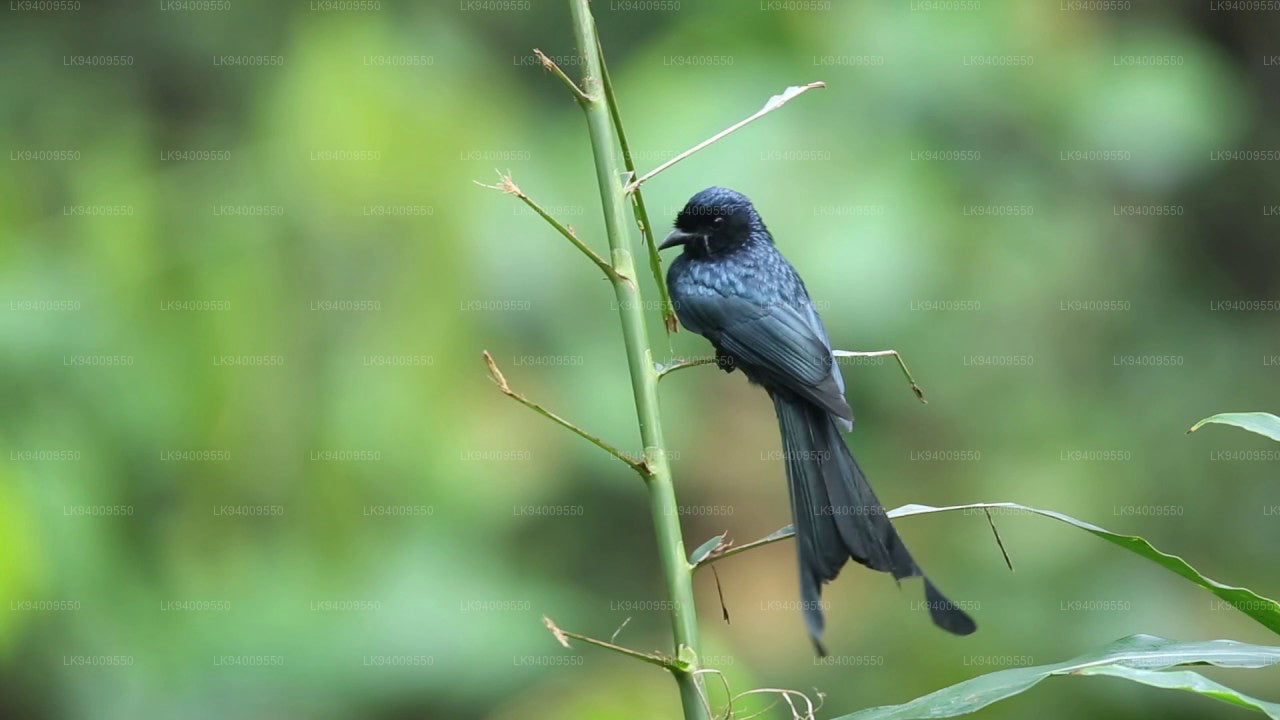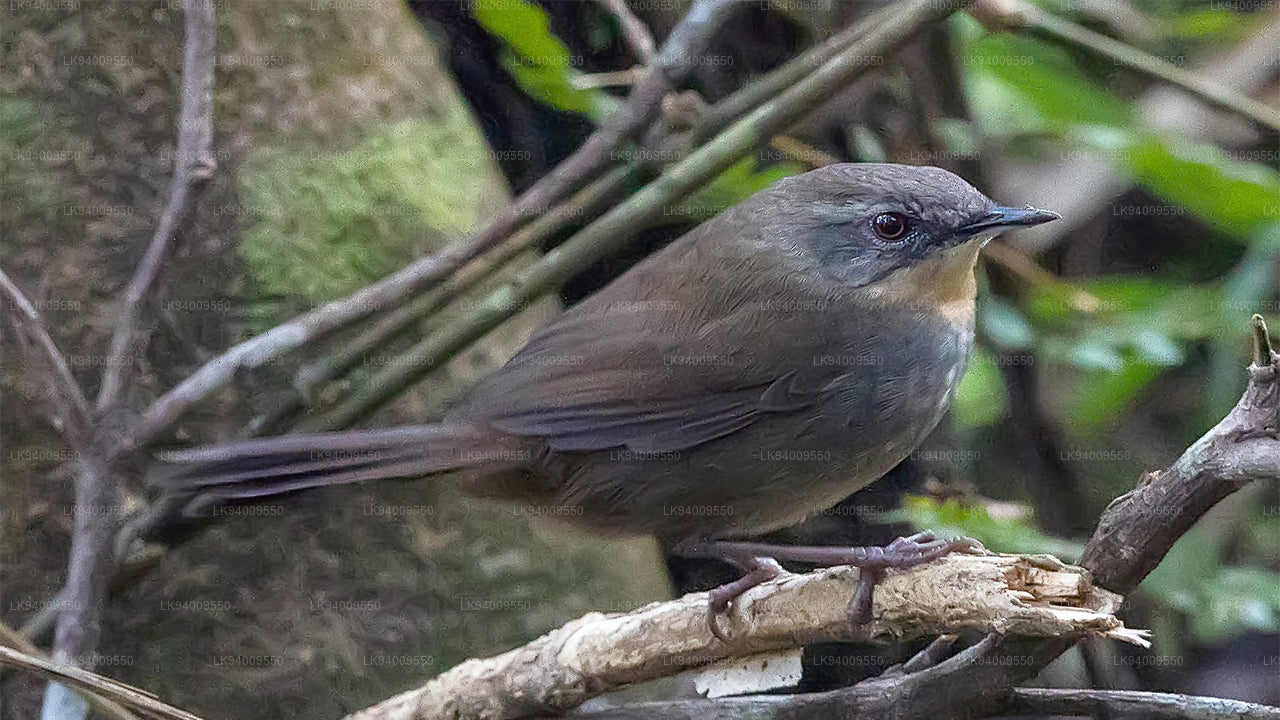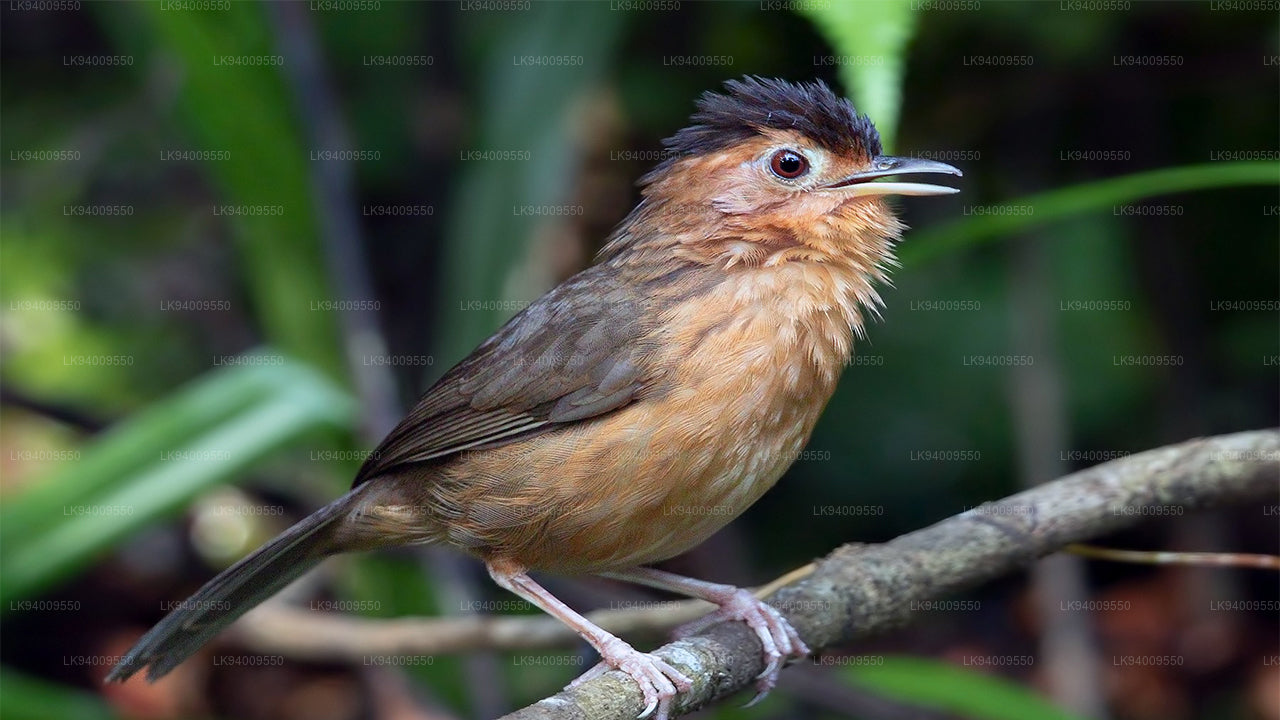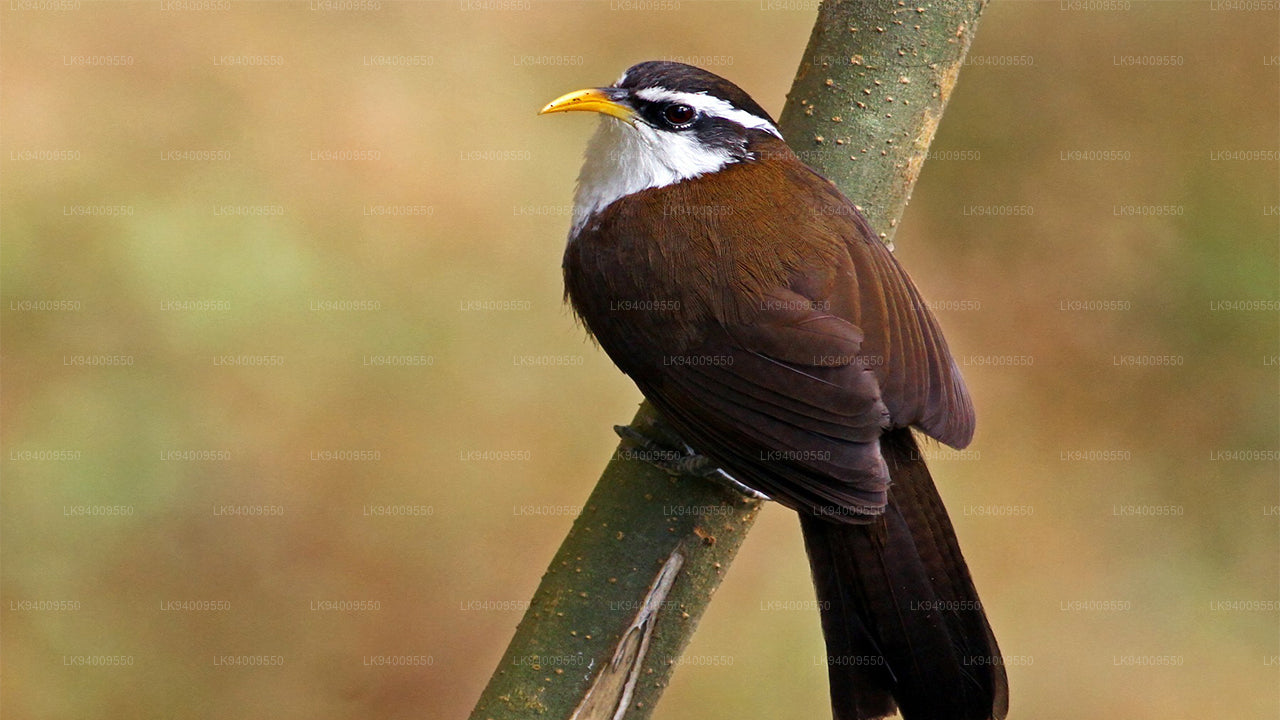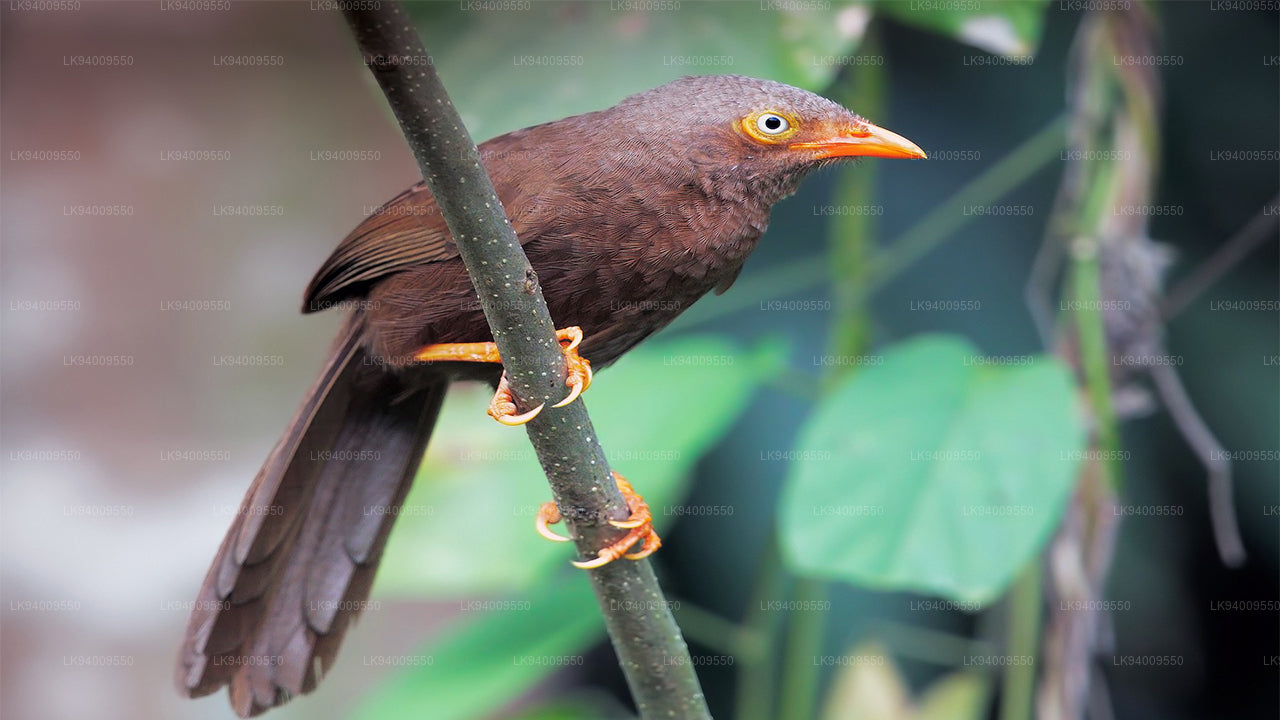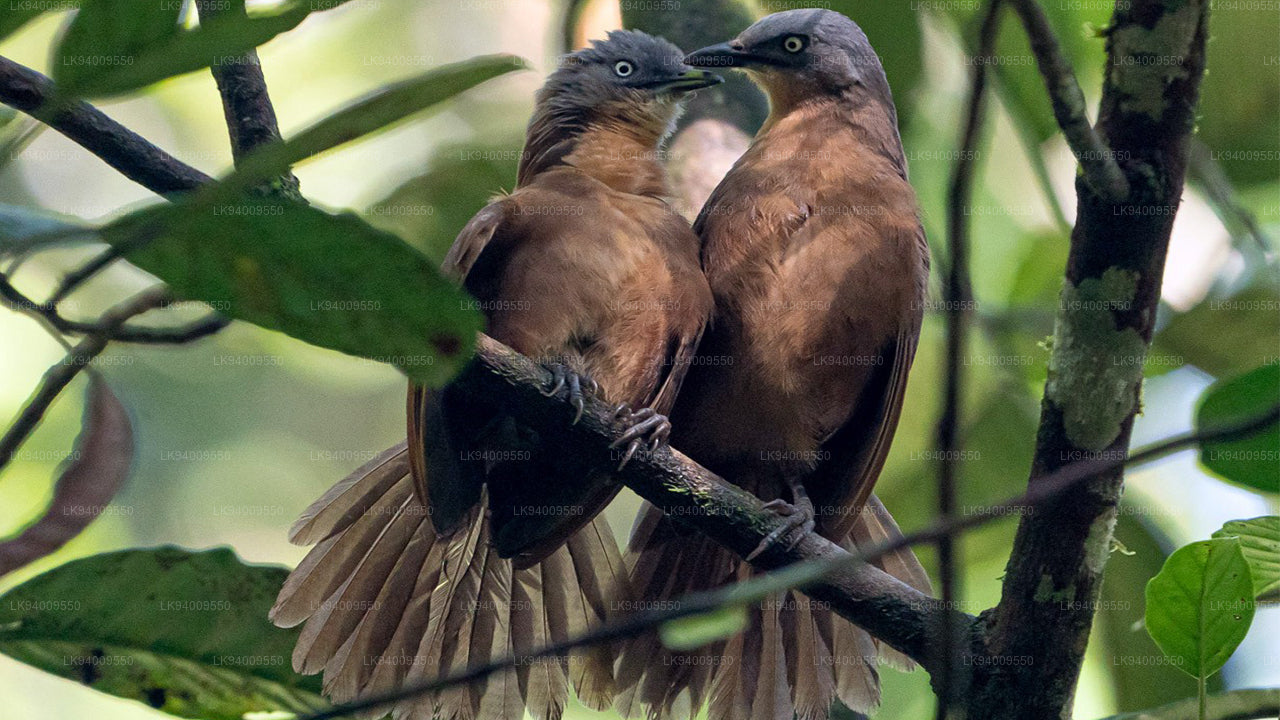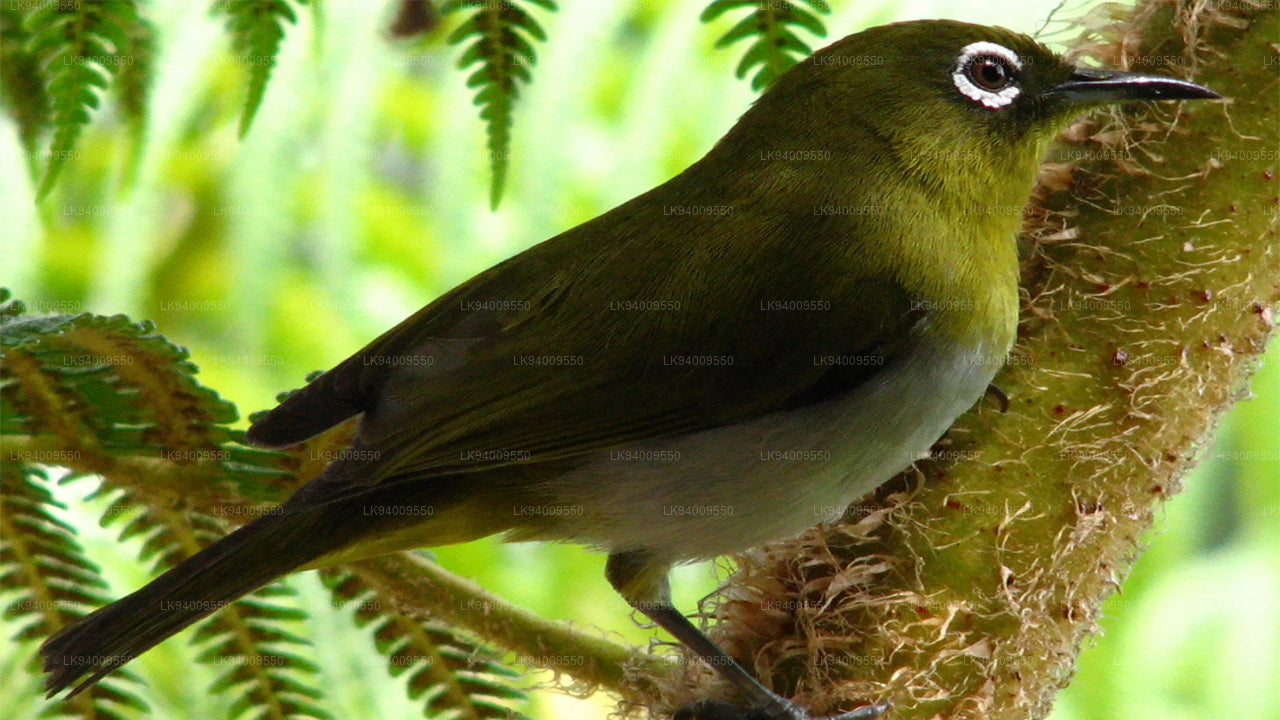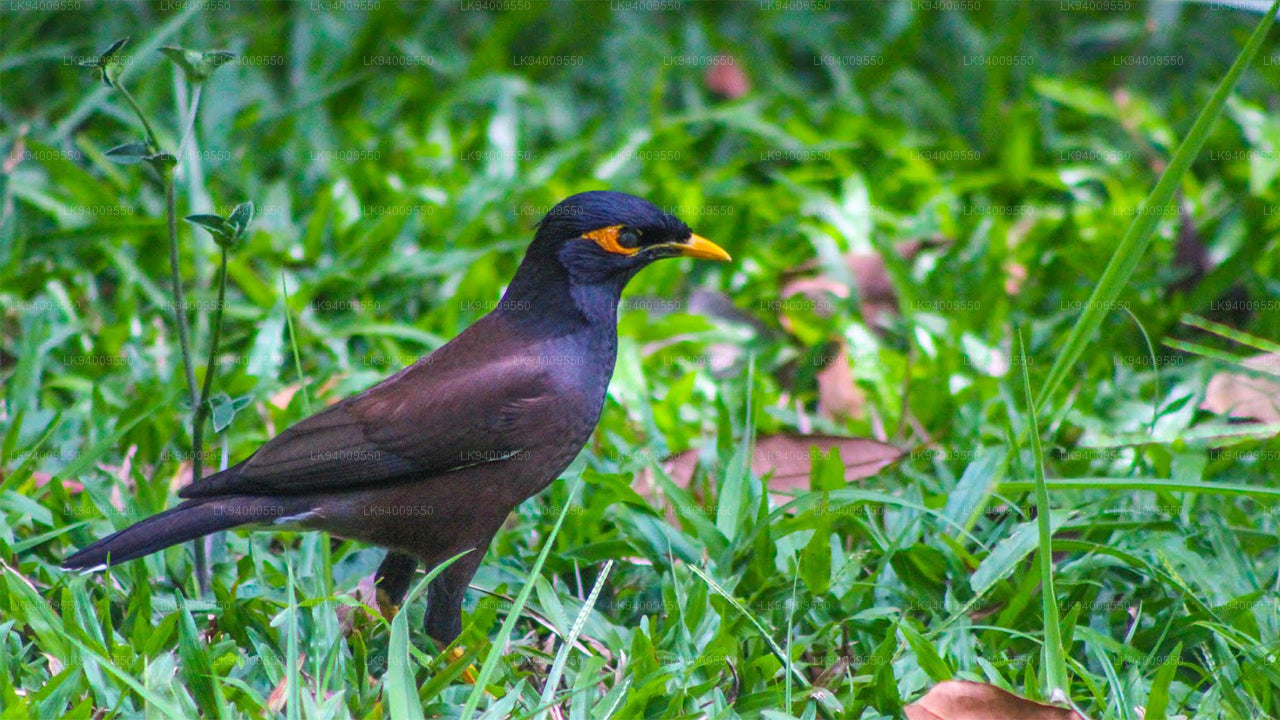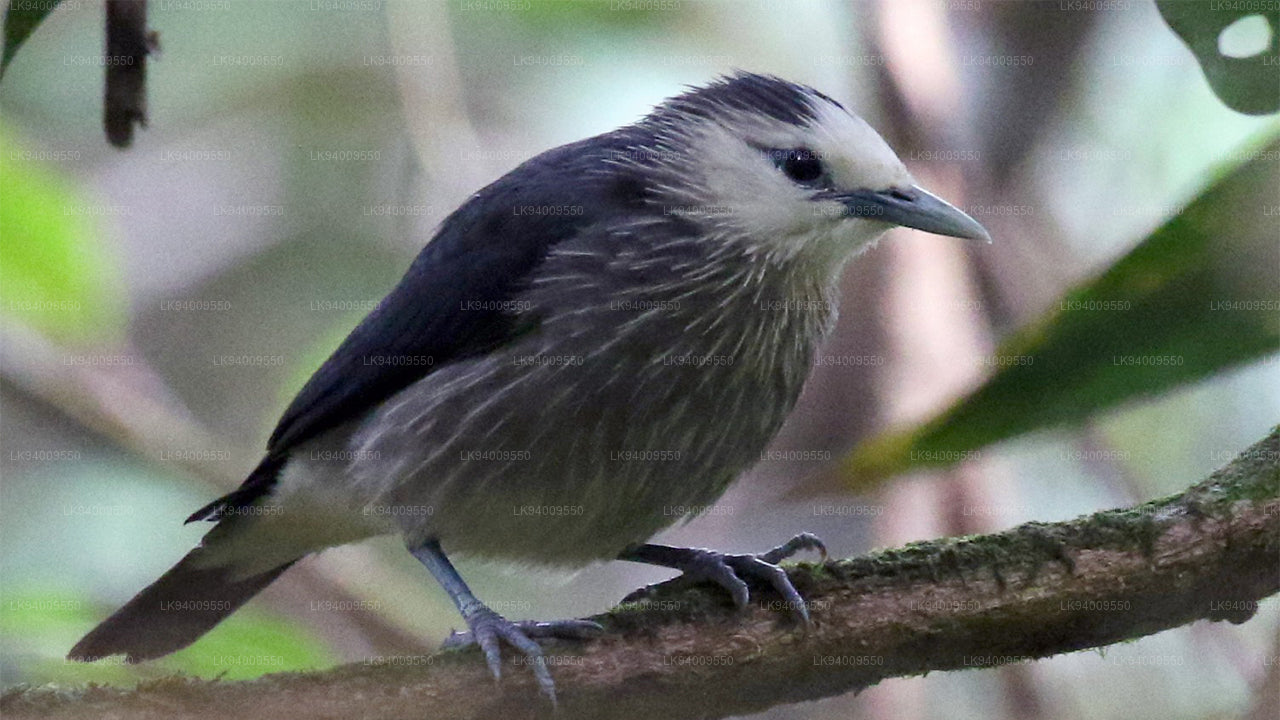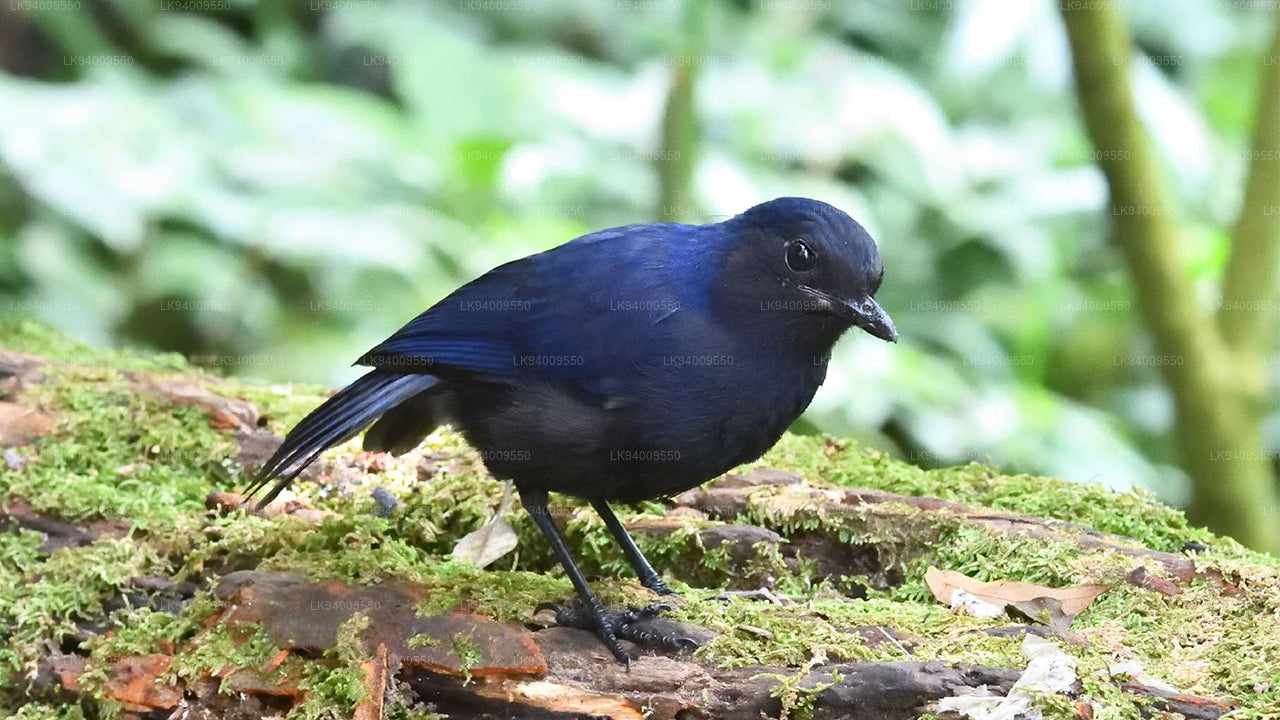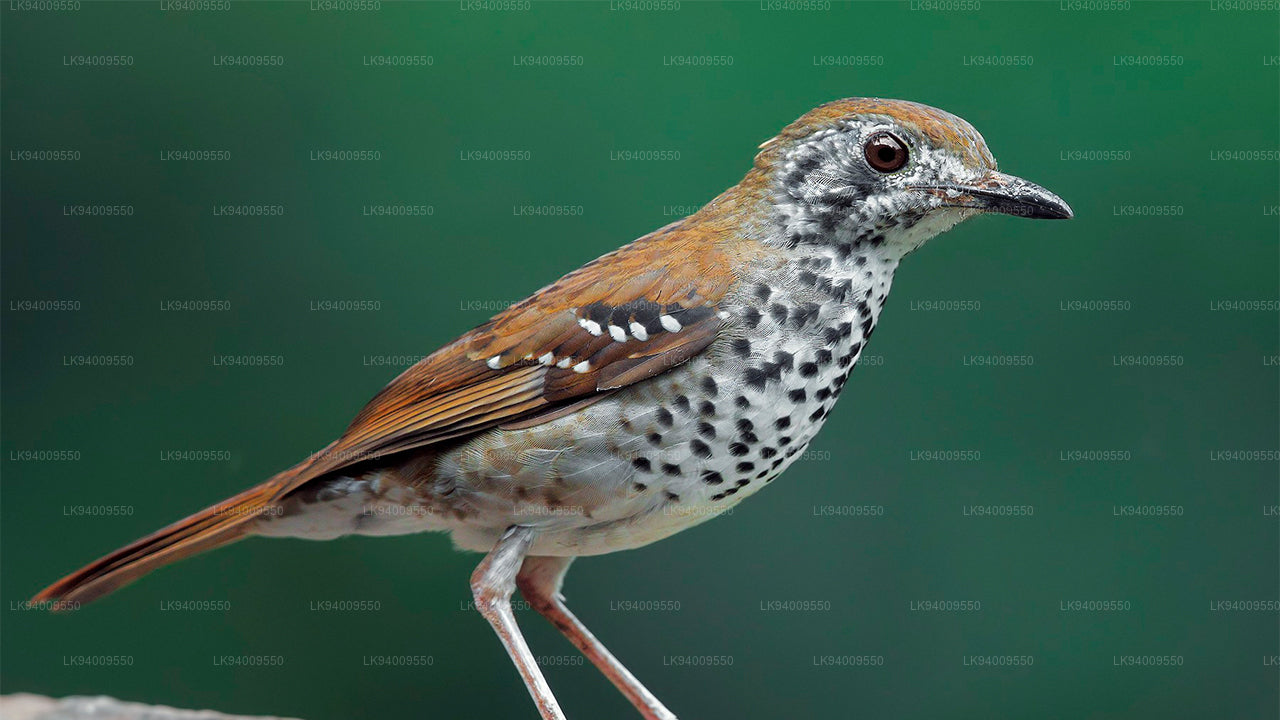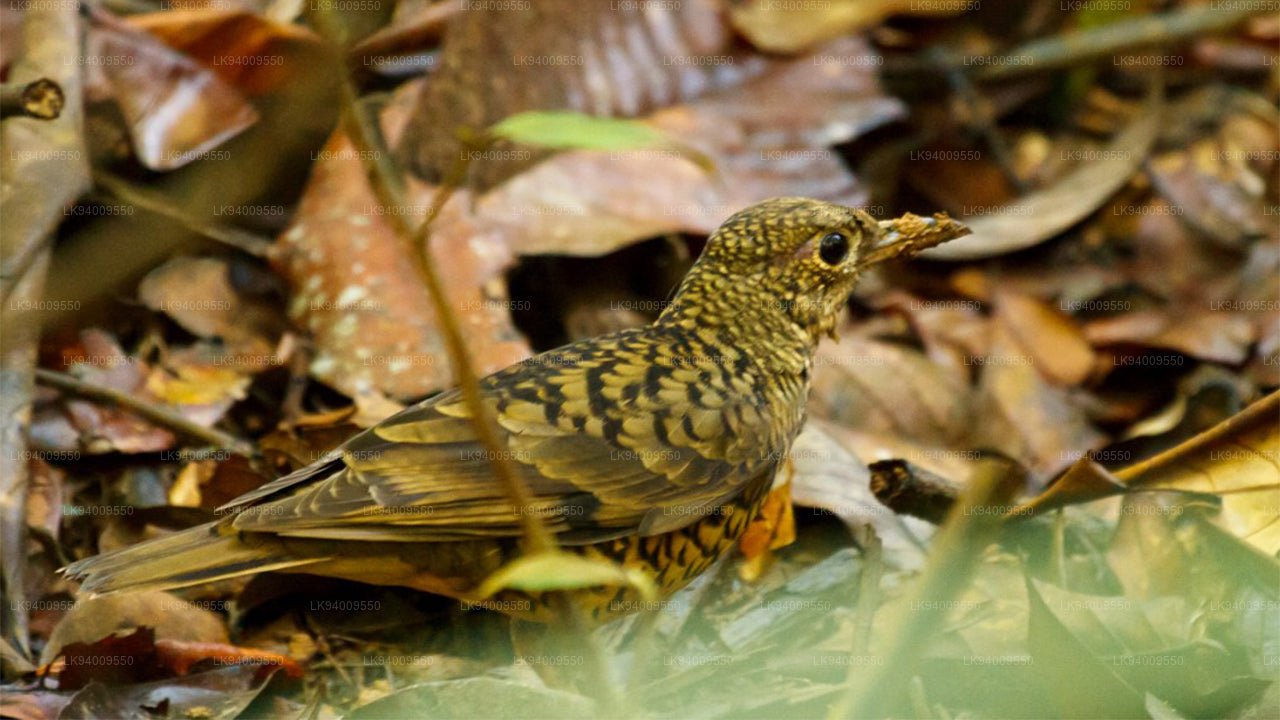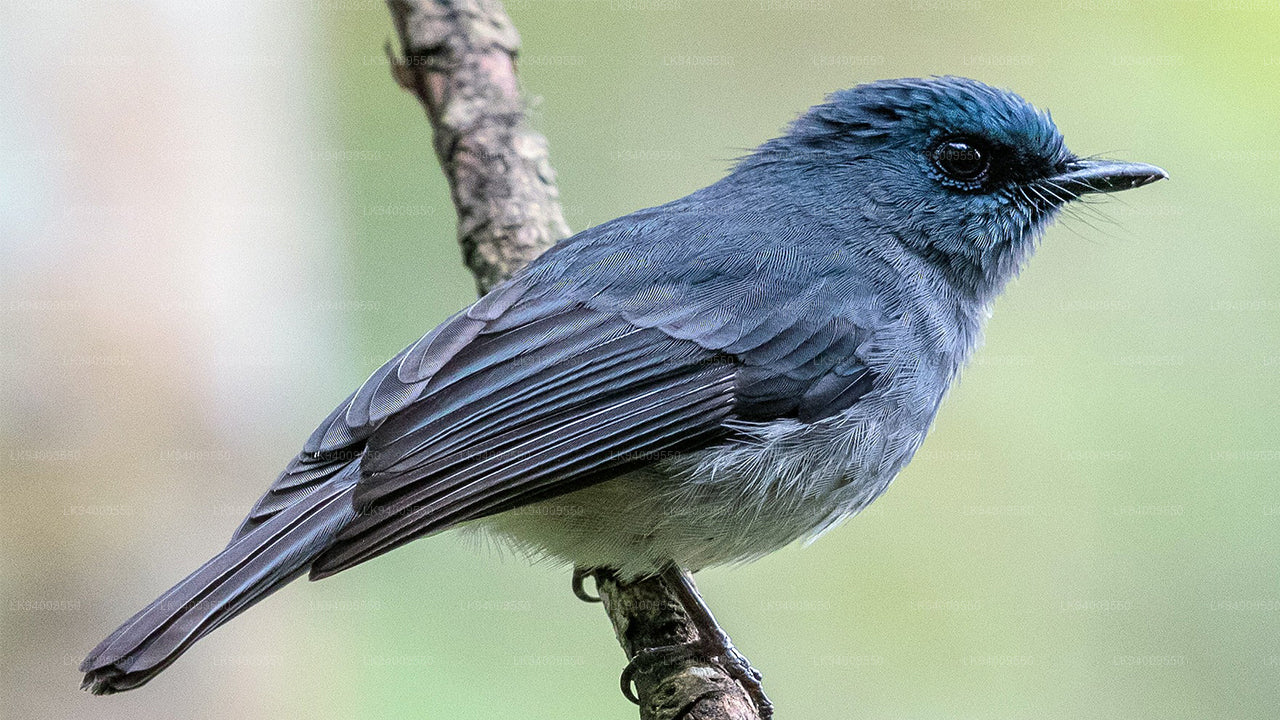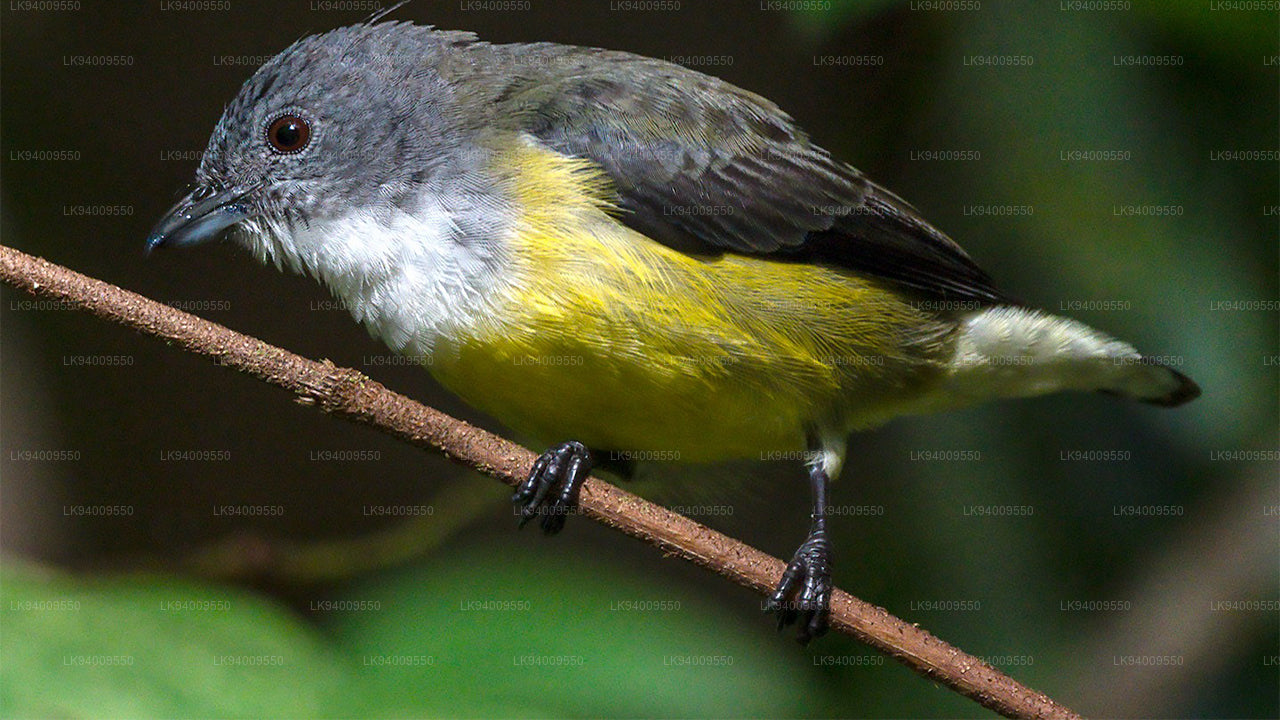
The Black-Capped Bulbul (Rubigula melanictera) is one of Sri Lanka's most recognisable endemic songbirds. A resident breeder rather than a seasonal visitor, it is typically encountered in pairs moving quietly through forest understorey and garden edges. Its distinctive jet-black cap contrasting with a bright yellow underside makes identification straightforward even for first-time birdwatchers.
Where Does the Black-Capped Bulbul Live?
The species is confined to the wet zone of Sri Lanka, ranging from the lowland coastal forests up through mid-elevation montane areas. It is most commonly recorded below around 1,500 metres, where rainfall is sufficient to sustain the dense, layered vegetation it prefers. Unlike some wet-zone endemics, it adapts reasonably well to secondary forest and well-wooded home gardens, so encounters near forested villages are not uncommon.
The Black-Capped Bulbul is absent from the dry zone's open scrub and from the highest ridges of the central massif. Its distribution therefore follows the arc of wet-zone reserves that stretches from the Western Province foothills southward through the Sabaragamuwa hills to the Sinharaja lowlands.
Which Reserves Offer the Best Sightings?
Several protected areas and forest reserves within the wet zone provide reliable opportunities to observe this bird. The table below lists the key sites along with their general elevation and access context.
| Location | Approximate Elevation | Key Feature |
|---|---|---|
| Sinharaja Rain Forest | 300–1,170 m | UNESCO World Heritage Site; highest endemic bird diversity in Sri Lanka |
| Kitulgala Forest Reserve | 50–400 m | Accessible lowland forest; popular birding base |
| Mitirigala Forest Reserve | 200–350 m | Quiet, undisturbed wet-zone forest close to Colombo |
| Bodhinagala Forest | 100–300 m | Lesser-visited reserve; good for undisturbed forest species |
| Morapitiya Forest Reserve | 200–600 m | Contiguous with Sinharaja; good secondary birding site |
| Hiyare Forest Reserve | 50–150 m | Lowland reservoir forest near Galle |
| Peak Wilderness Sanctuary | 600–2,243 m | Extensive mid-montane wet forest; Adam's Peak pilgrimage route passes through |
| Udawalawe National Park | 60–500 m | Primarily savanna; wet-zone forest patches on the northern border support the species |
| Wasgamuwa National Park | 100–600 m | Transitional zone park; encountered in the wetter forest patches |
Of these, Sinharaja Forest Reserve is widely regarded as the single most productive site for wet-zone endemics including the Black-Capped Bulbul, largely because its primary forest canopy remains largely intact.
What Does the Black-Capped Bulbul Look Like?
Adults display a glossy black crown and nape — the defining feature that gives the bird its common name. The upperparts are olive-brown, the throat is white or pale yellow, and the underparts shade to a brighter yellow toward the belly. The eyes are typically dark reddish-brown, and a small but visible wattle may be present around the eye-ring. Juveniles are duller overall, with a less defined cap.
In the field, the bird's call is a useful identifier: a series of cheerful, liquid notes delivered from mid-canopy perches, often before the bird itself is spotted. It frequently joins mixed-species foraging flocks, which can make finding it easier — locate the flock and scan methodically.
What Does It Eat and How Does It Behave?
The Black-Capped Bulbul is primarily frugivorous, feeding on small berries, figs, and other soft forest fruits. It will also take nectar from flowering trees and occasionally catches insects during aerial sallies. Because it disperses the seeds of many forest plants, it plays a quiet but meaningful role in maintaining wet-zone forest regeneration.
The species is largely sedentary, occupying the same territory year-round. Pairs stay close together outside the breeding season, and territorial calling is most prominent in the early morning hours. Nesting typically involves a compact cup nest positioned in a shrub or low tree fork, and both parents share incubation duties.
When Is the Best Time to Go Birdwatching for This Species?
The Black-Capped Bulbul can be observed throughout the year, but activity peaks during the inter-monsoon months — roughly January to April and again in August and September. During these periods the forest is quieter, trails are more navigable, and the birds are often more vocal as breeding season approaches.
The wet-zone forests receive the south-west monsoon from May to July and can be heavily overcast and wet during those months, which makes trail conditions more challenging. Visiting early morning — ideally on the trail by 6 am — maximises the chances of good sightings regardless of the season.
How Do I Get to the Key Birdwatching Sites?
Kitulgala, the most accessible starting point for many visitors, lies roughly 95 km east of Colombo along the A7 highway and takes around two to three hours by road. Udawalawe National Park is approximately 165 km from Colombo via the Southern Expressway and the A18 road. Sinharaja's main entry points at Kudawa and Deniyaya are reached via Ratnapura or Matara respectively, each requiring around three to four hours from Colombo depending on traffic.
A knowledgeable local guide significantly improves the experience: they can identify calls before a bird is visible and navigate the unmarked forest trails that lead to the best vantage points. Lakpura can arrange private birding excursions with experienced naturalist guides to any of these sites.
Is the Black-Capped Bulbul Endangered?
The species is currently assessed as Least Concern on the IUCN Red List, reflecting its relatively wide distribution across Sri Lanka's wet zone and its ability to persist in degraded and secondary forest. However, the ongoing fragmentation of Sri Lanka's wet-zone forests through agricultural expansion and development remains a long-term concern for all forest-dependent species, including this one. Supporting visits to protected reserves contributes to the economic case for conservation at these sites.