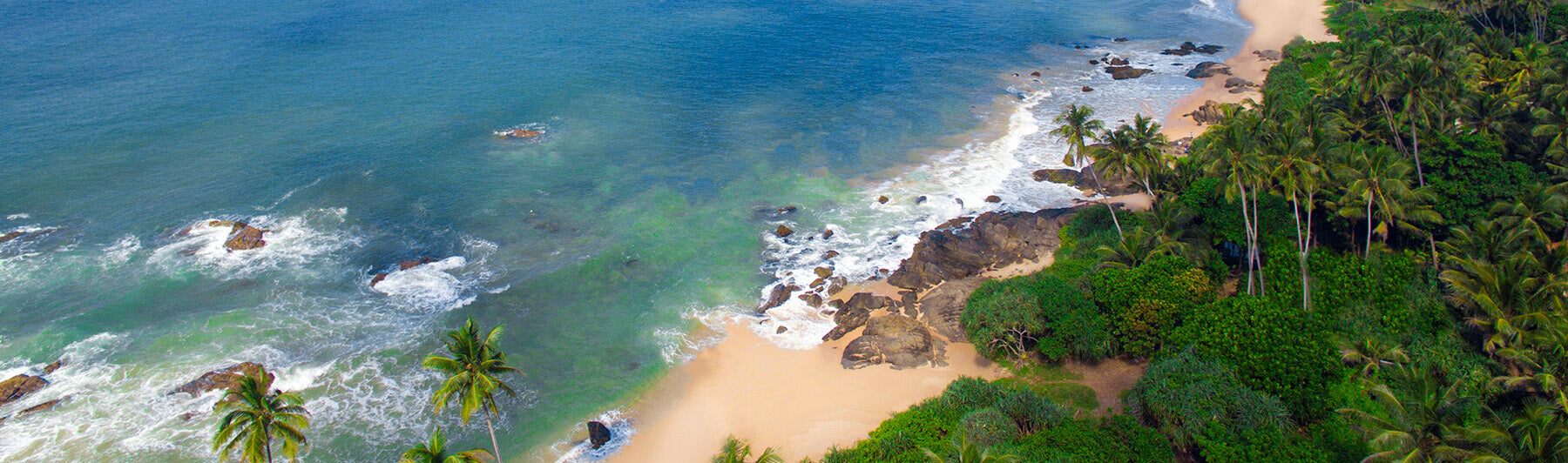
Ciudad de Balapitiya
Balapitiya: ciudad costera de Sri Lanka con playas pintorescas, ríos bordeados de manglares y oportunidades para realizar safaris en barco para explorar la rica biodiversidad.
Madu River
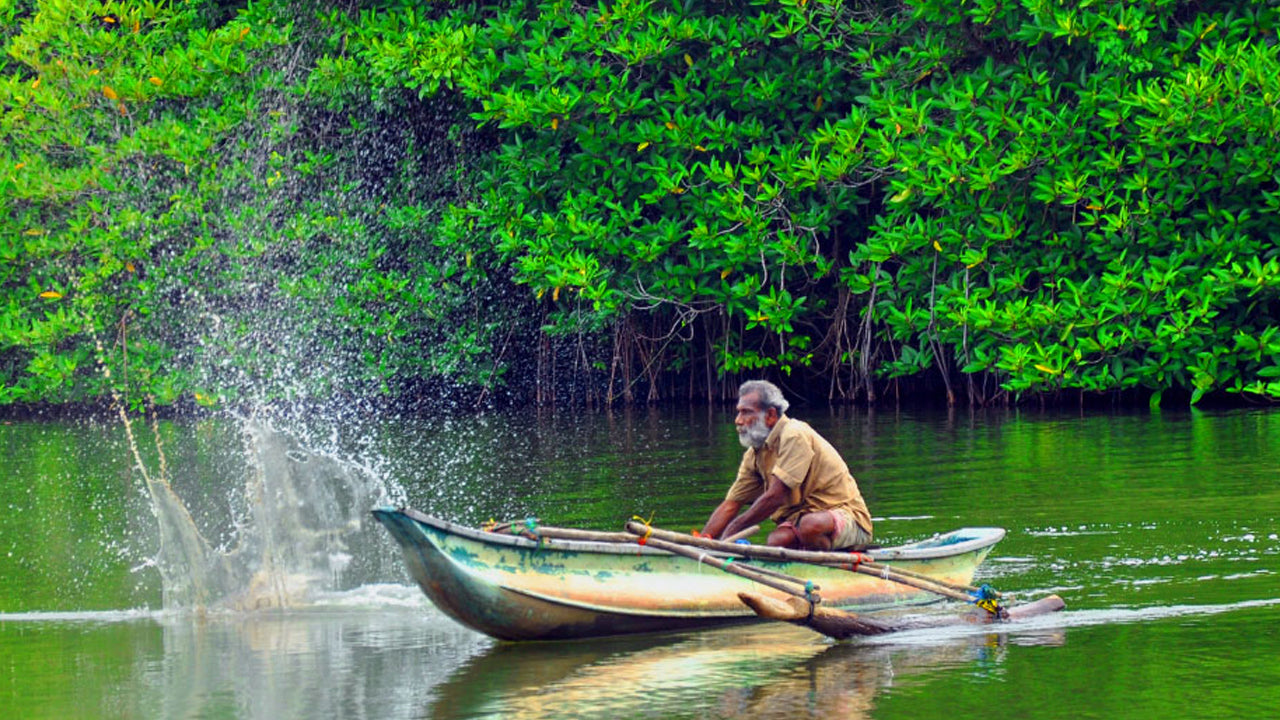
In the Southern region of Sri Lanka lies the Galle district. Balapitiya is a little town in the district and would be quite unimportant; except for the location of a river. The Madu River is very rich in biodiversity. It passes through the wet zone of Sri Lanka opening up into the large Madu Lagoon on its way to the Indian Ocean.
The Mangroves and their Ecology – Facts
- The Madu River area surrounding the river are all swampy marshlands covered in mangrove forests.
- The forest covers over 61 hectares, that is over 150 acres. 14 of the 24 species of mangroves are found in this area.
- It is interesting to note that mangroves play a huge part in preventing erosion.
- The value of the mangroves was understood in December 2004, during the devastating tsunami, when forest acted as a natural barrier protecting the region.
- The large growths of mangrove trees have caused a chain of ecological gain. The soil protected by the mangrove trees is very fertile. This has caused a rich growth of other wetland plants.
- Over 300 species, 19 of which are endemic, have been discovered so far.
- The region continues to be a treasure trove to biologists and ecologists with many undiscovered species in the unreachable depths of the mangrove forests.
- The plantlife in turn have supported a large number of wildlife that depends on them.
- The largest animal in the region is the wild boar. There are other smaller animals such as monkeys, a variety of squirrels, etc.
- When it comes to birds, cormorants and kingfishers are a common sight. For avid bird watchers, the mangrove forests are a dream coming true. There are over 111 bird species identified to inhabit the region.
- There are 31 types of reptiles, namely snakes, lizards, and crocodiles.
- There are also over 50 kinds of butterflies and 25 kinds of mollusks found in the Madu River zone.
Situated about 80 km South of the busy commercial hub of Colombo in the fishing town of Balapitiya, the Madu River or locally referred to as the Madu Ganga is a hidden natural treasure in the Southwest coastal area of Sri Lanka. The river flows gracefully through dense mangrove forests before widening into a lake forming a wetland that is home to an estuary with many islets that is part of a large and complex coastal ecosystem. The biodiversity significance of this area is known among many nature lovers while the mangroves are home to varied amounts of flora and fauna. Due to this reason, the Madu River has been listed under the International Ramsar Convention which is an International Treaty for the conservation and sustainable use of wetlands (Ramsar Sites).
Mangroves plays a huge role in preventing soil erosion while the Madu Ganga wetlands covers an area of over 61 hect
Acerca del distrito de Galle
Galle es una ciudad situada en el extremo suroeste de Sri Lanka, a 119 km de Colombo. Galle es el mejor ejemplo de ciudad fortificada construida por europeos en el sur y sudeste de Asia, mostrando la interacción entre los estilos arquitectónicos europeos y las tradiciones del sur de Asia. El fuerte de Galle es Patrimonio de la Humanidad y la fortaleza más grande que se conserva en Asia construida por ocupantes europeos.
Galle es el mejor ejemplo de ciudad fortificada construida por europeos en el sur y sudeste de Asia, mostrando la interacción entre los estilos arquitectónicos europeos y las tradiciones del sur de Asia. El fuerte de Galle es patrimonio de la humanidad y la mayor fortaleza que se conserva en Asia construida por ocupantes europeos.
Galle es una ciudad considerable, según los estándares de Sri Lanka, con una población de 91.000 habitantes, la mayoría de etnia cingalesa. También existe una importante minoría mora esrilanquesa, sobre todo en la zona del fuerte, que desciende de comerciantes árabes que se asentaron en el antiguo puerto de Galle.
Acerca de la Provincia del Sur
La Provincia Sur de Sri Lanka es una pequeña zona geográfica compuesta por los distritos de Galle, Matara y Hambantota. La agricultura y la pesca de subsistencia constituyen la principal fuente de ingresos para la gran mayoría de los habitantes de esta región.
Entre los lugares de interés de la Provincia Sur se encuentran los santuarios de vida silvestre de los Parques Nacionales de Yala y Udawalawe, la ciudad sagrada de Kataragama y las antiguas ciudades de Tissamaharama, Kirinda y Galle. (Aunque Galle es una ciudad antigua, prácticamente no se conserva nada anterior a la invasión portuguesa). Durante el período portugués, dos famosos poetas cingaleses, Andare, de Dickwella, y Gajaman Nona, de Denipitiya, en el distrito de Matara, compusieron poemas sobre la gente común.