Jaffna City
Jaffna is the main city of Jaffna peninsula in the northernmost district of Sri Lanka. Comfortable intercity busses from Colombo take 10-12 hours to reach the city of Jaffna.
Nagadeepa Viharaya
Nagadvipa ist nur etwa 35 Meilen von Indien entfernt und die kleinste Insel im Golf von Mannar. Kaufleute kamen schon lange hierher und auf die umliegenden Inseln, um die Muscheln zu kaufen, die in den warmen flachen Gewässern im Golf geerntet werden. Die Muschel ist natürlich für bestimmte hinduistische und buddhistische Rituale unerlässlich, und ein besonders perfektes Exemplar, das sich nach rechts dreht, kann einen enormen Preis erzielen. Pilger besuchen Nagadvipa (Nainativ) auch seit dem 1. Jahrhundert n. Chr., um die berühmte Stupa zu verehren. In der Mahavamsa ist die Insel einer der sechzehn heiligen Orte, und das tamilische buddhistische Epos, Manimekalai, erwähnt einen mit Edelsteinen besetzten Thron und einen Stein mit den Fußabdrücken des Buddha, die in Nagadvipa aufbewahrt werden, und Pilger aus Indien kamen, um ihn zu verehren. Die Heldin des Epos wird beschrieben, wie sie unter den "langen Sanddünen und Lagunen" der Insel umherwandert.
Es gibt jedoch auf beiden Seiten des Eingangs zum Tempel zwei sehr alte Objekte. Auf der linken Seite, wenn man betritt, befindet sich ein großer Stein mit einer Inschrift von Parakramabahu I. In der ersten Hälfte dieser Inschrift sagt der König, dass Ausländer, die in das Land kommen, nur in Uraturai (Kayts) einreisen sollten und dass sie bei Bedarf Hilfe erhalten sollten. Dies bezieht sich zweifellos auf Kaufleute und Pilger aus Indien. Der zweite Teil beschreibt, welche Maßnahmen ergriffen werden sollten, wenn Schiffe, die Elefanten oder Pferde und Handelsschiffe transportieren, verunglücken. Auf der rechten Seite des Eingangs befindet sich ein großer steinernes Rettungsring, ein antiker Anker. Arabische Schiffe trugen solche Anker. Weniger als einen halben Kilometer den Weg hinunter vom Tempel befindet sich Nagadvipa Vihara, das den Ort markiert, an dem der Buddha während seines Besuchs der kleinen Insel verweilen soll. Auf einer Seite des Weges steht der Bodhi-Baum, auf der anderen Seite die silberbemalte Stupa. Es gibt auch zwei Tempel, von denen einer eine bronzene Buddha-Statue enthält, die 1956 von der burmesischen Regierung gespendet wurde. Nichts auf Nagadvipa ist von ästhetischem oder historischem Interesse, außer den Inschriften; alles wurde in den 1950er Jahren gebaut.
About Jaffna District
Jaffna is the capital city of the Northern Province, Sri Lanka. 85% of the populations of the Jaffna and Kilinochchi districts are Hindus. The Hindus follow the Saivite tradition. The remainders are largely Roman Catholics or Protestants, some of whom are descendants of colonial settlers, known as Burghers. The Tamils are divided along caste lines, with the farmer-caste Vellalar forming the majority. Sea products, red onion, and tobacco are the main products in Jaffna.
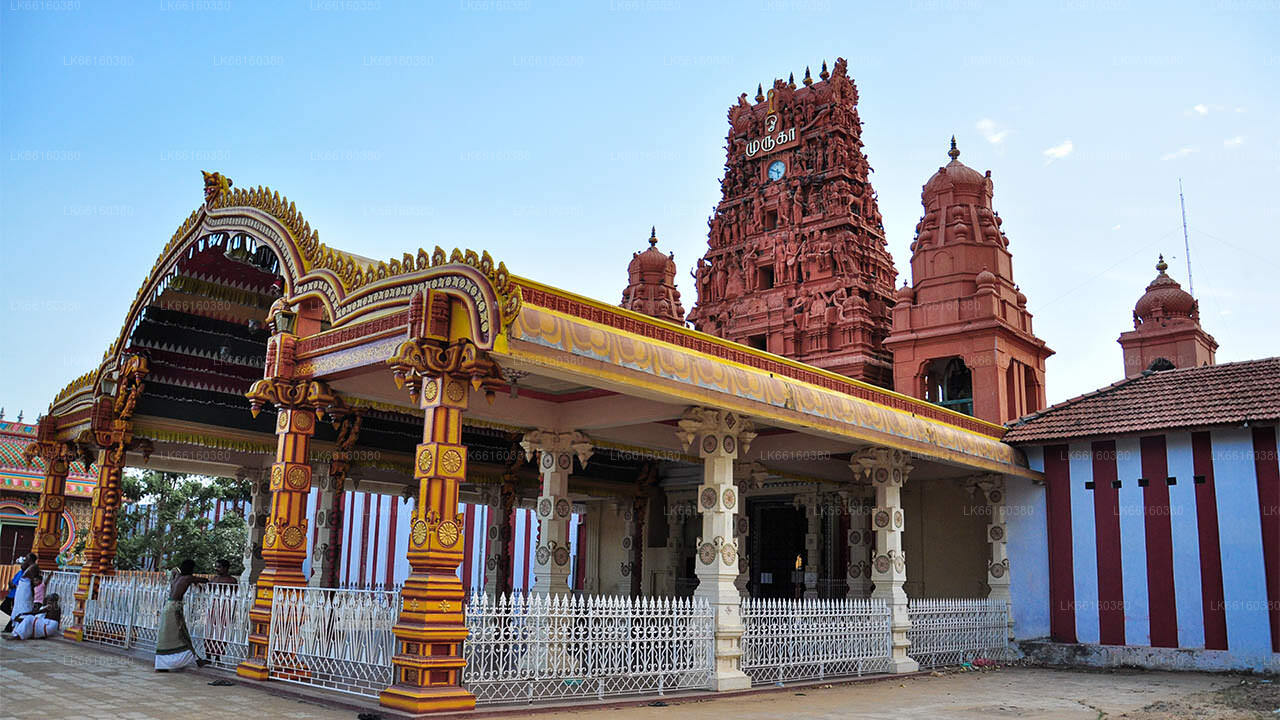
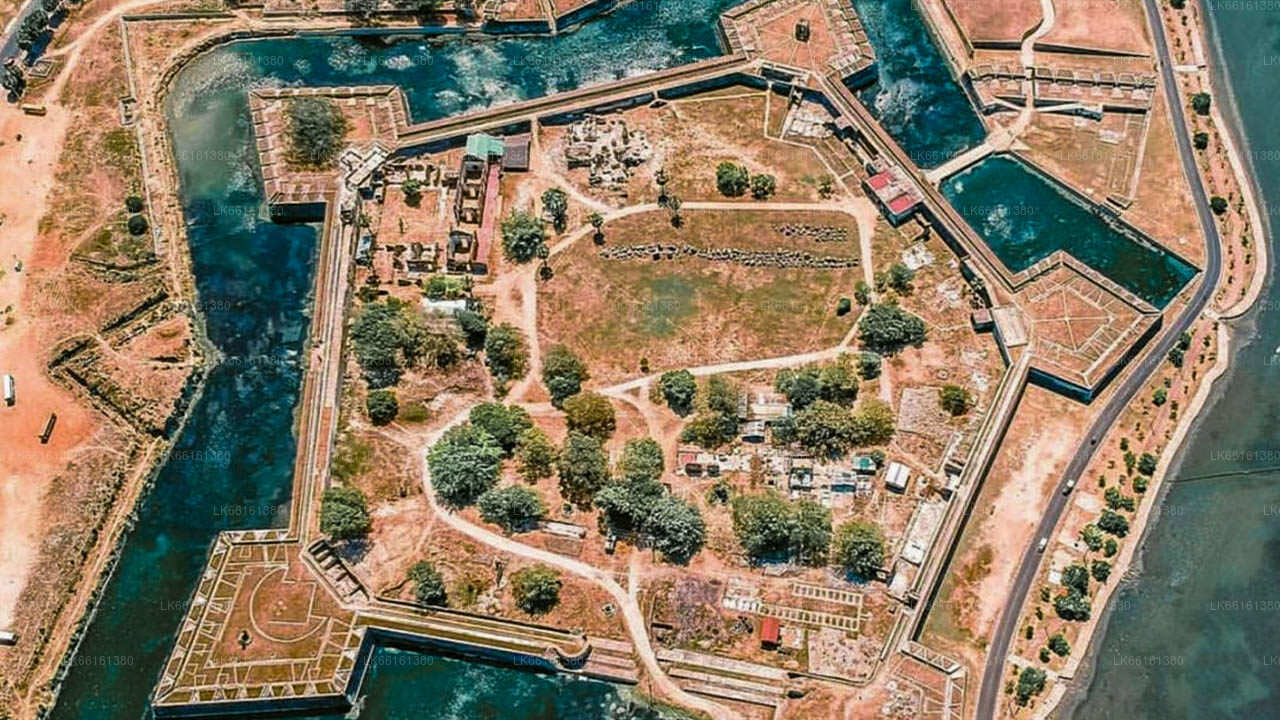
Jaffna is home to beautiful Hindu temples. An Old Dutch Fort still stands well preserved within which is an old Church. Another example of Dutch architecture is the King's House. No visit to Jaffna is complete without tasting the exquisite Jaffna mango, reputed for its sweetness. About 3 km away is the majestic Nallur Kandaswamy Temple, home to the largest religious festival in Jaffna. The Kayts Harbour is an ancient ship docking site in the Jaffna region.
About Northern Province
The Northern Province is one of the 9 provinces of Sri Lanka. The provinces have existed since the 19th century but they didn't have any legal status until 1987 when the 13th Amendment to the 1978 Constitution of Sri Lanka established provincial councils. Between 1988 and 2006 the province was temporarily merged with the Eastern Province to form the North-East Province. The capital of the province is Jaffna.
Northern Province is located in the north of Sri Lanka and is just 22 miles (35 km) from India. The province is surrounded by the Gulf of Mannar and Palk Bay to the west, Palk Strait to the north, the Bay of Bengal to the east and the Eastern, North Central and North Western provinces to the south.The province has a number of lagoons, the largest being Jaffna Lagoon, Nanthi Kadal, Chundikkulam Lagoon, Vadamarachchi Lagoon, Uppu Aru Lagoon, Kokkilai lagoon, Nai Aru Lagoon and Chalai Lagoon.Most of the islands around Sri Lanka are to be found to the west of the Northern Province. The largest islands are: Kayts, Neduntivu, Karaitivu, Pungudutivu and Mandativu.
The Northern Province's population was 1,311,776 in 2007. The majority of the populations are Sri Lankan Tamils, with a minority Sri Lankan Moor and Sinhalese population. Sri Lankan Tamil is the major language spoken in the province by the vast majority of the population. The other language spoken is Sinhala by 1 percent of the population. English is widely spoken and understood in the cities.