Tissamaharama Raja Maha Viharaya

Tissamaharama Raja Maha Vihara Tissamaharama Raja Maha Vihara Tissamaharama Raja Maha Vihara

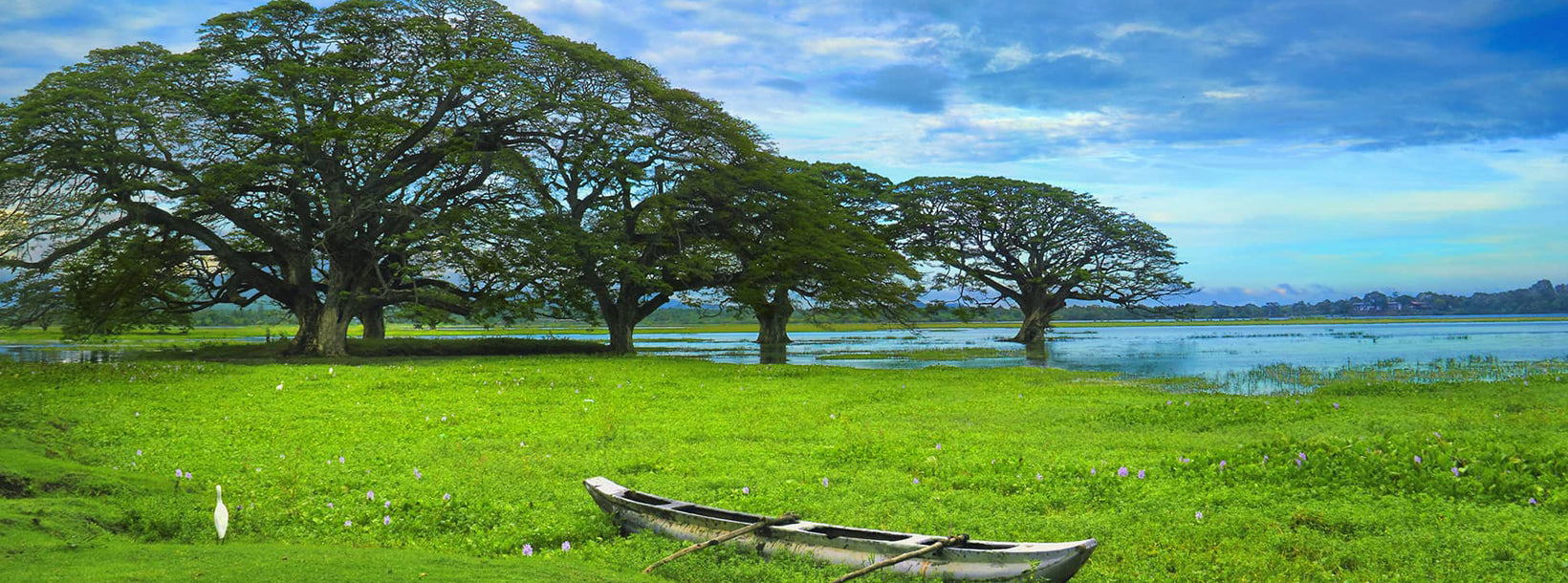
Tissamaharama Raja Maha Vihara, typically says the ‘Temple of Tissa,’ the 55.8m high dagoba is presumed to hold a sacred tooth relic and forehead bone relic. Adjoining wewa (lake) is said to be constructed around 200 BC by King Kavantissa resembling a common concept of ‘lake and temple’ in the good old days. Next to the dagoba is a statue of the heroic Queen Viharamahadevi; Sandagiri Stupa, presumed to be the oldest stupa in southern Sri Lanka and the area of ‘Kshatriya’ warrior clan. The stupa enshrines relics received as gifts from Emperor Asoka. A 2-3rd century BC ‘Siri Pathul Gal’ (footprint of Buddha carved in rock slabs) is among the ruins; Kirinda Raja Maha Vihara, about 10km south of Tissa is where princess Viharamahadevi drifted ashore as per legend. She was sacrificed to sea by her father King Kelanitissa of Kelaniya (close to Colombo) as a penance after he killed a monk. Subsequently, she married King Kavantissa, ruler of the Ruhunu kingdom. Their sons were Dutugemunu and Tissa, the former is the all-time admired Sinhalese king, who liberated Anuradhapura from Indian invaders, namely King Elara in the 2nd century BC and united the country.

In the city of Tissamamarama, there are 4 ancient stupas belonging to the Anuradhapura Era ara lying in a row. These are

      1. Sandagiri Stupa

      2. Tissamaharama Stupa

      3. Yatala Vehera

    4. Menik Vehera

Out of these, the most worshiped and the largest is the Tissamaharama Stupa & according to ancient chronicles this stupa has been built by King Kavantissa who ruled Ruhuna in the 1st century BC. But there is also a belief that this stupa was initially built by regional King Mahanaga in the 3rd century BC and King Kavantissa probably enlarged the shrine.

Mahanaga is a brother of King Devanampiyathissa (150-210 BC ). History states that that when Mahanaga was inspecting the construction of Walas Reservoir (???? ???), the queen of Devanampiyathissa send him a bowl of Mangos with the top most one poisoned. Her intention was to kill Mahanaga to ensure the throne to her son after Devanampiyathissa. At that time the son was with his uncle at the tank and child ate the poisoned mango and died on the spot. Fearing reprisal he took his pregnant wife and escaped to Ruhuna where he built up his own regional kingdom surrounding Magama area.

Tissamaharama Raja Maha Vihara Tissamaharama Raja Maha Vihara 

O okrese Hambantota

Hambantota je venkovské město na jihovýchodním pobřeží Srí Lanky. Je také hlavním městem okresu Hambantota v Jižní provincii Srí Lanky. Hambantota, která se nachází přibližně 240 km od Kolomba, se proměňuje ve strategický přístav a obchodní centrum a prochází rozsáhlým rozvojem infrastruktury. Hambantota, lemovaná rozlehlými písečnými plážemi, je výhodnou lokalitou pro návštěvu okolních památek.

Národní park Bundala leží 20 km východně od Hambantoty a svatyně Wiravila o něco dále. Národní park Ruhuna a chrám Kataragama jsou dalšími atrakcemi, ke kterým se z tohoto města snadno dostanete.

O Jižní provincii

Jižní provincie Srí Lanky je malá geografická oblast sestávající z okresů Galle, Matara a Hambantota. Pro velkou většinu obyvatel tohoto regionu je hlavním zdrojem příjmů zemědělství a rybolov.

Mezi důležité památky Jižní provincie patří přírodní rezervace v národních parcích Yala a Udawalawe, svaté město Kataragama a starobylá města Tissamaharama, Kirinda a Galle. (Ačkoli je Galle starobylé město, z doby před portugalskou invazí se nedochovalo téměř nic.) Během portugalského období žili dva slavní sinhálští básníci, Andare z Dickwelly a Gajaman Nona z Denipitiya v okrese Matara, kteří skládali básně o obyčejných lidech.