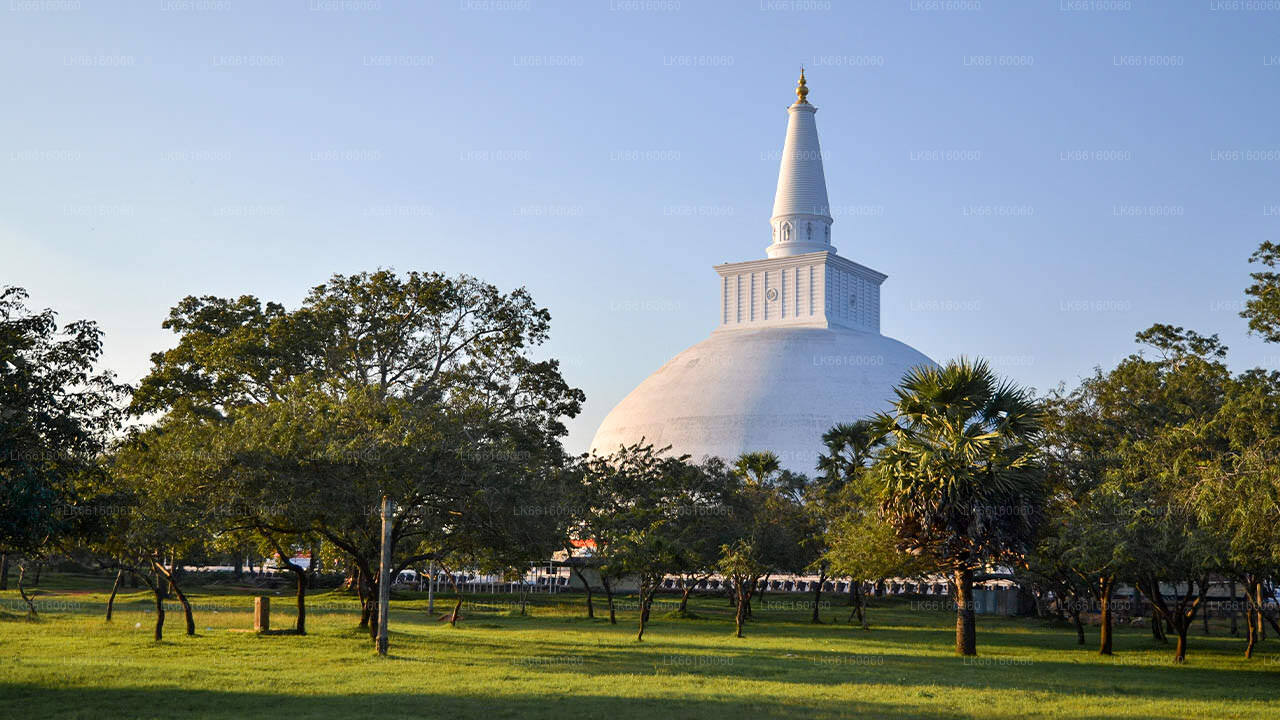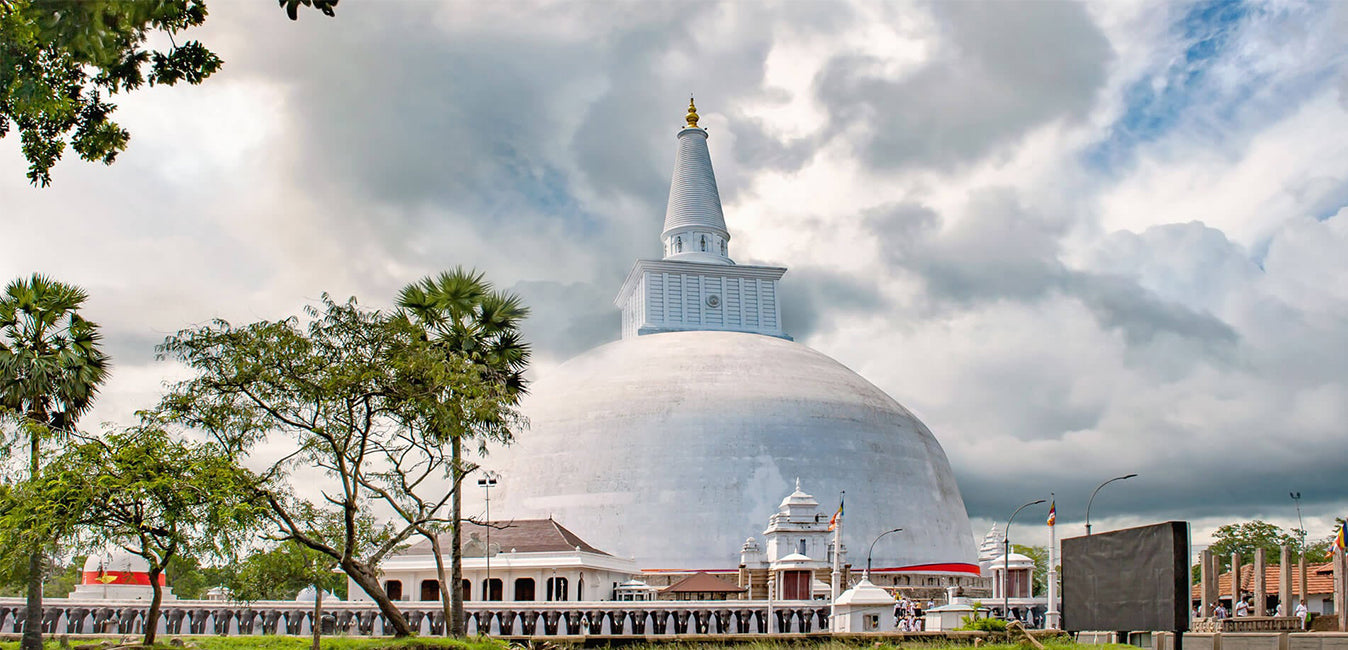
Ruwanweliseya
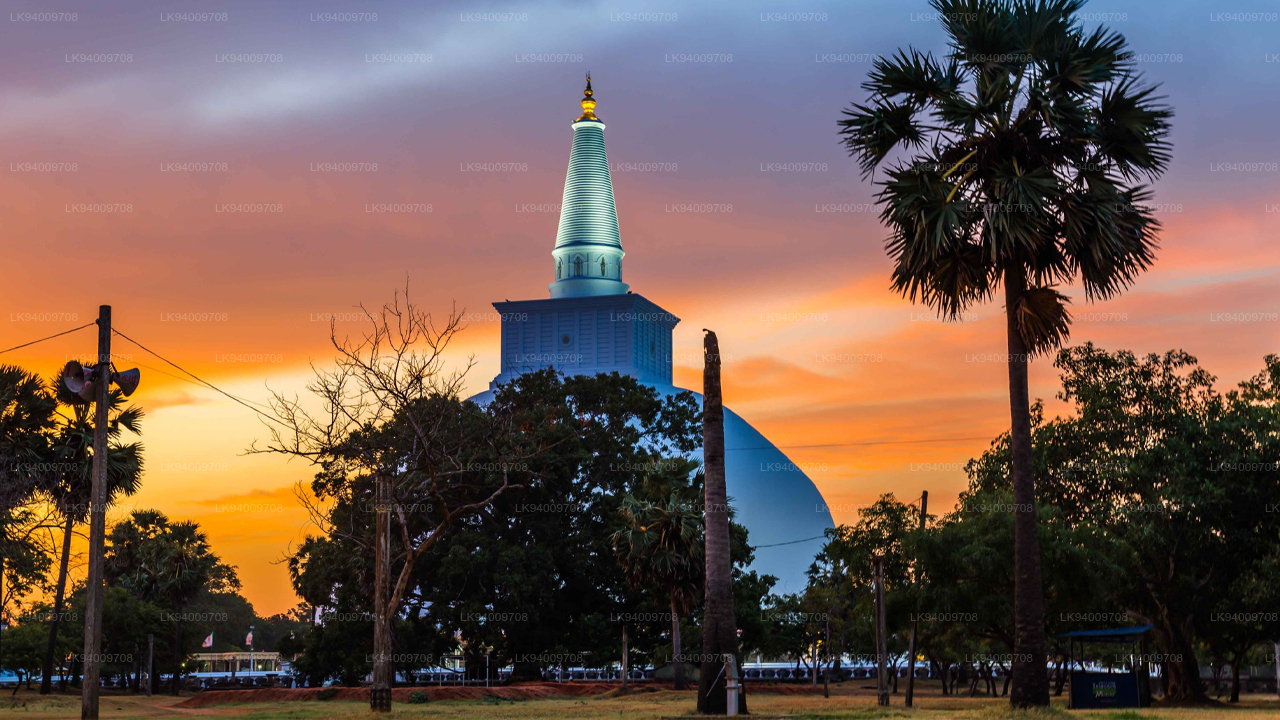
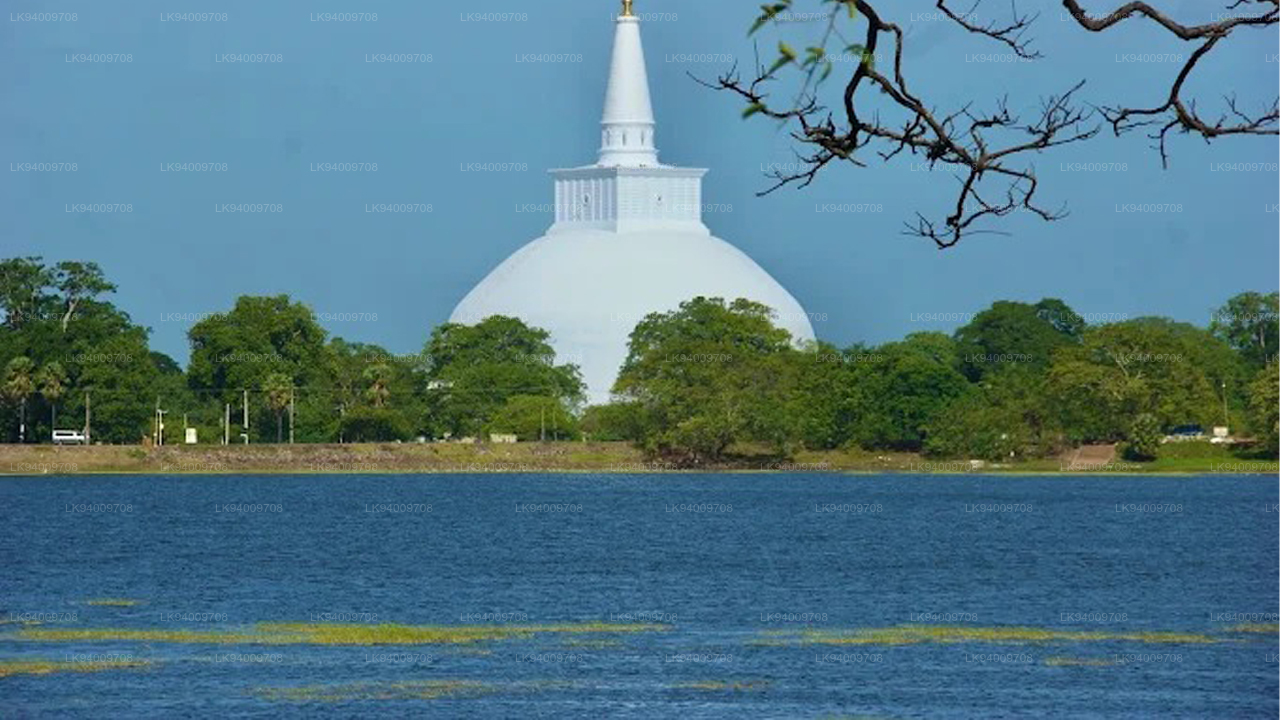

Ruwanweliseya Stupa (Ruwanveli Seya Stupa), det främsta av de storslagna och levande forntida monumenten i det singalesiska buddhistiska kulturarvet i staden Anuradhapura (ett UNESCO-världsarv – kultur), byggdes av Kung Dutugamunu (161–137 f.Kr.), nationens hjälte som kom från Ruhuna – en region som genom historien fram till modern tid har fött många av öns mest berömda hjältar. Ruwanweliseya Stupa (Ruwanveli Seya Stupa), även kallad Maha Stupa (singalesiska: den stora dagoban) eller Ratnapali Stupa eller Swarnamali Stupa, är den mest vördnadsfullt respekterade och älskade av alla de stora forntida dagoborna på Sri Lanka. Anuradhapura är rik på forntida kulturminnen som ligger mellan floden Malwatu Oya och två stora forntida konstgjorda bevattningsreservoarer – Tissa Wewa och Abhaya Wewa (Basawakkulama Wewa). Dessa två reservoarer, tillsammans med den forntida Nuwara Wewa på den östra sidan av Malwatu Oya, utgör livsnerven för jordbruket i Anuradhapura-distriktet.
De tre stora forntida stupaerna söder om den raserade södra muren i Anuradhapura — Ruwanweliseya Stupa, Mirisavatiya Dagoba och Jetavanaramaya Stupa — ligger perfekt i linje med den himmelska positionen för stjärnorna Rigel, Mintaka och Bellatrix, tre av de sju stjärnorna i Orion, vilka de forntida egyptierna (3150 f.Kr. – traditionell egyptisk kronologi) associerade med Osiris, solens, återfödelsens och efterlivets gud.
Och Anuradhapura på Sri Lanka (anomali för låg gravitation: –104 m geoid), trots att den ligger långt söder om Bodh Gaya i norra Indien, befinner sig endast tre och en halv grad väster om den. Bodh Gaya, platsen där Gautama Buddha nådde fullständig upplysning, anses enligt buddhistisk kosmologi vara Patavi Nahbi (sanskrit: jordens navel). Den geografiska antipoden till Bodh Gaya — på andra sidan jordklotet, sammanlänkat genom en axel som passerar genom jordens centrum — är Soltemplet (kallat universums navel) från Maya-civilisationen (3114 f.Kr. – den långa räkningens kalender), beläget vid ett UNESCO-världsarv i Cuzco (quechua: universums navel), nära Machu Picchu – mayafolkets förlorade stad.
Utöver de oförklarliga kosmologiska och geografiska mysterierna som omger Ruwanweliseya Stupa (Ruwanveli Seya Stupa), finns även det faktum att byggnadsplatserna för Ruwanweliseya och Mirisavatiya bestämdes av extraordinära omständigheter. Och det finns ännu mer häpnadsväckande detaljer…
-
 Sri Maha Bodhiya
Jaya Sri Maha Bodhi is a sacred bo tree in the Mahamewna Gardens, Anuradhapura, Sri Lanka. It is the southern branch from the historical Sri Maha Bodhi at Buddha Gaya in India under which Buddha attained Enlightenment. It was planted in 288 BC, and is the oldest living human-planted tree in the world with a known planting date.
-
 Ruwanweliseya
The Ruwanweli Maha Seya, also known as the Mahathupa (the Great Thupa) is a stupa (a hemispherical structure containing relics) in Anuradhapura, Sri Lanka. Two quarts or one Dona of the Buddha's relics are enshrined in the stupa, making it the largest collection of his relics anywhere. It was built by Sinhalese King Dutugemunu in c. 140 B.C., who became king of Sri Lanka after a war in which the Chola King Elāra (Ellalan) was defeated.
-
 Thuparamaya
Thuparamaya is the first Buddhist temple that was constructed, after the arrival of mahinda thero(mahindagamanaya) in Sri Lanka. Located in the sacred area of Mahamewna park, the Thuparamaya Stupa is the earliest Dagoba to be constructed in the island, dating back to the reign of King Devanampiya Tissa (247-207 BC). The temple has been formally recognised by the Government as an archaeological site in Sri Lanka.
-
 Lovamahapaya
Lovamahapaya is a building situated between Ruwanweliseya and Sri Mahabodiya in the ancient city of Anuradhapura, Sri Lanka. It is also known as the Brazen Palace or Lohaprasadaya because the roof was covered with bronze tiles. In ancient times, the building included the refectory and the uposathagara (Uposatha house).
-
 Abhayagiri Stupa
Abhayagiri Vihāra was a major monastery site of Mahayana, Theravada and Vajrayana Buddhism that was situated in Anuradhapura, Sri Lanka. It is one of the most extensive ruins in the world and one of the most sacred Buddhist pilgrimage cities in the nation.
-
 Jetavanaramaya
The Jetavanarama stupa or Jetavanaramaya is a stupa, or Buddhist reliquary monument, located in the ruins of Jetavana monastery in the UNESCO world heritage city of Anuradhapura, Sri Lanka. At 122 metres (400 ft), it was the world's tallest stupa, and the third tallest structure in the world when it was built by King Mahasena of Anuradhapura (273–301).
-
 Mirisawetiya Stupa
The Mirisaweti Stupa is a memorial building, a stupa, situated in the ancient city of Anuradhapura, Sri Lanka. King Dutugamunu (161 BC to 137 BC) built the Mirisaveti Stupa after defeating King Elara. After placing the Buddha relics in the sceptre, he had gone to Tissa Wewa for a bath leaving the sceptre.
-
 Lankarama
Lankarama is a stupa built by King Valagamba, in an ancient place at Galhebakada in the ancient kingdom of Anuradhapura, Sri Lanka. Nothing is known about the ancient form of the stupa, and later this was renovated. The ruins show that there are rows of stone pillars and it is no doubt that there has been a house built encircling the stupa (vatadage) to cover it.
-
 Isurumuniya
Isurumuniya is a Buddhist temple situated near to the Tissa Wewa (Tisa tank) in Anuradhapura, Sri Lanka. There are four carvings of special interest in this Vihara. They are the Isurumuniya Lovers, Elephant Pond and The Royal Family. The ancient Meghagiri Vihara or Meygiri Vihara is presently identified as the Isurumuni Vihara.