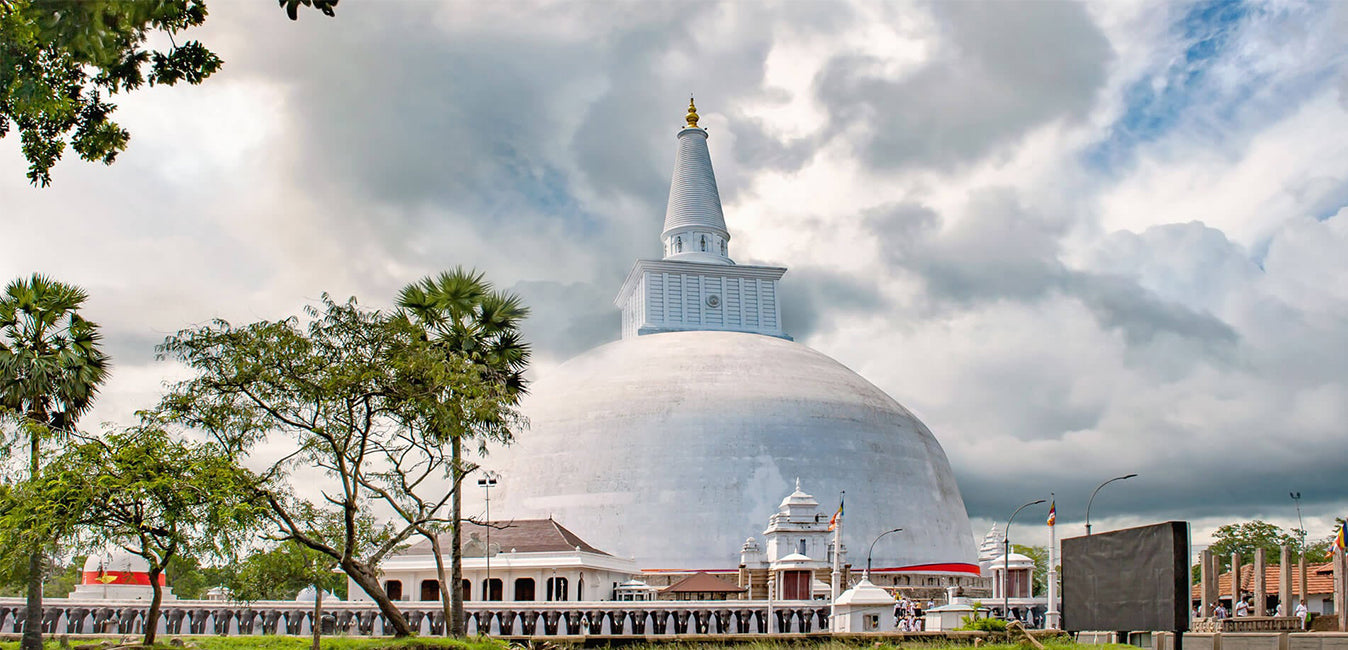
Jetavanaramaya Stupa


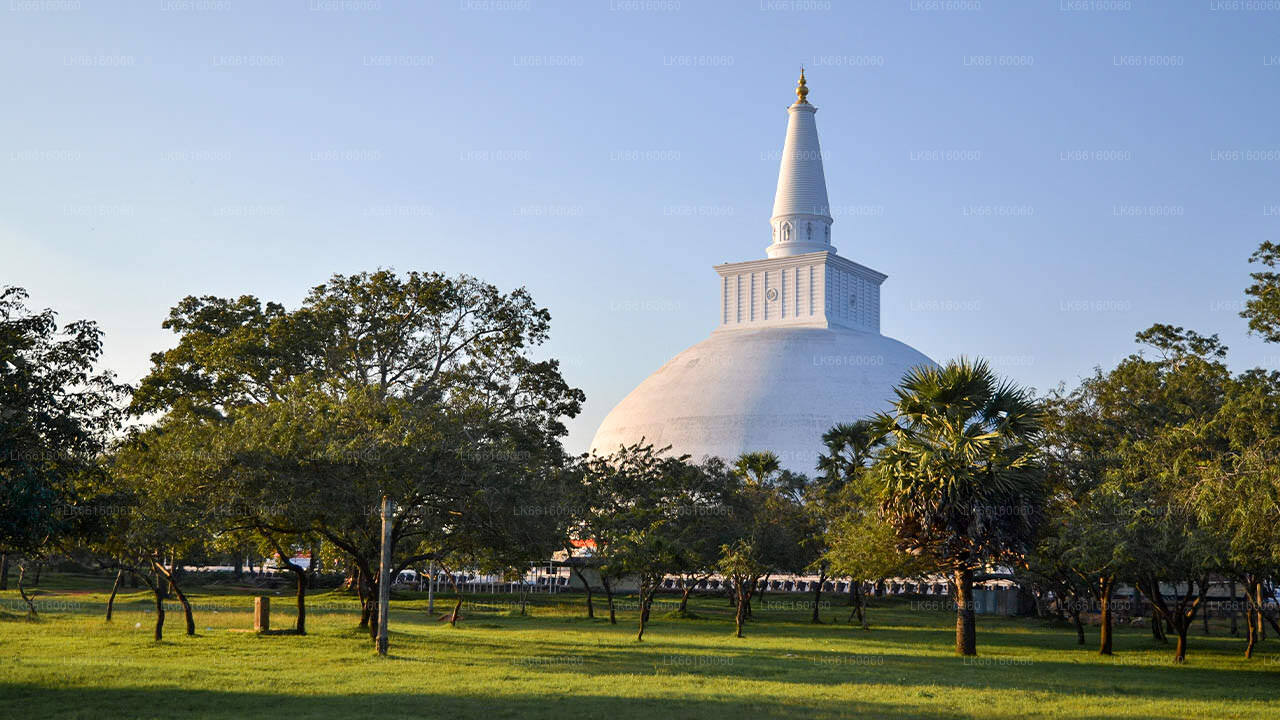
Jetavanarama stupa eller Jetavanaramaya är en stupa, eller buddhistisk relikvimonument, som ligger i ruinerna av Jetavana-klostret i UNESCO:s världsarvstad Anuradhapura, Sri Lanka. Med sina 122 meter (400 fot) var den världens högsta stupa och den tredje högsta strukturen i världen när den byggdes av kung Mahasena från Anuradhapura (273–301). Han började bygga stupan efter förstörelsen av Mahaviharaya i Anuradhapura. Hans son Maghavanna I fullföljde bygget av stupan och den renoverades av Parakramabahu I från Polonnaruwa. En del av ett bälte eller band som Buddha band är det relikvie som tros vara bevarat här.
Strukturen är betydelsefull i öns historia eftersom den representerar spänningarna mellan Theravada- och Mahayana-sekterna inom buddhism; den är också betydelsefull i den inspelade historien som en av de högsta strukturerna i den antika världen, och den högsta icke-pyramidala byggnaden; stupans höjd var 122 meter (400 fot), vilket gjorde det till den högsta stupan i den antika världen. Efter förstörelsen och övergivandet av Anuradhapura-riket på 1100-talet täcktes stupan och andra byggnader av djungeln. Kung Parakramabahu försökte renovera denna stupa på 1200-talet och den byggdes om till den nuvarande höjden, en minskning från den ursprungliga höjden. Idag står den på 71 meter (233 fot).
Komplexet täcker cirka 5,6 hektar och man uppskattar att det rymde 10 000 buddhistiska munkar. En sida av stupan är 176 m (576 fot) lång och trapporna på var och en av de fyra sidorna är 9 m (28 fot) breda. Dörrposten till helgedomen, som ligger på gården, är 8 m (27 fot) hög. Stupan har ett fundament som är 8,5 m (28 fot) djupt och står på fast berggrund.
Strukturen är inte längre den högsta, men den är fortfarande den största, med en basarea på 233 000 m² (2 508 000 kvadratfot). Cirka 93,3 miljoner bakade tegelstenar användes vid byggandet; den ingenjörsmässiga uppfinningsrikedomen bakom byggandet av denna struktur är en viktig utveckling i öns historia.


-
 Sri Maha Bodhiya
Jaya Sri Maha Bodhi is a sacred bo tree in the Mahamewna Gardens, Anuradhapura, Sri Lanka. It is the southern branch from the historical Sri Maha Bodhi at Buddha Gaya in India under which Buddha attained Enlightenment. It was planted in 288 BC, and is the oldest living human-planted tree in the world with a known planting date.
-
 Ruwanweliseya
The Ruwanweli Maha Seya, also known as the Mahathupa (the Great Thupa) is a stupa (a hemispherical structure containing relics) in Anuradhapura, Sri Lanka. Two quarts or one Dona of the Buddha's relics are enshrined in the stupa, making it the largest collection of his relics anywhere. It was built by Sinhalese King Dutugemunu in c. 140 B.C., who became king of Sri Lanka after a war in which the Chola King Elāra (Ellalan) was defeated.
-
 Thuparamaya
Thuparamaya is the first Buddhist temple that was constructed, after the arrival of mahinda thero(mahindagamanaya) in Sri Lanka. Located in the sacred area of Mahamewna park, the Thuparamaya Stupa is the earliest Dagoba to be constructed in the island, dating back to the reign of King Devanampiya Tissa (247-207 BC). The temple has been formally recognised by the Government as an archaeological site in Sri Lanka.
-
 Lovamahapaya
Lovamahapaya is a building situated between Ruwanweliseya and Sri Mahabodiya in the ancient city of Anuradhapura, Sri Lanka. It is also known as the Brazen Palace or Lohaprasadaya because the roof was covered with bronze tiles. In ancient times, the building included the refectory and the uposathagara (Uposatha house).
-
 Abhayagiri Stupa
Abhayagiri Vihāra was a major monastery site of Mahayana, Theravada and Vajrayana Buddhism that was situated in Anuradhapura, Sri Lanka. It is one of the most extensive ruins in the world and one of the most sacred Buddhist pilgrimage cities in the nation.
-
 Jetavanaramaya
The Jetavanarama stupa or Jetavanaramaya is a stupa, or Buddhist reliquary monument, located in the ruins of Jetavana monastery in the UNESCO world heritage city of Anuradhapura, Sri Lanka. At 122 metres (400 ft), it was the world's tallest stupa, and the third tallest structure in the world when it was built by King Mahasena of Anuradhapura (273–301).
-
 Mirisawetiya Stupa
The Mirisaweti Stupa is a memorial building, a stupa, situated in the ancient city of Anuradhapura, Sri Lanka. King Dutugamunu (161 BC to 137 BC) built the Mirisaveti Stupa after defeating King Elara. After placing the Buddha relics in the sceptre, he had gone to Tissa Wewa for a bath leaving the sceptre.
-
 Lankarama
Lankarama is a stupa built by King Valagamba, in an ancient place at Galhebakada in the ancient kingdom of Anuradhapura, Sri Lanka. Nothing is known about the ancient form of the stupa, and later this was renovated. The ruins show that there are rows of stone pillars and it is no doubt that there has been a house built encircling the stupa (vatadage) to cover it.
-
 Isurumuniya
Isurumuniya is a Buddhist temple situated near to the Tissa Wewa (Tisa tank) in Anuradhapura, Sri Lanka. There are four carvings of special interest in this Vihara. They are the Isurumuniya Lovers, Elephant Pond and The Royal Family. The ancient Meghagiri Vihara or Meygiri Vihara is presently identified as the Isurumuni Vihara.