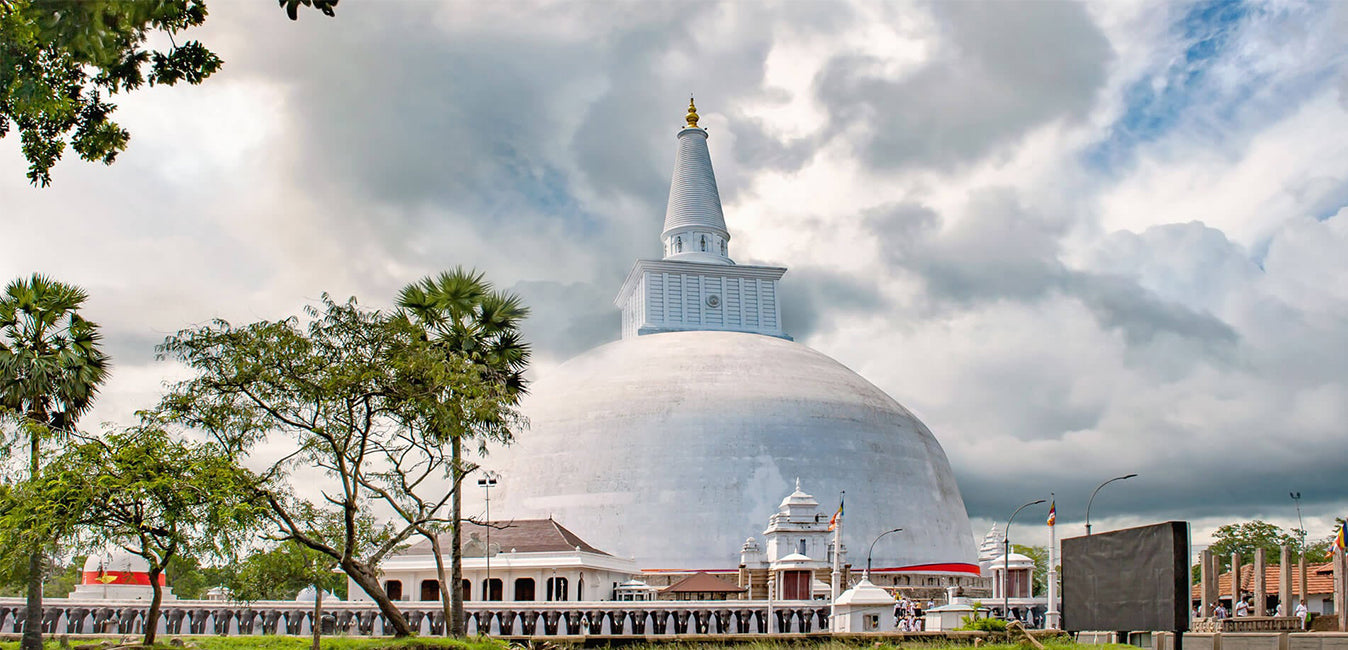
Jetavana Monastery


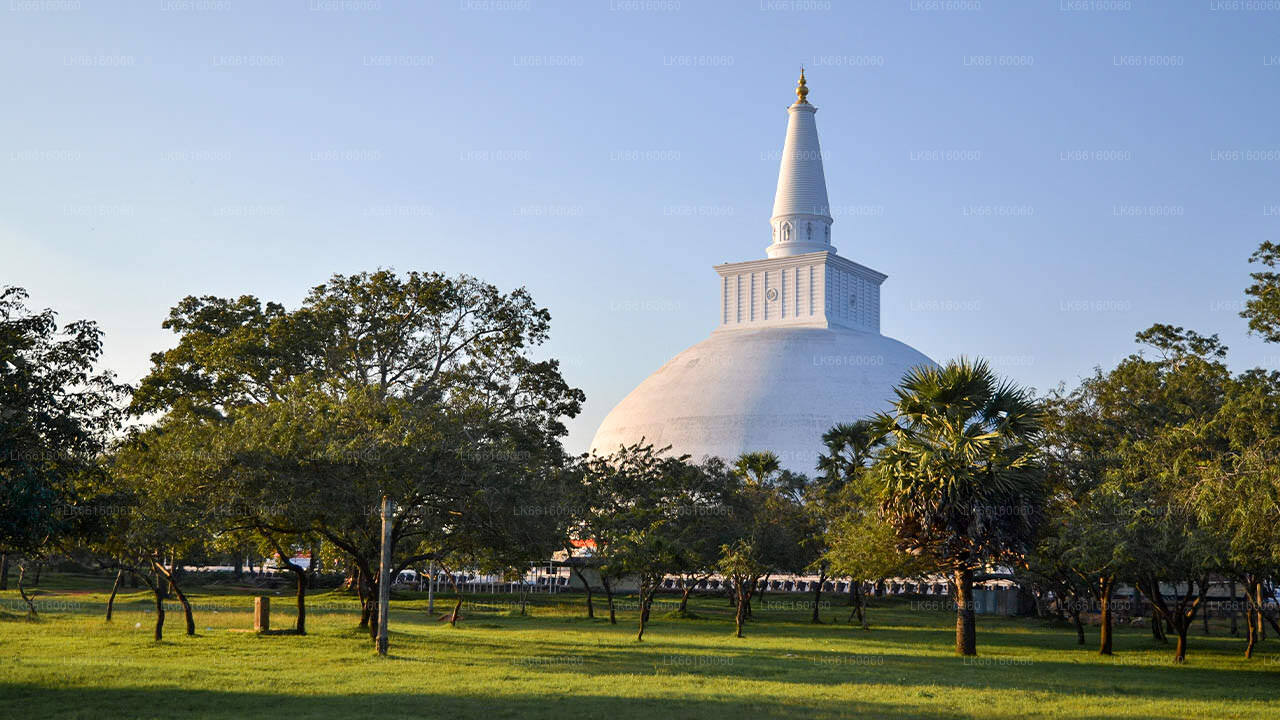
Jetavana Monastery at Anuradhapura one of the major Buddhist Monasteries of Sri Lanka was founded by King Mahasena (276-303 AC). His reputation as a builder of great monasteries was somewhat tarnished by his grave misdeeds against the Mahavihara Monastery. Though following his repentance and restoration of Mahavihara Monastery saved the name of the great king in the annals of history of Sri Lanka, today he was remembered as one of the greatest builders of tanks(rainwater reservoirs) of Sri Lanka. Such was the glory of the king following the construction of vast Minneriya tank, the king, following his death, was elevated the statues of deity named ‘Minneriya Deviyo” in the legends of Sri Lanka.
Jetavana Monastery was built in the Nandana Pleasure Garden, where the great Buddhist missionary Thera Mahinda, the son of Emperor Asoka of India, preached the Buddhism for seven consecutive days. Following the historical event the Garden was named “Jotivana” meaning “the place where the holy one made the true doctrine shine forth”. According to the historians, Thera Mahinda was known by the title of Dipajotaka meaning “Light of Lanka”. It is also said that the great monk and his associate monks were cremated herein following their death.The present monastery complex covering an area of 48 hectares was a result of gradual expansion of at least six centuries since its establishment in the 3rd century A.C.
The layout of Jetavana Monastery in Sri Lanka is identical to that of the Abhayagiri monastery though smaller in dimensions. All the components within the monastery too are to a large extent similar to those of Abhayagiri monastery: the stupa, the image house (pilimage), Bo tree Shrine (Bodhigara), the chapter house (uposathagara), the assembly hall (sannipatasala) and the residential complex of the Buddhist monks ( pannasala). The buildings were set up around the stupa in relation to the cardinal points: image house to the west, Bo-tree Shrine (Bodhigara) and chapter house to the south, and the refactery to the east. Around the stupa ran a belt of residential colleges of the monks with the entances to them facing the stupa. The refectory reveals the monastery is home to about 3000 resident Buddhist monks.
Museum at the Jetavana monastery
The museum is of great service revealing the artefacts discovered within the monastery during excavations. The numerous artefacts discovered is of such a volume, today these were called Jetavanana Treasure. Most of the artefacts were found deposited in the thick clay layer between the basal platform and a brick upper platform built during the original construction of the stupa by King Mahasena. The artefacts were dated between second century BC and the last quarter of the third century AC based on the contextual and stylistic grounds.
Among the artefacts displayed at the museum are imported and local ceramics; Roman, Indian and other coins, more than 300,000 beads made of clay, glass, stone, crystal, agate, carnelian, ivory, bone, shell, gold and silver, and also bronze; Buddhist and Hindu
-
 Sri Maha Bodhiya
Jaya Sri Maha Bodhi is a sacred bo tree in the Mahamewna Gardens, Anuradhapura, Sri Lanka. It is the southern branch from the historical Sri Maha Bodhi at Buddha Gaya in India under which Buddha attained Enlightenment. It was planted in 288 BC, and is the oldest living human-planted tree in the world with a known planting date.
-
 Ruwanweliseya
The Ruwanweli Maha Seya, also known as the Mahathupa (the Great Thupa) is a stupa (a hemispherical structure containing relics) in Anuradhapura, Sri Lanka. Two quarts or one Dona of the Buddha's relics are enshrined in the stupa, making it the largest collection of his relics anywhere. It was built by Sinhalese King Dutugemunu in c. 140 B.C., who became king of Sri Lanka after a war in which the Chola King Elāra (Ellalan) was defeated.
-
 Thuparamaya
Thuparamaya is the first Buddhist temple that was constructed, after the arrival of mahinda thero(mahindagamanaya) in Sri Lanka. Located in the sacred area of Mahamewna park, the Thuparamaya Stupa is the earliest Dagoba to be constructed in the island, dating back to the reign of King Devanampiya Tissa (247-207 BC). The temple has been formally recognised by the Government as an archaeological site in Sri Lanka.
-
 Lovamahapaya
Lovamahapaya is a building situated between Ruwanweliseya and Sri Mahabodiya in the ancient city of Anuradhapura, Sri Lanka. It is also known as the Brazen Palace or Lohaprasadaya because the roof was covered with bronze tiles. In ancient times, the building included the refectory and the uposathagara (Uposatha house).
-
 Abhayagiri Stupa
Abhayagiri Vihāra was a major monastery site of Mahayana, Theravada and Vajrayana Buddhism that was situated in Anuradhapura, Sri Lanka. It is one of the most extensive ruins in the world and one of the most sacred Buddhist pilgrimage cities in the nation.
-
 Jetavanaramaya
The Jetavanarama stupa or Jetavanaramaya is a stupa, or Buddhist reliquary monument, located in the ruins of Jetavana monastery in the UNESCO world heritage city of Anuradhapura, Sri Lanka. At 122 metres (400 ft), it was the world's tallest stupa, and the third tallest structure in the world when it was built by King Mahasena of Anuradhapura (273–301).
-
 Mirisawetiya Stupa
The Mirisaweti Stupa is a memorial building, a stupa, situated in the ancient city of Anuradhapura, Sri Lanka. King Dutugamunu (161 BC to 137 BC) built the Mirisaveti Stupa after defeating King Elara. After placing the Buddha relics in the sceptre, he had gone to Tissa Wewa for a bath leaving the sceptre.
-
 Lankarama
Lankarama is a stupa built by King Valagamba, in an ancient place at Galhebakada in the ancient kingdom of Anuradhapura, Sri Lanka. Nothing is known about the ancient form of the stupa, and later this was renovated. The ruins show that there are rows of stone pillars and it is no doubt that there has been a house built encircling the stupa (vatadage) to cover it.
-
 Isurumuniya
Isurumuniya is a Buddhist temple situated near to the Tissa Wewa (Tisa tank) in Anuradhapura, Sri Lanka. There are four carvings of special interest in this Vihara. They are the Isurumuniya Lovers, Elephant Pond and The Royal Family. The ancient Meghagiri Vihara or Meygiri Vihara is presently identified as the Isurumuni Vihara.