Kurikadduwan Jetty — known colloquially as KKD Jetty, particularly among Sri Lanka Navy personnel — sits at the western tip of Punguduthivu Island in the Northern Province. It is the primary embarkation point for the government ferry service to Delft Island (Neduntheevu), one of the most remote and historically layered islands in the Jaffna Archipelago. For travellers venturing into this rarely visited corner of Sri Lanka, the jetty marks the threshold between the familiar road network of the Jaffna Peninsula and the open waters of the Palk Strait.
Where exactly is Kurikadduwan Jetty?
The jetty lies on Punguduthivu, a small island connected to the Jaffna mainland via a series of causeways that thread through Velanai Island. It sits at roughly 7 metres above sea level on low-lying terrain fringed by shallow coastal waters. The surrounding landscape is flat and sparse, with salt-tolerant scrub, palmyra palms, and fishing communities dotting the shoreline. The name Kurikadduwan (also spelled Kurikadduvan in Tamil transliteration) refers both to the settlement and to the jetty that serves it.
How do I get to Kurikadduwan Jetty from Jaffna?
The drive from Jaffna town to KKD Jetty takes around 40 minutes under normal conditions, though road quality varies. The route crosses the Velanai causeway and continues along the Punguduthivu causeway — both narrow, exposed stretches that can be slow going. Travellers are advised to leave Jaffna with sufficient time before the ferry's scheduled departure, as delays on the causeways are common and the ferry waits for no one.
- Distance from Jaffna town: approximately 30 km by road
- Route: Jaffna → Velanai → Punguduthivu → Kurikadduwan
- Road condition: causeway sections can be rough; a sturdy vehicle or tuk-tuk is preferable
- Parking: limited informal parking near the jetty
There is no regular public bus that runs all the way to the jetty, so most visitors arrange a private vehicle from Jaffna. Hiring a private driver for the day is a practical option, as it covers both the outbound journey and the wait or return from the ferry.
What is the ferry service from Kurikadduwan Jetty?
The Sri Lanka government operates a scheduled ferry from Kurikadduwan Jetty to Delft Island. The crossing takes around two to two and a half hours depending on sea conditions in the Palk Strait. Ferries typically run on limited days each week, so checking the current schedule before travel is essential — sailings can be suspended in rough weather or for operational reasons.
The ferry carries foot passengers and, on some sailings, motorcycles. There is minimal infrastructure at the jetty itself: no café, no luggage storage, and limited shade. Arriving early and bringing water and snacks is strongly recommended.
What is Delft Island, and why make the journey?
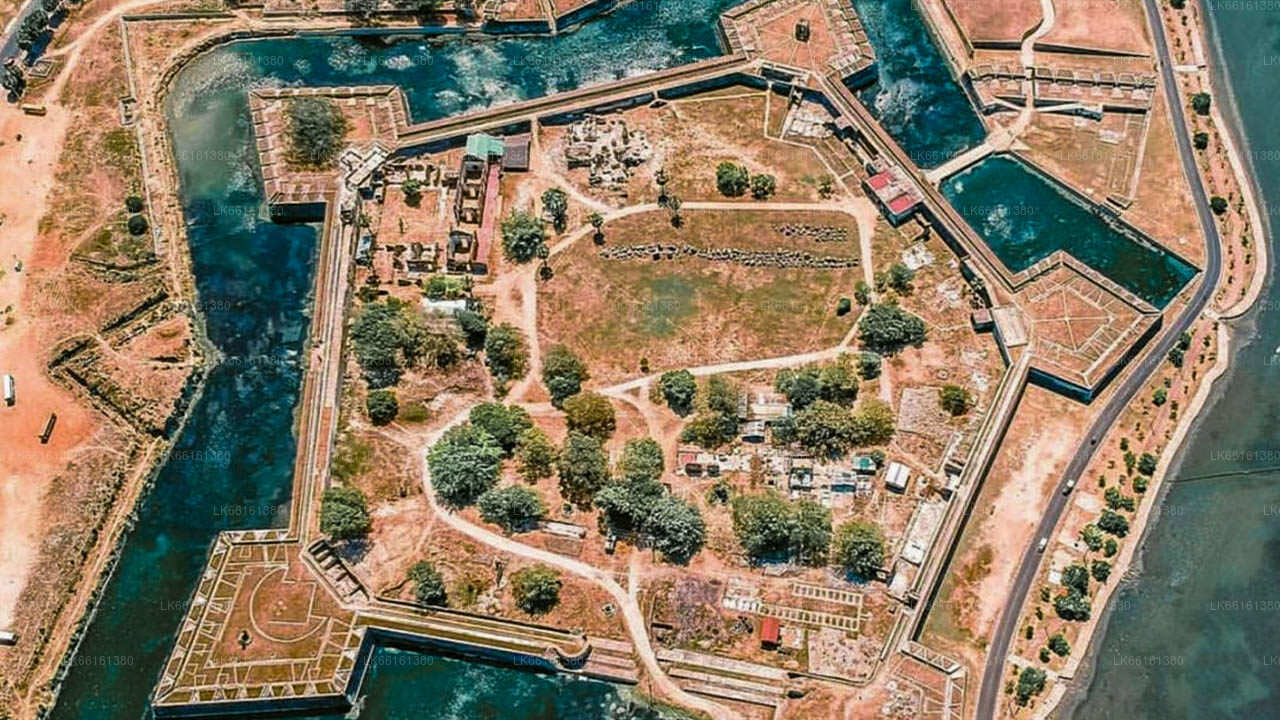
Delft Island — known in Tamil as Neduntheevu, meaning "long island" — is the largest island of the outer Jaffna Archipelago and one of the least-visited places in Sri Lanka. Its defining features are wild ponies that roam freely across its flat interior, the ruins of a Dutch-built fort, an ancient baobab tree of uncertain but considerable age, and a coral-stone gateway that stands incongruously in open scrubland. There are no hotels on Delft; day trippers must return on the afternoon ferry. The island offers a rare encounter with a landscape and pace of life that feels genuinely remote.
- Wild Delft ponies — descendants of horses introduced during Dutch colonial rule
- Dutch fort ruins dating to the 17th century
- Ancient baobab tree, believed to have been brought by Arab traders
- Coral-stone pigeon house and Portuguese-era structures
- Traditional fishing communities with Tamil heritage
When is the best time to visit Kurikadduwan Jetty and Delft Island?
The Northern Province has two distinct monsoon seasons that affect sea conditions. The most reliable window for the ferry crossing is from May through September, when the southwest monsoon brings dry, relatively calm weather to the north. The northeast monsoon, active roughly from October to January, can generate choppy seas in the Palk Strait and may cause ferry cancellations.
January to March is generally settled and pleasant, though the period around the northeast monsoon's tail end can still bring occasional disruptions. Travelling outside the monsoon peaks gives the best chance of a smooth crossing and clear skies over the island.
What should I know before boarding the ferry?
A few practical points will make the trip considerably easier:
- Confirm the schedule: Ferry timetables in the Jaffna Archipelago are subject to change. Verify the current departure days and times locally — your guesthouse in Jaffna or the Jaffna bus station are reliable sources.
- Arrive early: The jetty has limited capacity and queues form. Being there 30–45 minutes before departure is prudent.
- Carry cash: There are no ATMs near the jetty or on Delft Island.
- Pack light and waterproof: The crossing can be spray-heavy; keep documents and electronics in a dry bag.
- Return timing: Note the return ferry time from Delft carefully — missing it means an unplanned overnight stay, which is possible but logistically challenging without prior arrangement.
- Sun protection: The jetty and the open boat deck offer little shade. Sunscreen, a hat, and long sleeves are advisable.
Is there anything else to see near Kurikadduwan?
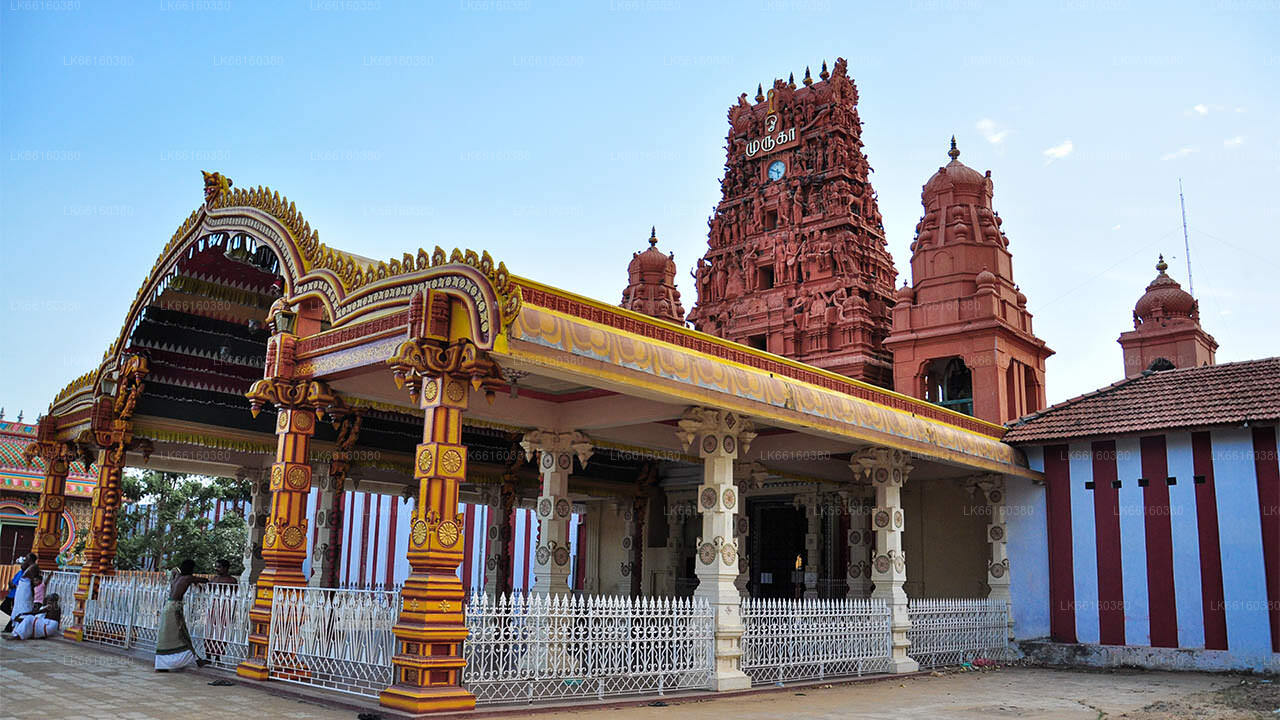
The islands between Jaffna and Kurikadduwan — particularly Velanai and Punguduthivu — reward slow travel. Small Hindu kovils, lagoon-edge fishing villages, and salt pans punctuate the drive. Kayts Island (Uruthirapuram), accessible from Jaffna via its own causeway, has additional Dutch-era ruins and a different ferry connection to Karaitivu. Together, these island chains form part of a broader Jaffna Archipelago experience that remains largely off the standard tourist circuit in Sri Lanka.
For travellers building a northern itinerary, Wilpattu National Park lies to the south and can be incorporated into a circuit that connects the Northern Province with the North Western coast — a route that contrasts the arid palmyra landscapes of the north with Wilpattu's dense dry-zone forest.