Lakpura
Lakpura®

Sau Dodol (Welithalapa; වැලිතලප)

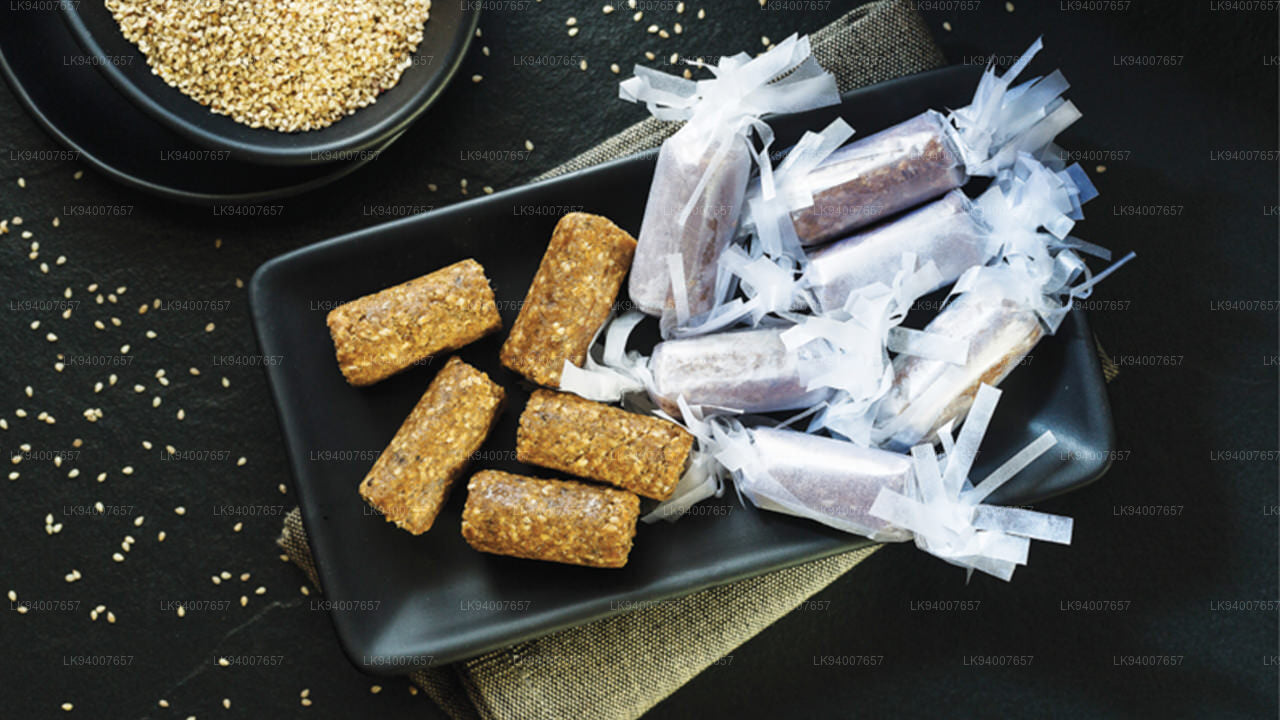
Among the sweets that appear on a Sri Lankan New Year table, Welithalapa — also known as Sau Dodol — occupies a place that few other confections can claim. Soft, dense, and faintly glistening, it is as much a ritual object as it is a food: no celebration of the Sinhala and Tamil New Year feels complete without a tray of it resting alongside other traditional sweets. Its name shifts by region and household — some call it Sau Dodol, others Welithalapa — but the recipe and the affection for it remain essentially the same across the island.

What is Welithalapa and how does it differ from Kalu Dodol?

Welithalapa belongs to the broader dodol family, a group of dense, chewy sweets found across South and Southeast Asia. The Sri Lankan version is typically lighter in colour than its close relative Kokis and Kalu Dodol, which is cooked much longer until it turns almost black. Welithalapa is pulled from the heat while still a warm amber, giving it a softer, more yielding texture and a gentler sweetness. Both sweets share a base of coconut milk, treacle (usually kithul or coconut treacle), and rice flour, but the ratio and cooking time determine the character of each.

The word weli in Sinhala means sand, a reference to the way the surface of a well-made Welithalapa can take on a faintly granular, melt-in-the-mouth quality rather than the rubbery chew of an overworked dodol.

What are the main ingredients in Welithalapa?

Traditional recipes rely on a short, honest list of ingredients, most of which have been grown on the island for centuries.

  • Coconut milk — extracted from freshly grated mature coconut, it provides richness and fat that carry the sweetness. Coconut (Cocos nucifera) is one of Sri Lanka's most versatile cultivated plants, and its milk is the backbone of many island desserts.
  • Kithul or coconut treacle — the primary sweetener. Kithul treacle, tapped from the fishtail palm, has a deep, caramel-like flavour that distinguishes Sri Lankan dodol from versions made with refined sugar.
  • Rice flour — usually made from raw red or white rice, it acts as a thickener and gives the sweet its characteristic body.
  • Cardamom — ground and added at the end of cooking, it lifts the heavy sweetness with a floral, slightly camphor note.
  • Salt — a small pinch that balances the sweetness and deepens the overall flavour.

Some households add cashews or dried fruits, though purists tend to keep the recipe unadorned. The quality of the treacle matters enormously: aged, thick treacle from reliable producers in the Kegalle or Matale districts is considered the best.

How is Welithalapa made?

Making a proper Welithalapa is slow, physical work. The ingredients are combined in a heavy-bottomed pan — traditionally a clay pot — and cooked over a wood fire or low gas flame. The mixture must be stirred continuously and without pause for anywhere from forty-five minutes to well over an hour, depending on the quantity. The cook watches for the moment the mass pulls away from the sides of the pan cleanly and holds its shape when a small piece is pressed between the fingers: that is when it is ready.

The cooked sweet is then poured into a greased tray or pressed into moulds, smoothed flat, and left to cool completely before cutting. The surface, when cooled, should be slightly firm to the touch but give easily under pressure. A piece made with a high proportion of kithul treacle will keep for several days at room temperature in a cool, dry kitchen — a practical quality in a country where New Year celebrations stretch across multiple days of visits and gatherings.

What is the nutritional profile of Welithalapa?

Welithalapa is energy-dense by design: it was historically made to sustain people through festive days of activity. A single serving provides meaningful calories primarily from natural sugars and fat. The coconut milk contributes medium-chain saturated fats, while the kithul treacle contains trace minerals and a lower glycaemic load than refined sugar, though it remains a sweet and should be enjoyed in moderation. Estimates suggest a standard piece can contain around 200–270 kilocalories, varying with the exact recipe and piece size.

The sweet contains no artificial preservatives, colourings, or flavour enhancers in its traditional form — a point worth noting at a time when consumers are looking more carefully at ingredient lists.

When is Welithalapa traditionally eaten?

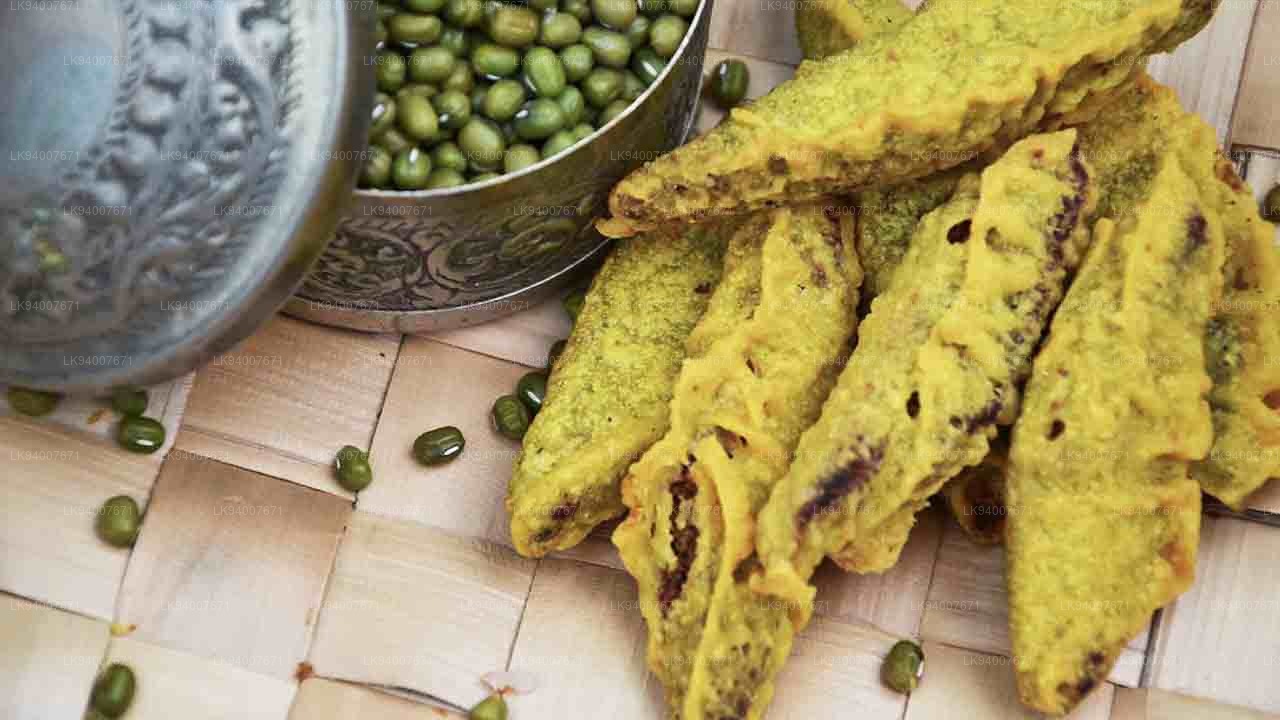
The most significant occasion is the Sinhala and Tamil New Year, which falls in April. Families prepare the sweet in the days leading up to the auspicious New Year times, and it is placed on the table alongside other confections — Kokis, Aasmi, Mung Kavum, and Konda Kavum — as part of the ritual first meal of the year. Offering Welithalapa to guests during the New Year period is a gesture of welcome and goodwill.

Beyond the New Year, Welithalapa appears at weddings, temple offerings, and family celebrations throughout the year, though it is made with particular care and in greater quantity for April. Commercial versions are available year-round in sweet shops and supermarkets across Sri Lanka, but many families still insist on making their own, preserving the recipe as an act of cultural memory as much as culinary preference.

How does Welithalapa compare to dodol from other parts of Asia?

Dodol in various forms is found across Indonesia, Malaysia, the Philippines, and parts of South India. The Sri Lankan version is distinguished primarily by the use of kithul treacle rather than palm sugar or coconut sugar, which gives it a darker, more complex flavour than, say, a Javanese dodol made with coconut palm sugar. The texture of Welithalapa is also typically softer than its Southeast Asian counterparts, which are often firmer and wrapped individually. Sri Lankan Kalu Dodol, the darker sibling, is closer in texture and intensity to the Malaysian version.

The shared presence of dodol-like sweets across the Indian Ocean world speaks to centuries of maritime trade and cultural exchange — a history that connects Sri Lanka to spice routes and culinary traditions stretching from the Malabar Coast to the Malay Peninsula.

Where can you buy authentic Welithalapa in Sri Lanka?

Freshly made Welithalapa is sold at sweet shops (kavili hal) in most Sri Lankan towns, particularly in the weeks approaching the New Year. Kandy, Kurunegala, and the hill-country towns are known for high-quality traditional confectionery. For travellers, the covered market areas of larger towns often have stalls dedicated to traditional sweets where you can taste before you buy.

Packaged versions from established Sri Lankan food brands are also widely available in supermarkets and are a practical option for taking the sweet home as a gift.

Book this experience with Lakpura

Curated by our local team. Direct booking, instant confirmation.

Ask Lakpura® Agent