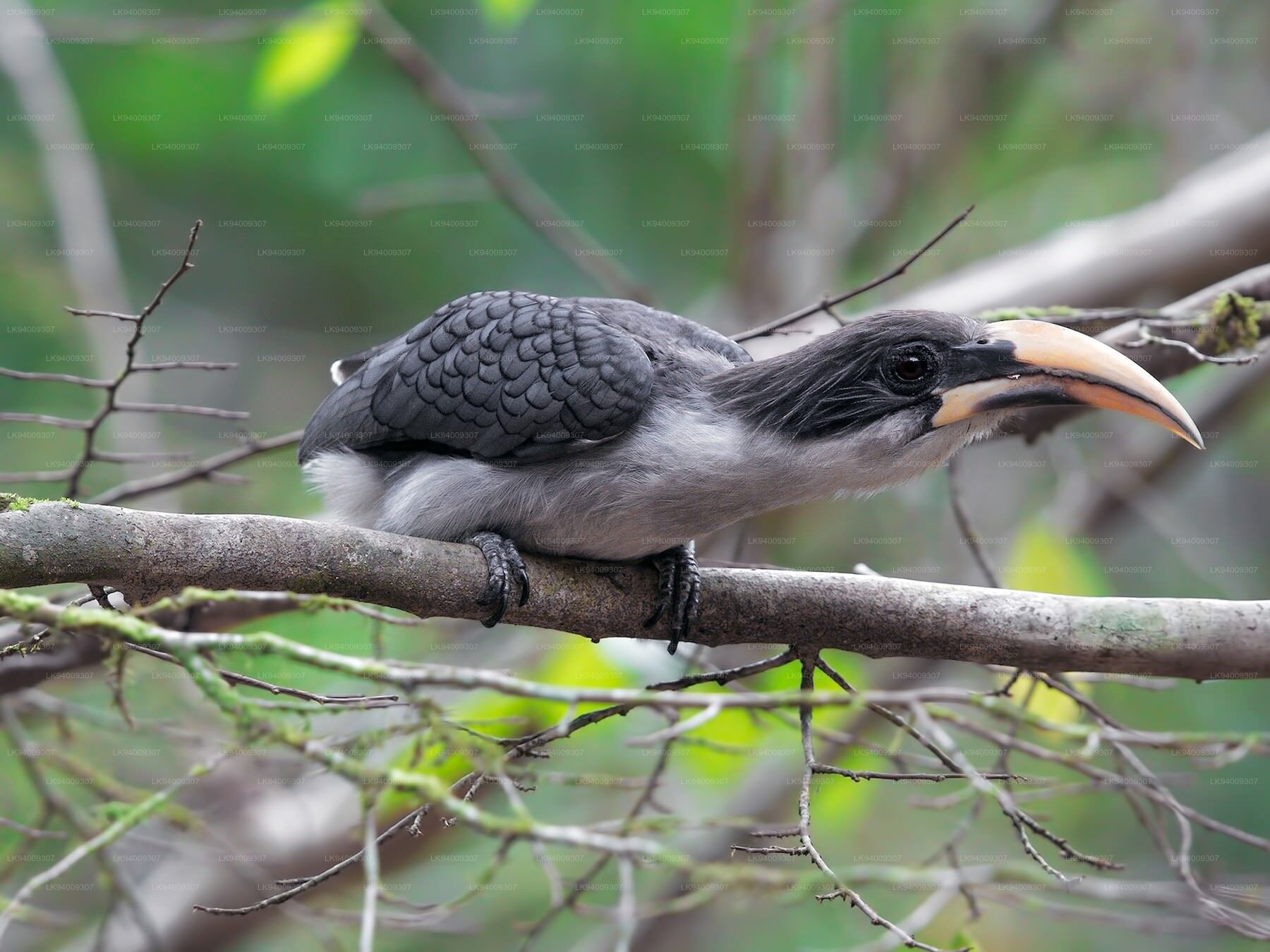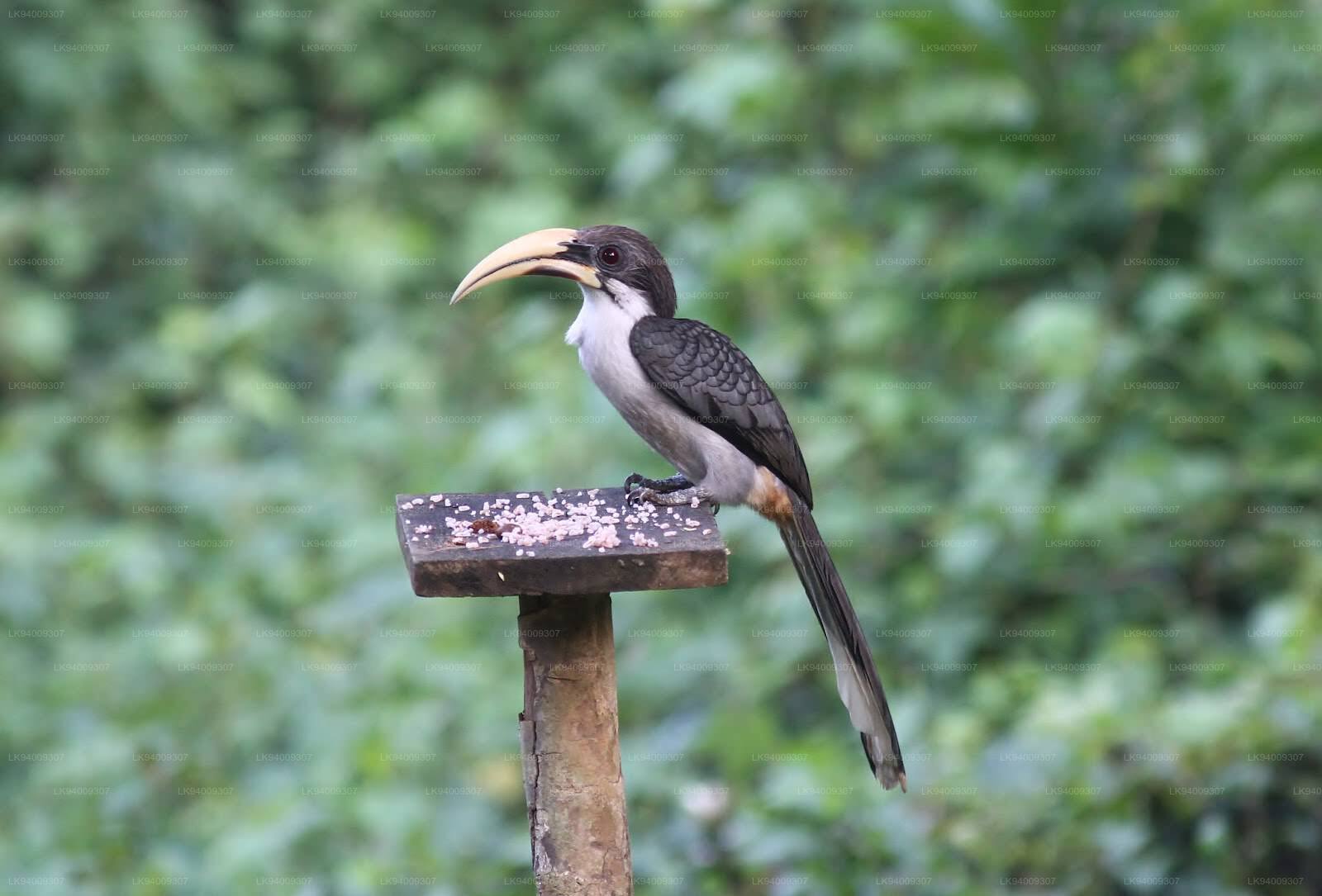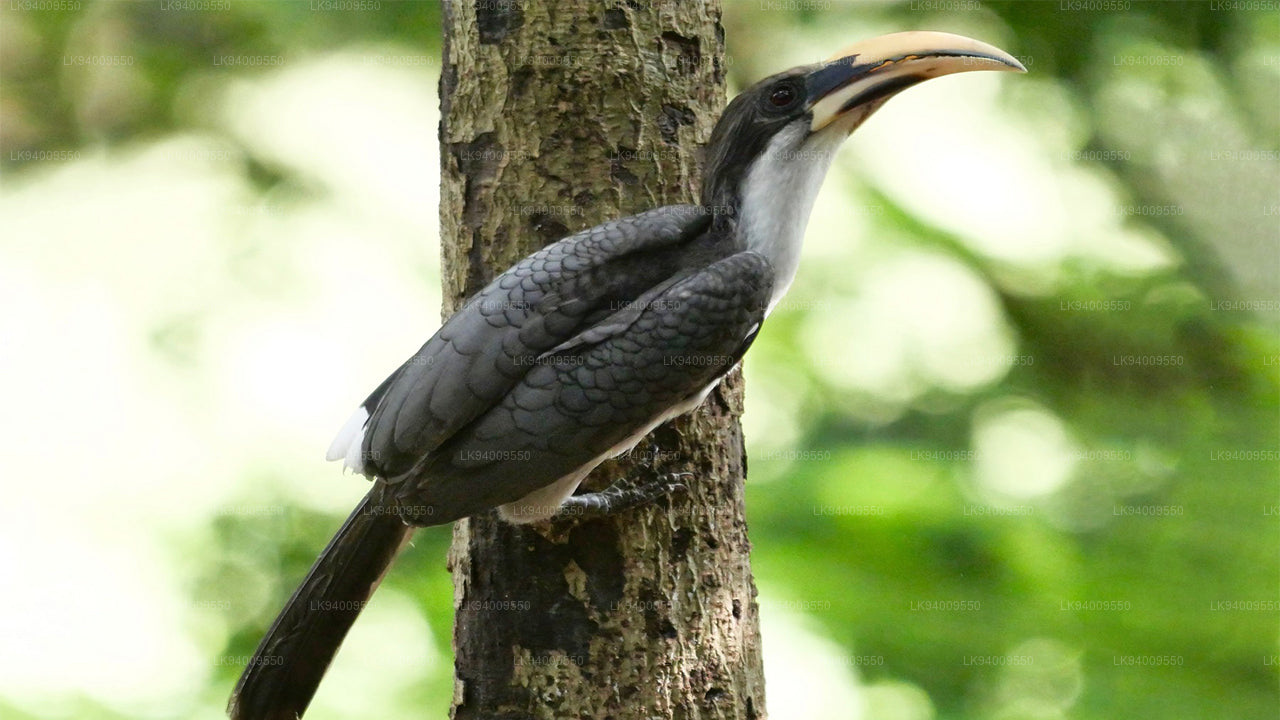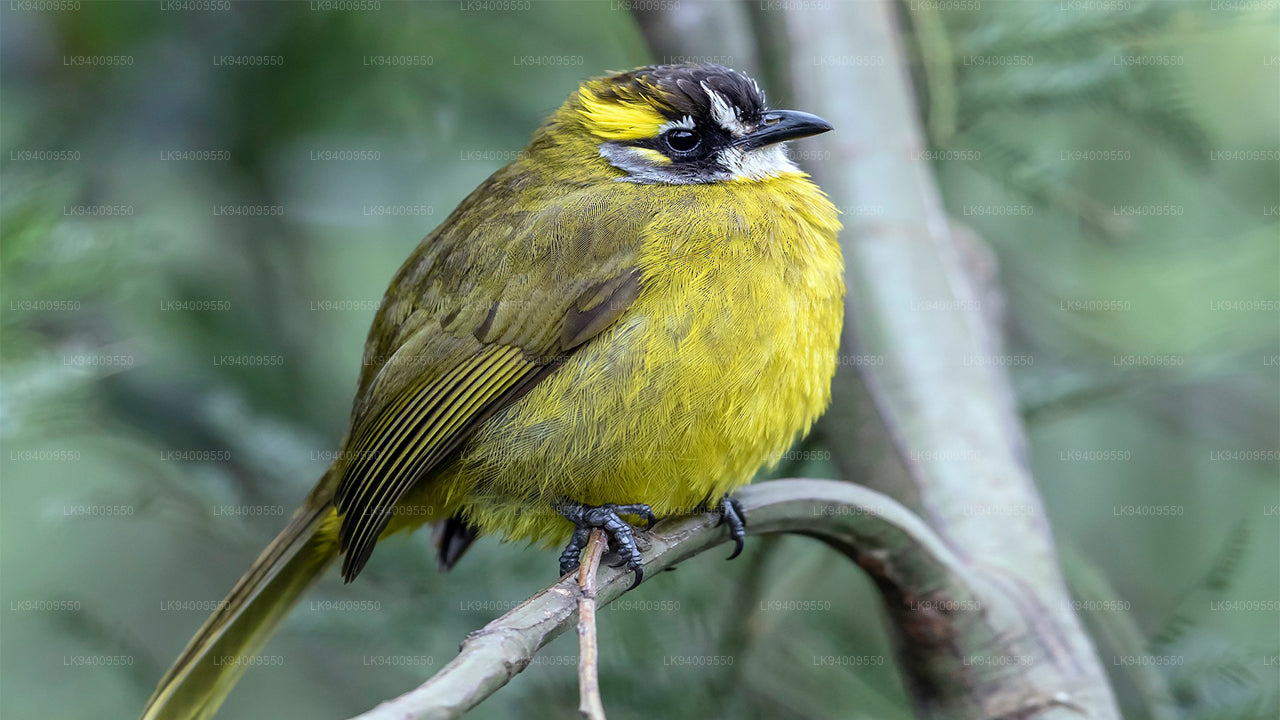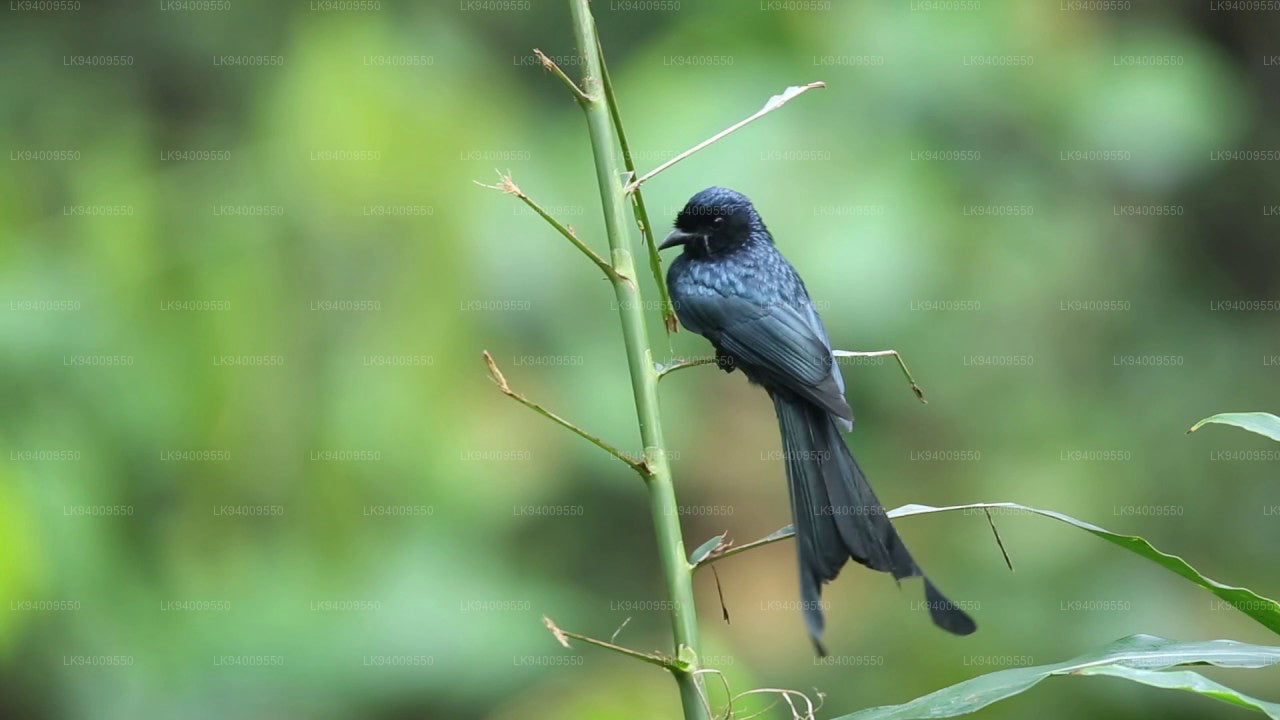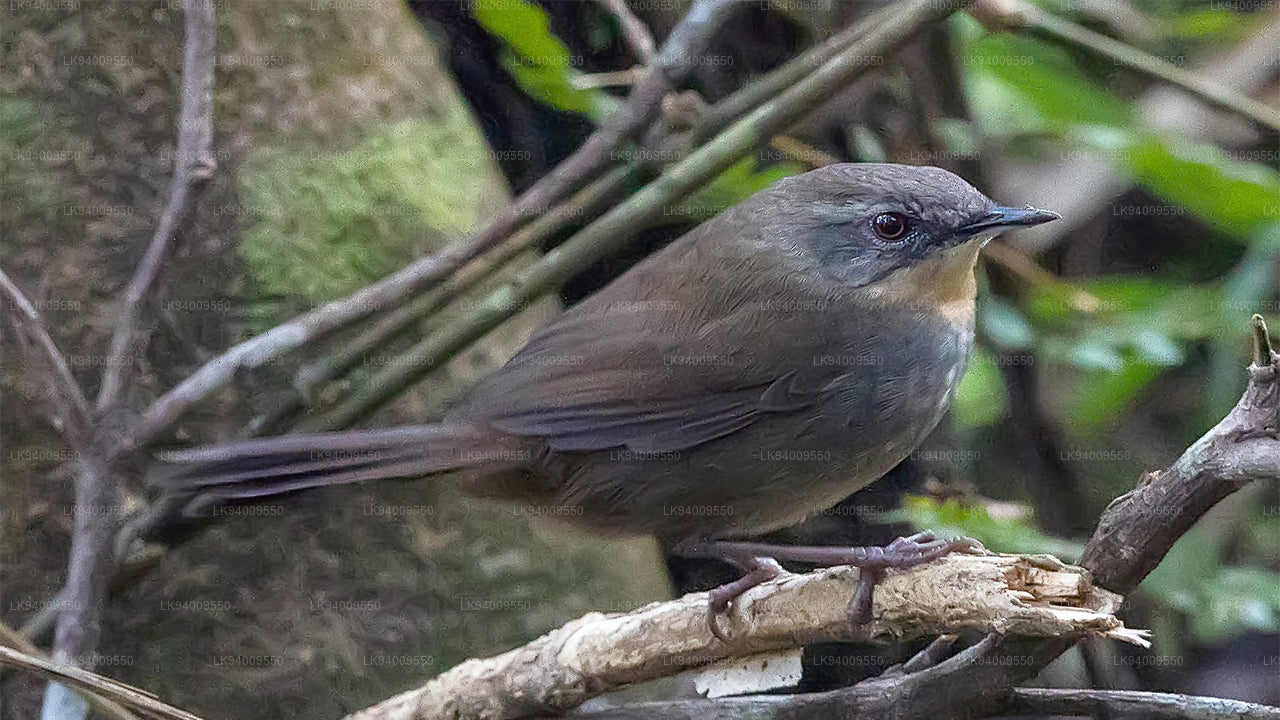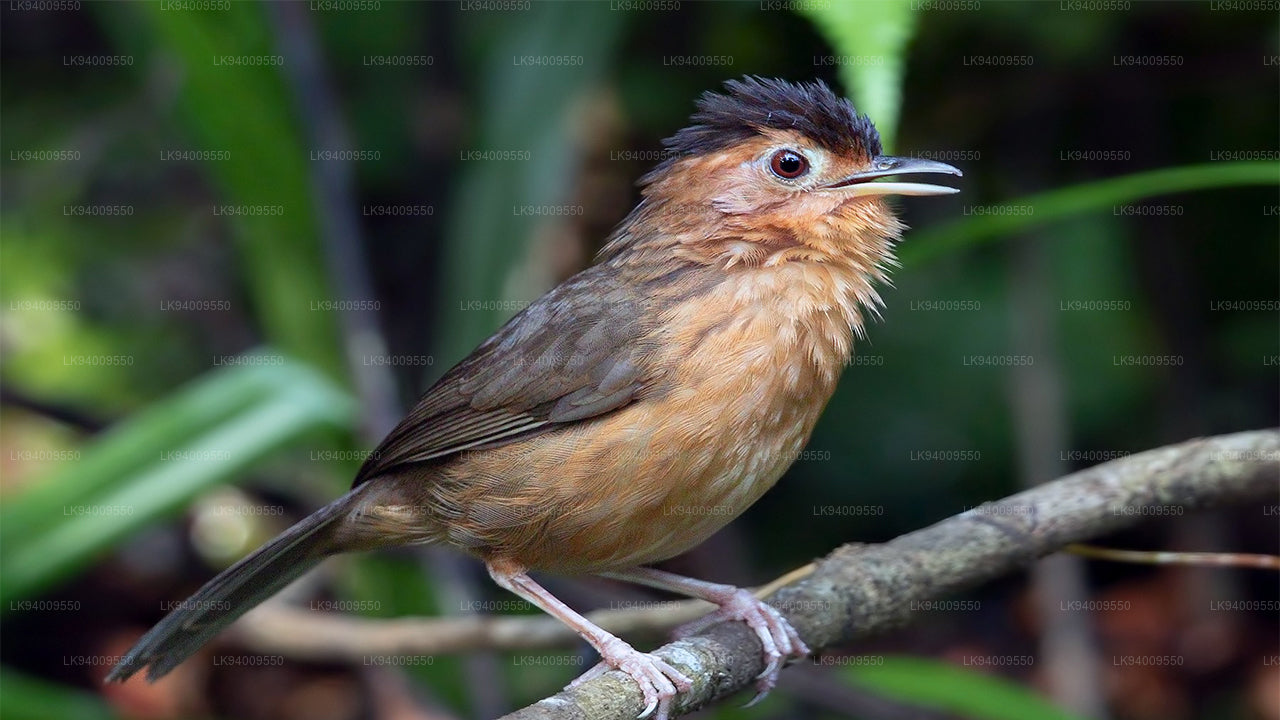
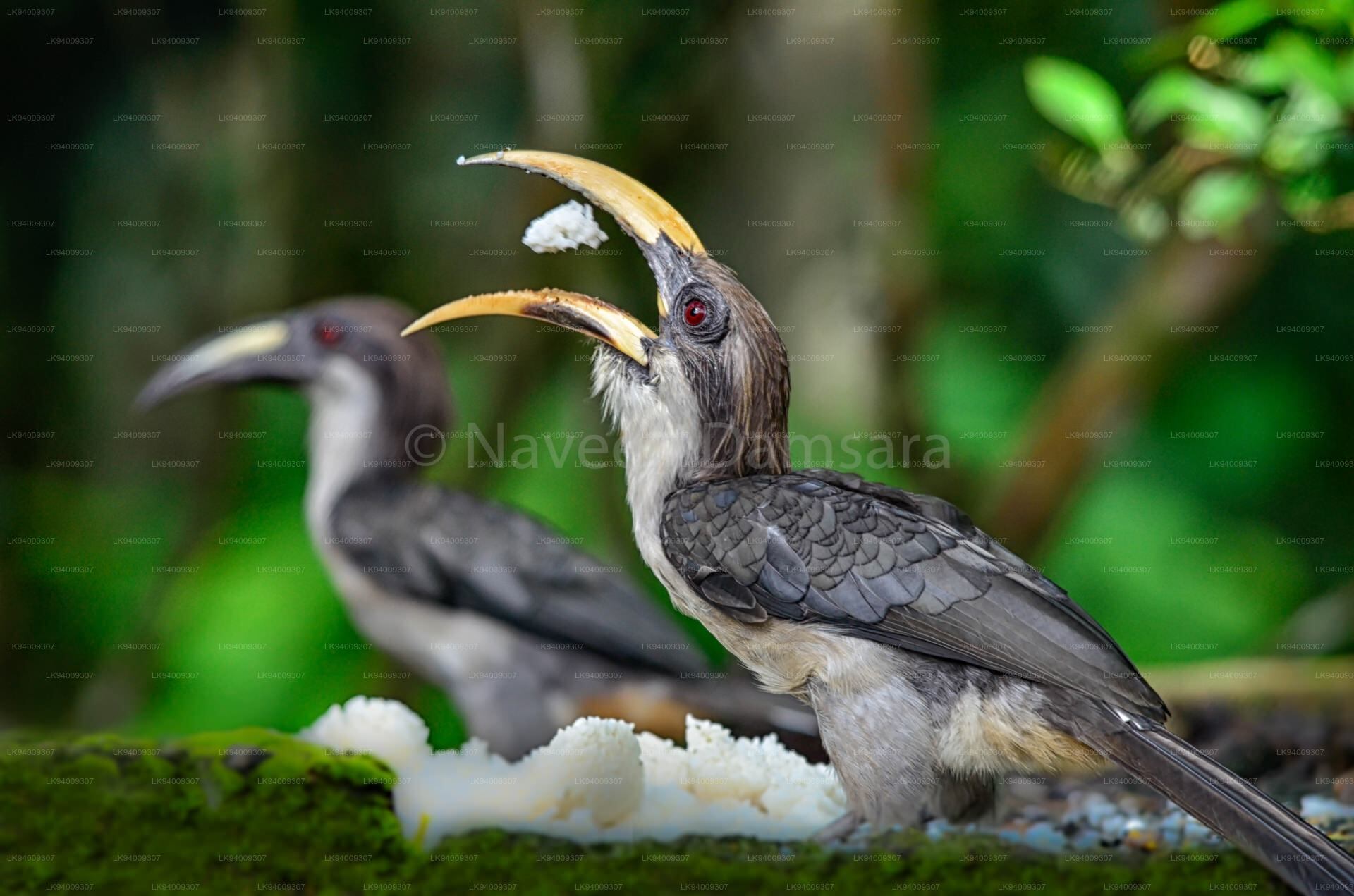
The Ceylon Grey Hornbill (Ocyceros gingalensis, Shaw 1811) is one of Sri Lanka's most frequently encountered endemic birds. Large, conspicuous, and often vocal, it draws attention wherever it appears — whether perched in a forest canopy or flying between fruiting trees in a loose, undulating glide. For birders visiting the island for the first time, spotting this species is typically one of the earliest and most satisfying ticks on the list.
Where does the Ceylon Grey Hornbill live?
This species is primarily a tall-forest bird. Its stronghold is the wet-zone lowlands — excluding the immediate coast — and it extends into the mid-hills up to altitudes of around 1,200 metres. Birds are also regularly recorded in the adjacent intermediate and dry zones, making the Ceylon Grey Hornbill more widely distributed than many other endemics confined purely to the wet zone.
Key habitats to search include mature rainforest, forest edges near cultivation, and large trees within village gardens. The Sinharaja Forest Reserve is among the most reliable sites: multi-species bird waves often include several hornbills, moving methodically through the understorey and canopy in search of fruiting trees. The Makandawa Rainforest and forest patches around Kandy are also productive areas.
How does the Ceylon Grey Hornbill behave and feed?
Outside the breeding season, hornbills move through the forest in pairs or small loose groups. When a tree is carrying heavy fruit, however, considerably larger numbers can congregate — making fruiting figs and other forest trees worth staking out.
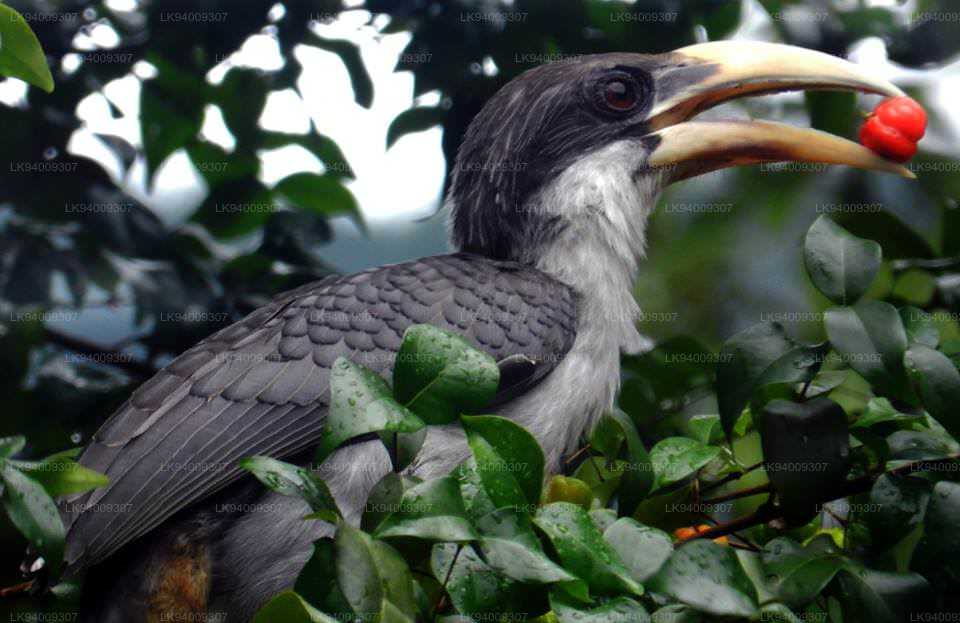
Feeding behaviour is particularly distinctive. The bird grasps a fruit or small prey item near the tip of its long bill, then tosses it upward and catches it in the throat with a deft backward flick of the head. This toss-and-swallow technique is shared by other hornbill species worldwide and is adapted to the mechanics of the decurved bill, which lacks the grasping dexterity of a shorter, straighter beak.
The call is hard to miss: a loud, resonant kaa…kaa…kaa that accelerates into a rapid ka-ka-ka-ka. Variants including kuk…kuk…kuk-kuk-kuk and ko…ko…ko-ko-ko have also been recorded. Once you know the call, you will hear this bird long before you see it.
How do you tell male and female apart?
The sexes are similar in size, but bill colour separates them reliably in the field.
- Male: bill mainly cream or pale yellow, blotched with black at the base.
- Female: bill predominantly black, with a cream stripe running along the lower edge of the upper mandible.
Both sexes share the grey-brown plumage, white-tipped tail feathers, and the characteristic casque — though the casque of this species is modest compared to larger hornbill relatives. Juveniles resemble females but tend to show a duller, less contrasting bill pattern.
When and how does the Ceylon Grey Hornbill breed?
The breeding season runs from approximately April to August. Like all hornbills, this species nests in natural tree cavities — a behaviour that ties its long-term survival closely to the availability of large, mature forest trees.
Once a suitable hollow is found, the female enters and seals herself inside using a mortar made primarily from her own excreta, leaving only a narrow vertical slit. Through this slit the male passes food to her, typically making several feeding visits each day. Inside the sealed chamber, the female lays one to three white eggs (measuring around 41.5 × 33 mm) and incubates them. During this extended confinement she undergoes a complete moult, emerging with fresh plumage once the chicks are ready to fledge.
When the nestlings are sufficiently developed, the female breaks through the sealed entrance and joins the male in provisioning the brood. This cooperative final stage of rearing is typical of hornbills globally and underscores the strong pair bond the species maintains.
What is the Ceylon Grey Hornbill's conservation status?
The species is currently assessed as Least Concern on the IUCN Red List, reflecting its relatively wide distribution and tolerance of modified habitats such as forest edges and large garden trees. Nevertheless, continued deforestation in the wet zone — particularly the loss of old-growth trees with suitable nesting cavities — poses a longer-term threat to breeding populations. Responsible ecotourism that supports forest-reserve management indirectly benefits this and many other endemic forest birds.
When is the best time to see the Ceylon Grey Hornbill?
The bird is resident year-round, so there is no single "best" season for observation. Activity levels are generally highest in the early morning hours when pairs move actively through the canopy in search of food. The breeding season (April–August) offers the possibility of observing nest-sealing and feeding behaviour, though nests can be difficult to locate without local guidance.
Weather patterns also influence ease of birding. The dry season in the wet zone (roughly January to April) typically offers clearer skies and quieter forest conditions, making it easier to track calling birds through the canopy. Carrying a good pair of binoculars and arriving at a forest entrance before dawn will substantially increase the chances of a close encounter.
What other wildlife might I see in the same habitat?
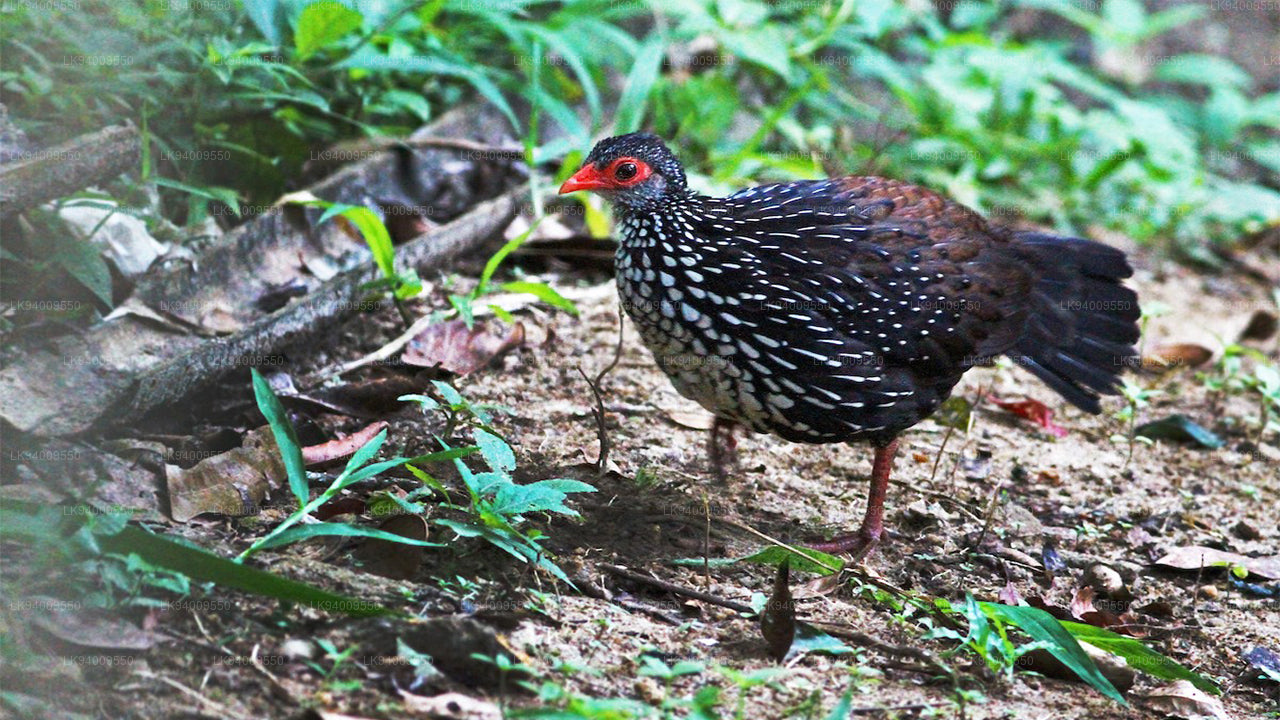
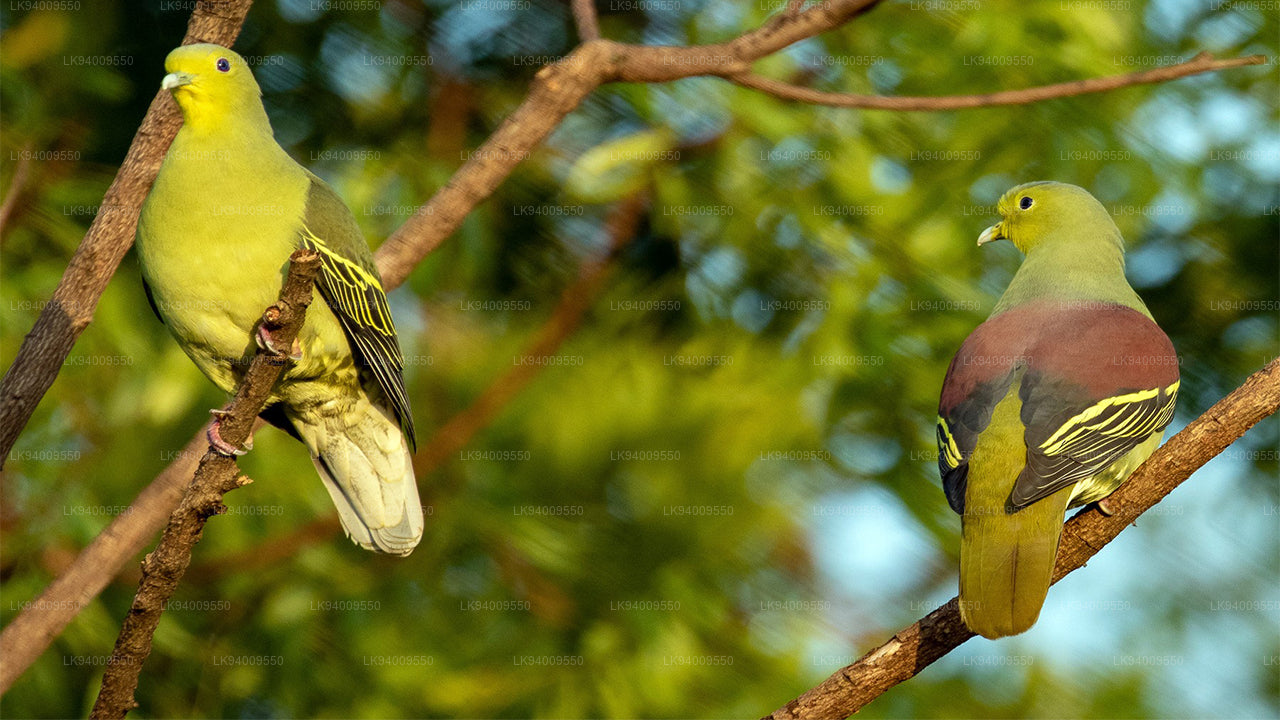
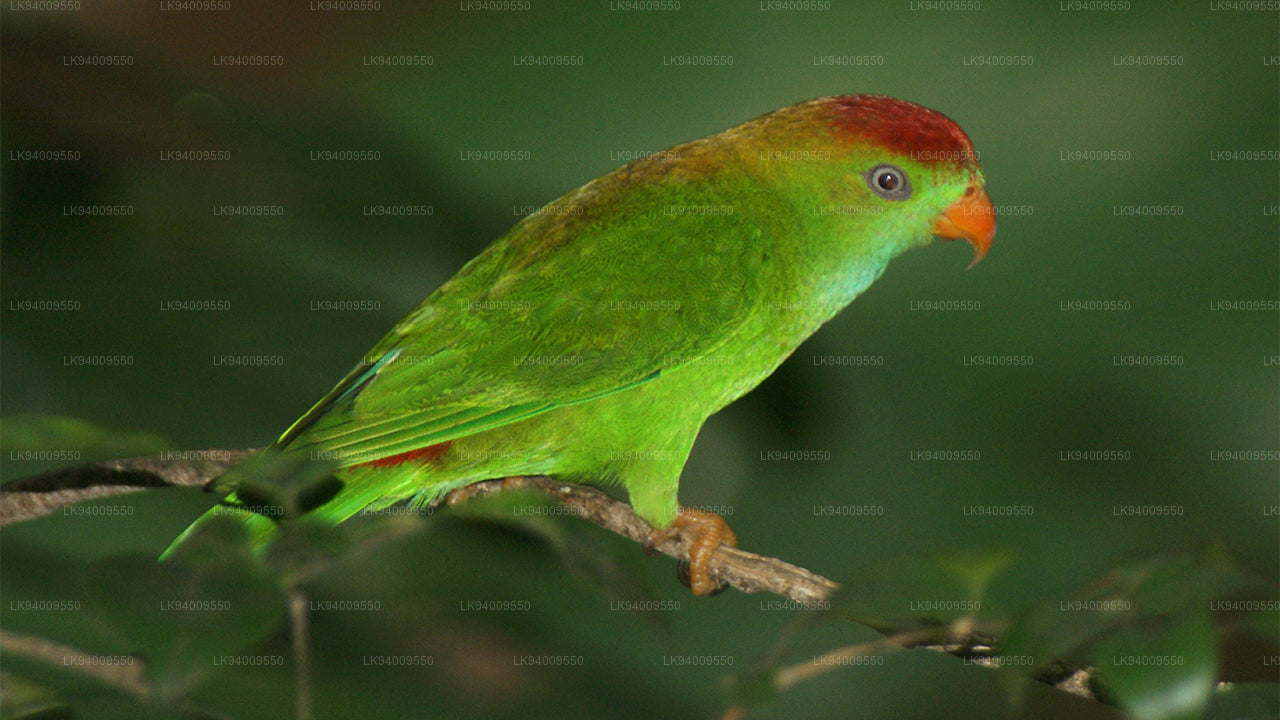
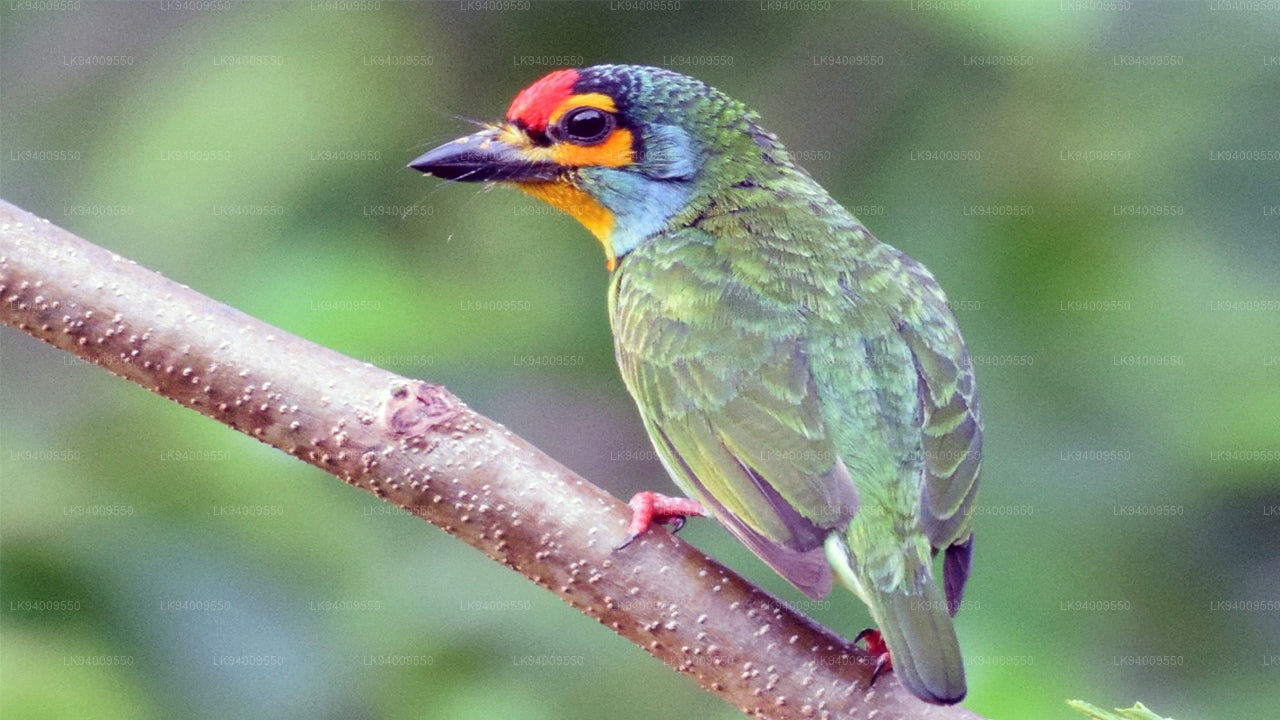
The Ceylon Grey Hornbill shares its forest habitat with a broad suite of other endemic and near-endemic species. During a typical morning walk in productive wet-zone forest, observers might also encounter the Sri Lanka Green Pigeon, Layard's Parakeet, Crimson-fronted Barbet, and various endemic babblers moving in mixed-species flocks. Mammals such as purple-faced leaf monkeys and giant squirrels are also characteristic of mature wet-zone canopy.
If you are planning a dedicated birding itinerary, combining lowland wet-zone forest with a visit to the Horton Plains National Park will bring a complementary set of montane endemics into range — species that overlap very little with the hornbill's preferred altitude band.