Lakpura
Lakpura®

Ceylon Green Pigeon

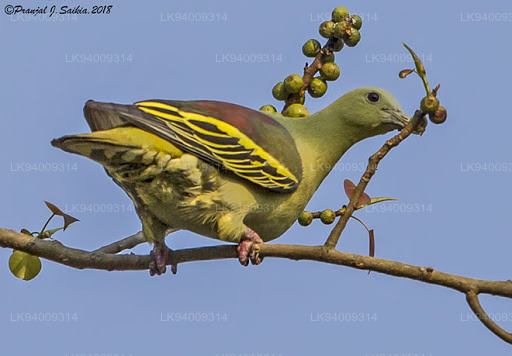
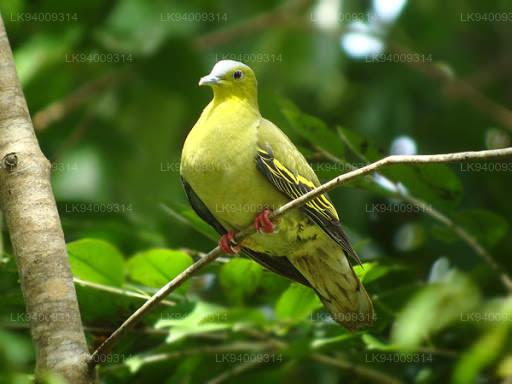
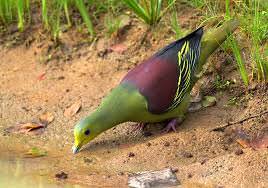
The Ceylon Green Pigeon (Treron pompadora), also known as the Pompadour Green Pigeon, is one of Sri Lanka's most regularly encountered frugivorous birds. Measuring around 25 cm in length, it inhabits the island's lowland forests, forest edges, and foothills, where it gravitates toward fruiting trees in sometimes sizeable flocks. Despite its vivid plumage, it blends into the forest canopy with remarkable ease — visitors often hear it long before they see it.

How do you identify the Ceylon Green Pigeon?

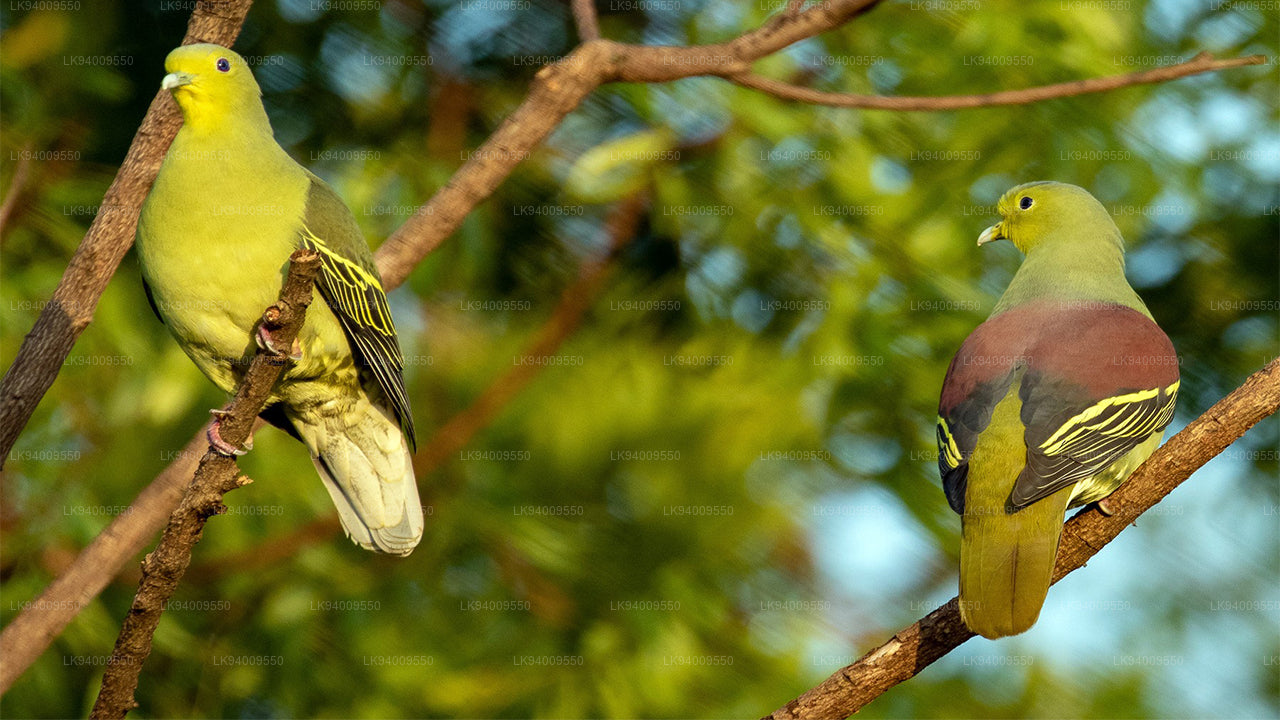
Both sexes display a rich yellow-green body, but the male is distinguished by maroon-chestnut coloring across the upper wings — a feature that immediately separates it from the closely related Orange-breasted Green Pigeon (Treron bicinctus). The female lacks the maroon patch and appears more uniformly green, but she can still be told apart from female Orange-breasted Green Pigeons by her middle tail feathers, which are yellowish-green rather than bluish. Because females tend to associate closely with males in the wild, this comparison is usually straightforward in the field.

In flight, look for the compact silhouette and swift, direct wingbeats typical of green pigeons. The undertail coverts are lemon-yellow, and the bill is pale with a reddish base.

What sound does the Ceylon Green Pigeon make?

The species produces a distinctive, mellow "coo" call — softer and more musical than a domestic pigeon's. In forested areas this call is often the first sign of the bird's presence; small groups calling from within a fruiting fig or wild mango tree can create a lively, cascading chorus. Experienced birders use these vocalizations to locate flocks before the birds become visible through breaks in the canopy.

Where can you spot Ceylon Green Pigeons in Sri Lanka?

The species is widespread across the wet and intermediate zones, from sea level up through the foothills. Some of the most reliable locations include:

  • Wet-zone lowland forests — the Sinharaja Forest Reserve hosts resident populations year-round, particularly around fruiting Dipterocarp and fig trees.
  • Dry-zone national parks — fruiting trees along the borders of Udawalawe National Park and Wilpattu National Park attract seasonal flocks.
  • Forest-edge gardens and home gardens — birds regularly descend into village gardens and orchards when fruiting trees are available, making them accessible even to casual observers.
  • Intermediate-zone scrub forests — degraded and secondary forest patches in the central foothills also support good numbers.

Early morning is the best time to observe feeding flocks, when birds are most active and vocal before the midday heat drives them to shade.

What does the Ceylon Green Pigeon eat?

Like all members of the Treron genus, this species is an obligate frugivore. Figs (Ficus spp.) are a dietary staple, but the birds will also exploit a wide range of soft-fruited forest trees and shrubs. They are agile feeders that cling to outer branches and often hang upside down to reach fruit — behavior more reminiscent of parrots than typical pigeons. In areas where wild fruits are plentiful, flocks of 10–30 individuals are not unusual.

This frugivory makes the Ceylon Green Pigeon an ecologically important seed disperser. Seeds pass through the gut intact and are deposited at distance from the parent tree, contributing to forest regeneration.

When does the Ceylon Green Pigeon breed?

The nesting season typically runs from December through June. Like other columbids, the Ceylon Green Pigeon constructs a remarkably flimsy platform nest of loosely interlaced twigs, usually positioned in the fork of a forest tree at moderate height. The clutch consists of one or two small, white eggs. Both parents share incubation duties.

Chicks are initially fed "pigeon milk" — a protein- and fat-rich secretion produced in the crop lining of both adult birds — before transitioning to regurgitated fruit pulp. This dietary strategy allows rapid growth even when protein-rich insect prey is unavailable.

Is the Ceylon Green Pigeon endemic to Sri Lanka?

The taxonomic position of Treron pompadora has been revised several times. The Sri Lankan population is now generally treated as a distinct species (sometimes called the Sri Lanka Green Pigeon) or as a subspecies complex, depending on the authority followed. It is closely related to the Ashy-headed Green Pigeon populations found across parts of South and Southeast Asia, but the Sri Lanka form shows consistent morphological differences — particularly in the male's wing pattern — that support separate treatment. Birdwatchers visiting Sri Lanka specifically to tick endemic or near-endemic species should place it on their list.

What other birds might you see alongside the Ceylon Green Pigeon?

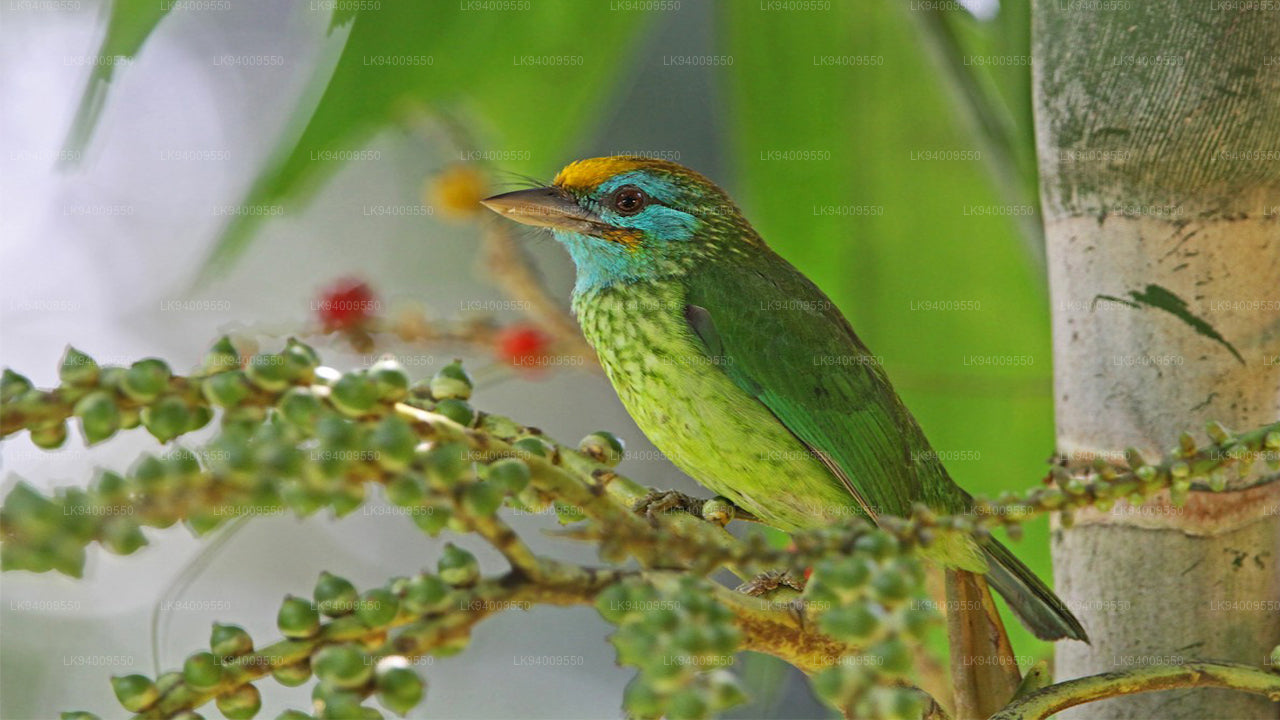
Fruiting trees that attract Ceylon Green Pigeons often draw a mixed assembly of other species. In lowland wet-zone forest expect to share the canopy with Sri Lanka Green Imperial Pigeons, various barbets, and flowerpeckers. In the foothills, orioles and fairy-bluebirds are frequent companions. The Horton Plains National Park at higher elevation holds different highland assemblages, but the transition zones along its lower approaches can produce an interesting mix of lowland and montane species.

Tips for birdwatching tours focused on the Ceylon Green Pigeon

  • Bring 8×42 or 10×42 binoculars — the dense canopy rewards magnification.
  • A field guide covering Sri Lankan endemics (e.g., Gehan de Silva Wijeyeratne's Birds of Sri Lanka) is invaluable for on-the-spot comparison with similar green pigeons.
  • Visit known fruiting trees at dawn for the best light and most active feeding behaviour.
  • Stay quiet and move slowly near fruiting trees; flocks flush easily when disturbed.
  • A local naturalist guide familiar with seasonal fruiting patterns will significantly increase sighting probability.
Ask Lakpura® Agent