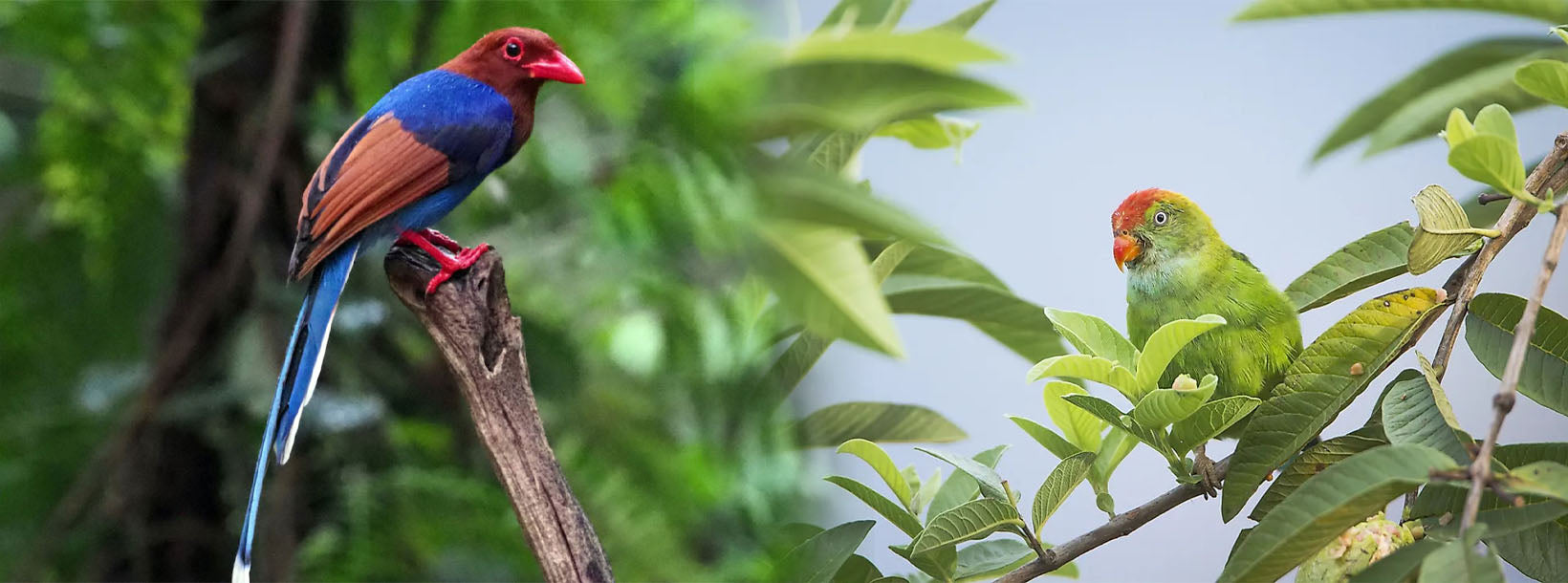
セイロンハンギングオウム
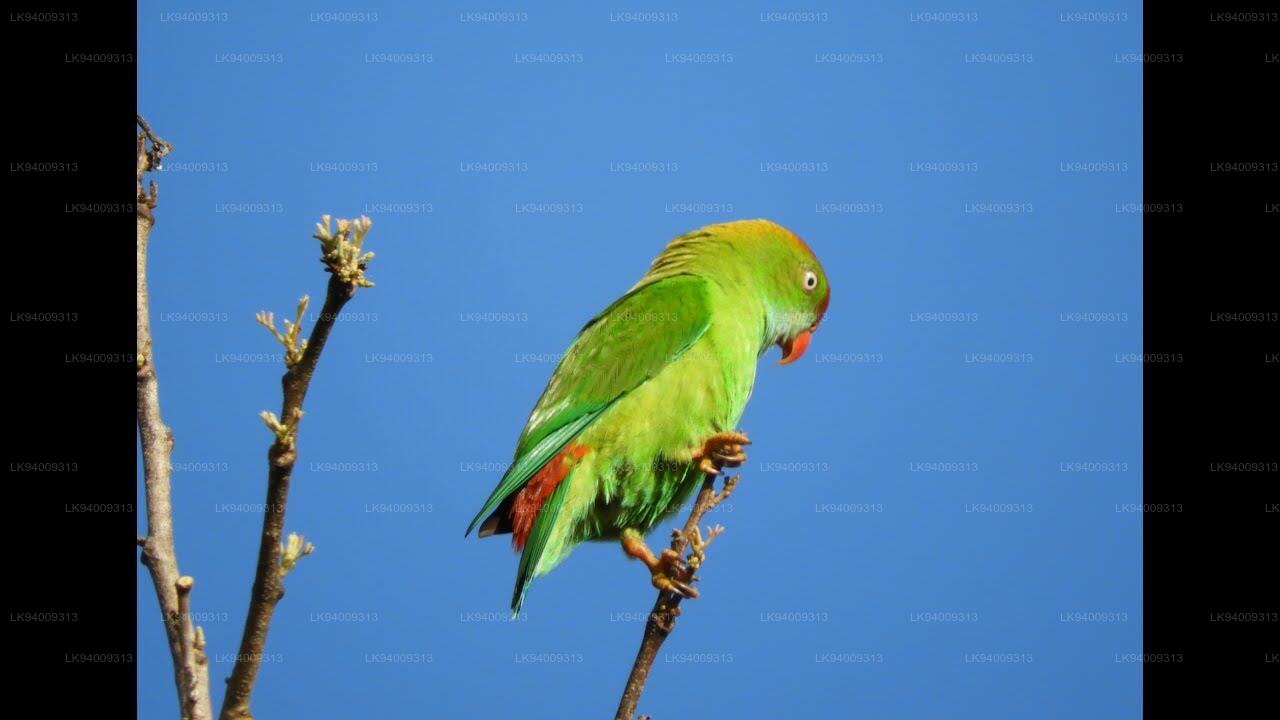
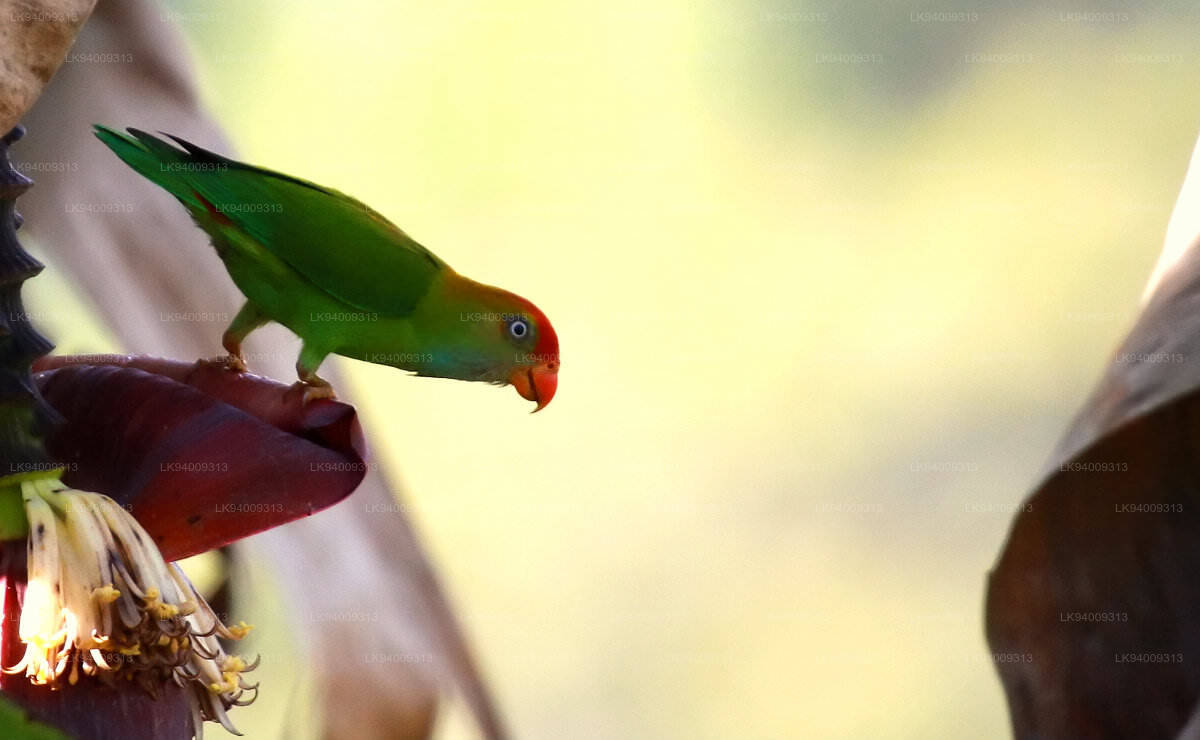
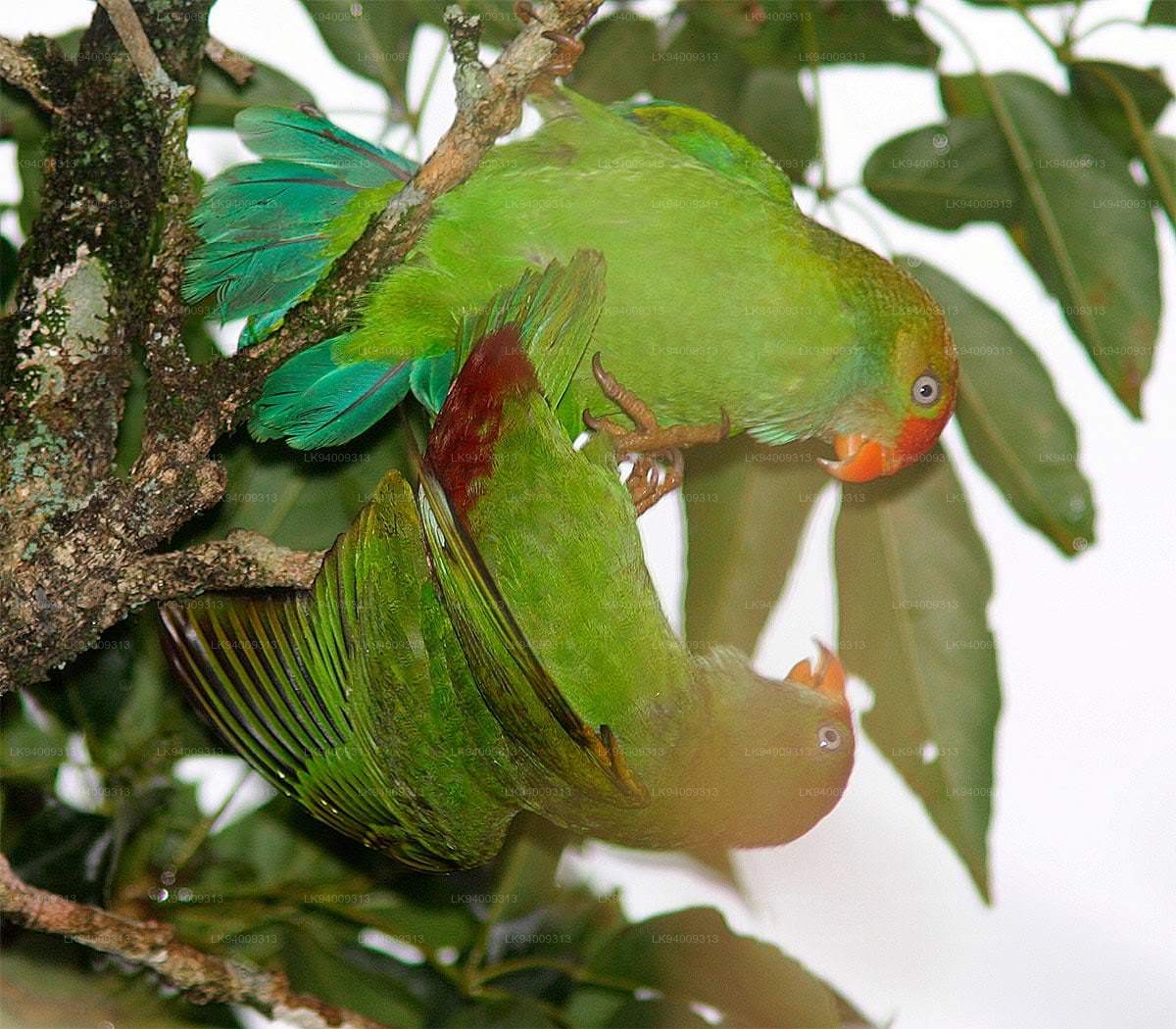
スリランカのハンギングオウム「Loriculus beryllinus」(フォースター、1781年)
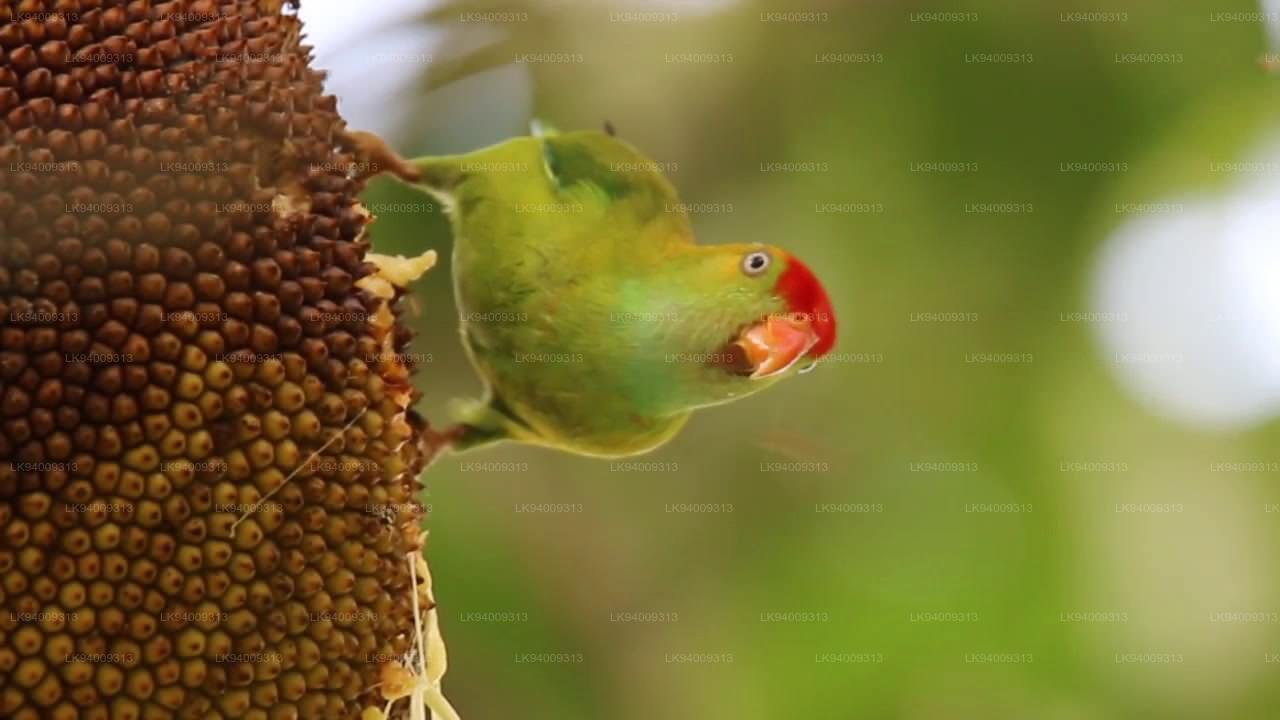
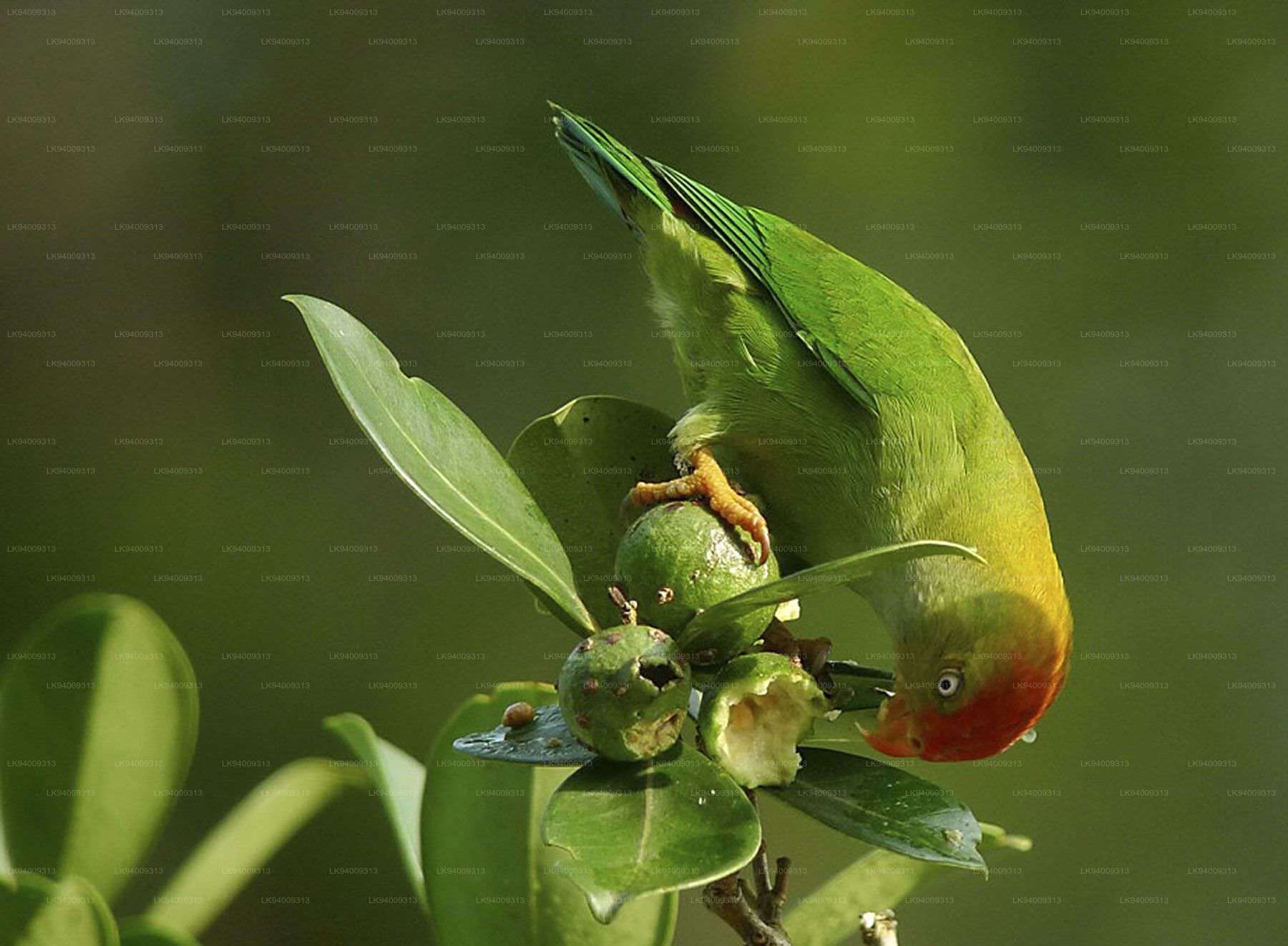
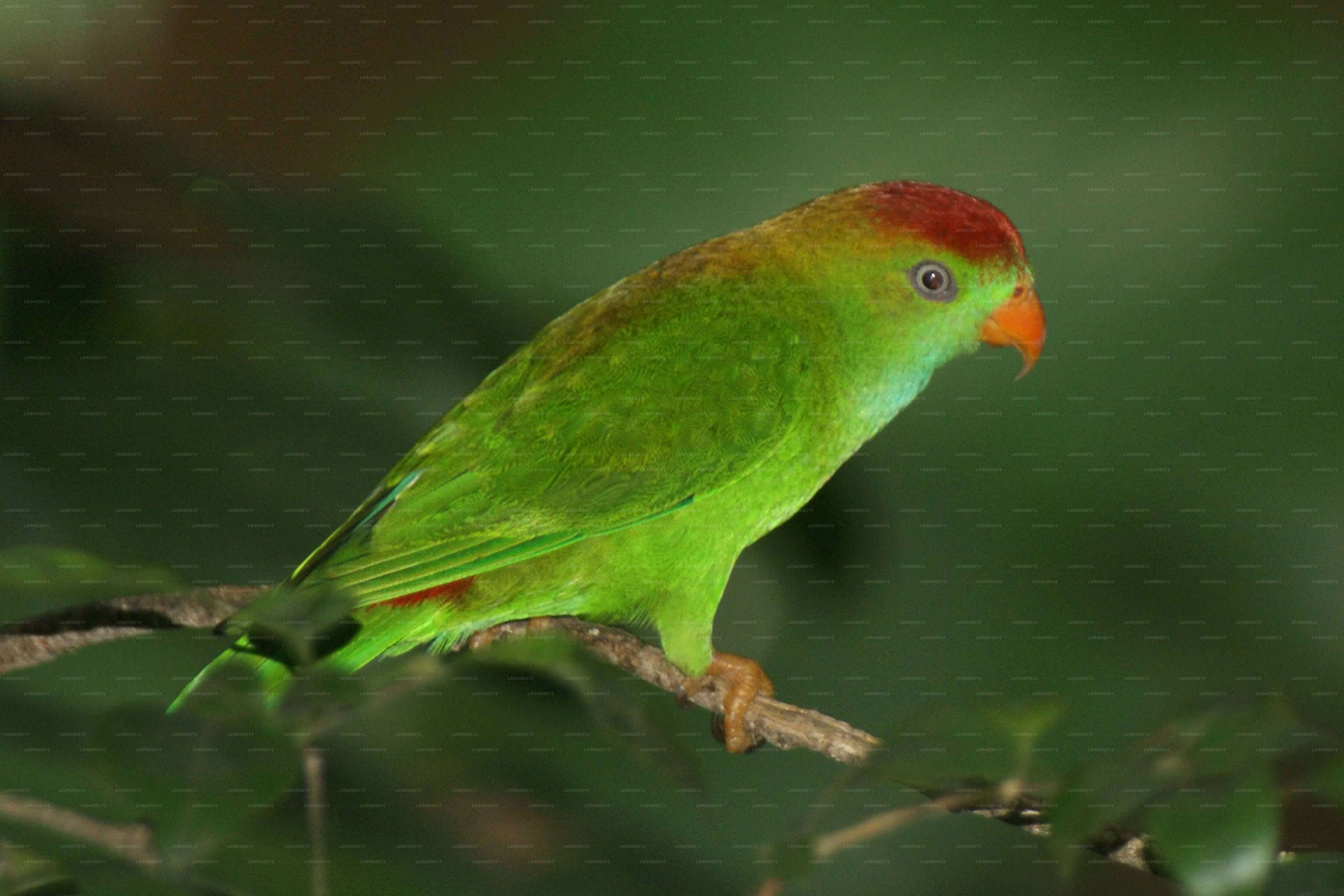
スリランカハンギングオウム (インコ) は完全に樹上性で、常に林冠の最上層の翼の上にいます。鳥はつがいで行動し、単独で行動する個体も見られますが、そのつがいの個体が遠くにいることはありません。雌雄は似ていますが、雌の方が色が鈍く、喉の部分に明るい青色が残っています。巣立った雛の額と顔は裸ですが、約1歳までに成鳥の羽が生えてきます。
彼らの飛行は迅速かつ迅速です。飛行中、彼らは鋭い3音節の笛で鳴きます:ツイ、ツイ、ツイ。
鳥は花の蜜、花粉、樹冠に生えているジューシーな果実を食べます。柔らかい種子を食べることも知られています。ハンギングオウムは餌を与えるのに適した木までかなりの距離を飛ぶことが知られており、時には最大20羽の鳥が1本の木を餌にしているのが見られることもあります。夜になるとコウモリのように足からぶら下がって頭を下にして休むため、この通称が付けられました。
スリランカ ハンギングオウム -Loriculus beryllinus
標高約 1,400 メートルまでの中央丘陵のどこにでも発生し、非繁殖期 (北東モンスーン) にはやや標高が高くなります。それらは丘陵の低いところと湿潤地帯全体に豊富に存在し、丘に近い乾燥地帯の地域にも中程度に多く存在します。
ハングインコは1 月から8 月にかけて繁殖し、営巣場所を選択して 1 月に交尾します。卵と雛は2 月から8 月に記録されており、 4 月から 5 月がピークとなります。巣は木の穴や自然の空洞に作られます。入口は地上2~12メートルの高さにあります。巣作りと孵化は完全にメスの仕事です。巣材には葉の細片が含まれており、メスが尻の羽の間にそれを押し込むことによって巣に持ち込まれます。巣は葉片の集合体で、メスはその中にサイズ約1.9×1.6cmの白亜のような白い球形の卵を3個産み、そのうち2個だけを孵化させます。
-
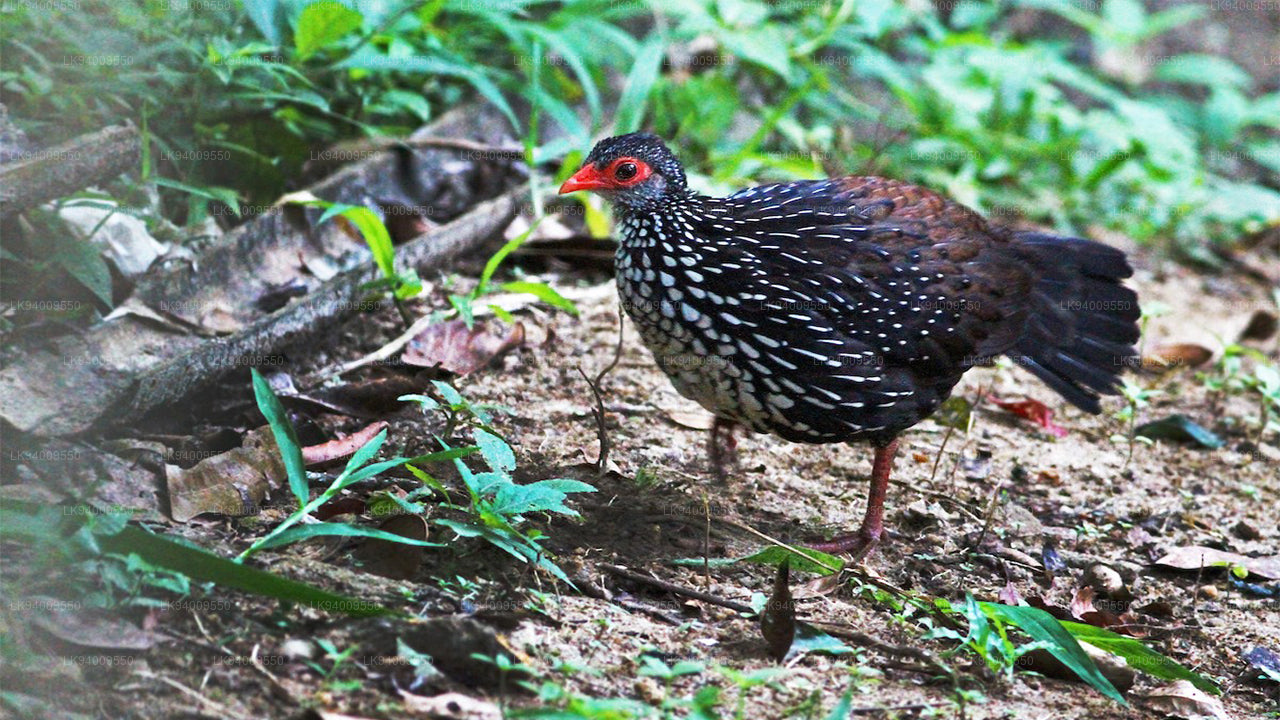 Ceylon Spurfowl
Galloperdix bicalcarata
-
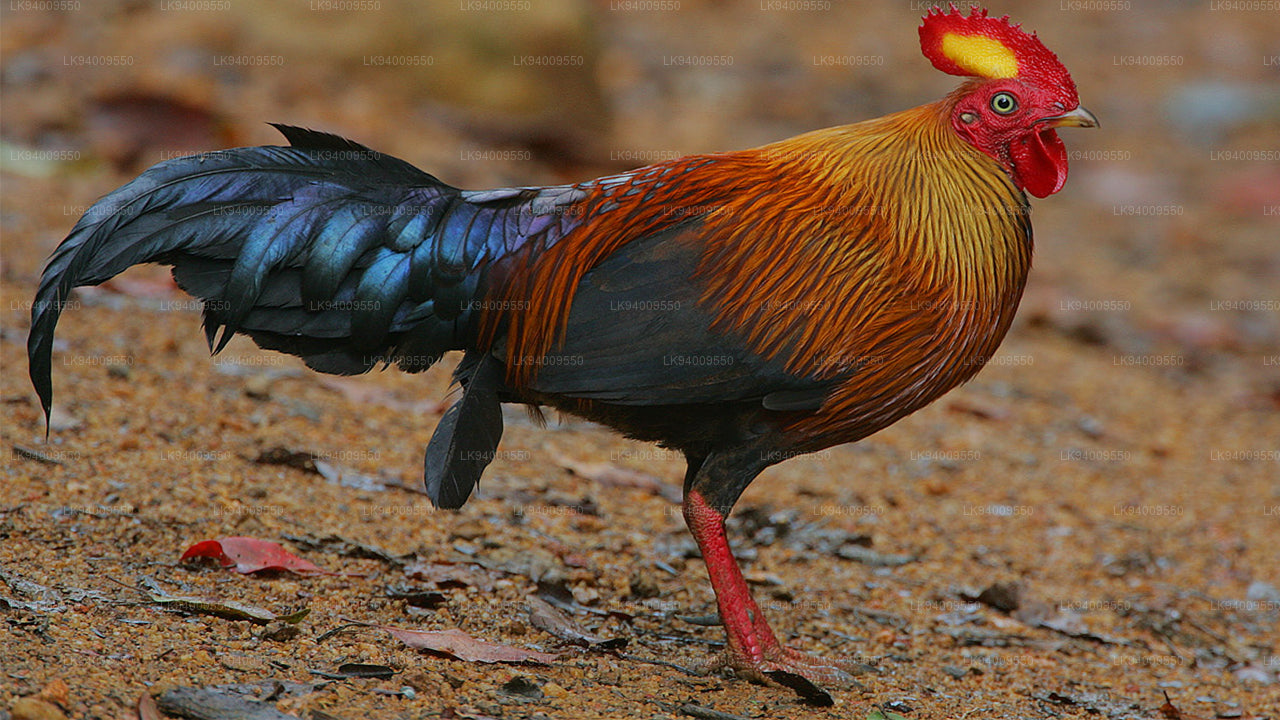 Junglefowl
Gallus lafayetii
-
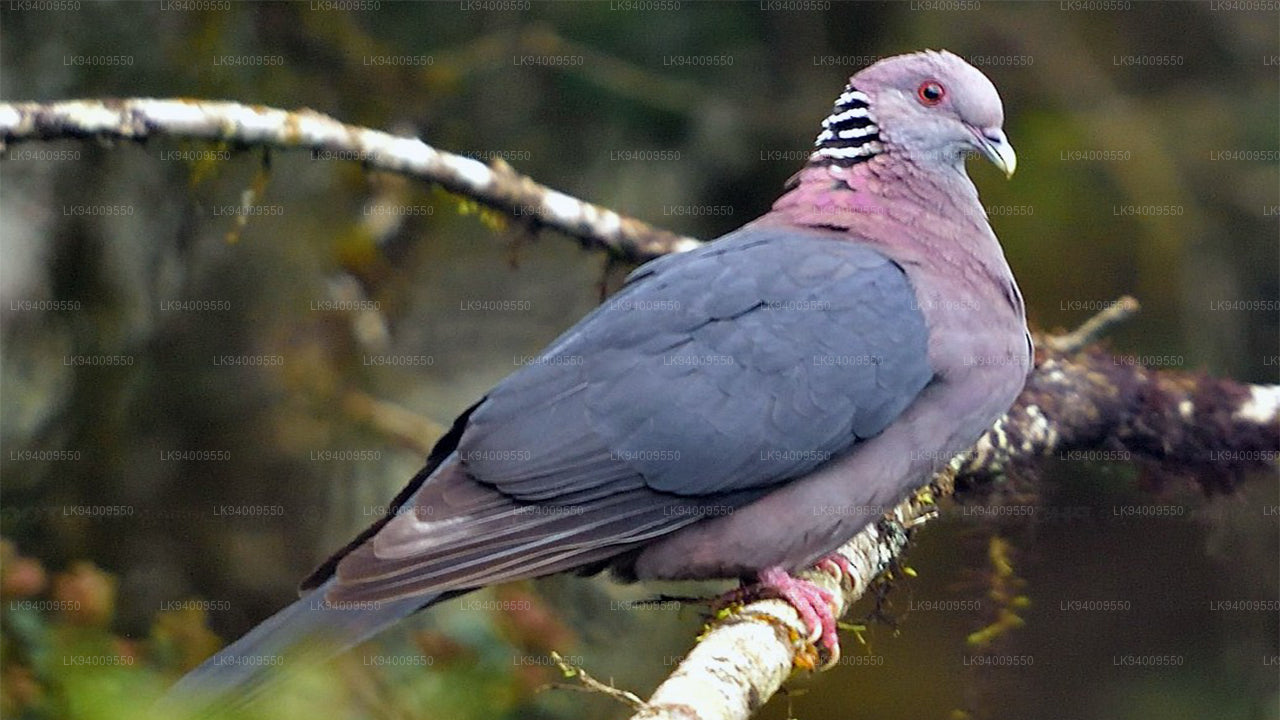 Ceylon Woodpigeon
Columba torringtoniae
-
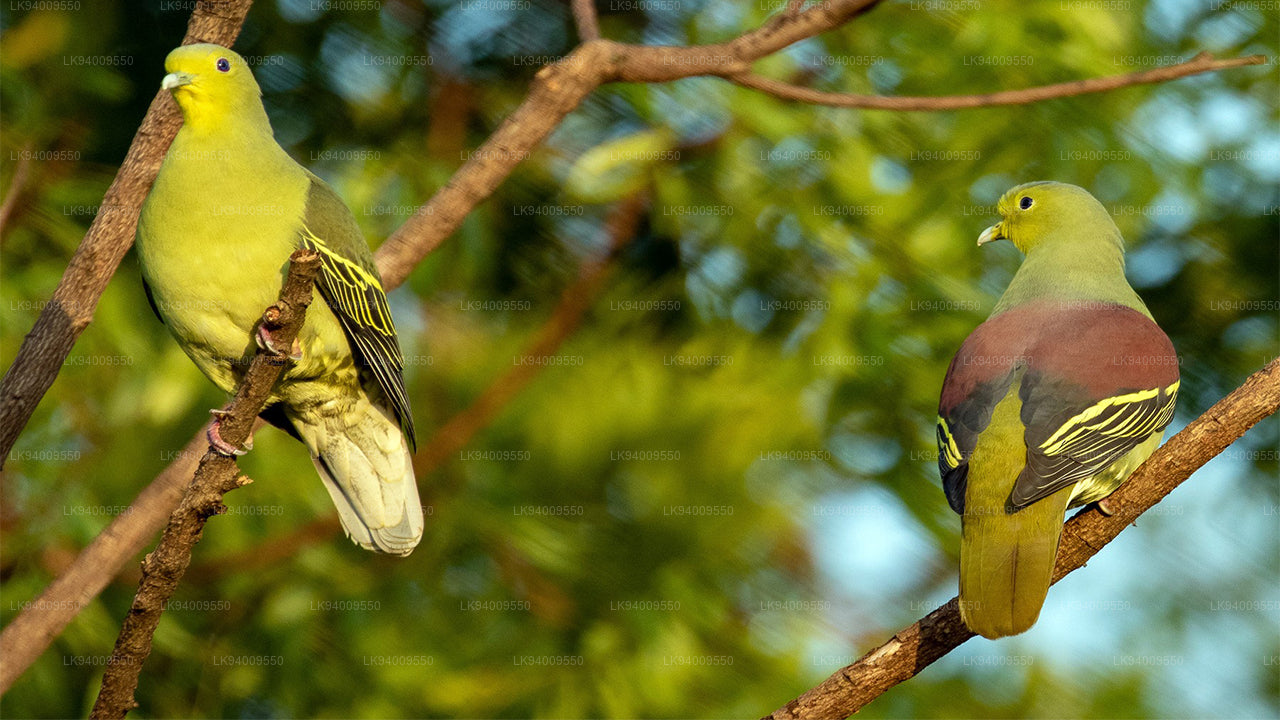 Ceylon Green Pigeon
Treron pompadora
-
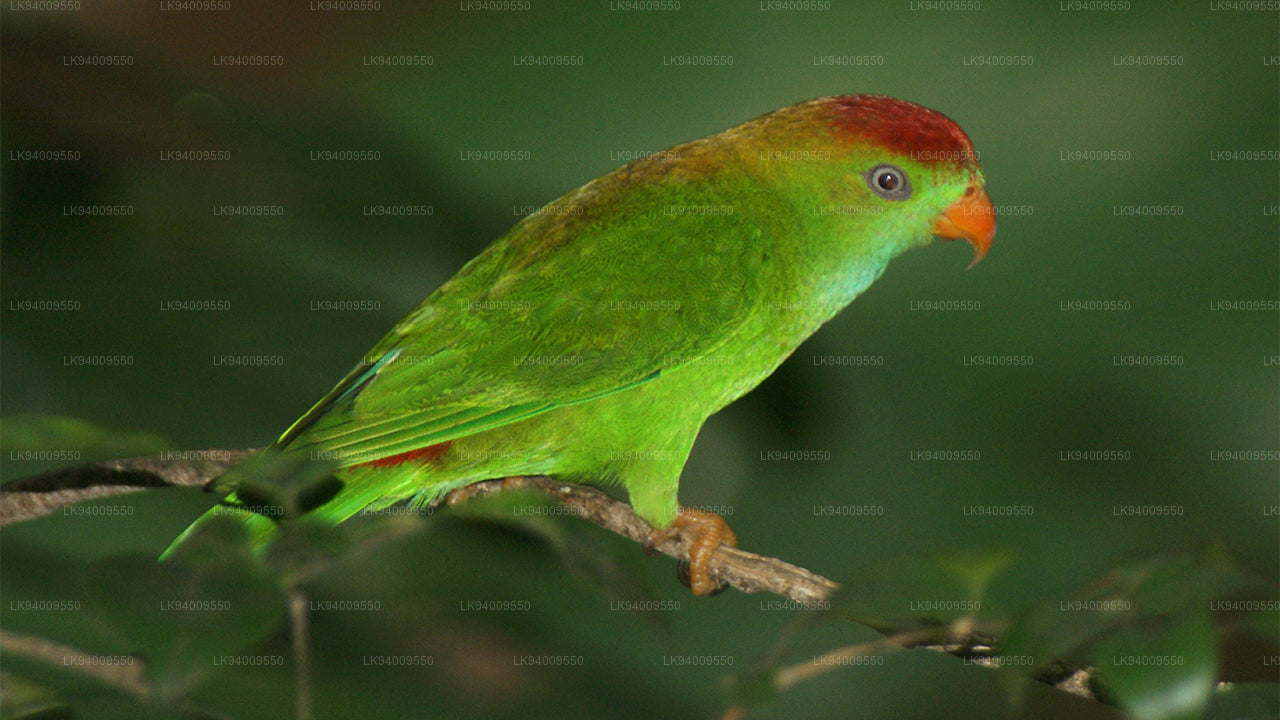 Ceylon Hanging Parrot
Loriculus beryllinus
-
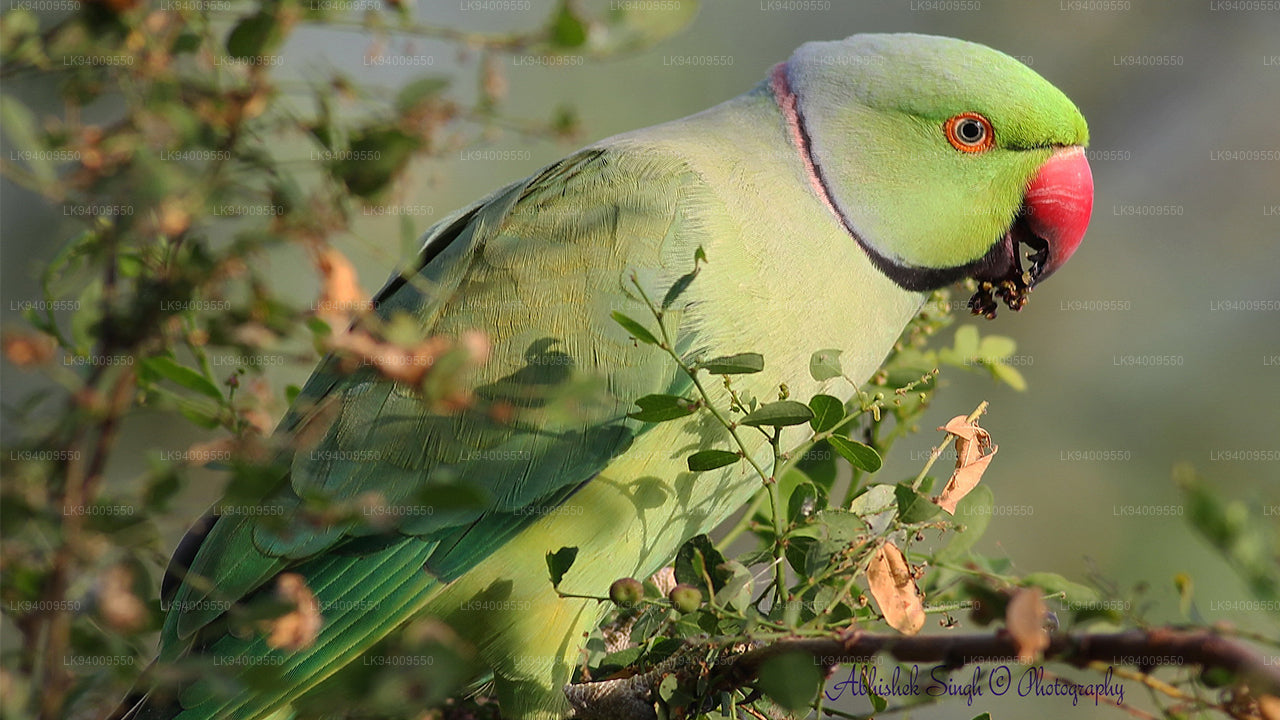 Layard’s Parakeet
Psittacula calthrapae
-
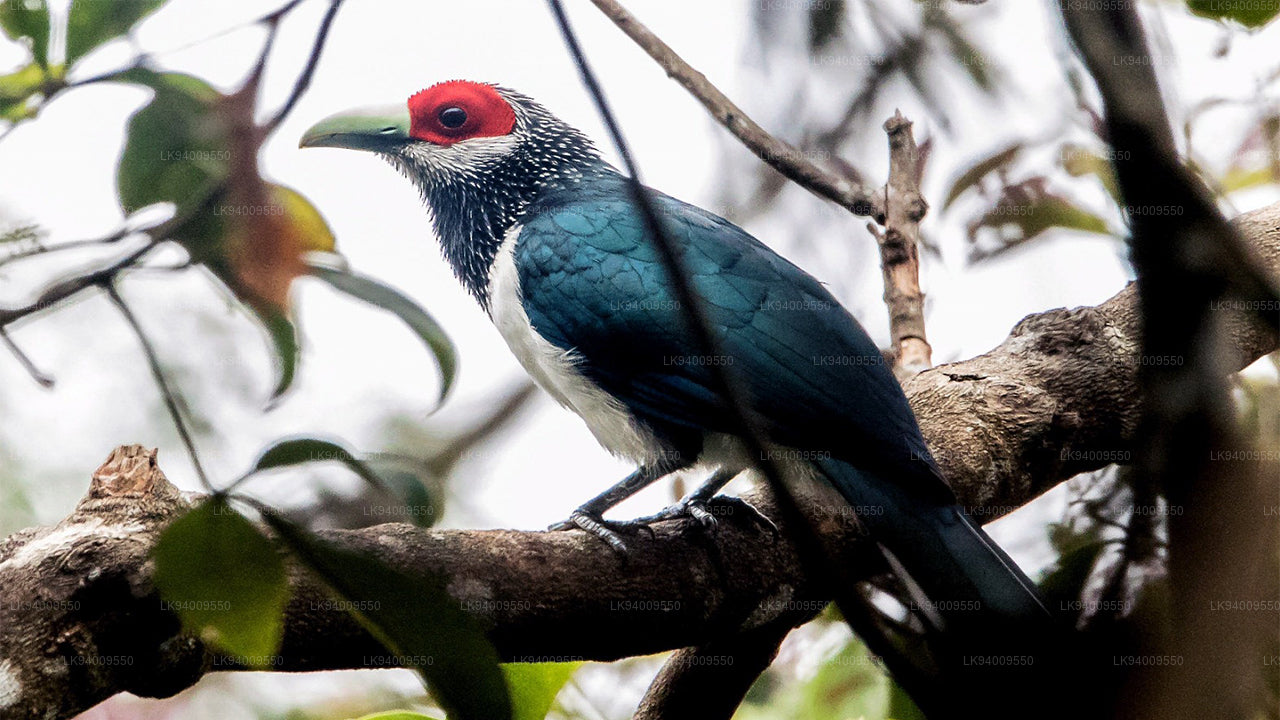 Red Faced Malkoha
Phaenicophaeus pyrrhocephalus
-
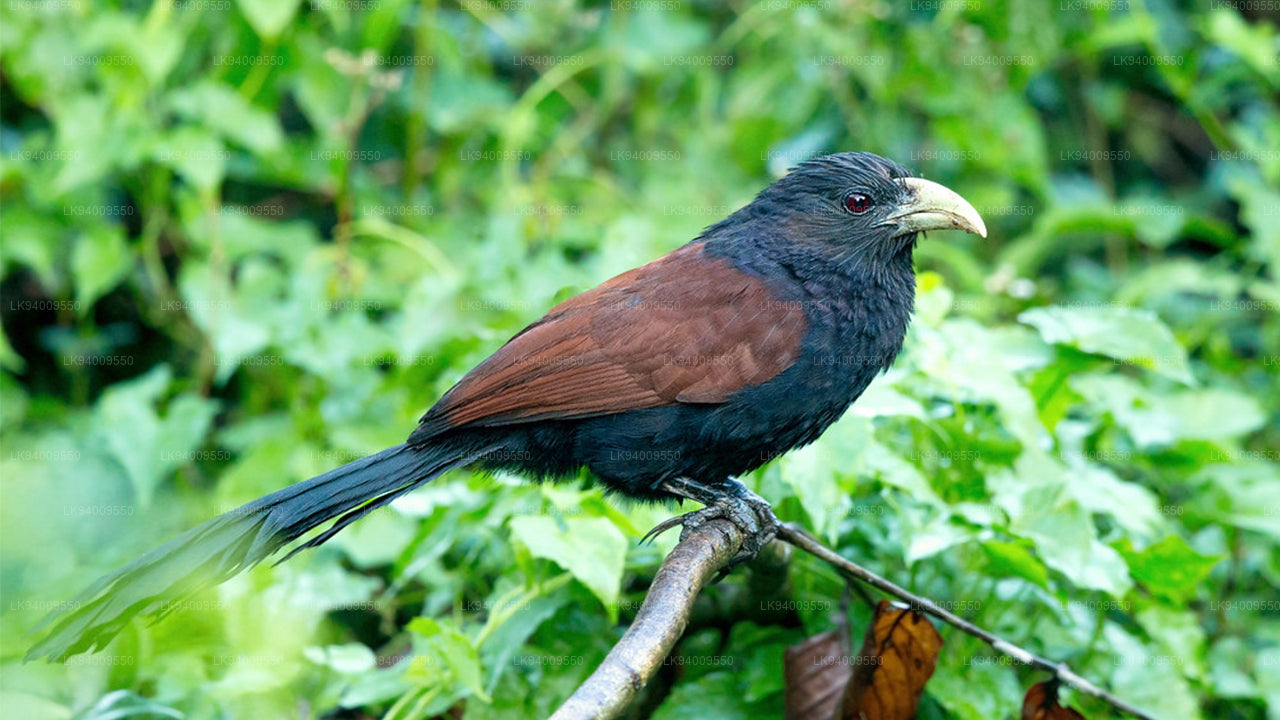 Green Billed Couca
Centropus chlororhynchos
-
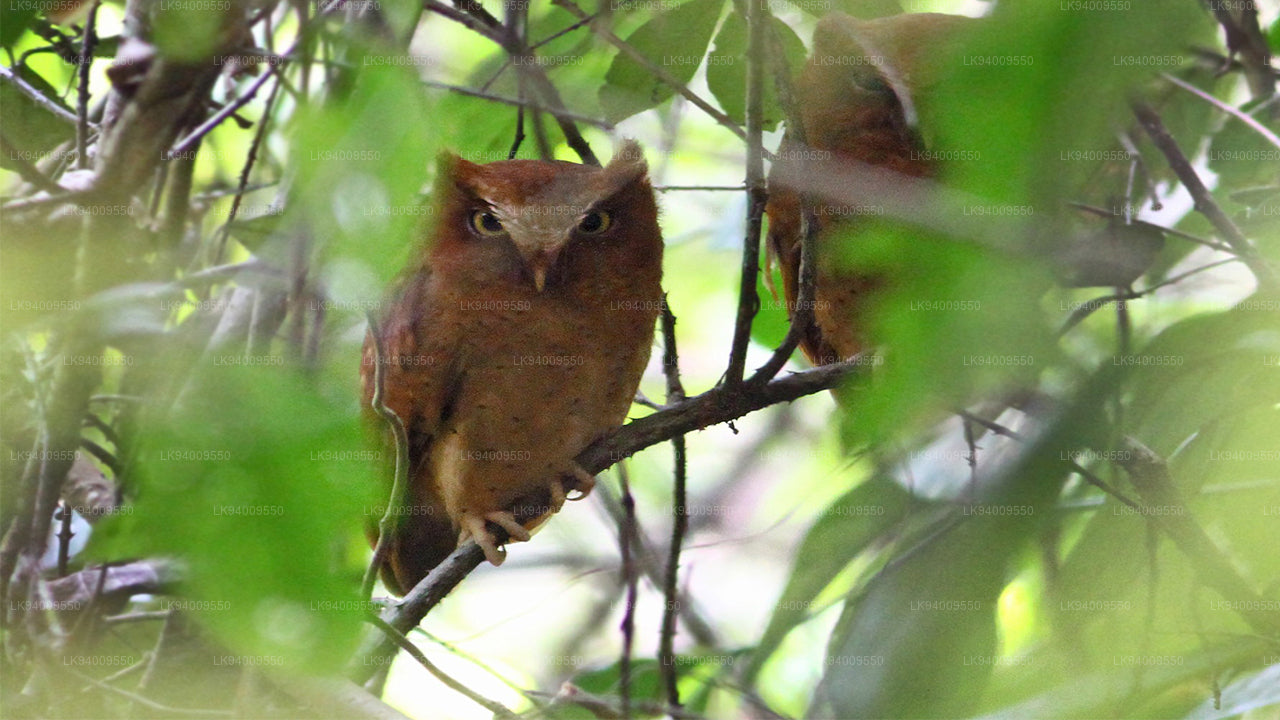 Serendib Scops Owl
Otus thilohoffmanni
-
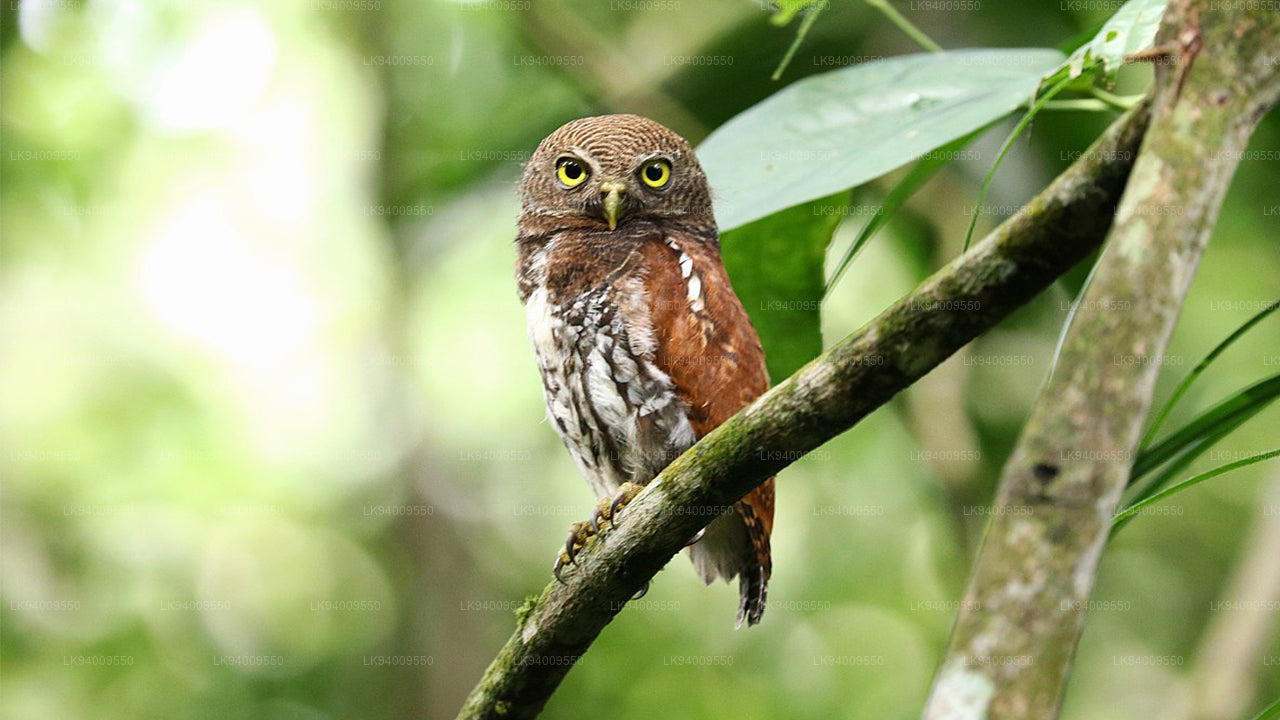 Chestnut Backed Owlet
$Glaucidium castanotum
-
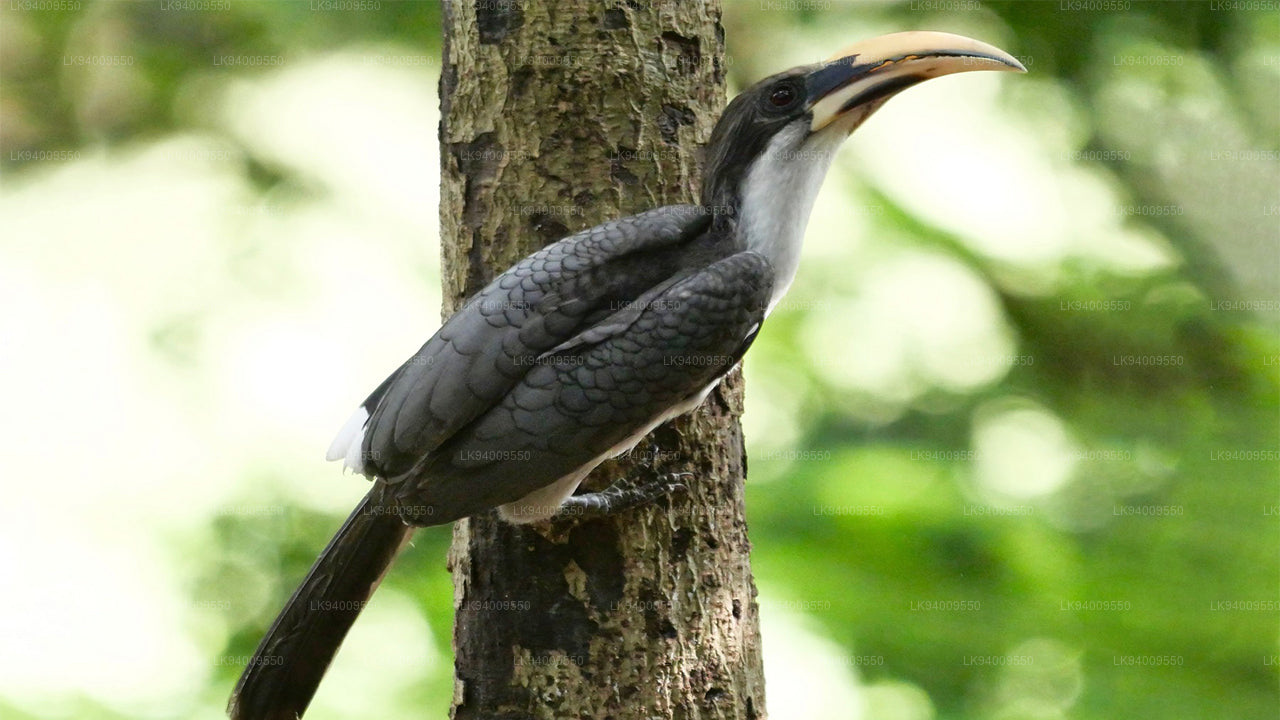 Ceylon Grey Hornbill
Ocyceros gingalensis
-
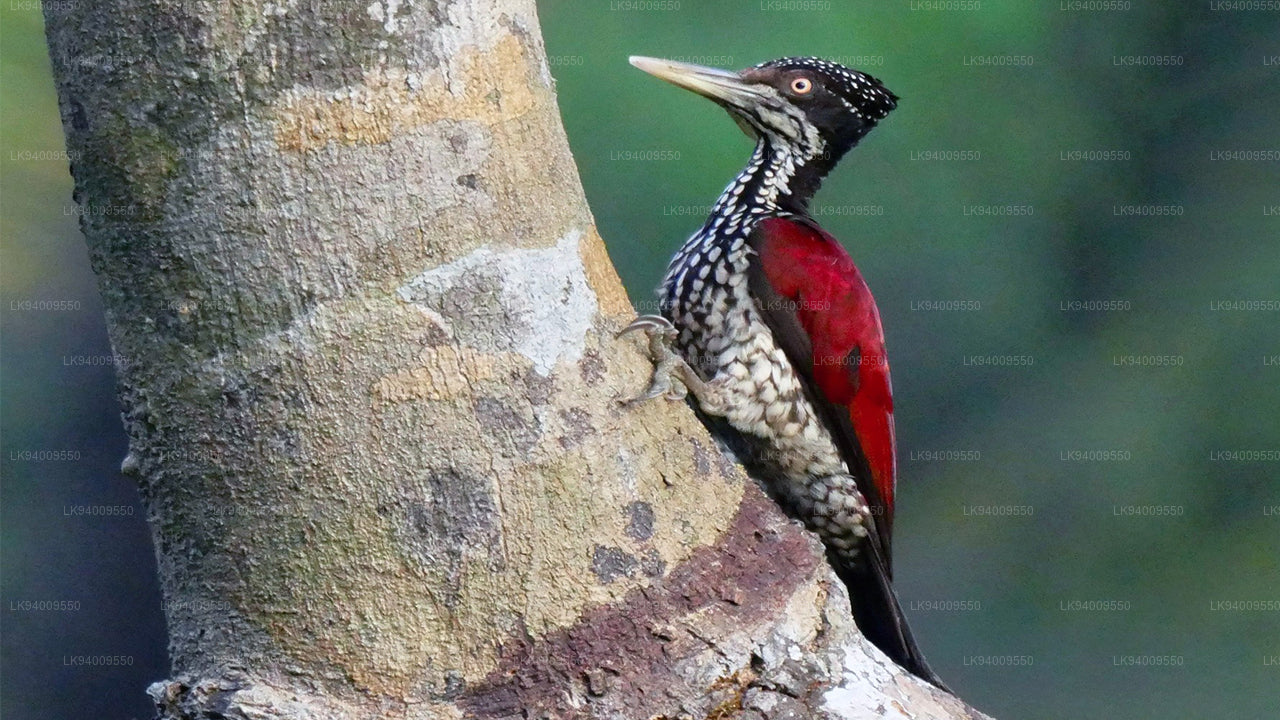 Crimson Backed Flameback
Chrysocolaptes stricklandi
-
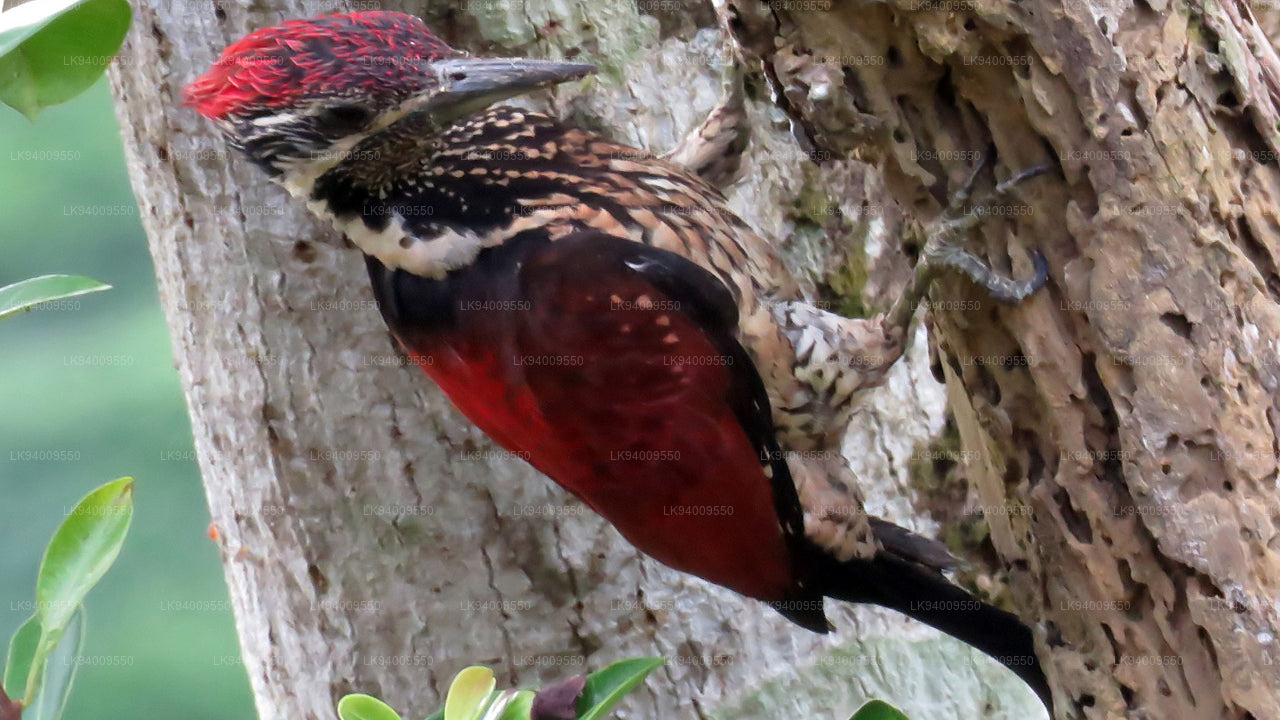 Red backed flameback
Dinopium psarodes
-
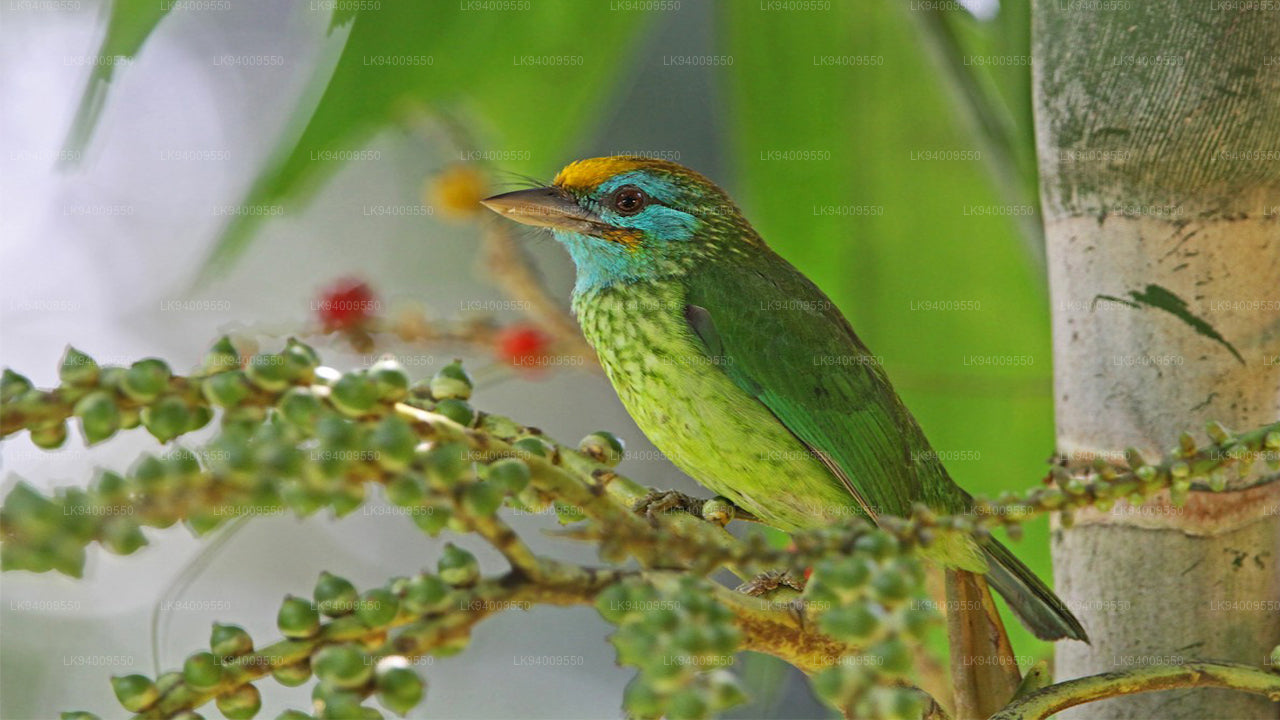 Yellow Fronted Barbet
Psilopogon flavifrons
-
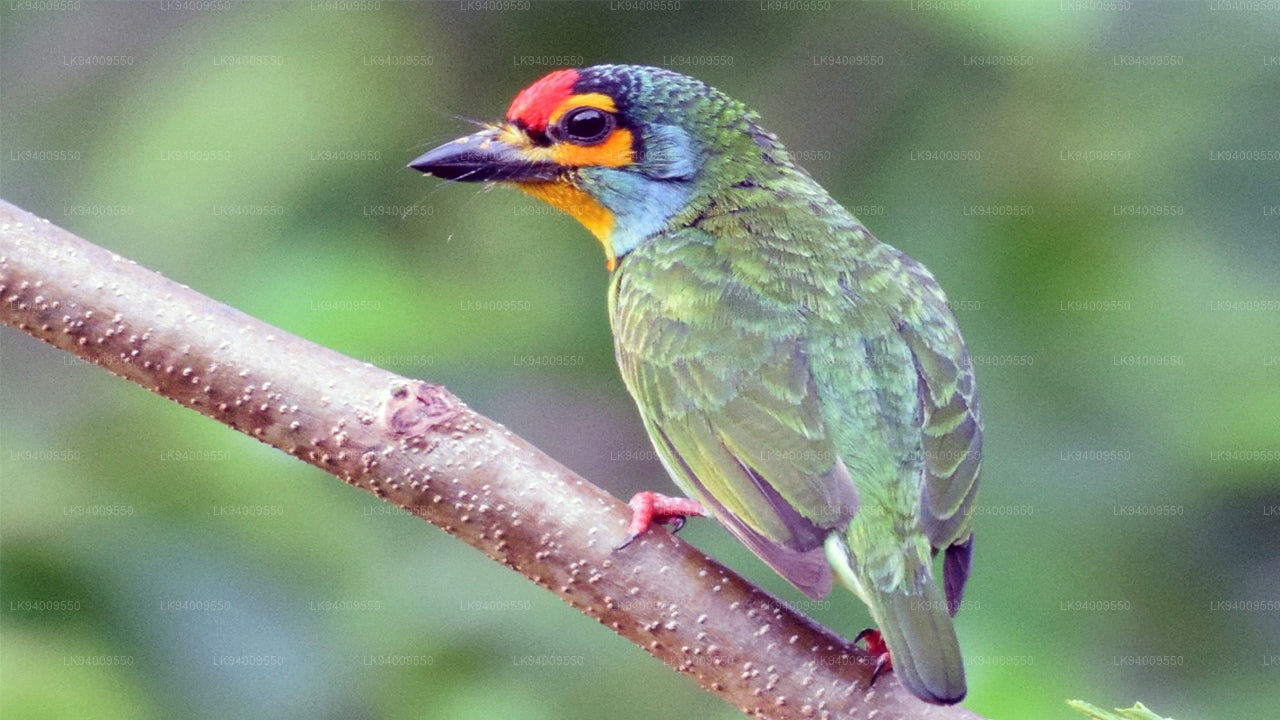 Crimson Fronted Barbet
Psilopogon rubricapillus
-
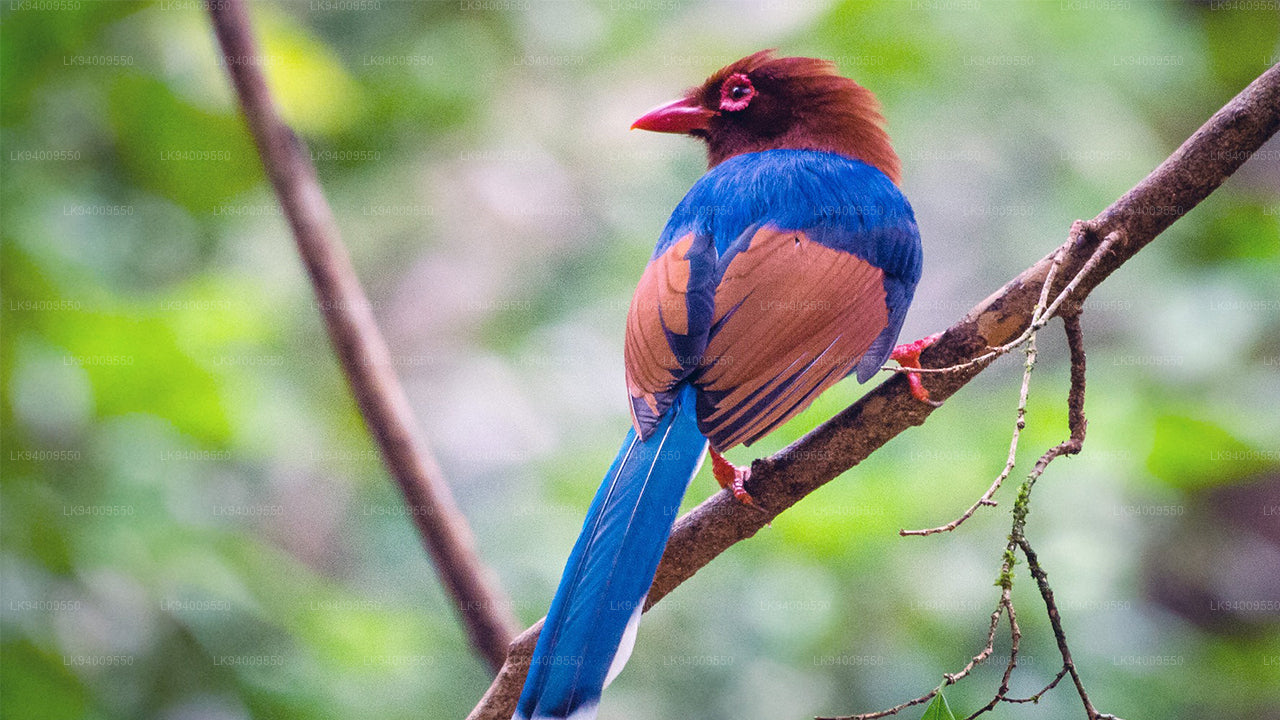 Ceylon Blue Magpie
Urocissa ornata
-
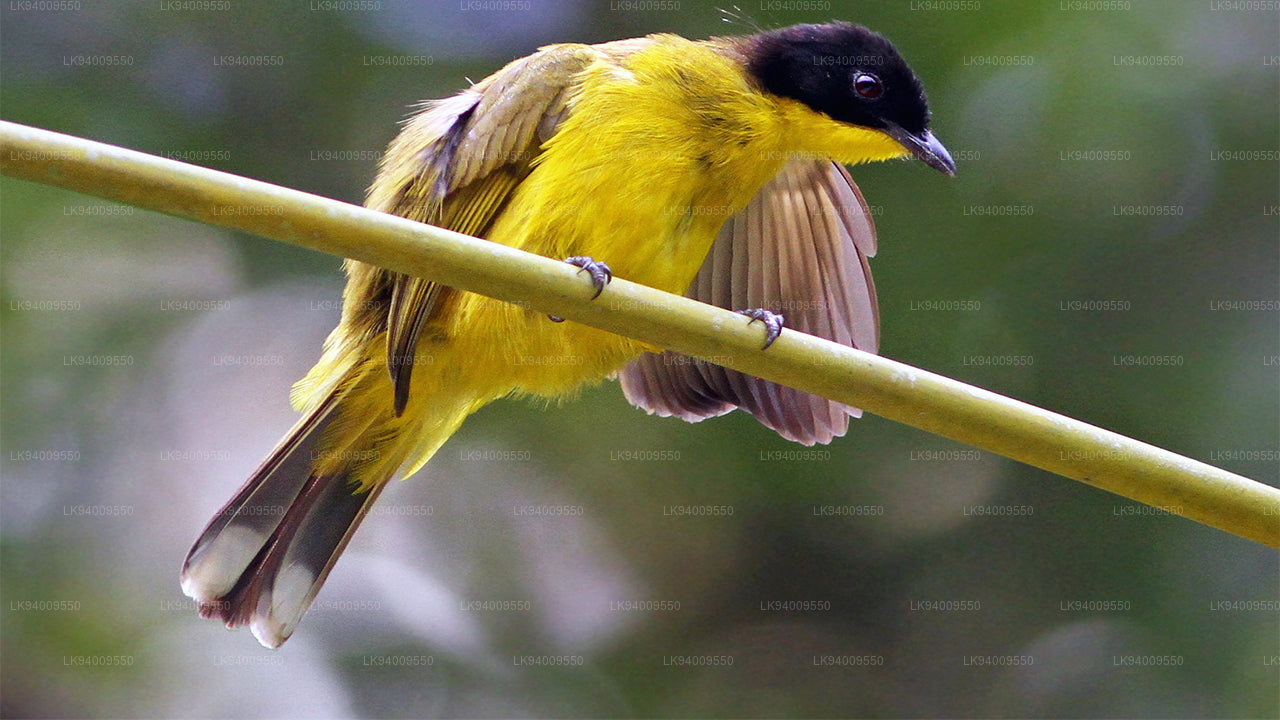 Black Capped Bulbul
Rubigula melanictera
-
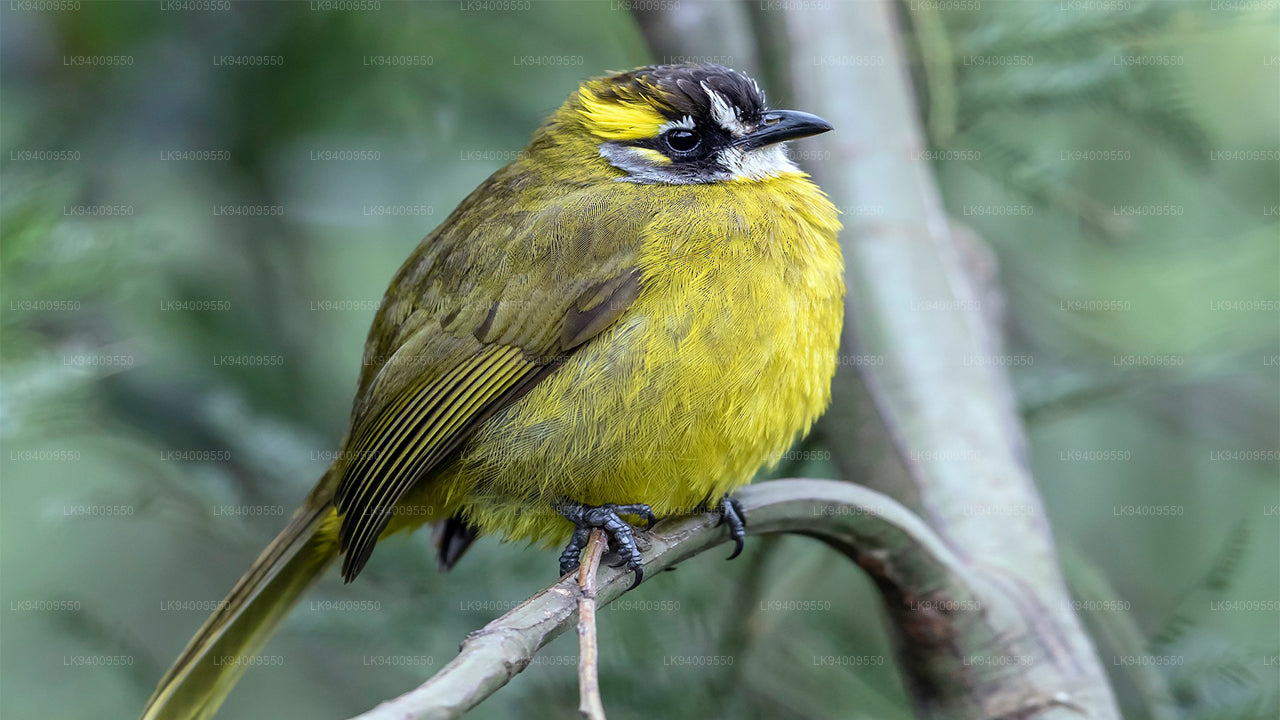 Yellow Eared Bulbul
Pycnonotus penicillatus
-
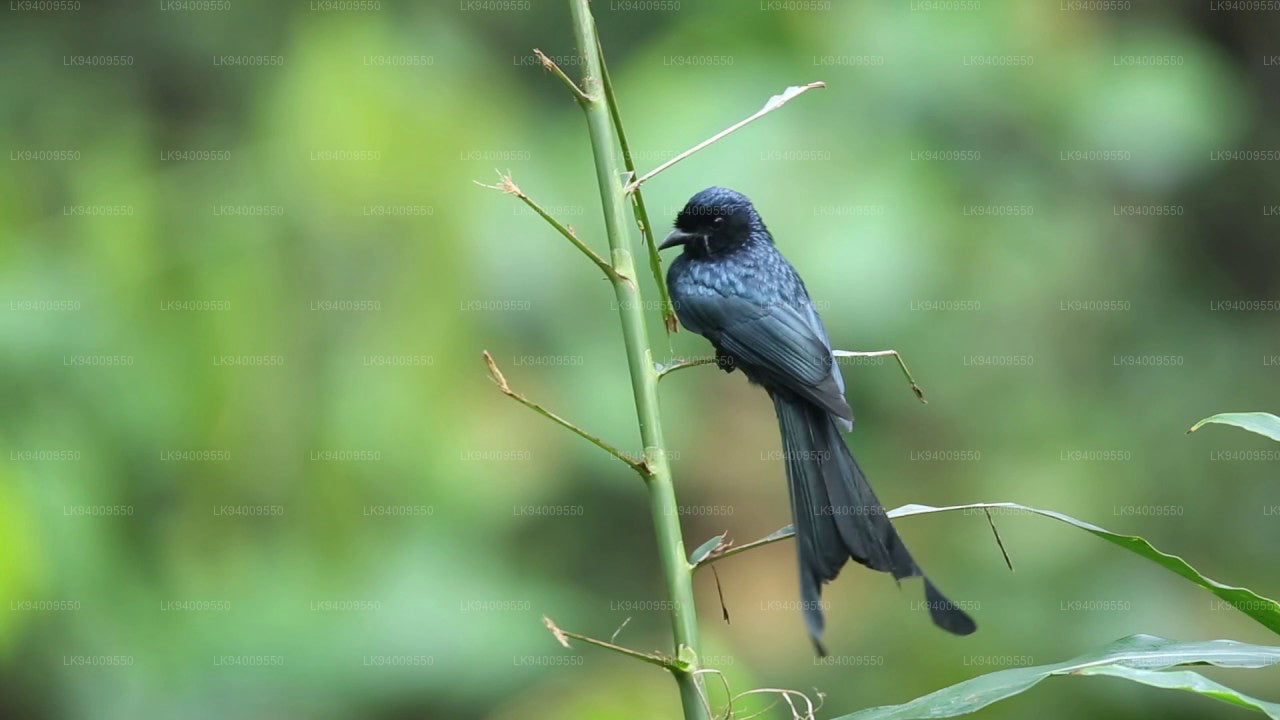 Ceylon Crested Drongo
Dicrurus lophorinus
-
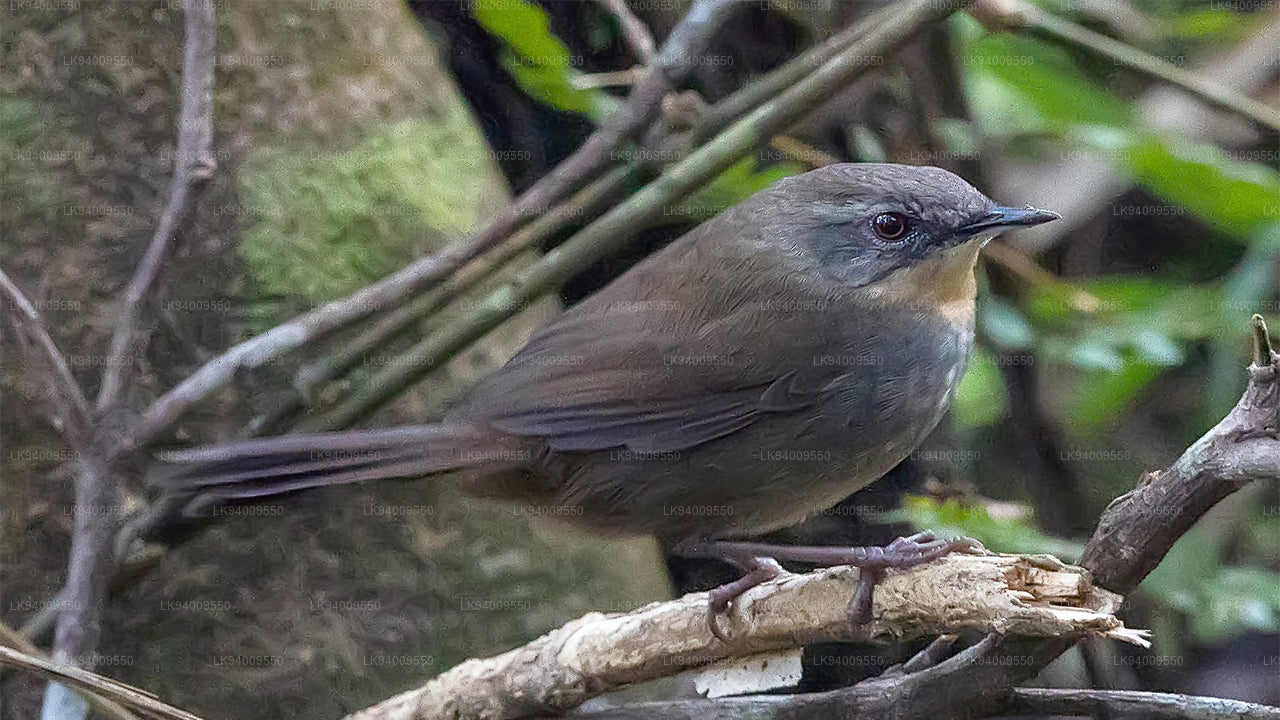 Ceylon Bush Warbler
Elaphrornis palliseri
-
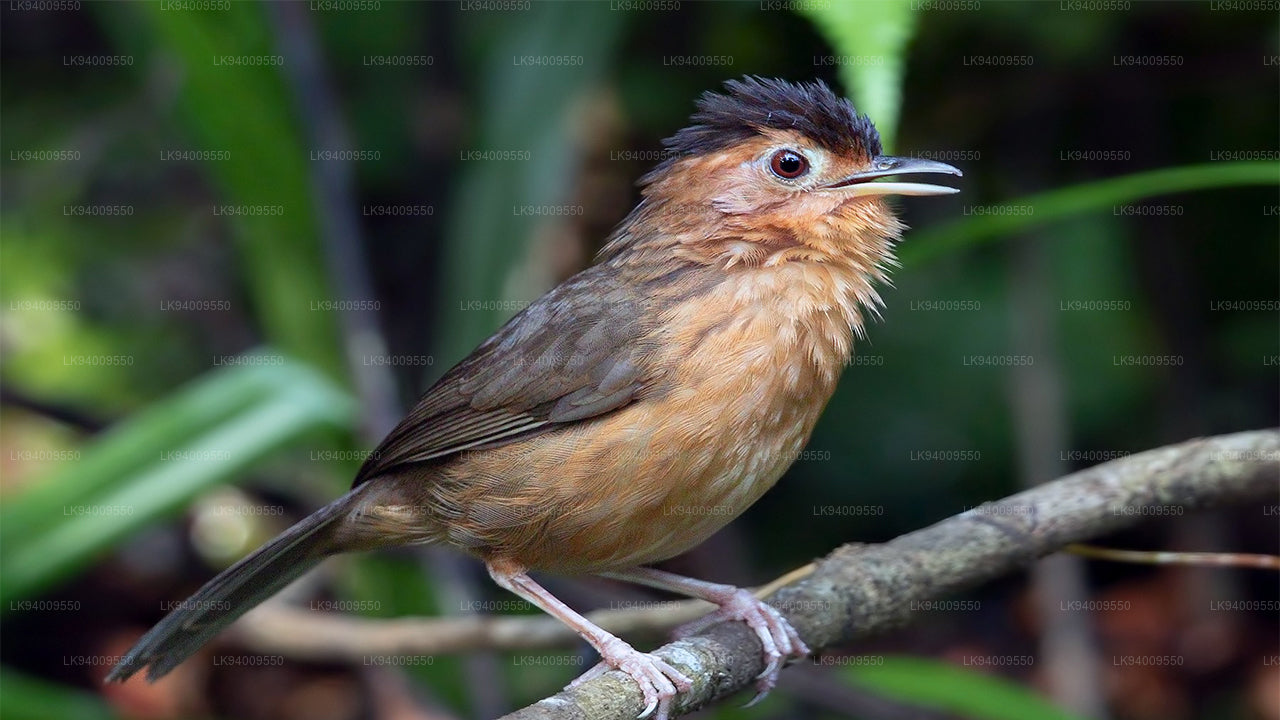 Brown Capped Babbler
Pellorneum fuscocapillus
-
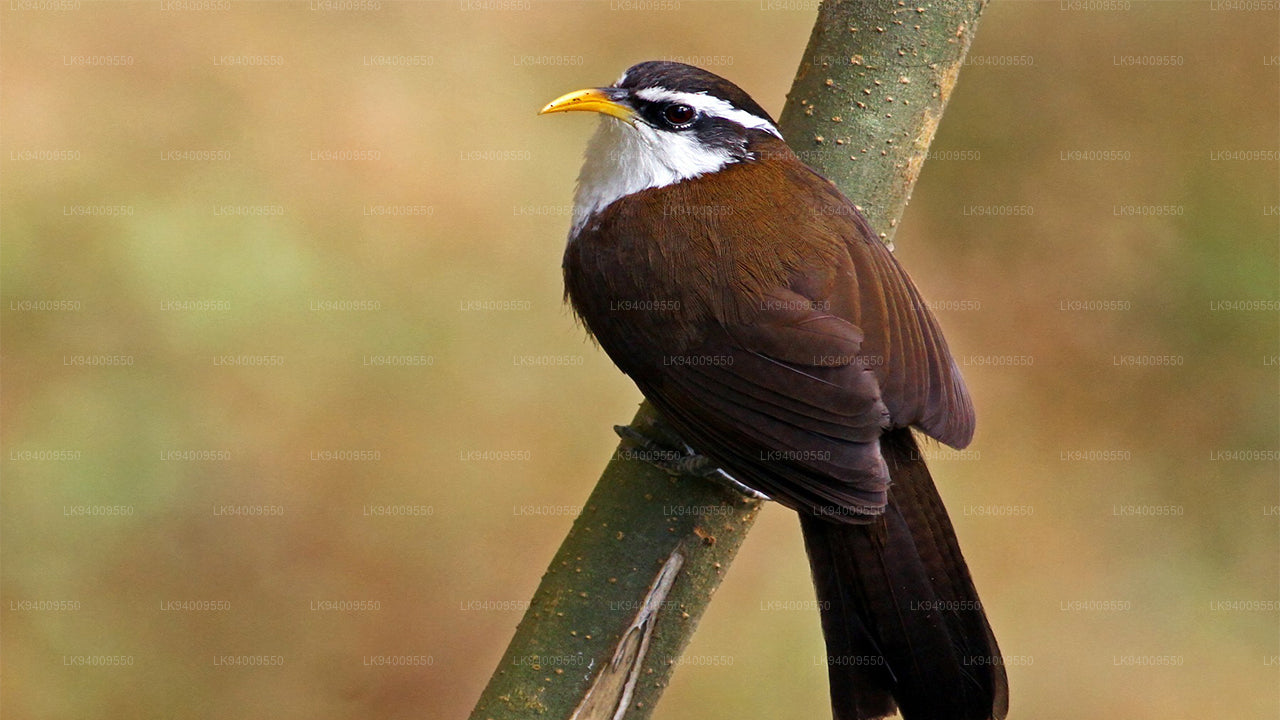 Ceylon Scimitar Babbler
Pomatorhinus melanurus
-
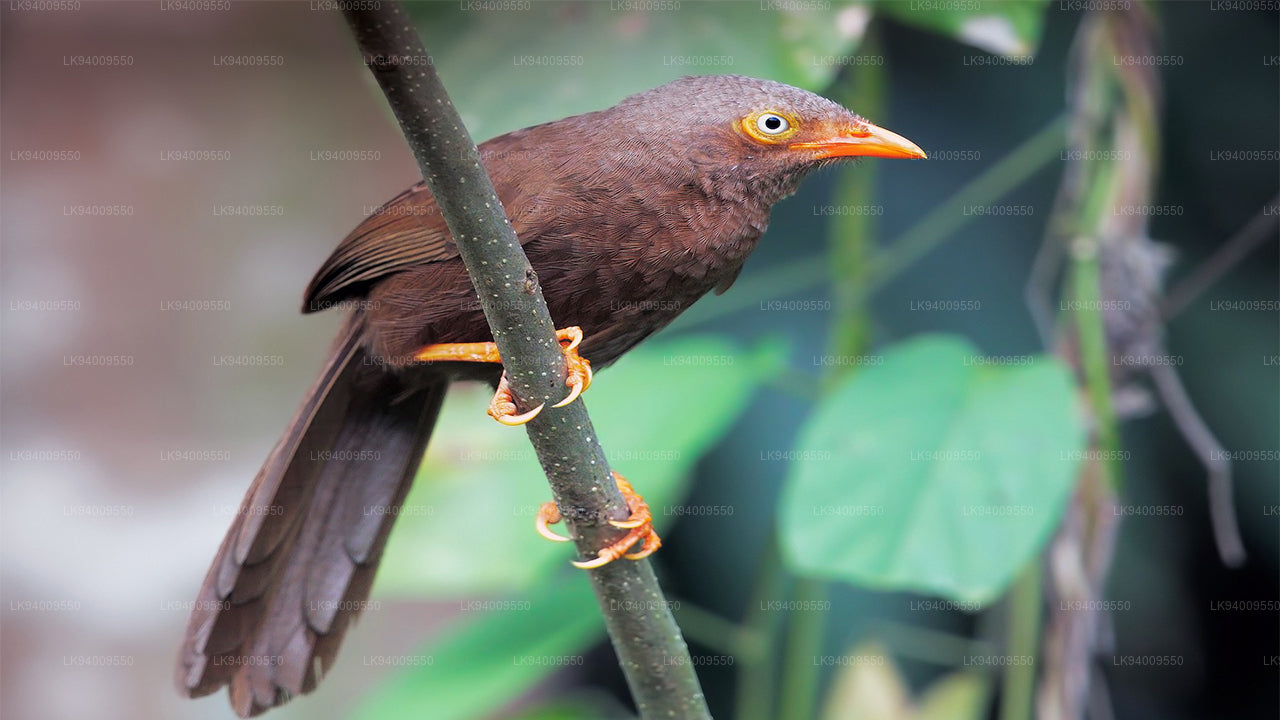 Ceylon Rufous Babbler
Argya rufescens
-
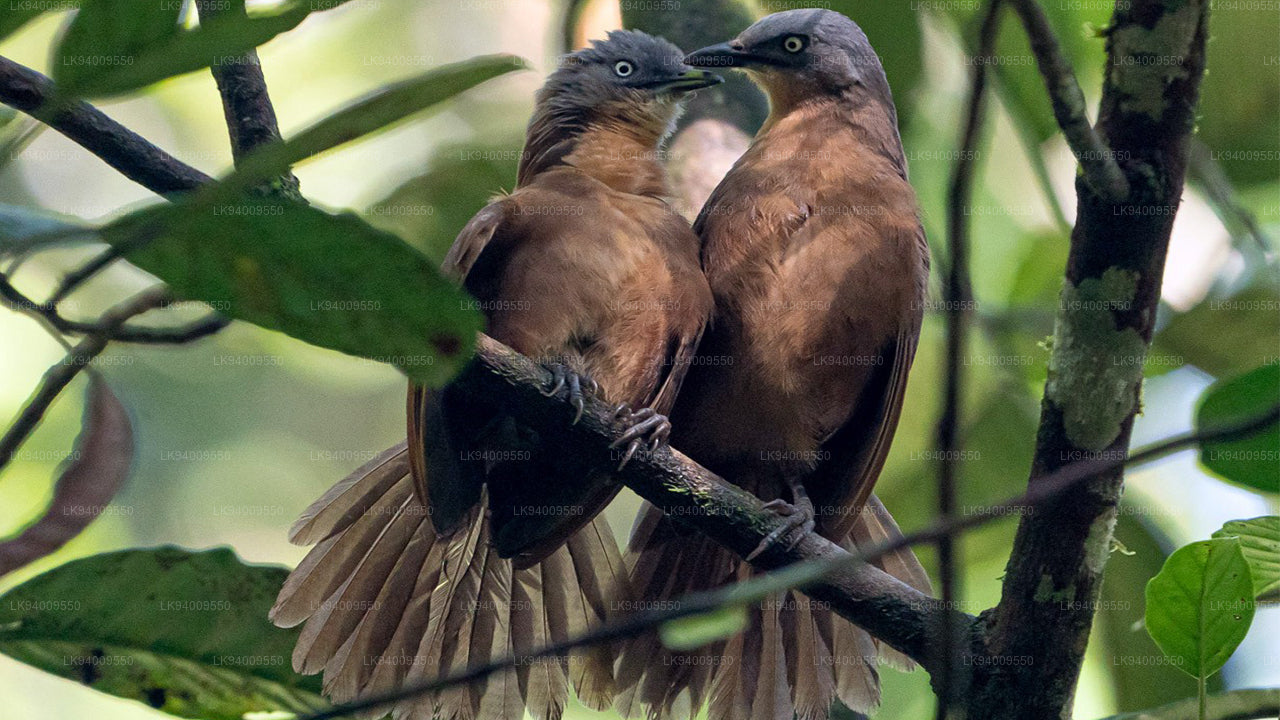 Ashy Headed Laughingthrush
Argya cinereifrons
-
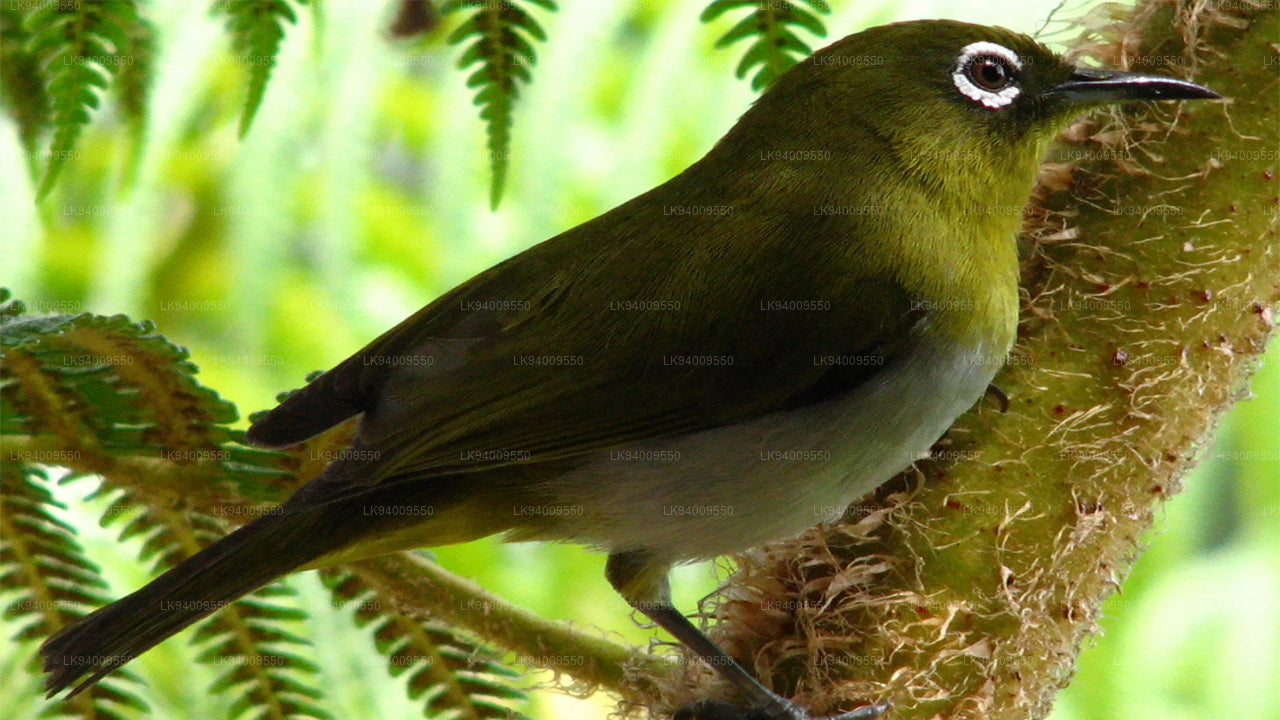 Ceylon White Eye
Zosterops ceylonensis
-
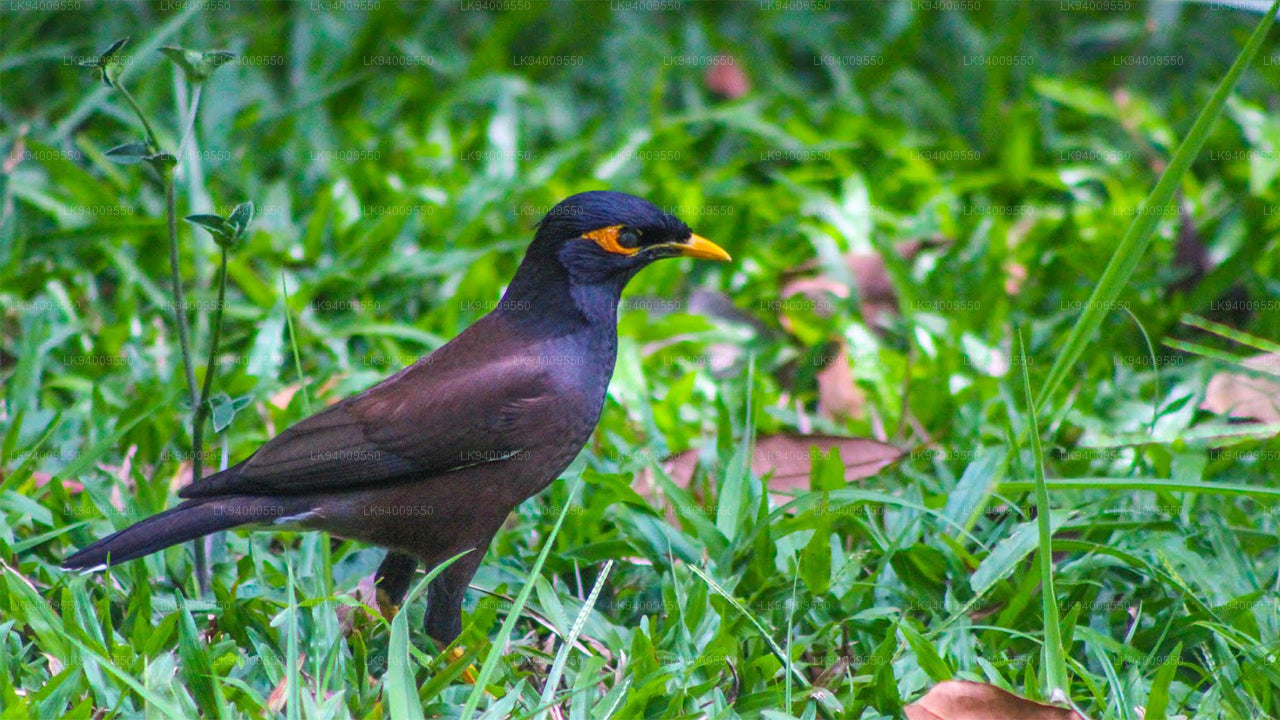 Ceylon Hill Myna
Gracula ptilogenys
-
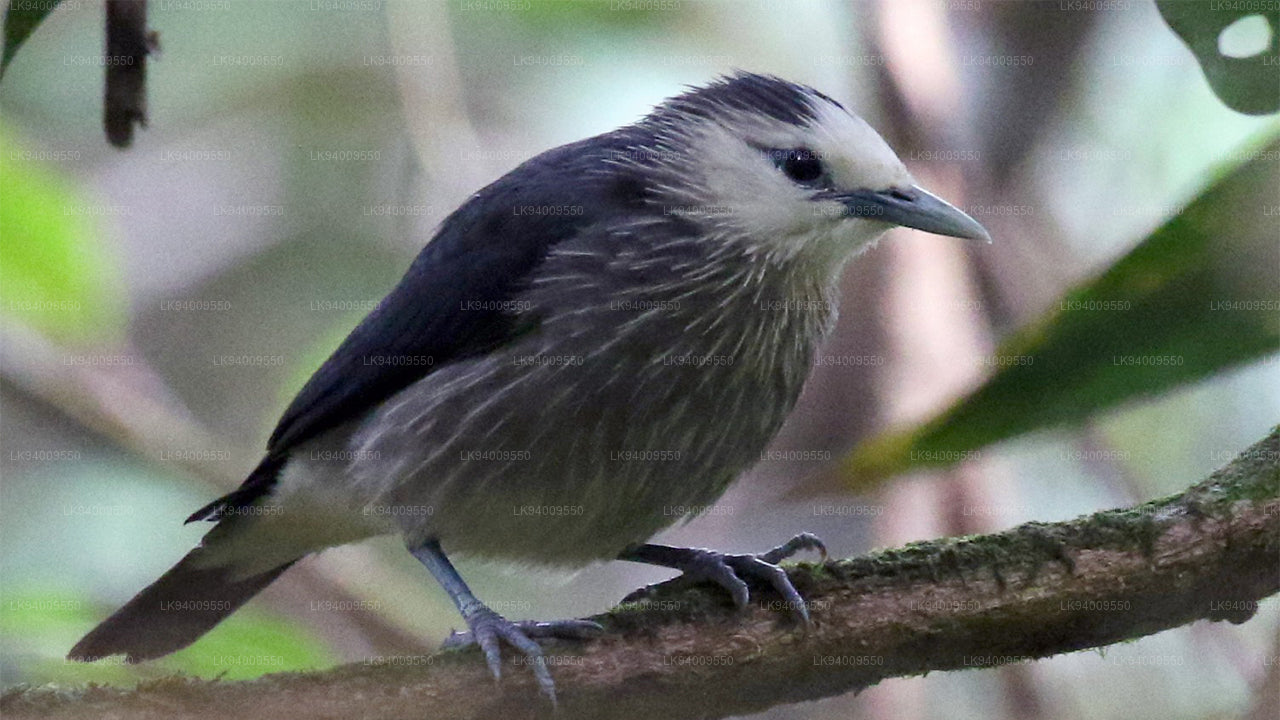 White Faced Starling
$Sturnornis albofrontatus
-
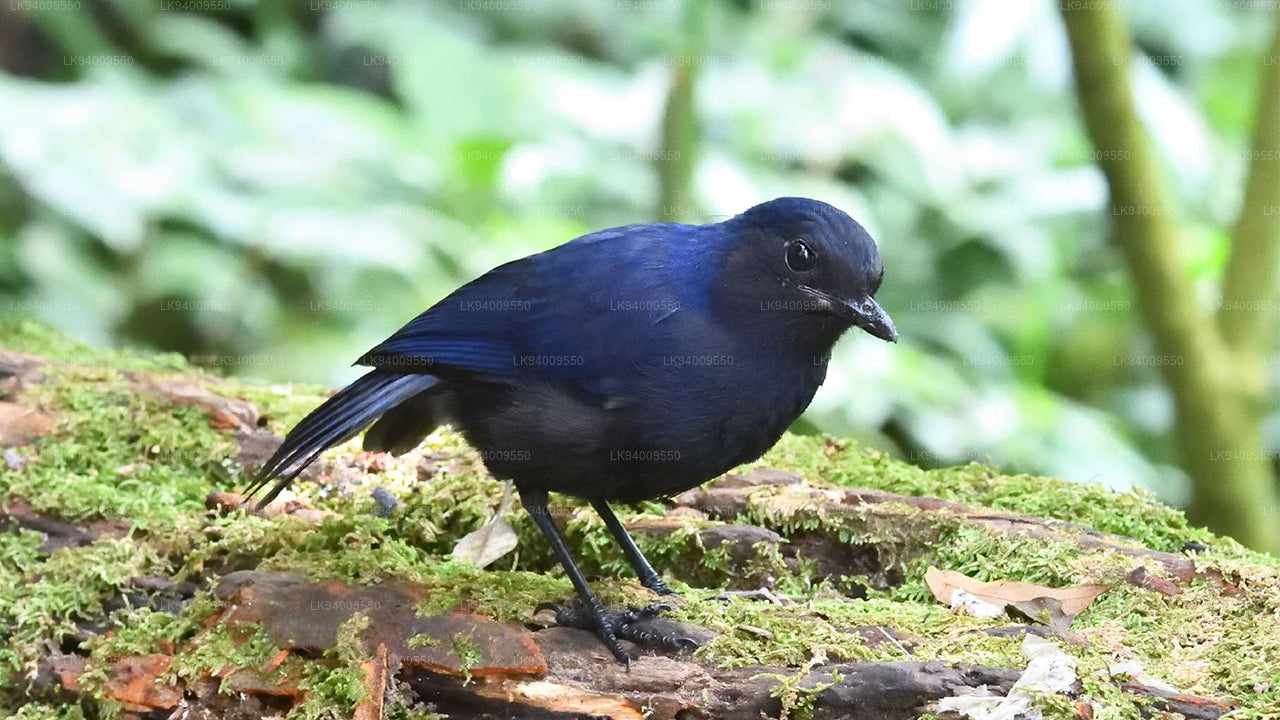 Ceylon Whistling Thrush
Myophonus blighi
-
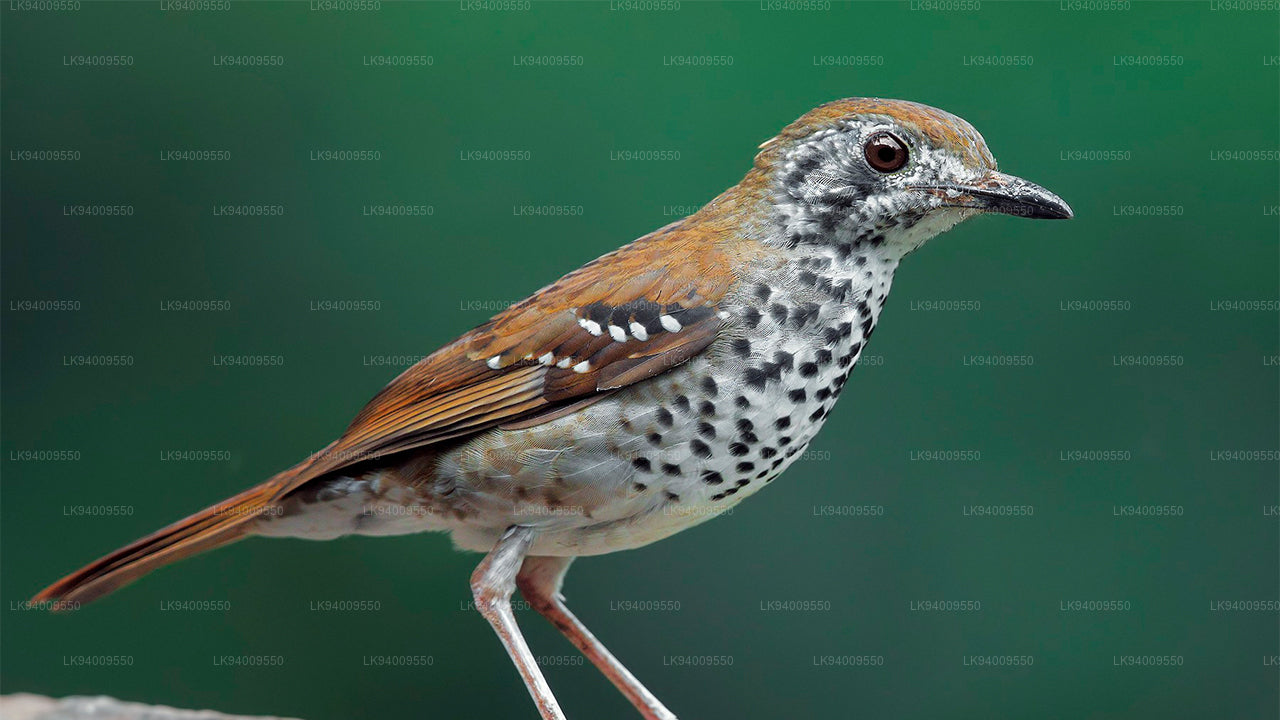 Spot Winged Ground Thrush
Geokichla spiloptera
-
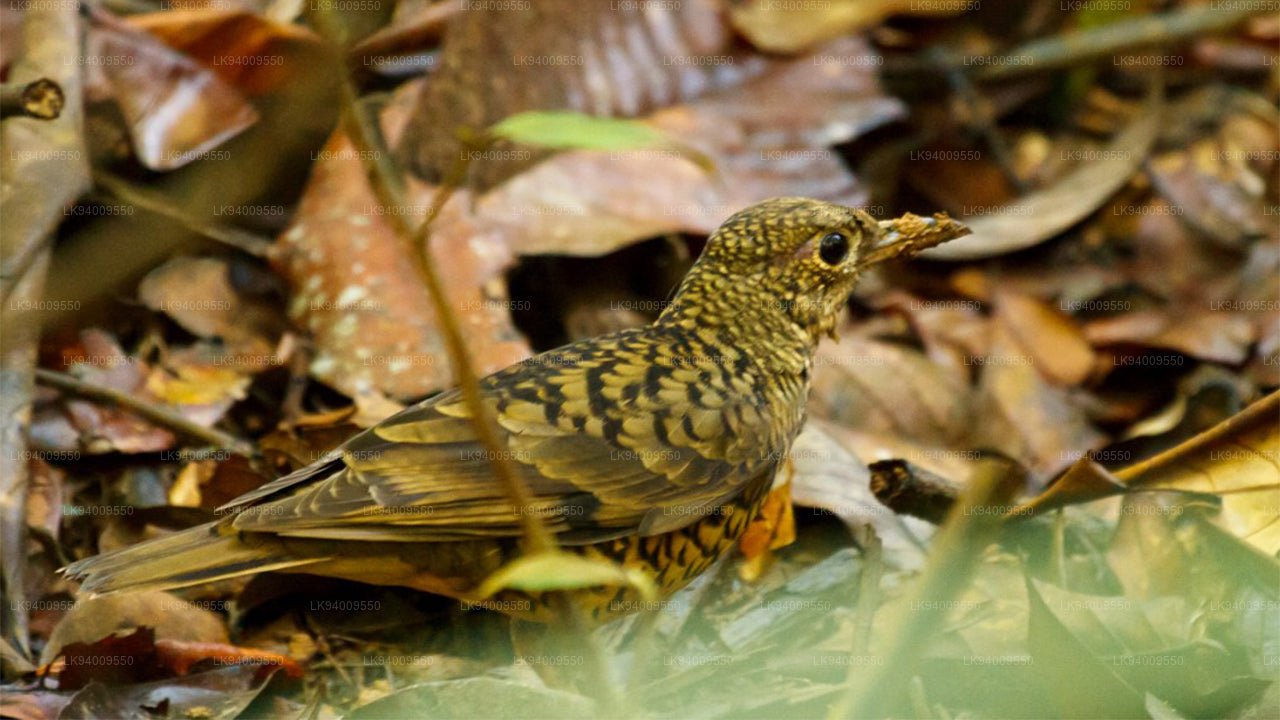 Ceylon Scaly Thrush
Zoothera imbricata
-
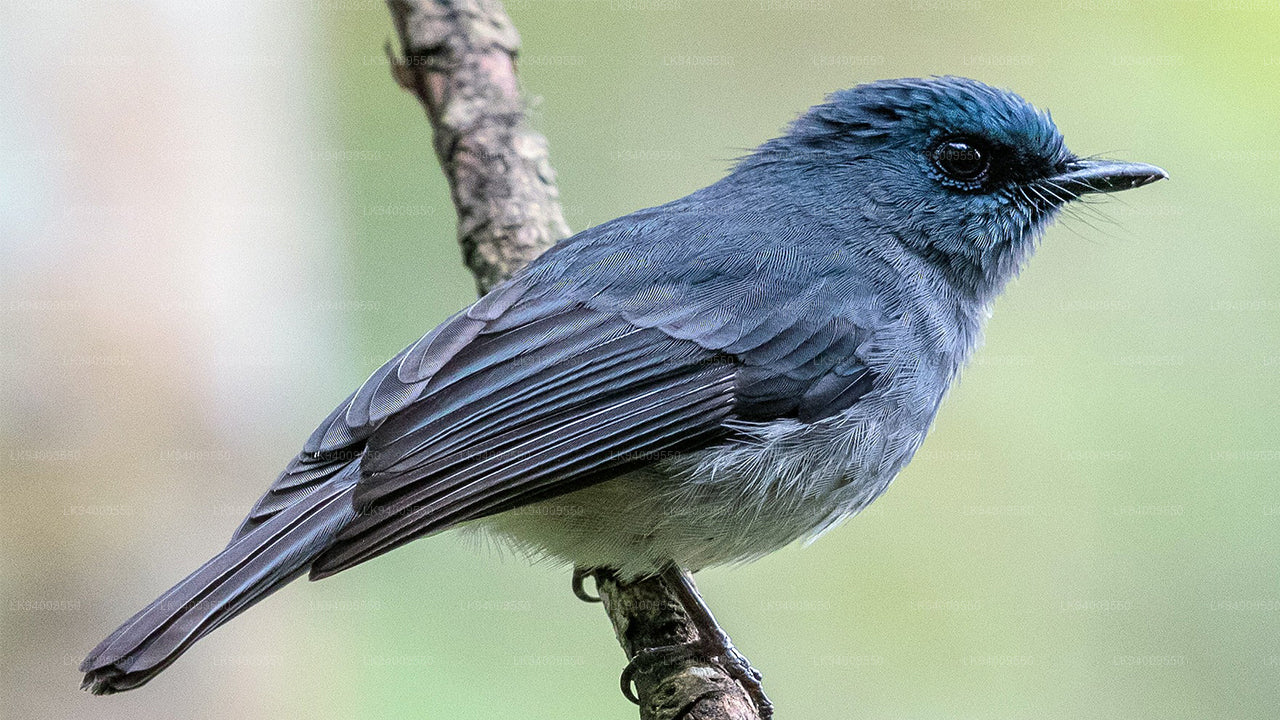 Dusky Blue Flycatcher
Eumyias sordidus
-
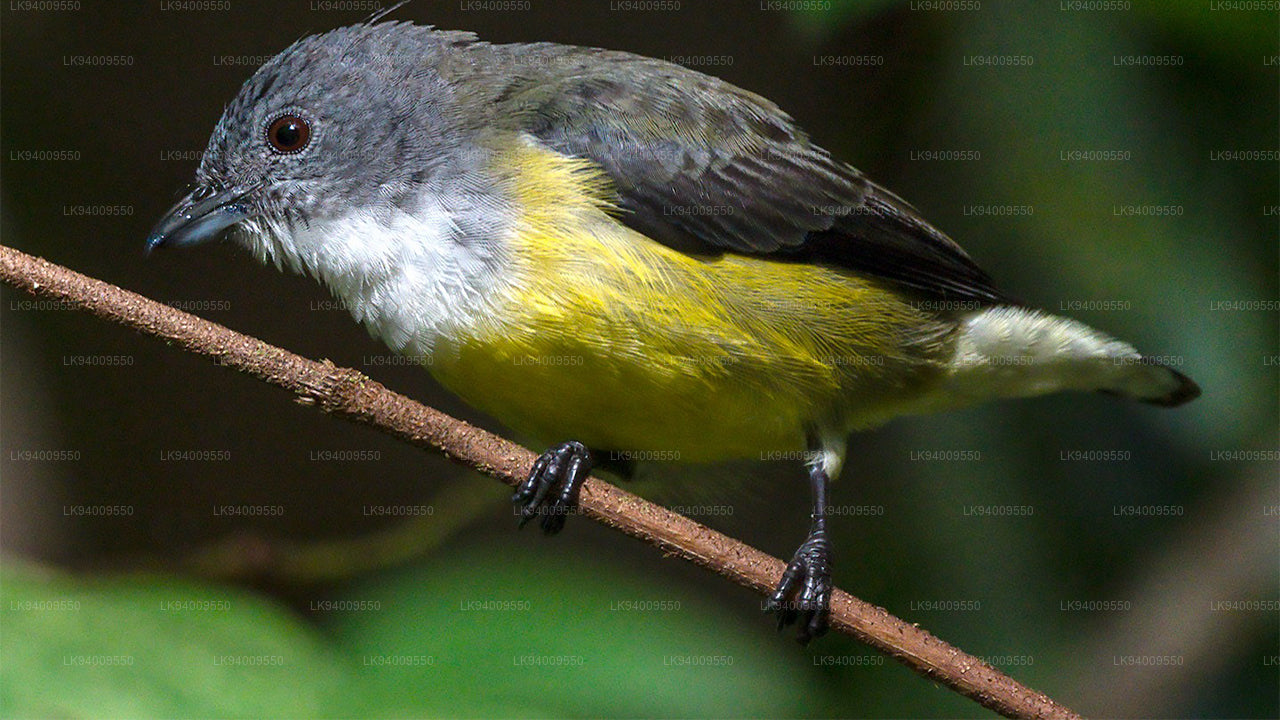 Legge's Flowerpecker
Dicaeum vincens
-
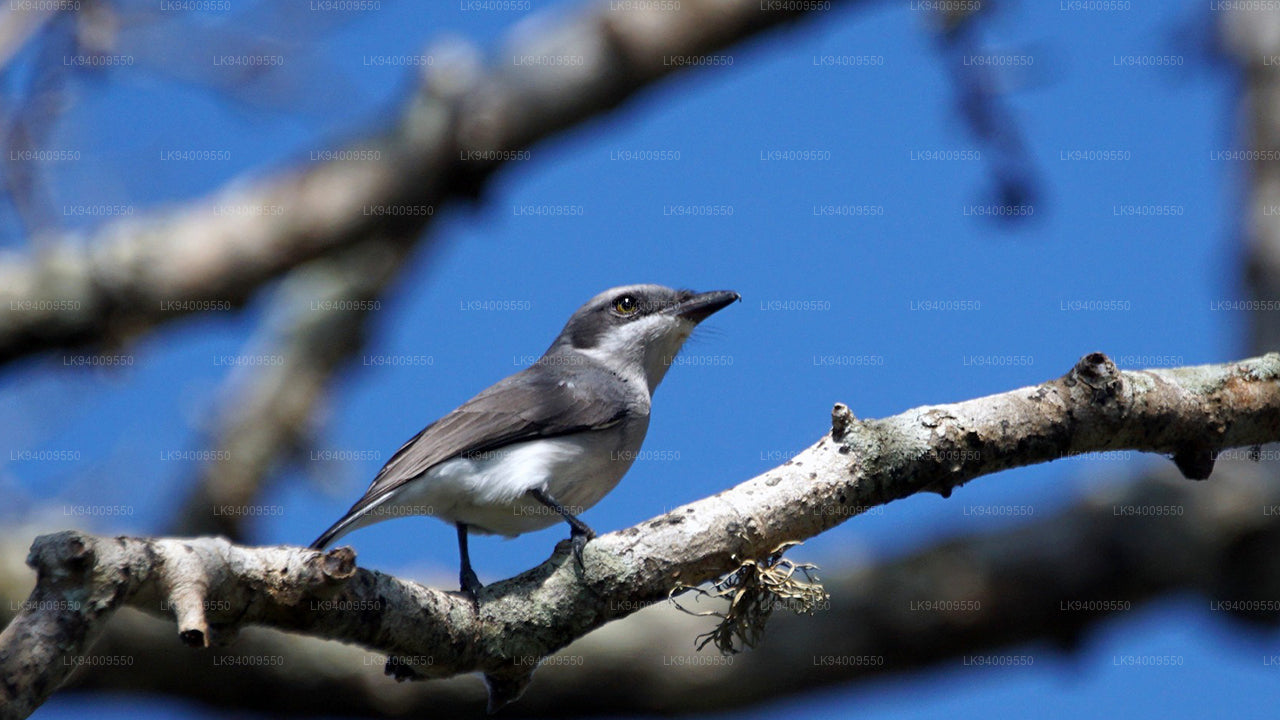 Ceylon Woodshrike
Tephrodornis affinis
-
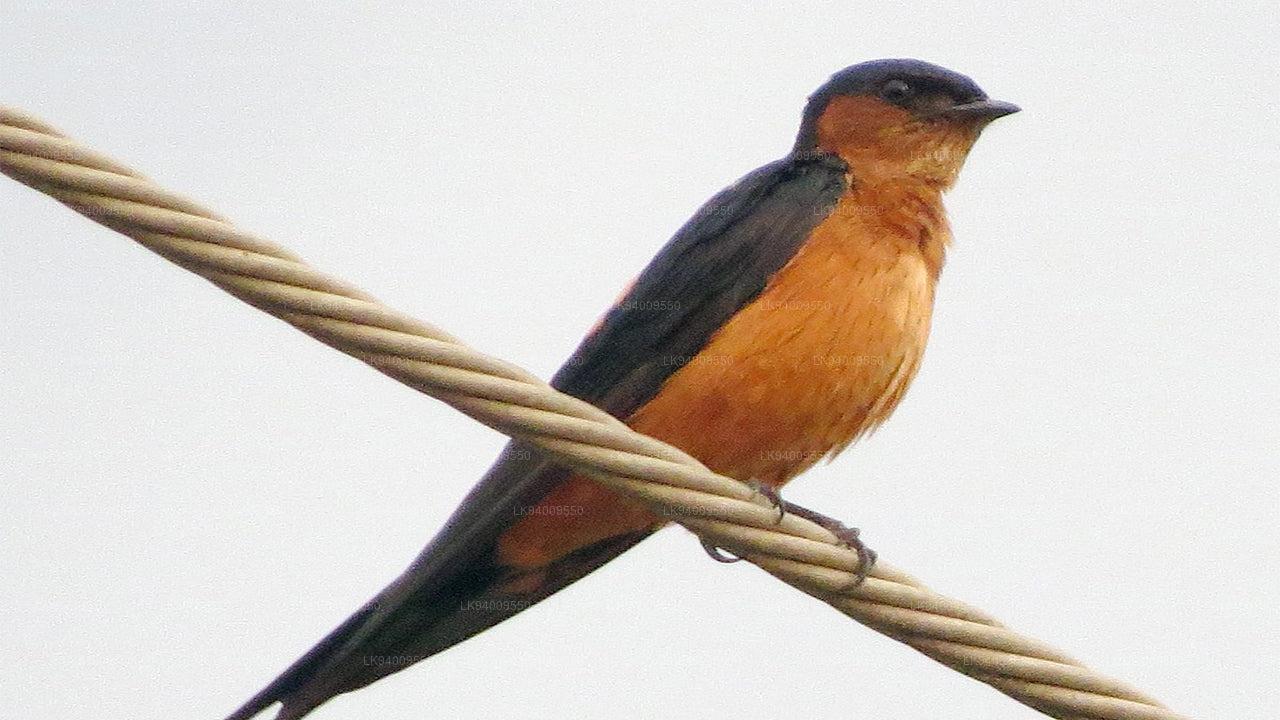 Ceylon Swallow
Cecropis hyperythra