Nallur Kandaswamy Kovil

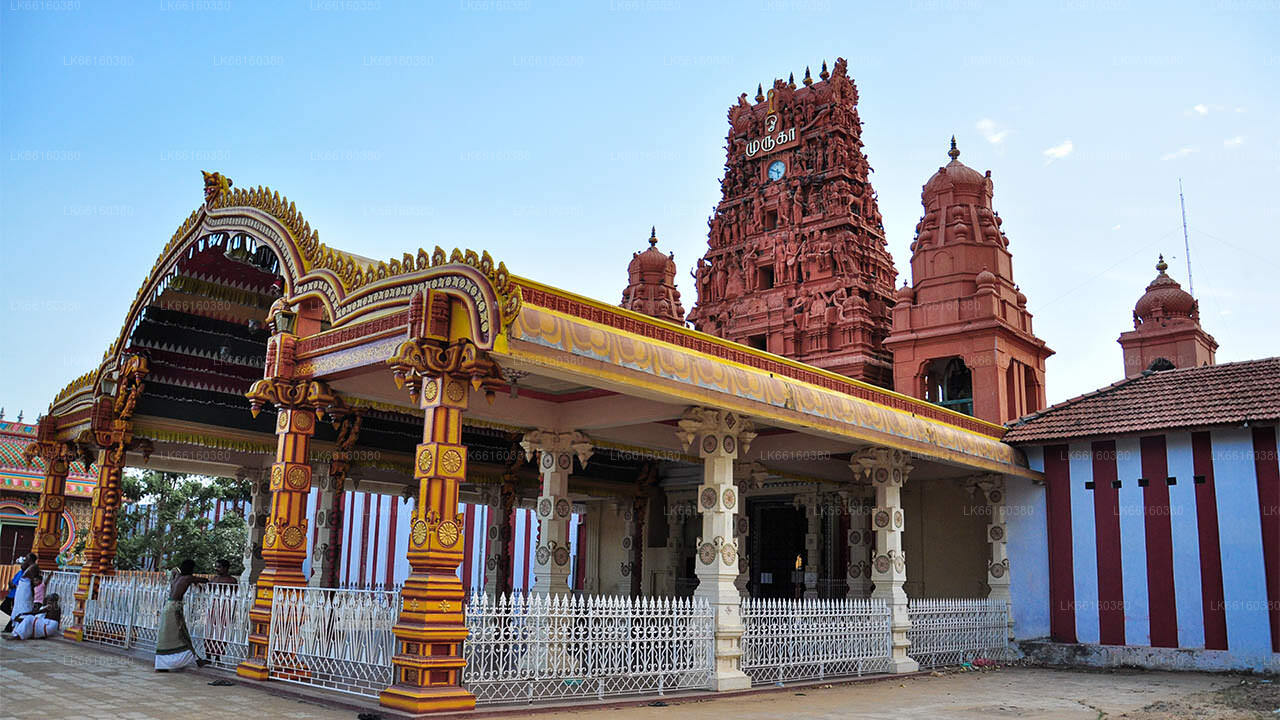
In the hot arid lands of Nallur, in Jaffna, rises the majestic Hindu temple for Skanda/ Murugan – the god of love, war and beauty. It has reigned over the land for centuries, attracting devotees from various walks of life. The temple itself embodies a kind of peace that can only be felt in the most divine of places.

History

The temple was originally founded in 948 AD. However, it reached fame when it was rebuilt in the 13th century by Puvaneka Vaahu, a minister of the Jaffna King Kalinga Maha. The Nallur Kandaswamy Temple was built for a third time by Senpaha Perumal (a.k.a Sapumal Kumaraya) who was the adopted son of the Kotte king. Nallur served as the capital of the kings of Jaffna, and was a highly defensive fort and city. There were courtly buildings, the palaces, businesses and much more.

The third built temple was destroyed by the Portuguese in 1624 AD; and many churches built over the ruins. The location of the original temple is now covered by the St James Church, Nallur. Part of the original Sivalingam from the temple remained in the vicarage, but was destroyed during the recent civil war. Now only the platform where it was mounted remains.

The current temple was built in 1734 AD by Don Juan. However, the ‘Golden Era’ of the Nallur Temple began in the latter 1890s with the takeover of the temple administration by Arumuga Maapaana Mudaliyar; who started renovating it to bring it back to its earlier magnificence.

Design

Created in the ways of the ancient temple cities of Madura and Padaliputra in India; the town of Nallur too revolves around this temple.

  • The cities had four entrances with temples at each gate.
  • There were outer circles where the commoners resided and businesses flourished, inner circles where highly placed nobles resided.
  • The walls of the temple then rose, resembling the towers (in this case kopurams) and palisades of a fort.
  • Within these walls were the outer courtyard, the holy bathing well (theertha keni), the residences of the priests, the inner temple, and smaller shrines for lesser deities.
  • The inner temple itself was large; and contained the inner courtyard, the central shrine or mulasthanam, shrines for other major gods and goddesses, the dance hall, the conference hall, and many other such elements.

While the original Nallur Kandaswamy Temple was on this same grand scale; the current temple is on a much smaller scale when considering area, whilst still being one of the largest and historically accurate temples still existing in Sri Lanka. The temple has four kopurams, a rarity nowadays; including a massive golden-ochre Rajakopuram standing approximately seven stories (22-25m) tall. Some of the kopurams were built within the last decade. The inner and outer circles usually function as normal roads; except during the temple’s elaborate festival. With beautiful sculptures and architecture created by architects brought in from India; the temple is a visual delight that is best seen directly.

Guidelines on visiting the Nallur Kandaswmy Temple.

  • The temple has a large courtyard; don’t forget remove your shoes and wash your feet at the outer well before you enter.
  • You bring items such as flowers, fruits, camphor and such to offer to the shrines. These can be bought from shops opposite the temple; but everything except camphor and incense must be washed outside before offering.
  • Men are not allowed to wear any other garments above waist level within the temple, as has been the Hindu custom from ancient d

Informazioni sul distretto di Jaffna

Jaffna è la capitale della Provincia Settentrionale dello Sri Lanka. L'85% della popolazione dei distretti di Jaffna e Kilinochchi è indù. Gli indù seguono la tradizione shivaita. La restante parte è in gran parte cattolica romana o protestante, alcuni dei quali discendenti di coloni, noti come Burgher. I Tamil sono divisi in caste, con la maggioranza dei Vellalar, casta agricola. I prodotti ittici, la cipolla rossa e il tabacco sono i principali prodotti di Jaffna.

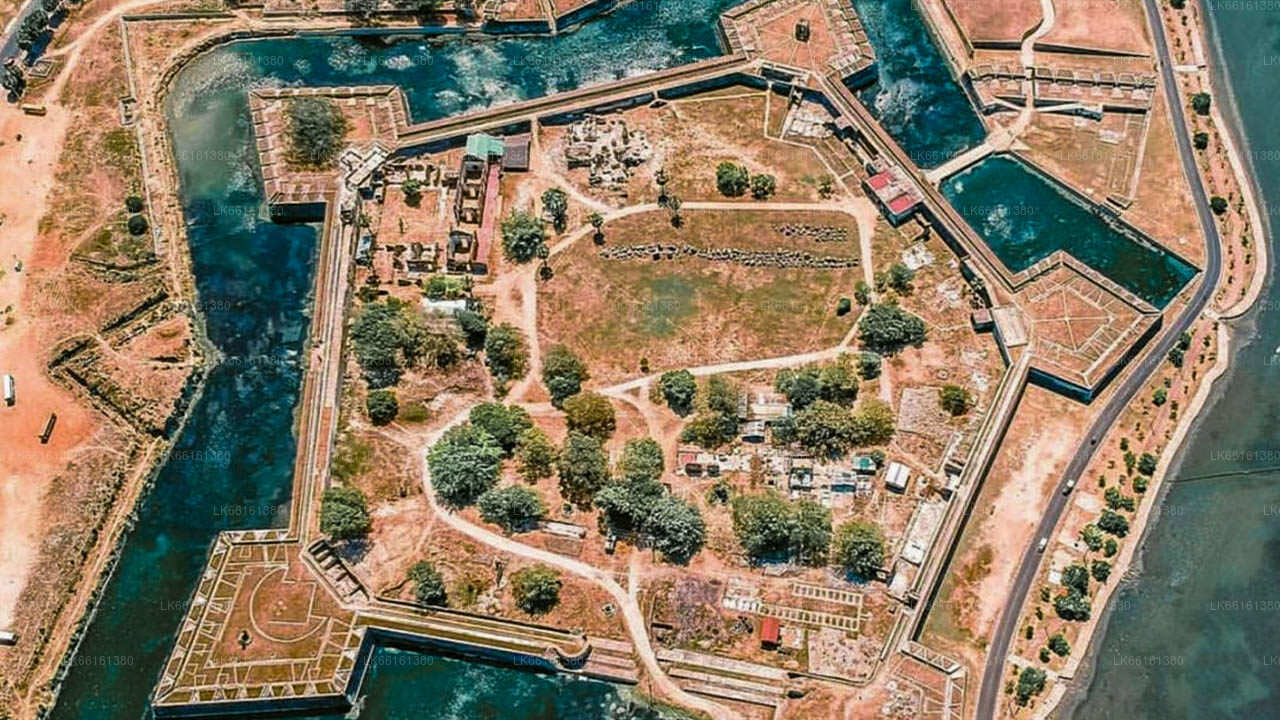
Jaffna ospita splendidi templi indù. Un antico forte olandese è ancora ben conservato e al suo interno si trova un'antica chiesa. Un altro esempio di architettura olandese è la King's House. Nessuna visita a Jaffna è completa senza aver assaggiato lo squisito mango di Jaffna, rinomato per la sua dolcezza. A circa 3 km di distanza si trova il maestoso tempio di Nallur Kandaswamy, sede della più grande festa religiosa di Jaffna. Il porto di Kayts è un antico punto di attracco per navi nella regione di Jaffna.

Informazioni sulla provincia settentrionale

La Provincia Settentrionale è una delle 9 province dello Sri Lanka. Le province esistono dal XIX secolo, ma non hanno avuto alcuno status giuridico fino al 1987, quando il 13° emendamento alla Costituzione dello Sri Lanka del 1978 ha istituito i consigli provinciali. Tra il 1988 e il 2006 la provincia è stata temporaneamente fusa con la Provincia Orientale per formare la Provincia del Nord-Est. Il capoluogo della provincia è Jaffna.

La Provincia Settentrionale si trova nel nord dello Sri Lanka e dista solo 35 km dall'India. La provincia è circondata dal Golfo di Mannar e dalla Baia di Palk a ovest, dallo Stretto di Palk a nord, dal Golfo del Bengala a est e dalle Province Orientale, Centro-Settentrionale e Nord-Occidentale a sud. La provincia ha diverse lagune, le più grandi delle quali sono la Laguna di Jaffna, la Laguna di Nanthi Kadal, la Laguna di Chundikkulam, la Laguna di Vadamarachchi, la Laguna di Uppu Aru, la Laguna di Kokkilai, la Laguna di Nai Aru e la Laguna di Chalai. La maggior parte delle isole intorno allo Sri Lanka si trova a ovest della Provincia Settentrionale. Le isole più grandi sono: Kayts, Neduntivu, Karaitivu, Pungudutivu e Mandativu.

Nel 2007, la popolazione della Provincia Settentrionale era di 1.311.776 abitanti. La maggior parte della popolazione è composta da Tamil dello Sri Lanka, con una minoranza di Mori e Singalesi dello Sri Lanka. Il Tamil dello Sri Lanka è la lingua principale parlata nella provincia dalla stragrande maggioranza della popolazione. L'altra lingua parlata è il Singalese, parlato dall'1% della popolazione. L'inglese è ampiamente parlato e compreso nelle città.

Nel 2007, la popolazione della Provincia Settentrionale era di 1.311.776 abitanti. La maggior parte della popolazione è composta da Tamil dello Sri Lanka, con una minoranza di Mori e Singalesi dello Sri Lanka. Il Tamil dello Sri Lanka è la lingua principale parlata nella provincia dalla stragrande maggioranza della popolazione. L'altra lingua parlata è il singalese, parlato dall'1% della popolazione. L'inglese è ampiamente parlato e compreso nelle città.