Shri Ponnambalawaneswaram Kovil


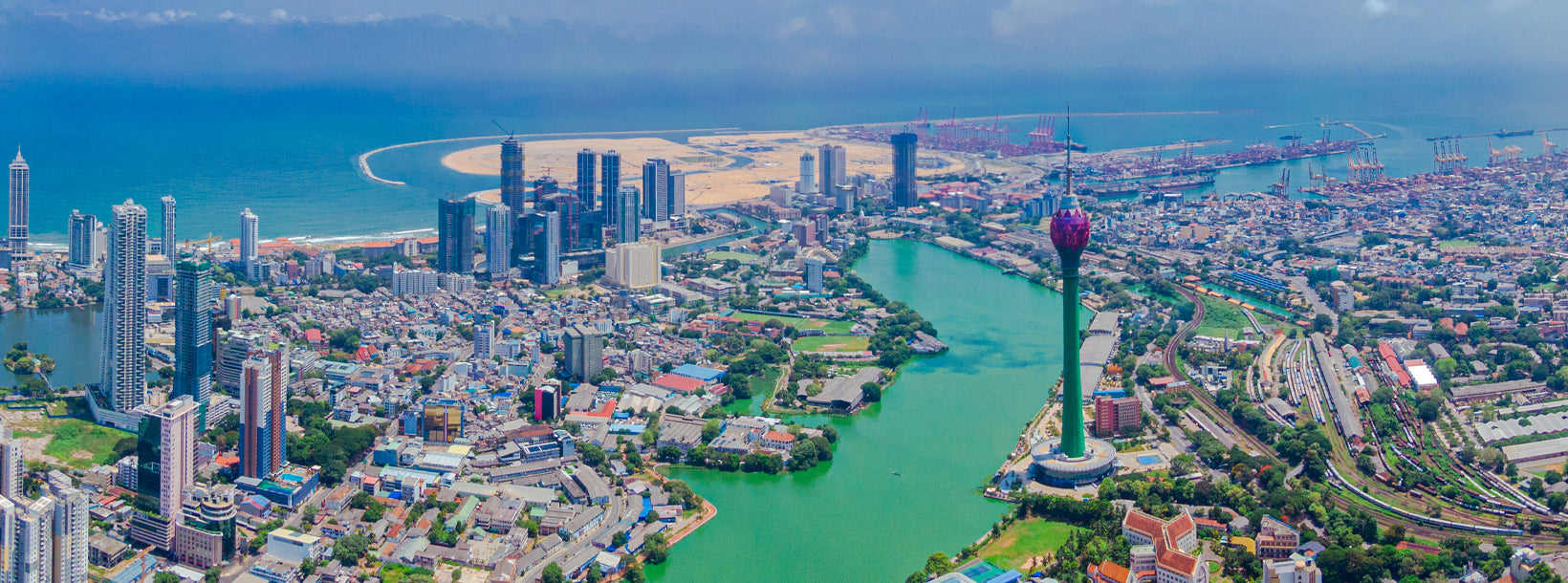
The Hindu Temples of Sri Lanka usually do not resemble the ancient Indians temples with their elaborate and detailed sculptures and solid black granite construction. This is doubly true for the capital city of Colombo which does not have many old Hindu temples. However, there is one temple dedicated to the Hindu God Shiva; which while not being too old, is still a peerless example of ancient Dravidian architecture. And that temple is Sri Ponnambala-waneswaram Temple.
History
The history of Sri Ponnambalawaneswaram Temple dates back to over a century ago. In 1857, a local minor lord named Ponnambalam Mudaliyar wished to provide a place of worship for the Hindus in residence in Colombo.
At the time the country was under British rule; and the Mudaliyar built a little temple for God Shiva, which became a safe haven for the Hindus of the era.
Years later, in 1905, the temple was inherited by Ponnambalam Mudaliyar’s son, the Independence Revolutionary, Sir Ponnnambalam Ramanathan. This was the same man who would later be known as one of the keystones of Sri Lanka’s Independence. He is well known today by all Sri Lankans for his oratory and legal work during the times of crisis that arose during the struggles for Sri Lanka’s Independence. Ramanathan served as an Attorney General and during the Sinhala-Muslim riots in 1915; he argued passionately against the British Government, who had arrested several prominent Sinhala leaders including D. S Senanayake who would become the first Sri Lankan Prime Minister later on.
In any case Ramanathan was a devout man in addition to being extremely talented. Shortly after inheriting the temple, he had a visionary dream where he was told to build an exemplary temple for God Shiva. Ramanathan woke up and decided to build a temple that would last for ages and which was in full accordance to the ancient Hindu Vedic scriptures. He brought in the most famous sculptors of the time from South India and had the temple designed in the ancient Dravidian style. The temple was constructed in the traditional style with black granite quarried from Veyangoda and with all the other materials locally sourced as well.
The Temple
Sri Ponnambalawaneswaram is one only few solid granite temples still existent in Sri Lanka. Many were destroyed either during the ravages of time, war or during the various foreign invasions. However, solid black granite construction was one aspect of temples which were made in accordance to ancient Hindu Vedic scriptures. The other aspects included the construction being done by qualified temple builders and sculptors who were descended from families of temple builders, the design being modeled after the human anatomy, certain design elements being included in the sculptures, and etc.
Accordingly the builders of Sri Ponnambalawanesvaram came from a long line of workers who has been building temples for several generations. They had apprenticed under their family and learnt the highly honed skills passed from their ancestors. As a result, the work done on the temple was intrica