Polonnaruwa City
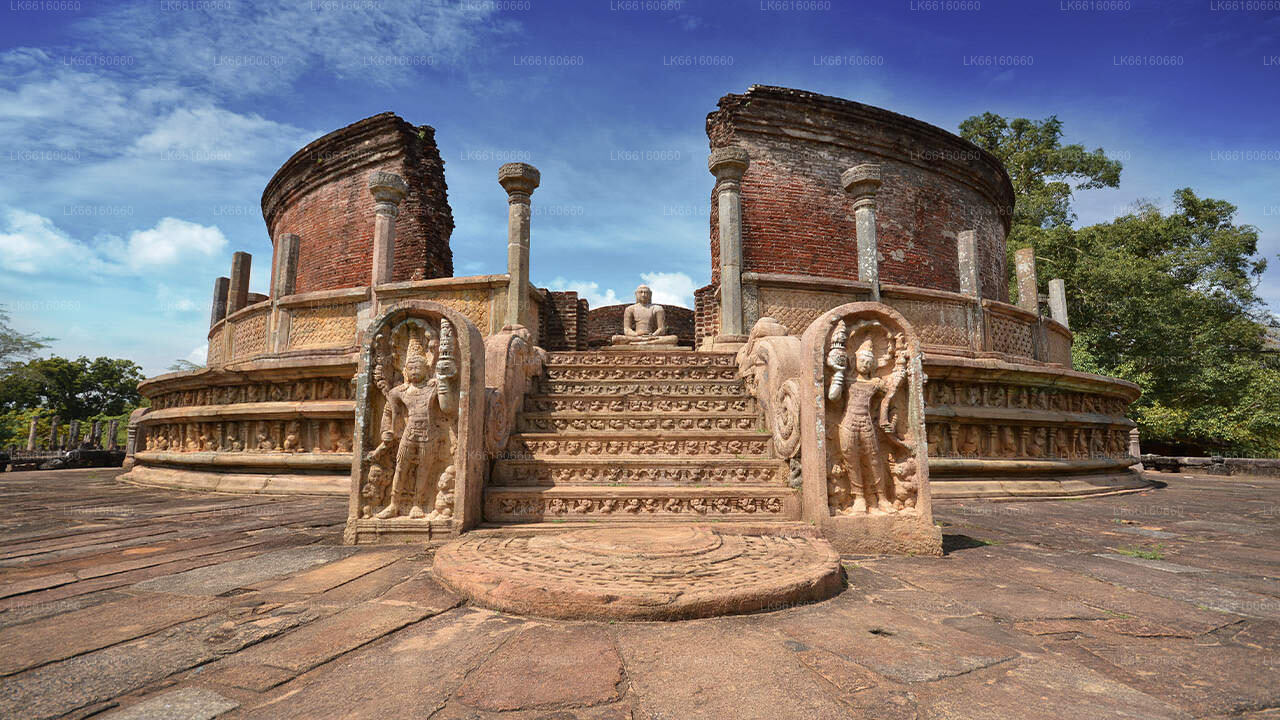
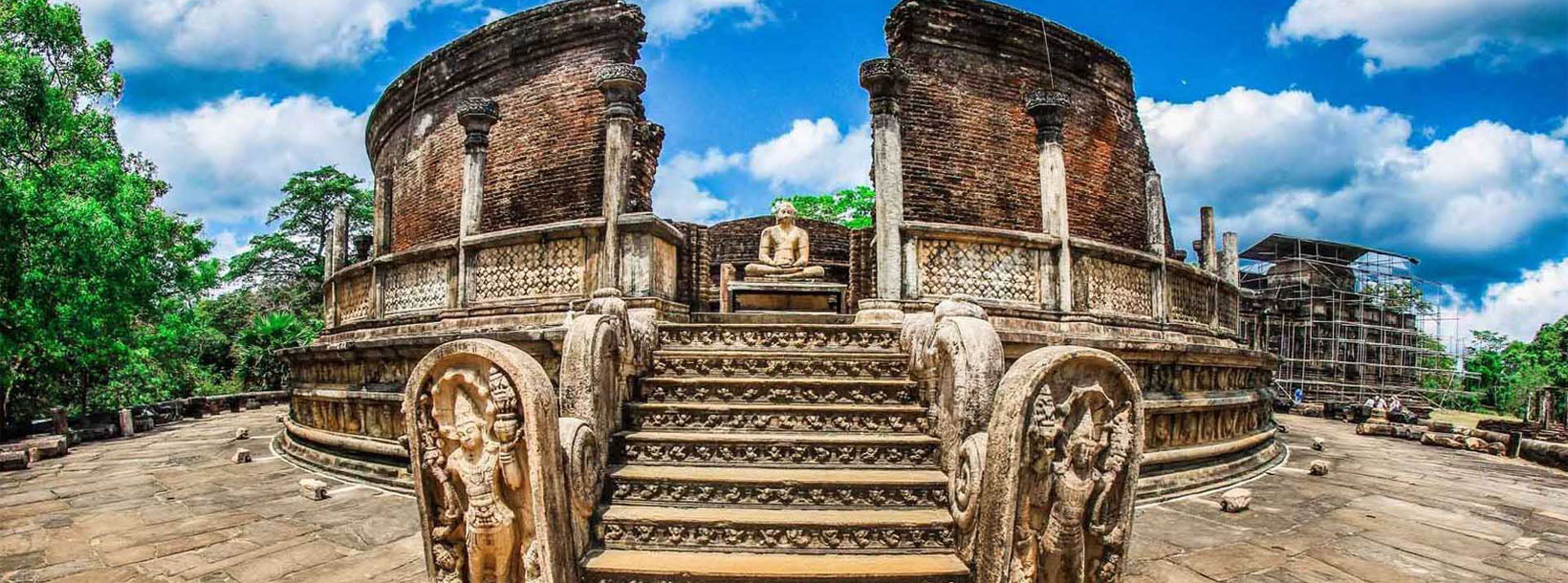
Polonnaruwa, a UNESCO World Heritage Site in Sri Lanka, was the country's medieval capital (11th-13th century). Renowned for its well-preserved ruins, including the iconic Gal Vihara statues, it showcases impressive architecture, reflecting the grandeur of the ancient Sinhalese civilization.
Stupa de Kiri Vehera
La Stupa de Kiri Vehera est un ancien monument bouddhiste situé dans la ville historique de Polonnaruwa, au Sri Lanka. Ce stupa sacré a été construit sous le règne du roi Parakramabahu I au XIIe siècle et est l'un des sites religieux les plus importants et les mieux conservés de la région. Le nom "Kiri Vehera" se traduit par "Stupa du lait", ce qui reflète son apparence blanche éclatante et son importance dans l'héritage bouddhiste du Sri Lanka.
Le stupa est réputé pour sa grande structure en forme de dôme, entourée de belles colonnes en pierre sculptées et de ruines anciennes. On pense qu'il abrite des reliques de Bouddha, ce qui en fait un site de pèlerinage majeur pour les bouddhistes. L'environnement autour, avec sa végétation luxuriante et son atmosphère paisible, ajoute à la signification spirituelle du lieu, offrant aux visiteurs un endroit de paix et de réflexion.
Les visiteurs de la Stupa de Kiri Vehera peuvent explorer les vestiges archéologiques du site, y compris des inscriptions en pierre, de petits sanctuaires et des complexes monastiques anciens. Le cadre paisible du stupa au cœur du triangle culturel du Sri Lanka en fait une destination populaire pour les touristes et les pèlerins, offrant un aperçu de la riche histoire bouddhiste de l'île.
La meilleure période pour visiter la Stupa de Kiri Vehera est pendant la saison sèche, de décembre à avril, lorsque le climat est idéal pour les visites touristiques et l'exploration des ruines de Polonnaruwa. Le site est facilement accessible depuis la ville, offrant une expérience significative pour ceux qui s'intéressent à l'architecture bouddhiste ancienne et à l'histoire du Sri Lanka.
About Polonnaruwa District
Polonnaruwa is the 2nd largest city in north central province in Sri Lanka. The ancient city of Polonnaruwa has been declared a World Heritage site by UNESCO Polonnaruwa has a great history of conquest and struggle behind it and rightfully forms the third element in the Cultural Triangle. Located about 140 kms north east from Kandy,Polonnaruwa offers hours of endless pleasure for history and culture lovers, as there are numerous sights of significance.
Much of the physical ruins standing today are credited to King Parakrama Bahu I who spent many royal resources on town planning, including parks, edifices, irrigation systems and so on. The period of his rule is considered a golden age where the kingdom thrived and prospered under a visionary ruler. The Parakrama Samudra is a mammoth tank and named after its patron. The popular kings Royal Palace, the Audience Hall encircled by beautifully carved stone elephants and the Bathing Pool reflect the superior engineering capabilities of the time.
About North Central Province
North Central Province which is the largest province in the country covered 16% of total country's land area. North Central Province consist two districts called Polonnaruwa and Anuradhapure. Anuradhapura is the largest district in Sri Lanka. Its area is 7,128 km².
North Central Province has numerous potentials for Investors to start their Businesses, especially Agriculture, agro based industries and Livestock sectors. More than 65% of North Central Province's people depend on basic Agriculture and agro base industries. NCP also called "Wew Bendi Rajje" because there are more than 3,000 medium and large scale tanks situated in the province. Sri maha bodiya, Ruwanweli seya, Thuparama dageba, Abayagiri Monastry, Polonnaruwa Rankot wehera, Lankathilake are scared