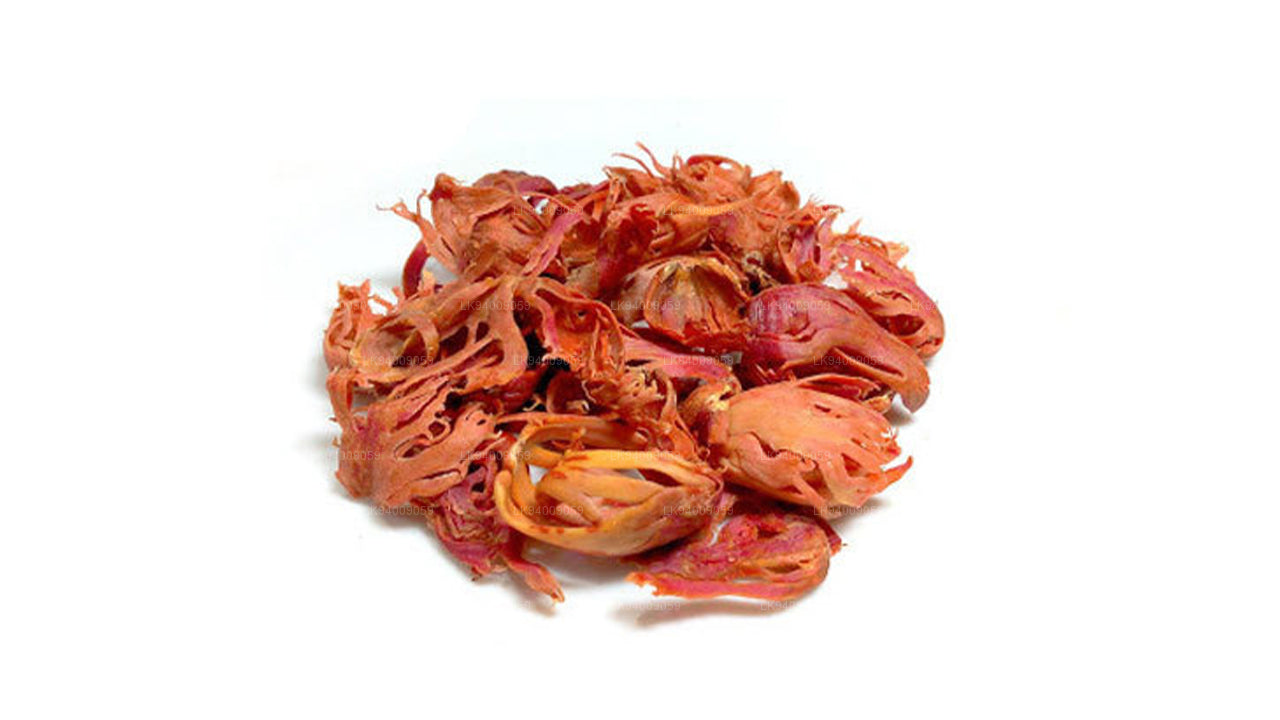
Nutmeg (Myristica fragrans) is one of Sri Lanka's most prized spice crops, cultivated on the island for centuries and still valued today in kitchens, pharmacies, and perfumeries around the world. Unlike many commodity spices, Sri Lankan nutmeg is distinguished by its notably high essential oil content, which gives it a richer, more persistent aroma than varieties grown in other tropical regions. The same tree yields two distinct spices: the seed itself — what most people call nutmeg — and mace, the lacy red aril that wraps around the seed. Both reach international markets, and both are produced in meaningful volumes by Sri Lankan smallholder farmers.
Where is nutmeg grown in Sri Lanka?
The districts of Matale and Kandy, sitting in the island's central hill country, provide the altitude, rainfall, and deep loamy soils that nutmeg trees favour. Parts of the Southern Province — particularly the Galle and Matara districts — also support productive nutmeg gardens. Cultivation tends to be intercropped alongside other spices such as Ceylon black pepper, cinnamon, and cloves, a practice that mirrors the mixed spice gardens European traders once crossed oceans to reach.
A mature nutmeg tree takes around seven years to produce its first significant harvest but can remain productive for several decades thereafter. Harvesting is done by hand, typically when the fleshy outer husk splits naturally to reveal the mace-covered seed. The mace is peeled away, dried separately, and grades into its own commodity category, while the seed is dried, sometimes shelled, and processed for whole or ground nutmeg.
What does nutmeg taste like, and how is it used in cooking?
Nutmeg has a warm, slightly sweet, and faintly woody flavour with subtle notes of clove and pine. Mace is similar but lighter and more delicate, often described as a more refined version of the same profile. In Sri Lankan cooking, both appear in rice dishes, meat curries, and festive sweets. Globally, nutmeg seasons everything from béchamel sauce and mulled wine to spiced cakes and Middle Eastern rice pilafs.
- Whole seeds — grated fresh over dishes for the sharpest flavour
- Ground nutmeg — convenient for baking and spice blends
- Mace blades — added whole to slow-cooked stocks and biryanis, then removed before serving
- Nutmeg oil — a concentrated flavouring used in confectionery, beverages, and food manufacturing
Because nutmeg's volatile oils dissipate quickly once ground, freshly grated whole seed nearly always outperforms pre-ground powder in aroma and taste. Sri Lankan whole nutmeg, with its high oil yield, is particularly well suited to grating at the table.
What are the traditional health uses of nutmeg?
In Ayurvedic practice, nutmeg — known in Sinhala as sadikka — has long been used to support digestive health, ease insomnia, and calm the nervous system. Practitioners historically prescribed small quantities of nutmeg powder mixed with honey or warm milk as a remedy for restlessness and mild anxiety. It also appears in classical formulations targeting joint discomfort and poor circulation.
Modern pharmacological research has confirmed that nutmeg contains compounds — principally myristicin, elemicin, and eugenol — with demonstrated anti-inflammatory and antimicrobial properties. However, it is important to note that nutmeg is potent: very large quantities can be toxic, and therapeutic use should remain within culinary doses unless guided by a qualified practitioner.
The essential oil extracted by steam distillation from nutmeg seeds is used in aromatherapy, where it is blended with carrier oils and applied topically to ease muscle tension. It also appears as a fragrance note in perfumery and as an active ingredient in certain pharmaceutical liniments and toothpastes.
How does Sri Lanka's nutmeg trade fit into the global spice market?
Sri Lanka exports nutmeg and mace to markets across Europe, the Middle East, and Asia. The country's reputation rests on consistent quality rather than volume — Indonesia and Grenada produce larger quantities, but Sri Lankan nutmeg competes on the premium segment, particularly in specialty food and pharmaceutical applications that specify high oil content.
The spice industry remains an important livelihood for smallholder farmers, many of whom cultivate mixed gardens that have remained in the same families for generations. These gardens preserve traditional horticultural knowledge and contribute to the biodiversity of Sri Lanka's mid-country landscape. The sector is supported by the Sri Lanka Export Development Board, which promotes certification and quality standards to help producers access premium international buyers.
Sri Lanka's spice legacy is broad: nutmeg sits alongside cloves, pepper, and cinnamon in a portfolio of exports that helped shape the island's colonial history and continue to underpin its agricultural economy.
What forms of Sri Lankan nutmeg are available to buy?
Consumers and food professionals can source Sri Lankan nutmeg in several forms, each suited to different applications:
| Form | Best for | Notes |
|---|---|---|
| Whole seed, with shell | Long storage, home grating | Shell protects volatile oils; grate as needed |
| Whole seed, without shell | Easier grating, gift sets | Slightly shorter shelf life once shelled |
| Ground powder | Baking, spice blends | Convenient; buy in small quantities and store airtight |
| Essential oil | Aromatherapy, topical blends | Highly concentrated; always dilute before skin contact |
| Nutmeg tea | Wellness, bedtime ritual | Mild infusion; easier to dose than raw powder |
Organic-certified nutmeg has grown in demand as buyers seek verifiable traceability. Several Sri Lankan producers have obtained organic certification, and products labelled accordingly carry documentation from accredited bodies.
How should nutmeg be stored to preserve its flavour?
Whole nutmeg seeds keep well for two to three years when stored in an airtight container away from heat, light, and moisture. Ground nutmeg loses potency significantly faster — typically within six to twelve months — so buying whole seeds and grating them as needed is the better approach for anyone who uses the spice regularly. Essential oil should be kept in dark glass bottles with tight caps and stored away from direct sunlight.
Can visitors see nutmeg cultivation in Sri Lanka?
Several spice gardens in the Matale and Kandy districts welcome visitors, offering guided walks through working plantations where nutmeg, pepper, cinnamon, and other spices are grown and processed. These tours explain traditional cultivation and post-harvest methods and usually include a demonstration of how mace is separated from the seed. Combining a spice garden visit with a Kandy city tour makes for a well-rounded half-day excursion from the hill-country capital.