Pulasthi-Statue
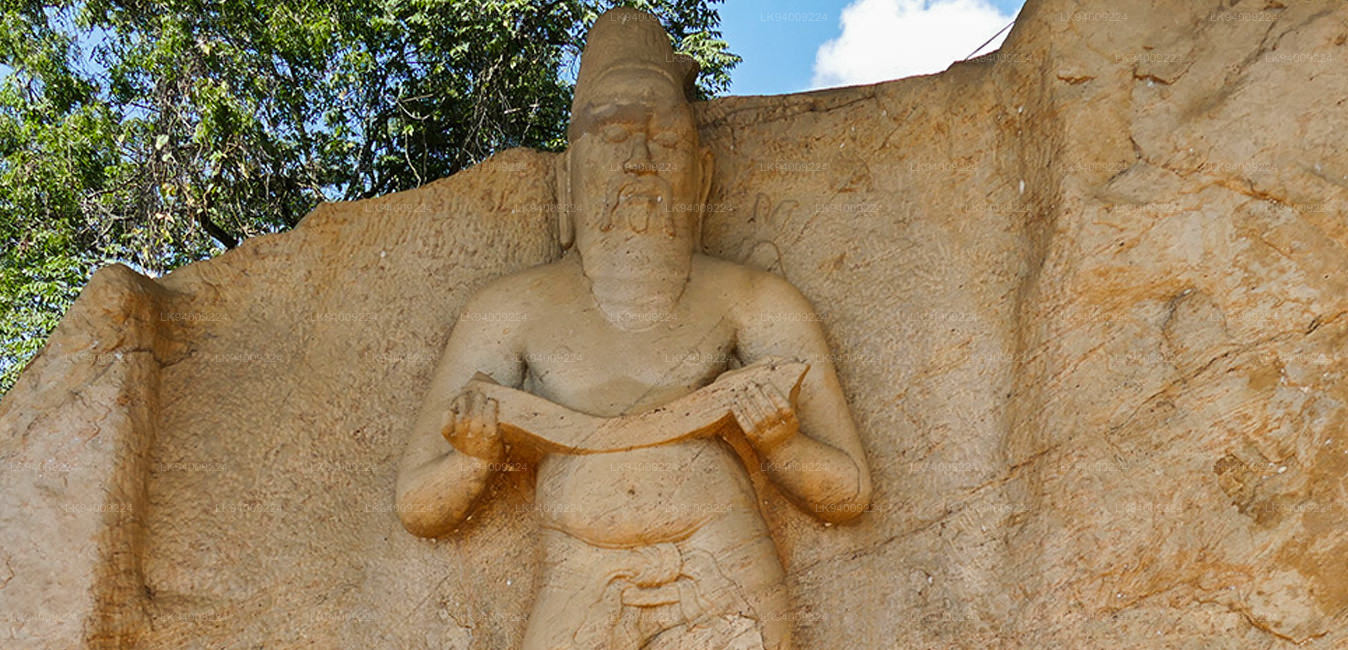
Die Statue befindet sich nördlich der Stadt Polonnaruwa und nahe dem Ostufer des Parakrama-Samudra- Stausees, der von Parakramabahu I. selbst erbaut wurde. Sie liegt etwa 100 Meter nördlich des alten Klosters Potgul Vehera
StandortDie Statue befindet sich nördlich der Stadt Polonnaruwa und nahe dem Ostufer des Parakrama Samudra-Stausees, der von Parakramabahu I. selbst erbaut wurde. Sie liegt etwa 100 Meter nördlich des alten Klosters Potgul Vehera.
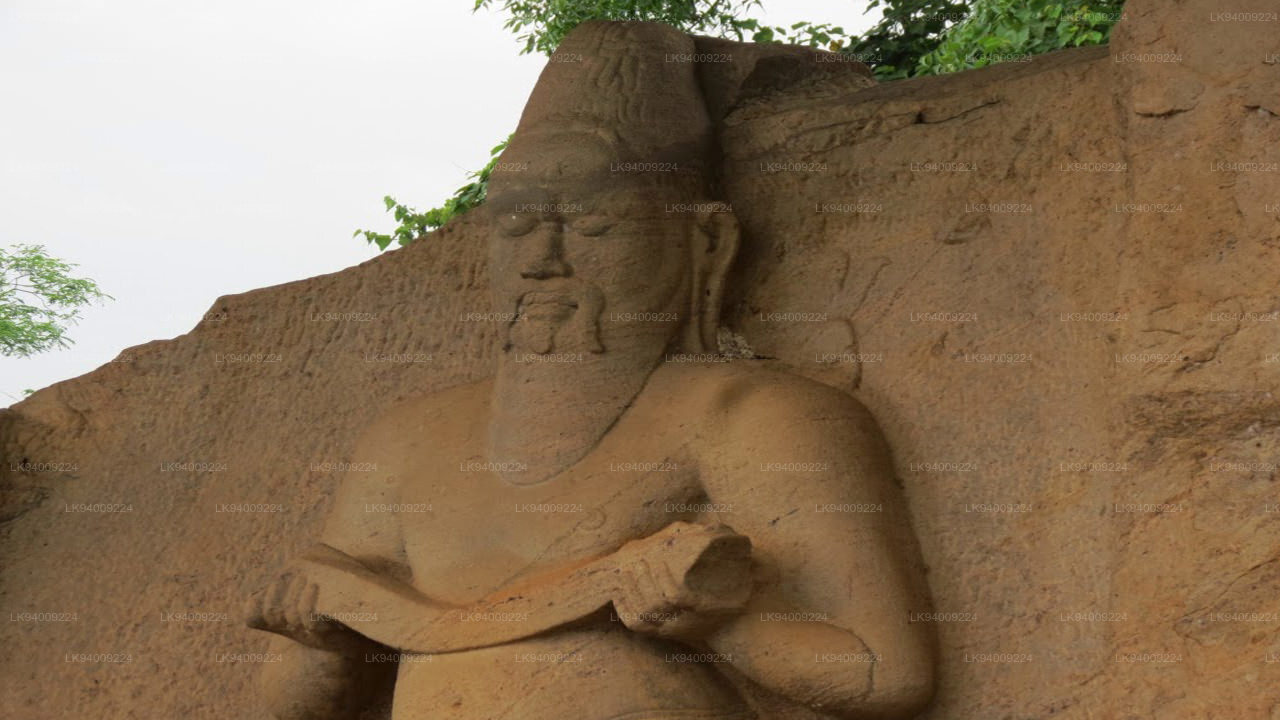
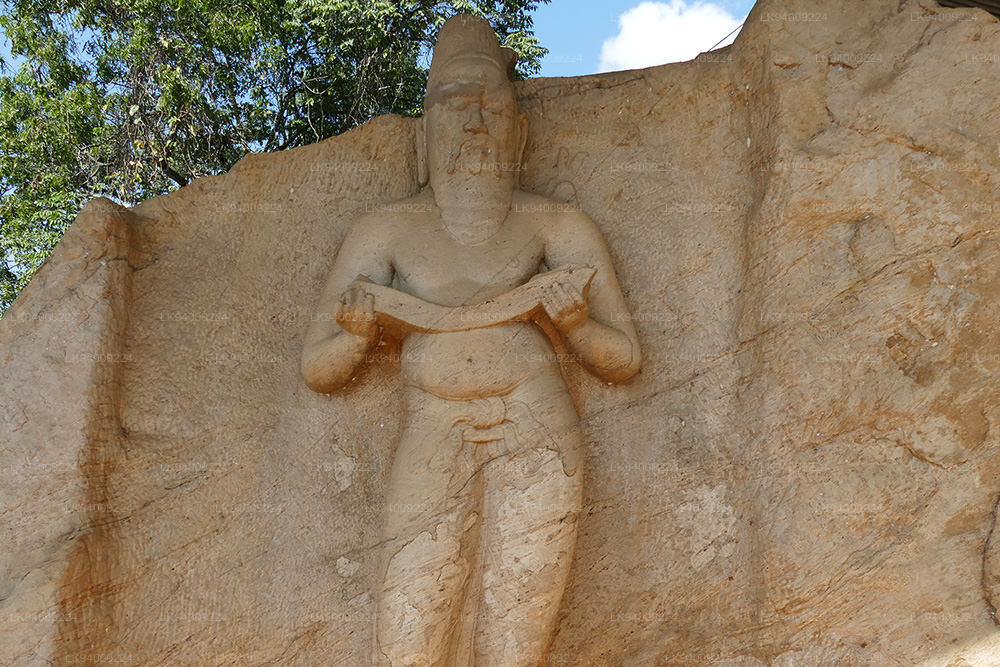
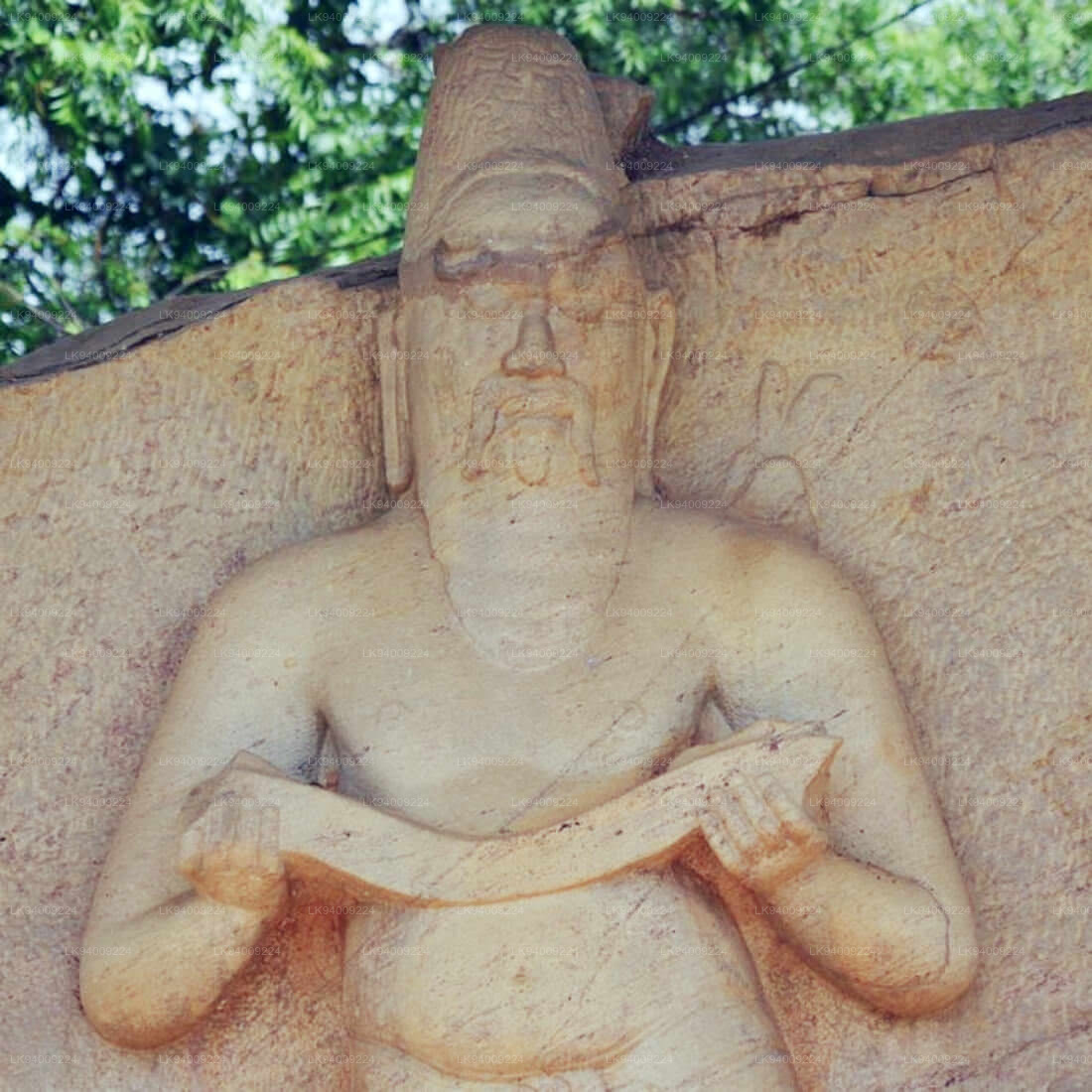
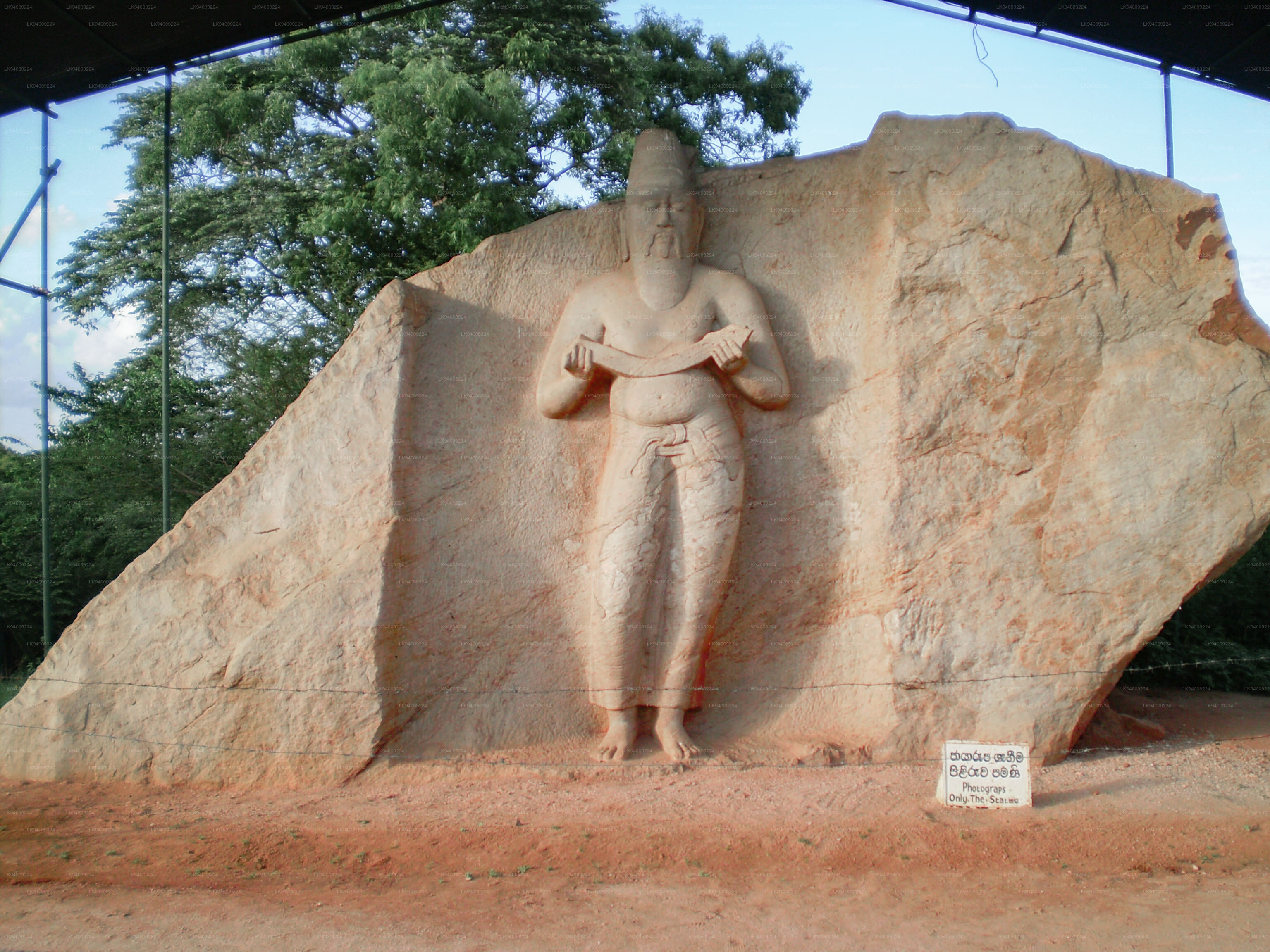
EigenschaftenDie Statue wurde vermutlich im 12. Jahrhundert während der Herrschaft von Parakramabahu I. erbaut. Sie ist eine der schönsten Steinskulpturen der Polonnaruwa-Zeit. Die 3,40 m hohe Statue ist als Hochrelief in einen großen Felsblock gemeißelt, wobei ihre Höhe voll ausgenutzt wird. Ihr Oberkörper ist bis auf einen einzelnen Faden über der linken Schulter nackt. In den Händen hält sie einen langen Gegenstand. Das Gesicht der Statue hat einen ernsten Ausdruck mit halb geschlossenen Augen, hoher Stirn, langem Bart und Schnurrbart. Die Schultern der Statue sind abgerundet, was auf „außergewöhnliche Stärke“ schließen lässt. Das rechte Bein ist entspannt, das rechte Knie leicht nach vorne gebeugt. Das linke Bein trägt das Körpergewicht, während die Hüfte ebenfalls leicht nach links geneigt ist. Laut dem Archäologen Senarath Paranavitana ist diese Statue „die Verkörperung von Stärke, Majestät und Würde“.
IdentitätDie Statue konnte nicht eindeutig identifiziert werden, doch die weit verbreitete Annahme ist, dass es sich bei der Statue um König Parakramabahu I. handelt, der das Land von 1153 bis 1186 regierte. Der Historiker Mendis Rohanadeera vermutet, dass die Statue einen Mann aus dem Lambakanna-Clan darstellt, da über der linken Schulter der Statue ein Hase – ein Symbol dieses Clans – abgebildet ist. Dies stützt die Theorie, dass es sich um eine Statue von Parakramabahu I. handelt, der dem Lambakanna-Clan angehörte. Eine andere Theorie besagt jedoch, dass es sich um die Statue eines Weisen handelt; entweder Agastya oder Pulasthi. Der Gegenstand in den Händen der Statue könnte ein Ola-Buch (getrocknete Palmblätter) sein. Dies und die Tatsache, dass sie sich in der Nähe des Potgul Vehera befindet, einer Bibliothek aus der Antike, stützen diese Theorie. Eine andere Annahme besagt jedoch, dass es sich bei dem Gegenstand um ein „Joch des Königtums“ handelt.