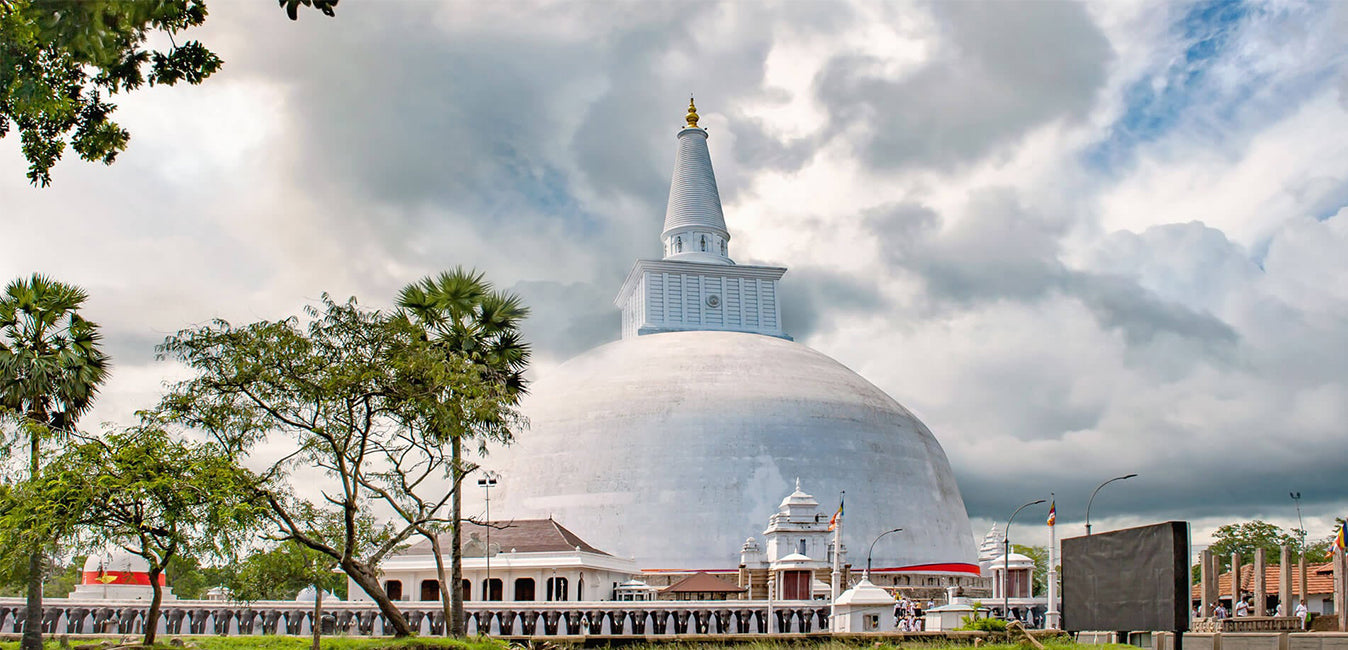
Aukana-Buddha-Statue
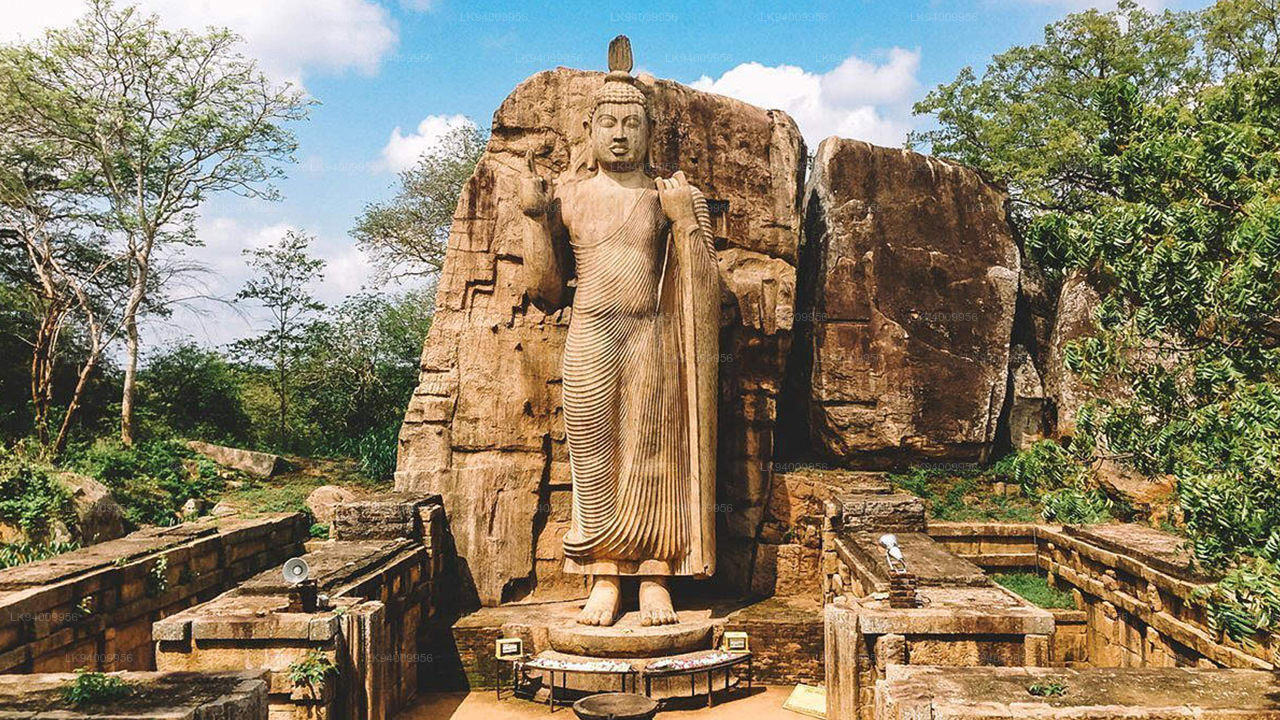
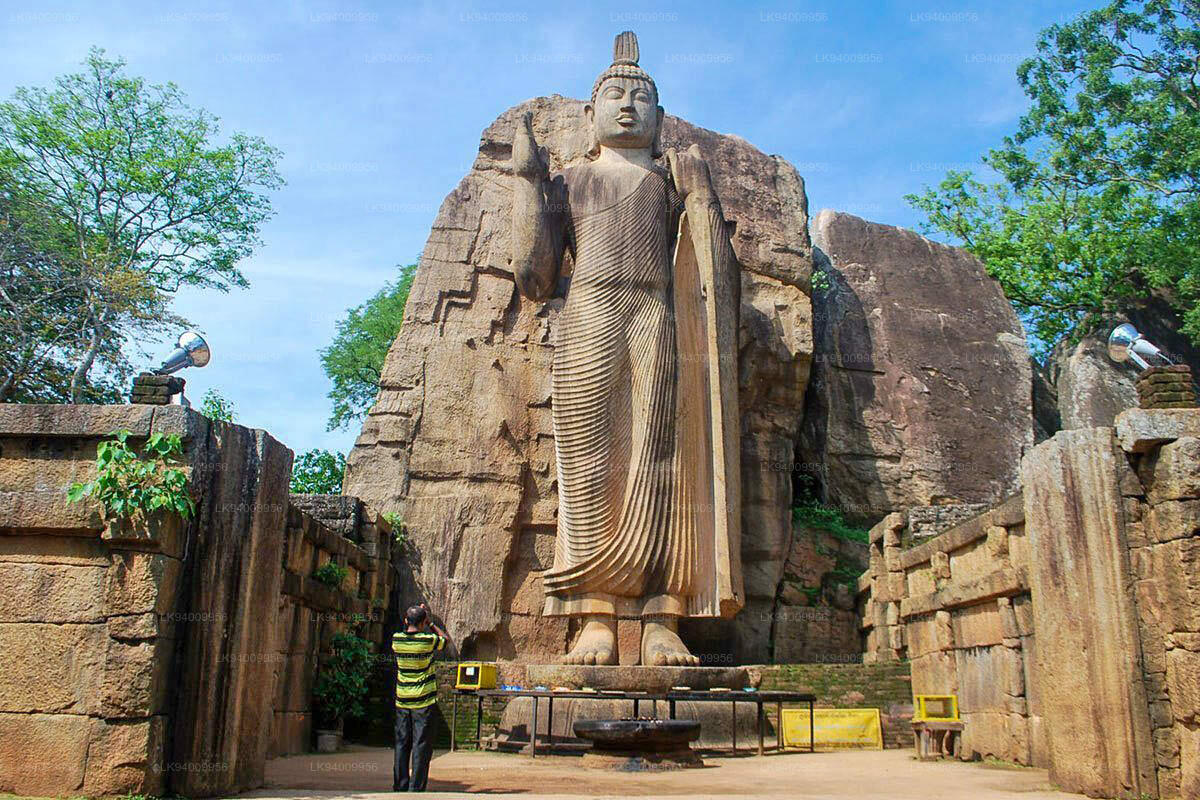
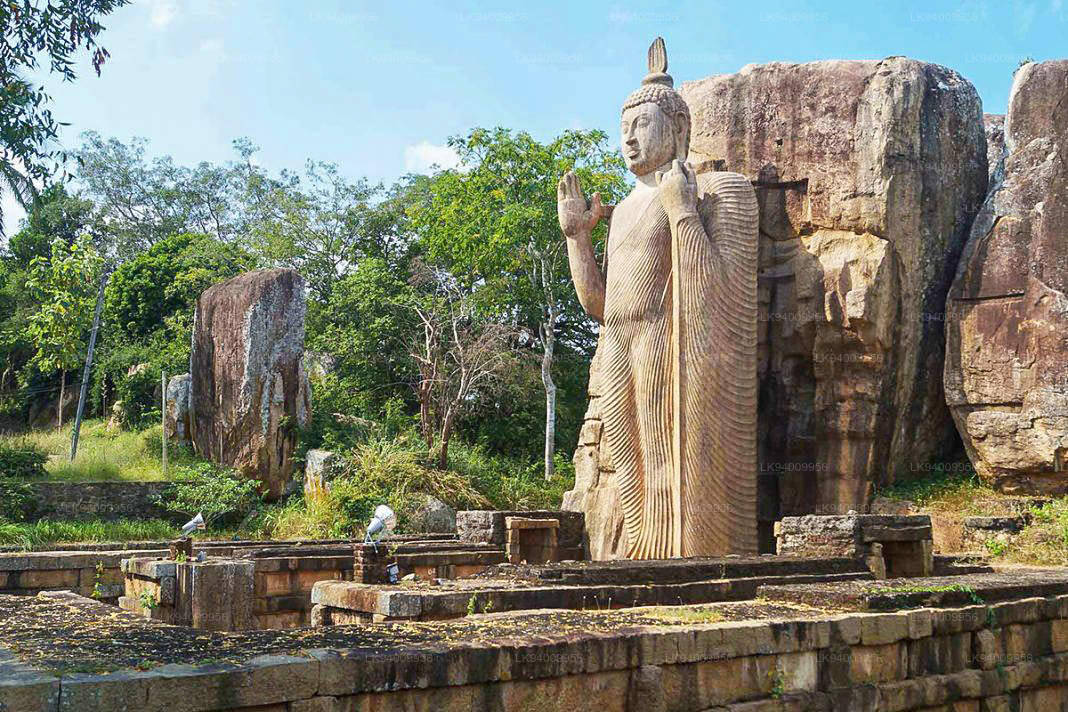
Die Aukana-Buddha-Statue befindet sich 30 km nordwestlich von Dambulla in der Nähe des alten künstlichen Regenwasserreservoirs Kala Weva. Es kann von Kekirawa aus über die Straße Dambulla-Anuradhapura erreicht werden.
Die höchste antike Buddha-Statue Sri Lankas
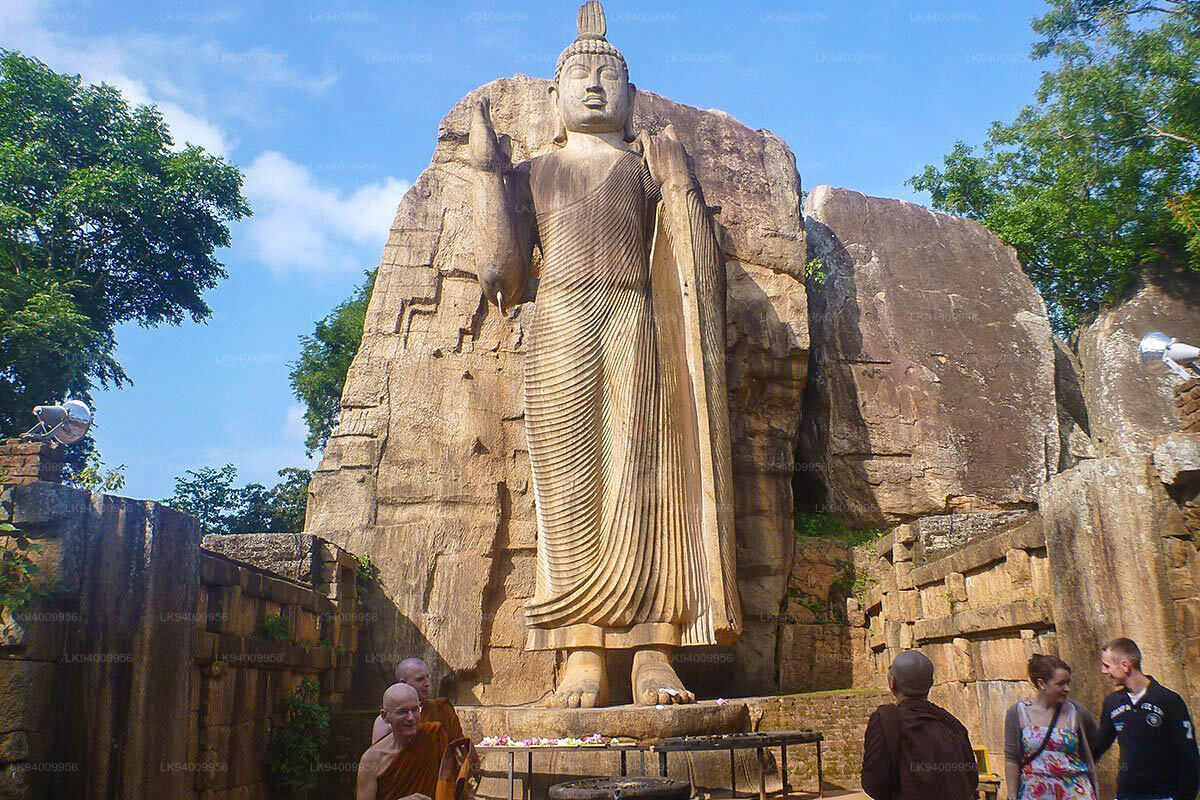
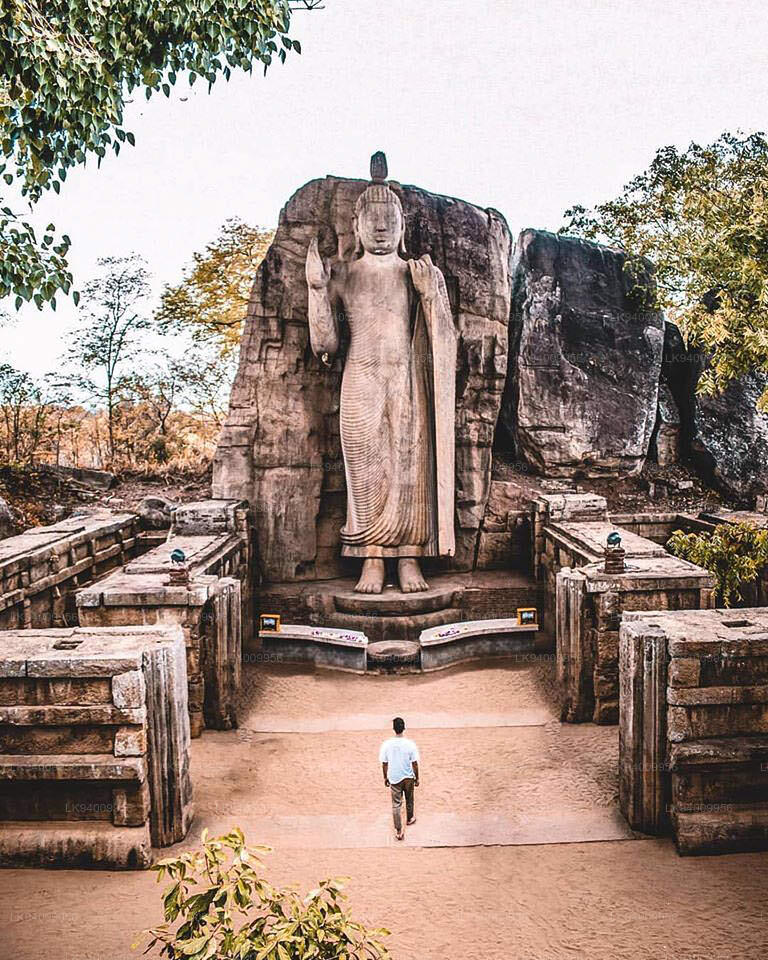
Die Aukana-Buddha-Statue in Sri Lanka ist mit einer Höhe von 11,36 Metern die höchste antike Buddha-Statue in Sri Lanka.
Die Haltung der Statue
Die Aukana-Buddha-Statue in Asisa Mudra oder der „Segenshaltung“ ist aus einem Felsblock geschnitzt. Die Statue ist rund geschnitzt und mit der Rückseite mit dem Felsblock verbunden. Die zarte und kunstvolle Schnitzerei des Gewandes des Buddha vermenschlicht und enthüllt auf keusche Weise die zugrunde liegende Form seines Körpers, während der teilnahmslose Gesichtsausdruck eine Aura spiritueller Überlegenheit ausstrahlt.
Es wird gesagt, dass die Statue so ausgerichtet ist, dass Regentropfen auf der Nase direkt in eine kleine Vertiefung zwischen den Zehen fallen würden. Die Aukana-Buddha-Statue ist ein Meisterwerk einer kolossalen Buddha-Statue von einem unbekannten Bildhauer: Der heitere Ausdruck der Statue, das anmutig geschnitzte Gewand mit sauberen Falten bringt eine Zartheit mit sich, die man kaum in einen Felsen formen könnte. Der teilnahmslose Gesichtsausdruck spiegelt die höchste Spiritualität wider.
Die Skulptur im Verhältnis
Die Aukana-Buddha-Statue ist allein im Verhältnis von neun Gesichtern geschnitzt: Die Körperhöhe beträgt das Neunfache der Länge des Gesichts. Das Verhältnis von neun Gesichtern ist die Ikonometrie, die die Bildhauer im 8. Jahrhundert n. Chr. in Sri Lanka verfolgten.
Sirasapata
Sirasapata ist das Symbol oben auf den Buddha-Statuen in Sri Lanka. Es wird angenommen, dass das Sirasapata, das auf dem Kopf der Aukana-Buddha-Statue gefunden wurde, eine moderne Ergänzung aus dem Jahr 1870 ist. Die Entdeckung eines Fragments eines Sirasapata in den Räumlichkeiten der Stätte deutet darauf hin, dass sich vor etwa 1870 ein Sirasapata auf dem Kopf der Statue befunden hatte Jahrhundert vor 1870. Diese Wendung der Ereignisse führte zu der Untersuchung, ob Sirasapata von Anfang an im 8. Jahrhundert n. Chr. existiert hatte. Laut buddhistischer Literatur gab es Sirasapata in allen vier vorherigen Buddhas. Die Einführung und Existenz von Sirasapata ist in Sri Lanka mit einigen Ausnahmen seit der zweiten Hälfte des fünften Jahrhunderts n. Chr. beständig. Daher wird angenommen, dass auch die Aukana-Buddha-Statue mit einem Sirasapata geschmückt war.
Vorhänge
Drapierung, die Kunst, die Statuen in Falten zu drapieren, spielt bei der Aukana-Buddha-Statue eine herausragende Rolle. Das einreihige Gewand ist über die linke Schulter drapiert und fällt bis zum Knöchel über die linke Schulter. Die rechte Schulter bleibt frei.
Sockel
Die Aukana-Buddha-Statue steht auf einem Sockel, dessen Vorderseite aus einer Steinplatte in Form einer doppelblättrigen Lotusblume namens Padmasana, was „Lotussitz“ bedeutet, geschnitzt ist.
Kunstschule
Die Ikonographie, das Studium der Eigenschaften von Statuen, des Avukana-Buddha, insbesondere des Sirasapata, des Sockels und des Stils, zeigt, dass die Aukana-Buddha-Statue zur Kunstschule von Anuradhapura gehört.
Dating-Aukana-Statue
Die Meinungsverschiedenheit der Experten über die Datierung von Aukana-Buddha-Statuen wurde schließlich gelöst, nachdem im Jahr 1952 eine Inschrift auf einer Granitplatte an der Nordwand des Schreins entdeckt wurde. Die Statue wurde in der zweiten Hälfte des 8. Jahrhunderts n. Chr. geschaffen, als der Mahayana-Buddhismus in Sri Lanka Fuß zu fassen drohte.

-
 Sri Maha Bodhiya
Jaya Sri Maha Bodhi is a sacred bo tree in the Mahamewna Gardens, Anuradhapura, Sri Lanka. It is the southern branch from the historical Sri Maha Bodhi at Buddha Gaya in India under which Buddha attained Enlightenment. It was planted in 288 BC, and is the oldest living human-planted tree in the world with a known planting date.
-
 Ruwanweliseya
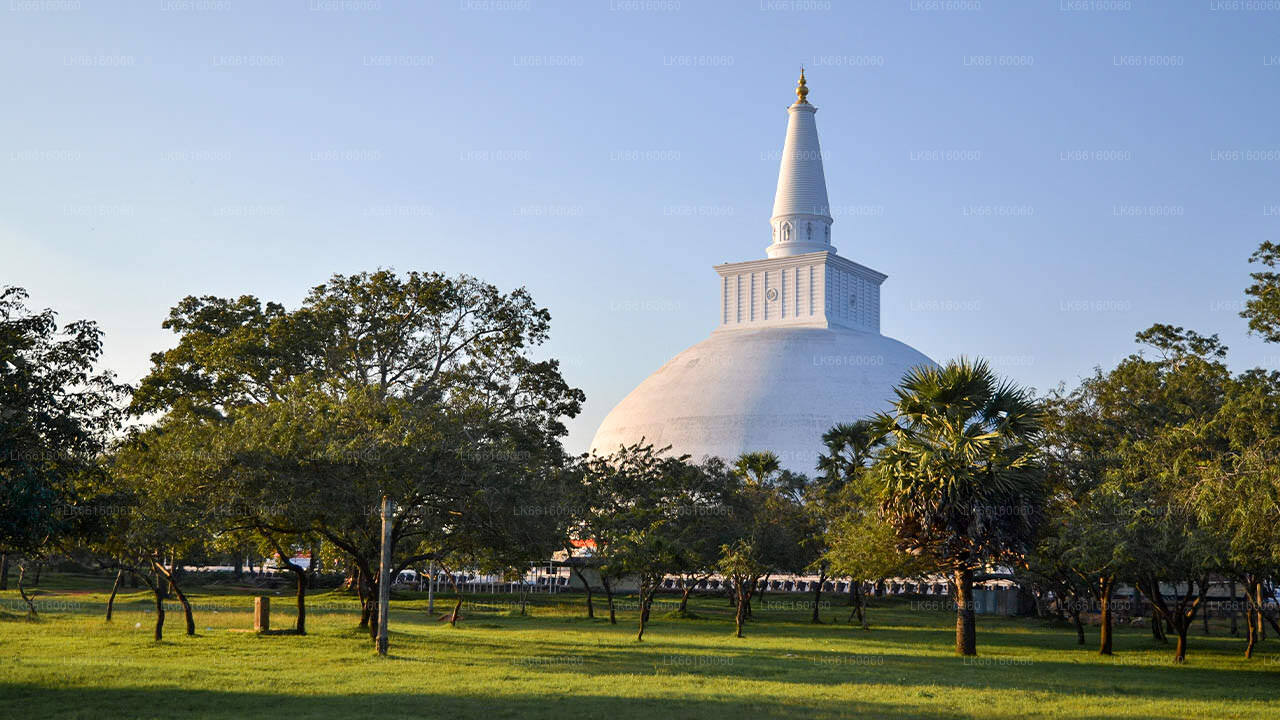
The Ruwanweli Maha Seya, also known as the Mahathupa (the Great Thupa) is a stupa (a hemispherical structure containing relics) in Anuradhapura, Sri Lanka. Two quarts or one Dona of the Buddha's relics are enshrined in the stupa, making it the largest collection of his relics anywhere. It was built by Sinhalese King Dutugemunu in c. 140 B.C., who became king of Sri Lanka after a war in which the Chola King Elāra (Ellalan) was defeated.
-
 Thuparamaya
Thuparamaya is the first Buddhist temple that was constructed, after the arrival of mahinda thero(mahindagamanaya) in Sri Lanka. Located in the sacred area of Mahamewna park, the Thuparamaya Stupa is the earliest Dagoba to be constructed in the island, dating back to the reign of King Devanampiya Tissa (247-207 BC). The temple has been formally recognised by the Government as an archaeological site in Sri Lanka.
-
 Lovamahapaya
Lovamahapaya is a building situated between Ruwanweliseya and Sri Mahabodiya in the ancient city of Anuradhapura, Sri Lanka. It is also known as the Brazen Palace or Lohaprasadaya because the roof was covered with bronze tiles. In ancient times, the building included the refectory and the uposathagara (Uposatha house).
-
 Abhayagiri Stupa
Abhayagiri Vihāra was a major monastery site of Mahayana, Theravada and Vajrayana Buddhism that was situated in Anuradhapura, Sri Lanka. It is one of the most extensive ruins in the world and one of the most sacred Buddhist pilgrimage cities in the nation.
-
 Jetavanaramaya
The Jetavanarama stupa or Jetavanaramaya is a stupa, or Buddhist reliquary monument, located in the ruins of Jetavana monastery in the UNESCO world heritage city of Anuradhapura, Sri Lanka. At 122 metres (400 ft), it was the world's tallest stupa, and the third tallest structure in the world when it was built by King Mahasena of Anuradhapura (273–301).
-
 Mirisawetiya Stupa
The Mirisaweti Stupa is a memorial building, a stupa, situated in the ancient city of Anuradhapura, Sri Lanka. King Dutugamunu (161 BC to 137 BC) built the Mirisaveti Stupa after defeating King Elara. After placing the Buddha relics in the sceptre, he had gone to Tissa Wewa for a bath leaving the sceptre.
-
 Lankarama
Lankarama is a stupa built by King Valagamba, in an ancient place at Galhebakada in the ancient kingdom of Anuradhapura, Sri Lanka. Nothing is known about the ancient form of the stupa, and later this was renovated. The ruins show that there are rows of stone pillars and it is no doubt that there has been a house built encircling the stupa (vatadage) to cover it.
-
 Isurumuniya
Isurumuniya is a Buddhist temple situated near to the Tissa Wewa (Tisa tank) in Anuradhapura, Sri Lanka. There are four carvings of special interest in this Vihara. They are the Isurumuniya Lovers, Elephant Pond and The Royal Family. The ancient Meghagiri Vihara or Meygiri Vihara is presently identified as the Isurumuni Vihara.