Vallipuram


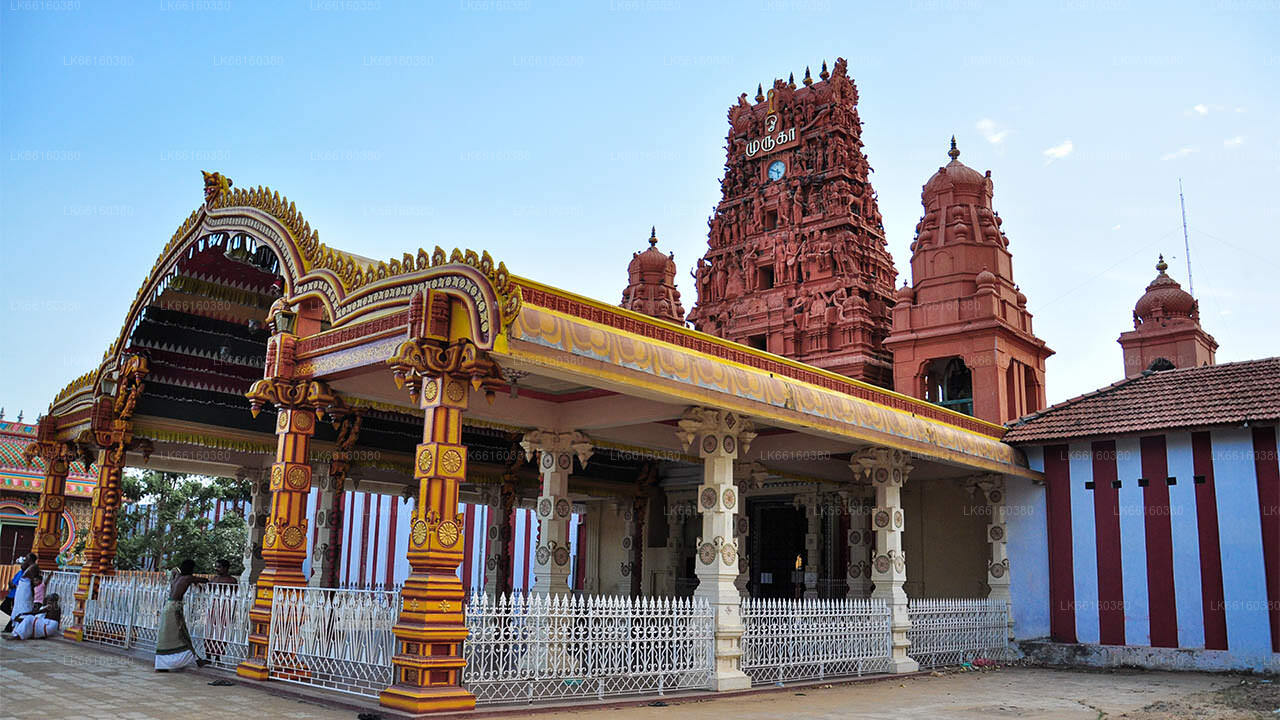
The Vishnu temple Vallipuram is one of the oldest temples in Jaffna. The temple attracts worshippers daily, on Sundays in particular. Situated amidst a vast expanse of sand dunes, it is difficult to imagine that the area was once a capital city of the Jaffna region. Sir Paul. E Pieris, who also discovered Kadurugoda, made important discoveries here, which have subsequently been identified as belonging to the period of the first Lambakarna King, Vasaba (65 – 109 AC). An inscription on a gold plate records the words “Hail in the reign of the great king, Vasaba and when the Minister Isigirayan was governing Nakadiva, Piyagutikatissa caused a Vihara (temple) to be built at Badakara Atana”. The origin of this temple, like most, is founded in legend. The story says that Lavalli Ammaiyar, a pious lady, had been afflicted with nagadosham (a curse) and was hence unable to have children. She was advised to go to this place which was sacred to Vishnu and beseech him for the remission of her sins. She performed tapas (prayed) daily with arms outspread facing the sea in the hope that Lord Vishnu would appear before her, arise from the ocean and grant her desire. One day when the fishermen of the village were fishing they cast their net and caught a large fish which leapt into the arms of Lavalli Ammaiyar. As she held it, it turned into the shape of an infant looking like the Lord Vishnu himself. When the infant vanished an old soothsayer who was present gave to the people a Vishnu Cakkaram (a disc, symbol of Vishnu), which they decided to install at this place and venerate in commemoration of the event. In the sanctum, the Vishnu’s Cakkaram (disc) occupies the place of the Utsava Moorthy (deity) which is taken out for processions during festivals. The annual festival is held in August-September.
The place name is “Valli”, or “sand” in Tamil and Sinhala. The Vishnu temple here was constructed around the 13th century. Tamil Buddhists and Hindu cults co-existed with no trouble, even when the rulers did not, and hence a Vaishnava tradition may have existed in early times as well. The deity of the temple is called Vallipura Azhvar. Azhvar names are common in Vaishnavite tradition. This place is the first place of settlement in Sri Lanka. Rest of Sri Lanka was populated from this landing place. Vallipuram (Sandy City) has a recorded history from the 2nd century BC, in the gold inscription, where the local ruler is named as “Azhagiri”, a name confirmed in the Nelugala stone inscription (2nd Century BC). King Vasaba is also thought to be mentioned. The Buddhist list of holy places (“Nampotha”) names it as “Vallipuram” or sand city. The exact details of the temple complex are not known, and the famous `Vallipuram” Buddha statue built with Dravidian A sculptural traditions from Amaravati, Andhra Pradesh wa found in excavations below the Hindu Temple. The language of the inscription is Tamil-Prakrit, which shares several similarities with script inscriptions used in Andhra at the time. This cultural exchange between the Jaffna Tamils and Andhra Pradesh occurred at the height of Tamil trade in the Sangam period, continuing when the Telugu Satavahana dynasty was at the height of its power from 230 BCE right through when its 17th mo