Ahungalla sits quietly on Sri Lanka's southwest coast, roughly 76 kilometres south of Colombo along the Southern Expressway corridor. Unlike the busier resort strips of Bentota or Hikkaduwa on either side, it has remained relatively unhurried — a quality that draws travellers who want beach life without the crowds. The town is small, the pace is slow, and the coastline is long enough to feel genuinely uncrowded even during peak season.
What are Ahungalla's beaches like?
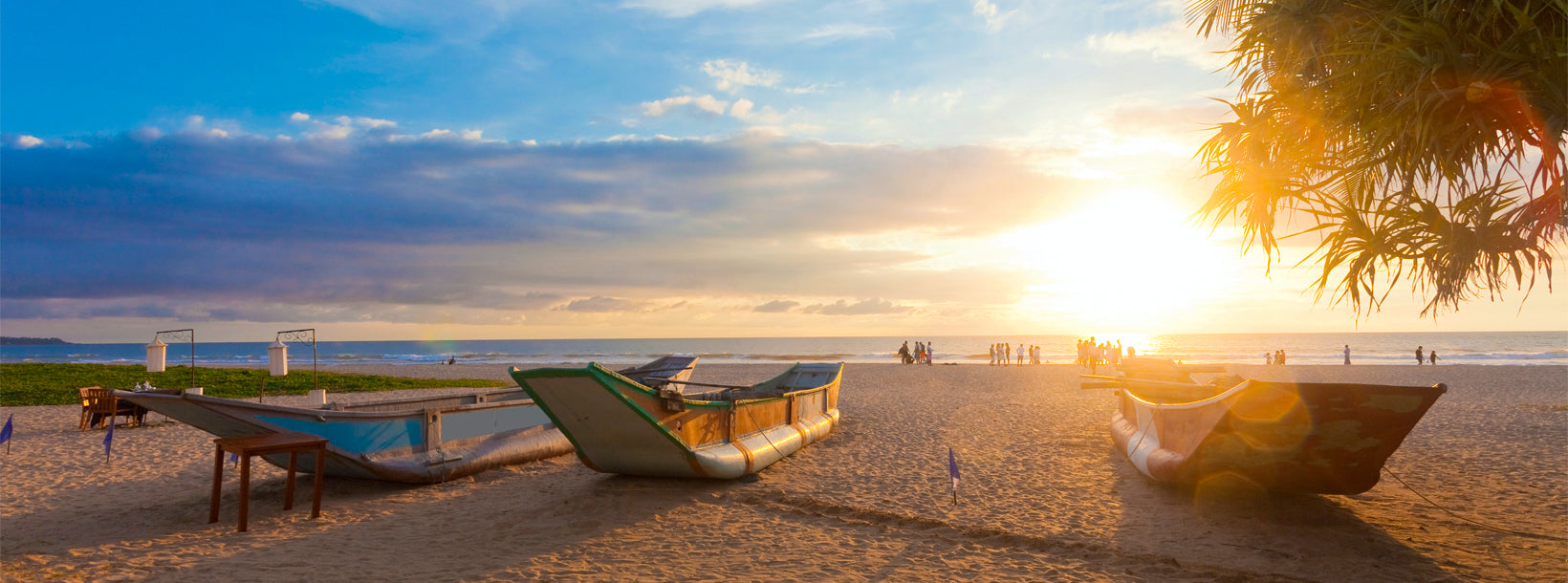
The beach at Ahungalla stretches for several kilometres of pale gold sand backed by casuarina and coconut palms. The sea here follows the southwest monsoon pattern: calm and swimmable from November through April, rougher and better suited to watching from May through September. Outside monsoon season, the water is clear and the undertow is manageable for most adults, though the absence of lifeguards means swimmers should exercise caution.
Because the shoreline is largely fronted by resort properties rather than a busy promenade, it stays noticeably cleaner than more commercialised stretches of the coast. Early mornings are particularly good — fishing outriggers return to shore, and the light is soft and photogenic.
What makes Ahungalla's resorts different?
Ahungalla earned its reputation in the luxury travel world largely through a single building: Heritance Ahungalla, designed by Geoffrey Bawa, the Sri Lankan architect whose work defines a whole school of tropical modernism. The hotel's open-plan pavilions, water courts, and seamless indoor-outdoor flow make it one of the most architecturally significant resort properties in South Asia. Even if you are not staying there, an appreciation of Bawa's wider legacy enriches a visit to this stretch of coast.
Beyond Heritance, the town has a range of accommodation from boutique villas to mid-range guesthouses. Several properties also specialise in Ayurvedic treatments, making Ahungalla a reasonable base for a week-long wellness retreat combining beach rest with traditional therapies.
What is the Madu River, and why should I visit it?
A short drive inland from Ahungalla brings you to the Madu Ganga, a UNESCO-listed wetland that is one of the most biodiverse river systems in Sri Lanka. The estuary covers around 900 hectares and is threaded with channels between mangrove islands, some of which contain small temples or cinnamon gardens that have been tended for generations.
Boat safaris on the Madu River typically last between one and two hours. You are likely to spot monitor lizards sunning on the banks, kingfishers, cormorants, and — with luck and a quiet engine — crocodiles resting in the shallows. The Madu River Safari is widely considered one of the best half-day excursions on the southwest coast, suitable for families and photographers alike.
Are there turtle conservation projects near Ahungalla?
Several turtle hatcheries and conservation projects operate along this stretch of coast. The Kosgoda Sea Turtle Conservation Project is among the best known in the region, located a short distance north of Ahungalla. Five species of sea turtle nest on these beaches, including the green turtle and the olive ridley. Hatchery staff collect eggs from the beach at night, incubate them in protected pits, and release hatchlings into the surf — a process visitors can often watch during early morning releases.
These projects are run independently of the resorts and typically ask for a small voluntary donation. They offer a meaningful contrast to purely passive beach tourism and give children especially a memorable, tangible connection to wildlife conservation.
What day trips can I take from Ahungalla?
Ahungalla's position on the coast road makes it a practical base for exploring a wide arc of the southwest. The most popular excursion is southward to Galle — the walled Dutch colonial city is around 40 kilometres away. A Galle City Tour typically covers the ramparts, the lighthouse, the Dutch Reformed Church, and the boutique streets inside the fort.
Heading north, Bentota offers water sports on the river and access to the Brief Garden, the estate of landscape artist Bevis Bawa (Geoffrey's brother). Colombo is around 90 minutes away by road, manageable as a long day trip if you want urban contrast — markets, colonial buildings, and the Colombo waterfront.
| Destination | Distance | Approximate drive time |
|---|---|---|
| Colombo (city centre) | ~76 km | ~90 minutes |
| Colombo Airport (BIA) | ~100 km | ~2 hours |
| Galle Fort | ~40 km | ~50 minutes |
| Bentota | ~10 km | ~15 minutes |
| Madu Ganga entrance | ~10 km | ~15 minutes |
| Kosgoda Turtle Project | ~5 km | ~10 minutes |
When is the best time to visit Ahungalla?
The southwest coast has two seasons shaped by the monsoons. The dry season runs from approximately November to April, when seas are calm, skies are clear, and beach conditions are at their best. This period coincides with European and Australian winter holidays, so resorts tend to be fuller and prices higher.
From May through September, the southwest monsoon brings rain and rougher surf. The sea becomes unsuitable for swimming, but the landscape turns intensely green, room rates drop considerably, and the crowd thins out. October is a transitional month that can go either way. Travellers seeking value and solitude often prefer the shoulder months of October–November and March–April.
How do I get to Ahungalla?
The most comfortable option for most international visitors is a private transfer directly from Bandaranaike International Airport (BIA) or from Colombo, which takes around 90 minutes to two hours depending on traffic and whether you use the Southern Expressway. Trains on the Colombo–Galle–Matara coastal line stop at nearby stations; the rail journey offers sea views but can be slow. Intercity buses also run regularly along the coast road if you prefer a budget option.
What water activities are available in Ahungalla?
Beyond swimming and beach walking, the coast here supports kayaking in calm weather. Some resorts offer stand-up paddleboarding and snorkelling equipment for guests. The open ocean off Ahungalla is also a viable departure point for deep sea fishing trips targeting species such as barracuda, tuna, and dorado. Boat operators along this coast can usually arrange trips on request.
For more adventurous water activities — jet-skiing, wakeboarding, white-water rafting — Bentota, about 10 kilometres north, has a larger concentration of operators on the river lagoon.
Is Ahungalla suitable for families?
Ahungalla works well for families with older children, particularly those who respond to wildlife and nature alongside beach time. The turtle hatcheries, Madu River boat safari, and calm beach conditions outside monsoon season make for a varied and low-intensity itinerary. The main caution is that some of the luxury resort pools and beach areas are designed for adults, so families with young children should check specific property facilities before booking.