Lakpura
Lakpura®

Kandy Perahera

Few spectacles in Asia match the scale and solemnity of the Kandy Esala Perahera. For ten consecutive nights, the streets of Kandy fill with the thunder of drums, the glow of fire-breathers, the rustle of silk costumes, and the measured procession of lavishly caparisoned elephants. At the centre of it all is one of Buddhism's most revered objects: the Sacred Tooth Relic of the Buddha, enshrined in the Kandy Temple of the Tooth. Understanding what this festival is, why it exists, and how best to experience it will transform your visit from passive spectator to informed witness.

What is the Kandy Esala Perahera?

The Sinhala word perahera simply means a ceremonial procession. The Kandy Esala Perahera, however, is far more than a parade. It is a living religious ritual that honours the Sacred Tooth Relic and petitions the four guardian deities of the island — Natha, Vishnu, Kataragama, and Goddess Pattini — for timely rain and agricultural prosperity. The festival is widely regarded as one of the oldest continuously held religious pageants in the world.

Scholars believe the present form of the Perahera is a fusion of two older traditions: the Esala procession, which dates back to at least the 3rd century BC and was conducted to invoke rain from the gods, and the Dalada procession, which celebrates the Sacred Tooth Relic itself. Together, they form a ceremony of extraordinary cultural and spiritual depth.

What is the history behind the Kandy Esala Perahera?

The origins of the Perahera are inseparable from the arrival of the Tooth Relic in Sri Lanka. According to historical accounts, Prince Danta and Princess Hemamala smuggled the relic from Kalinga, India, concealing it in the princess's hair, during the reign of King Kirthisiri Meghawanna (305–331 AD). Once the relic was received, the king decreed that it should be paraded through the city of Anuradhapura once a year — and so the annual procession began.

The Chinese pilgrim Fa Hien, who visited the island in the 5th century AD, left one of the earliest detailed written accounts of the Esala Perahera, describing enormous crowds and rich pageantry. Over the following centuries, waves of foreign invasion forced successive capitals — from Anuradhapura to Polonnaruwa, then through Dambadeniya and several other cities — but each move saw a new temple built for the relic, and the Perahera continued wherever the court resided.

When the Kandyan Kingdom established itself in the central highlands, the relic found a more permanent home, and the Perahera has been held in Kandy without significant interruption ever since. After the British annexed the Kandyan Kingdom in 1815, royal patronage gave way to lay stewardship: the title of Diyawadana Nilame was created to manage the Temple of the Tooth and oversee the Perahera on behalf of the Buddhist clergy.

When does the Kandy Esala Perahera take place?

The festival falls in the month of Esala, which corresponds to late July or August in the Gregorian calendar. The precise dates shift each year because they are determined by the lunar calendar — specifically, the festival culminates on the Nikini full moon Poya day. In practice, this means the grand processions take place over approximately ten nights, with the final and most elaborate procession, the Randoli Perahera, occurring on the last night.

  • Kap Situweema (Kap Planting): The ceremonial start, involving the planting of a sanctified young jackfruit sapling in each of the four devales (deity shrines) at an auspicious time set by astrologers. The sapling is anointed with sandalwood-scented water and offered nine varieties of flowers along with an oil lamp bearing nine wicks.
  • Kumbal Perahera (nights 1–5): Smaller, more intimate processions that build gradually in size and spectacle each night.
  • Randoli Perahera (nights 6–10): The grand processions, growing in splendour nightly. The final night — Maha Randoli — is the most spectacular.
  • Diya Kepeema (Water-Cutting Ceremony): The morning after the last procession, a ritual water-cutting ceremony at the Mahaweli River formally closes the festival. See the Diya-Kepeema ceremony page for more detail.

What happens during the procession?

The Perahera comprises five separate processions moving as one: the Maligawa (Temple of the Tooth) procession leads, followed by those of the four devales — Natha, Maha Vishnu, Kataragama, and Pattini. Each contingent has its own drummers, dancers, flag-bearers, and elephants, so the combined procession can stretch for well over a kilometre.

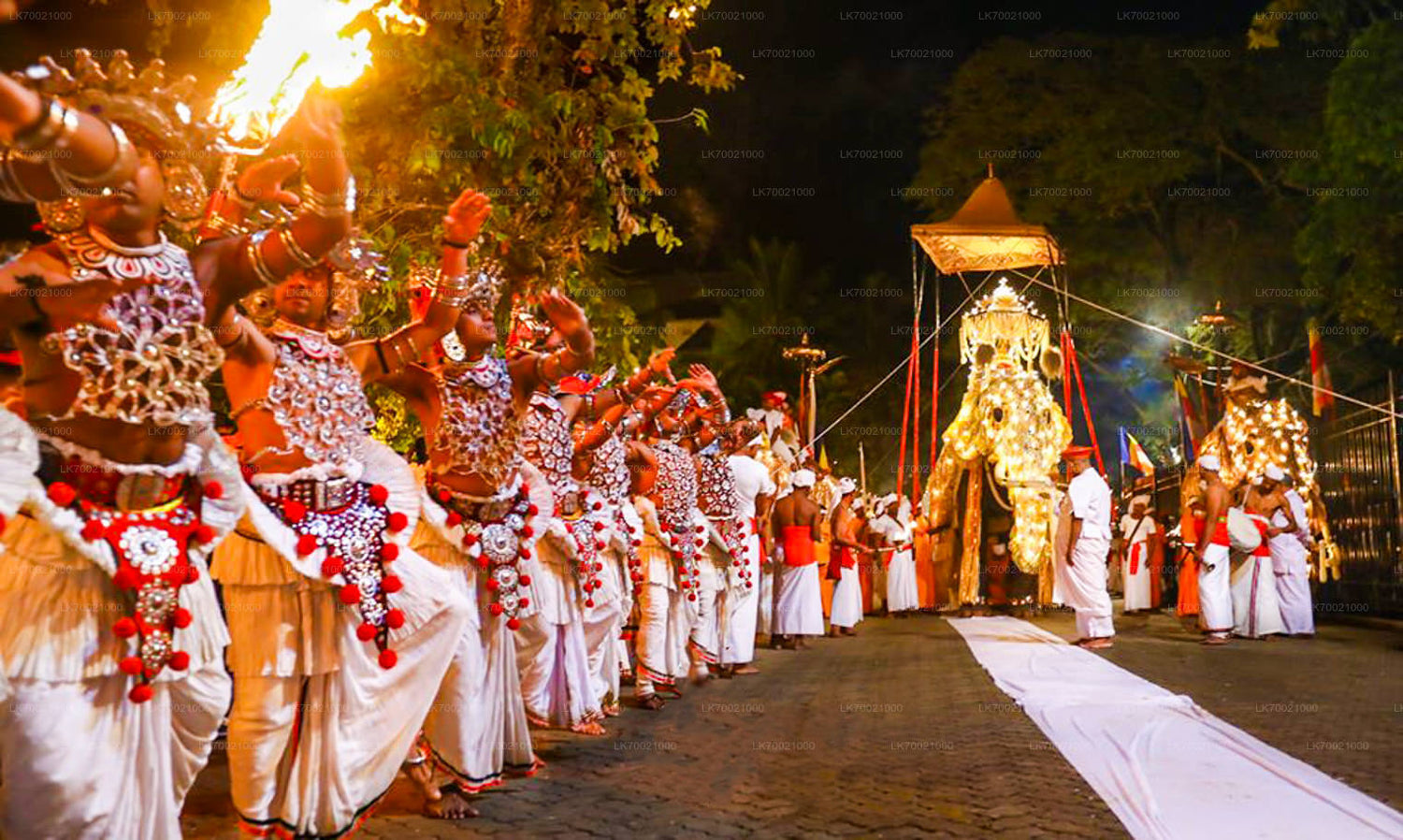
At the head of the Maligawa procession walks the Maligawa Tusker, the most honoured elephant, who carries a golden casket containing a replica of the Tooth Relic casket on his back. Around him, hundreds of performers create a layered sensory experience:

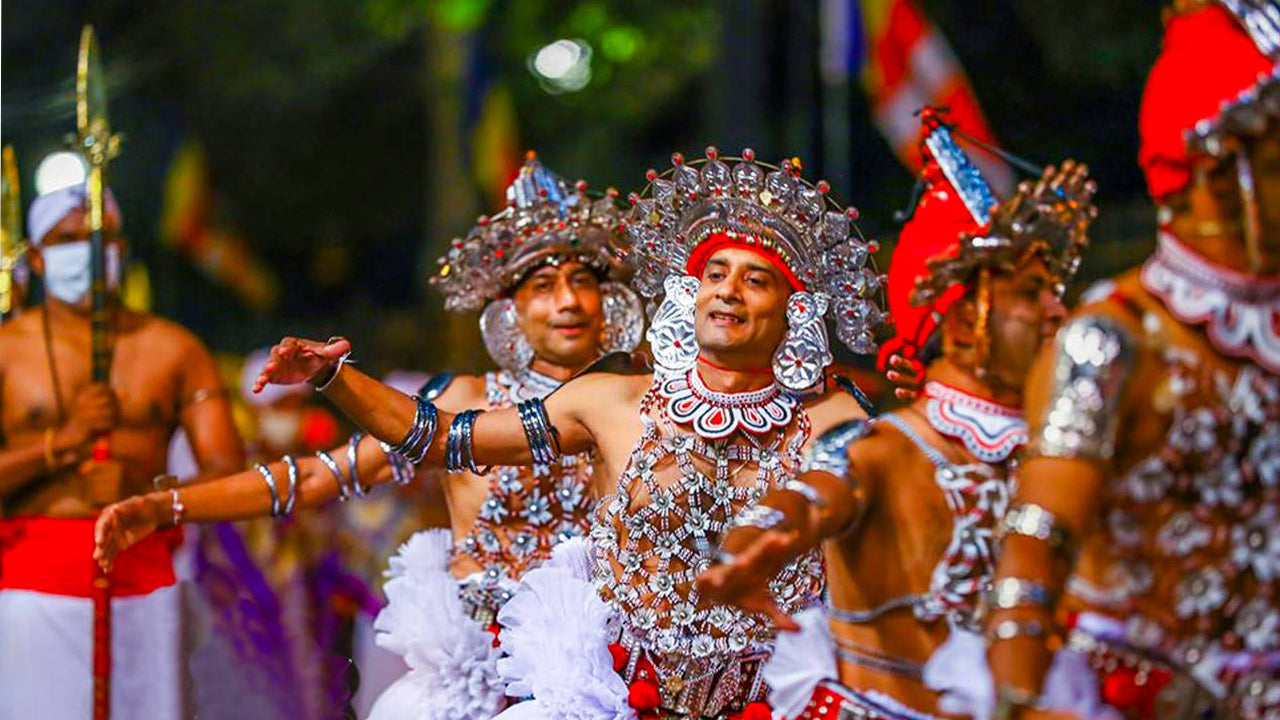
  • Kandyan dancers in elaborate headdresses and silver-adorned costumes perform ves and naiyandi styles unique to this region.
  • Whip-crackers announce each section of the procession with sharp reports that echo off the buildings lining the route.
  • Fire-breathers and fire-walkers perform alongside torchbearers, bathing the street in amber light.
  • Drummers playing the davul, geta bera, and tammattama sustain a driving rhythm that can be felt as much as heard.
  • Up to 100 or more elephants in total, dressed in ornate gold and silver cloths, participate across all five processions on the grandest nights.

How do I get a good viewing position for the Perahera?

The procession follows a fixed route through Kandy's central streets, circling the lake and passing in front of the Temple of the Tooth. Viewing options range from free standing positions along the route (arrive early — the streets fill hours before the procession begins) to ticketed gallery seats set up by private operators and the government along the route.

Ticketed gallery seats offer a reserved spot, shade, and a clearer sightline than standing in the crowd. Lakpura can arrange gallery tickets and, where available, VIP enclosure access. The procession typically begins around 8 pm and can last two to three hours on the grandest nights, so plan accordingly and bring insect repellent.

For those unable to attend in person, a dedicated Esala Perahera Festival page outlines multi-day itinerary options built around the festival.

How do I reach Kandy from Colombo?

Kandy lies roughly 115 km east of Colombo, typically two to three hours by road depending on traffic. The scenic train journey from Colombo Fort to Kandy takes around two and a half to three hours and is one of the more enjoyable ways to arrive. Private transfers arranged through Lakpura offer door-to-door convenience, which is particularly useful when travelling with children or arriving late after the procession ends. Taxis and private drivers are available via the Lakpura taxi service.

What should visitors know before attending?

  • Book accommodation early. Kandy hotels sell out weeks — sometimes months — in advance during Perahera season. The Randoli Perahera nights command the highest premiums.
  • Dress modestly. While the streets are busy and informal, the Perahera is a religious ceremony. Shoulders and knees covered is a reasonable guideline.
  • Photography. Hand-held cameras and phones are generally permitted from public viewing areas. Flash is discouraged near the elephants.
  • Elephant welfare. Concerns about the welfare of captive elephants used in the Perahera are longstanding. Visitors who wish to learn more about Sri Lanka's captive elephant situation may find the Elephant Transit Home in Udawalawe worth visiting as part of a wider itinerary.
  • Traffic and crowds. Road closures around the procession route are extensive. Build extra time into any post-procession plans, particularly if you need to reach a hotel outside the city centre.

Is the Kandy Esala Perahera a UNESCO-recognised event?

The Esala Perahera is not currently inscribed on UNESCO's Intangible Cultural Heritage list, though Sri Lanka has nominated various elements of its living heritage. The festival is, however, formally recognised by the Sri Lankan government as a nationally significant cultural event, and it draws significant international tourism each year. The UNESCO Intangible Cultural Heritage programme provides useful context for understanding how living traditions of this kind are documented globally.

What else can I do in Kandy during the Perahera season?

The festival transforms the entire city, and there is far more to explore than the nightly processions alone. The Temple of the Tooth holds daily rituals — puja ceremonies — at dawn, midday, and dusk that are open to respectful visitors throughout the year. The Kandy Lake, the Royal Botanical Gardens at Peradeniya, and the surrounding hill country offer easy day trips. Consider pairing the festival visit with a Kandy City Tour to make the most of your time in the region.

Book this experience with Lakpura

Curated by our local team. Direct booking, instant confirmation.

Chat on WhatsApp