The Giant Footprint


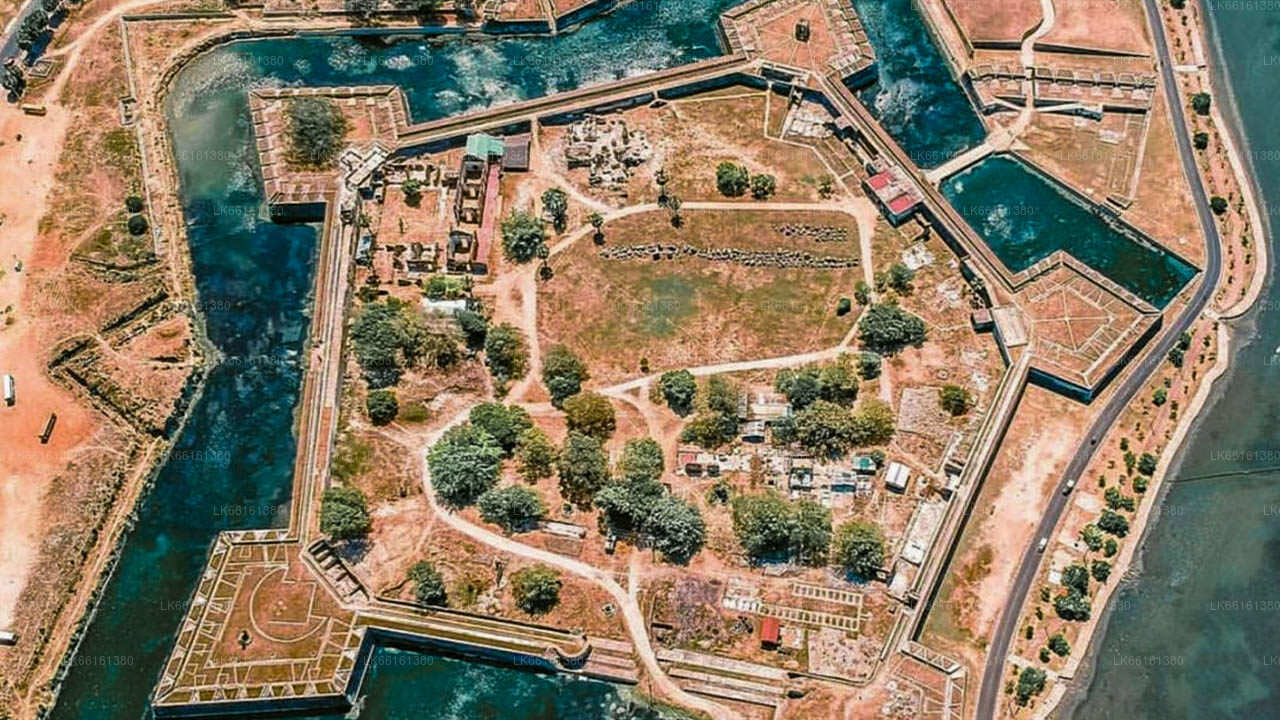
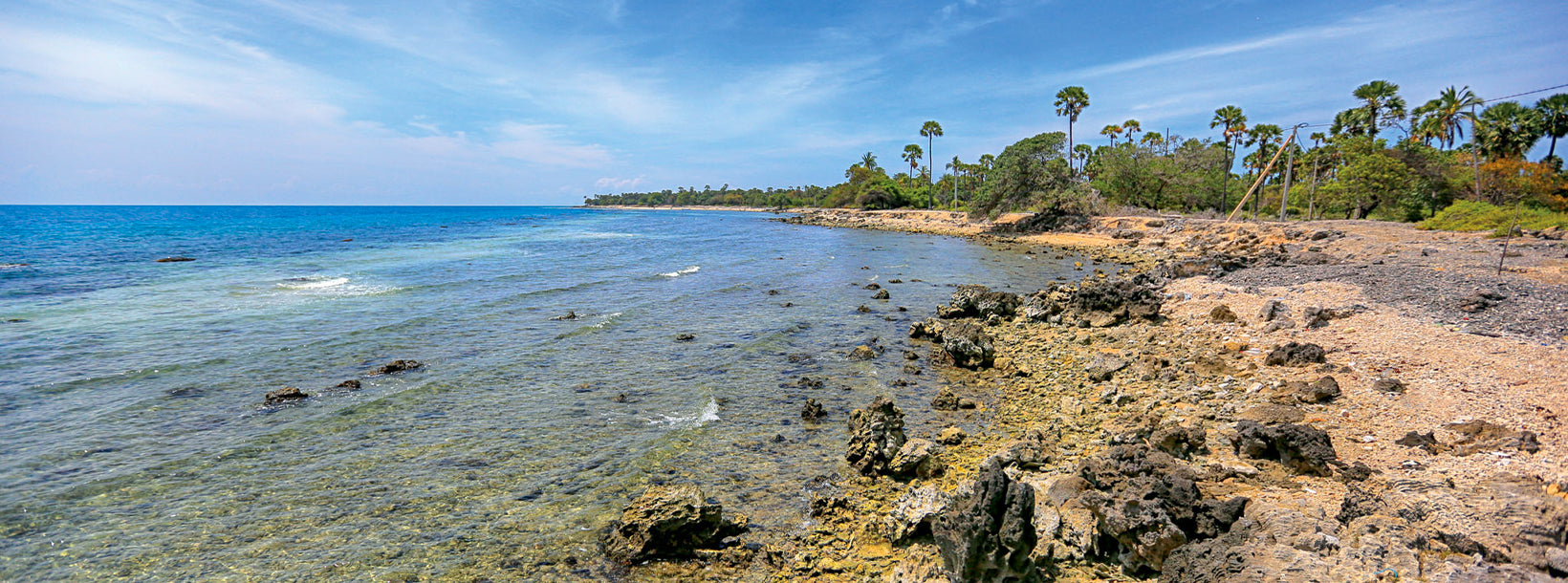
Queens Tower is in the very south-east of Delft Island, travelling from there along the southern coastline you will arrive at the village called Sarapiddi close to the western coastline. Sarapiddi is located halfway between Queens Tower and the Dutch fort and not far from the stupa called Cholan Ruins, alias Vediyarasan Fort.
Sarapiddi does not really look like a village. It's a settlement area, with dispersed inhabited houses and some gardening areas in between them. Sarapiddi is the perfect place to study the coral walls surrounding private properties, typical for Delft Island. Fences used as enclosures of premises are typical for Tamil settlements all over the Jaffna peninsula. However, coral walls instead of fences are something special. Their appearance resembles Irish sceneries more than Tamil settlements. And this is not by accident, as we shall see below. That Sarapiddi is known for the best freshwater, is also connected with the story of the coral walls. Travellers usually stop at Sarapiddi to walk to the the ruins of a stable complex close to the village.
On the way to the ruins of those horse stable, visitors come along the so-called "Giant's footprint". It is engraved on the stone surface. It is said to have been left by a man who must have been about 13 meters tall. A similar footprint on the island of Nainativu is attributed to the second of the Buddha's three legendary visits in Sri Lanka. However, the Hindu population of Delft credits Hanuman with leaving the footprint in Sarapiddi. The monkey-faced Hanuman was the helper of Rama and came to Sri Lanka several times, flying through the air just like the Buddha. The first time he was on the Island of Lanka in search for Rama's abducted wife Sita. He came again with Rama's monkey army to free Sita. And during the war he had to travel to the Himalayas in search for medical herbs needed for curing Rama's and Lakshmana's otherwise fatal wounds. According to some Hindu beliefs, the entire island of Delft had been created by a piece of the Himalaya mountains that the god Hanuman had been carrying when returning to Sri Lanka, a story supposed to explain the occurence of 62 species of Ayurvedic plants on Delft Island. But usually it's the smaller island of Kachchaitivu which is regarded to be this so-called "Sanjeewani drop" in the Indian Ocean. However, on one of his visits Hanuman must have arrived on Delft or started his giant jump back to India from here. What else could be the cause of the giant footprint?