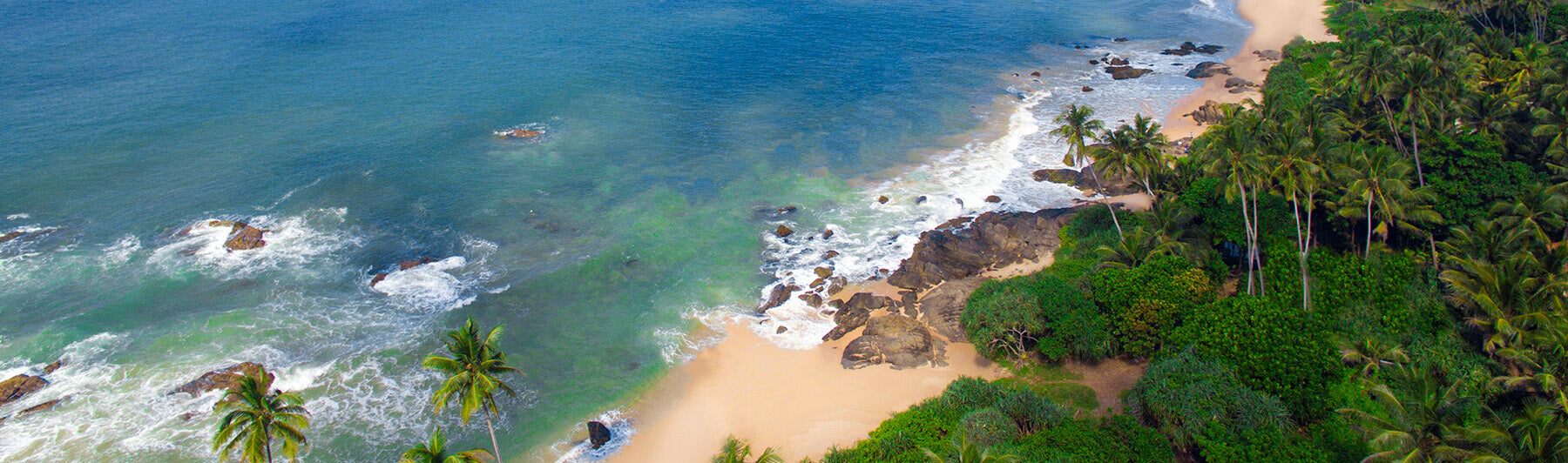
Balapitiya By
Balapitiya: Kystby i Sri Lanka med naturskønne strande, floder omgivet af mangrover og muligheder for bådsafari for at udforske den rige biodiversitet.
Madu River
In the Southern region of Sri Lanka lies the Galle district. Balapitiya is a little town in the district and would be quite unimportant; except for the location of a river. The Madu River is very rich in biodiversity. It passes through the wet zone of Sri Lanka opening up into the large Madu Lagoon on its way to the Indian Ocean.
The Mangroves and their Ecology – Facts
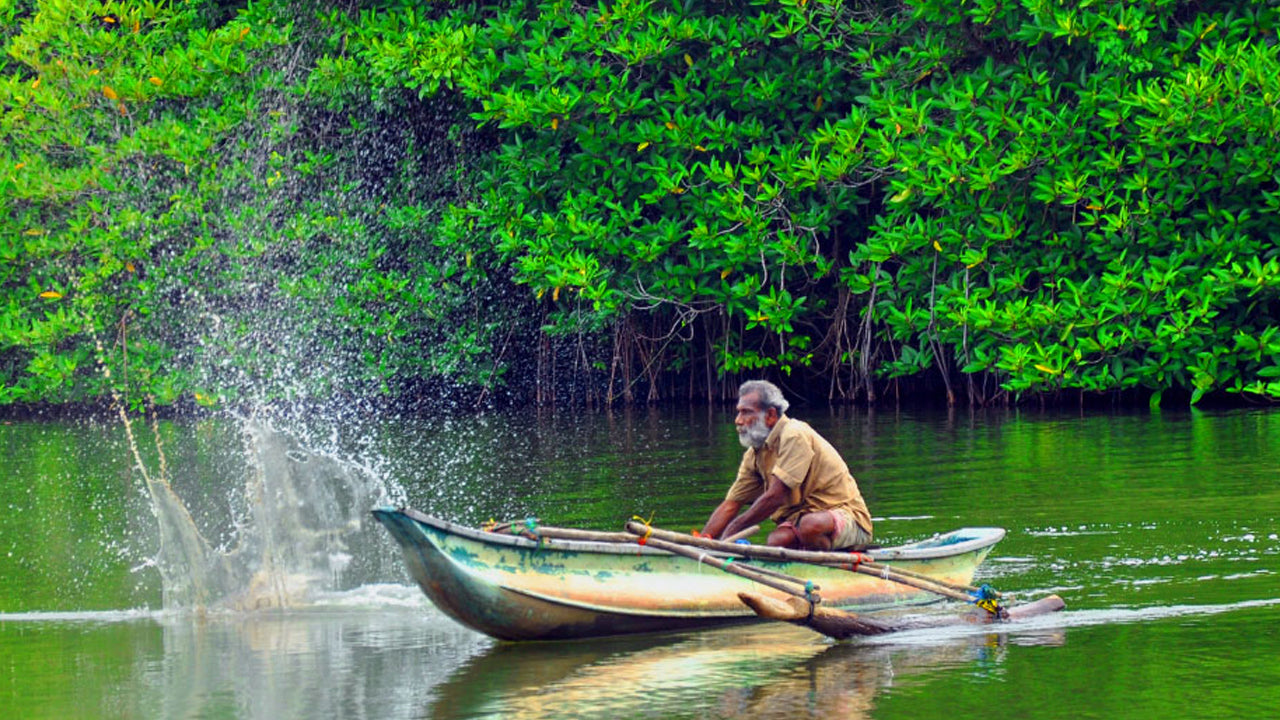
- The Madu River area surrounding the river are all swampy marshlands covered in mangrove forests.
- The forest covers over 61 hectares, that is over 150 acres. 14 of the 24 species of mangroves are found in this area.
- It is interesting to note that mangroves play a huge part in preventing erosion.
- The value of the mangroves was understood in December 2004, during the devastating tsunami, when forest acted as a natural barrier protecting the region.
- The large growths of mangrove trees have caused a chain of ecological gain. The soil protected by the mangrove trees is very fertile. This has caused a rich growth of other wetland plants.
- Over 300 species, 19 of which are endemic, have been discovered so far.
- The region continues to be a treasure trove to biologists and ecologists with many undiscovered species in the unreachable depths of the mangrove forests.
- The plantlife in turn have supported a large number of wildlife that depends on them.
- The largest animal in the region is the wild boar. There are other smaller animals such as monkeys, a variety of squirrels, etc.
- When it comes to birds, cormorants and kingfishers are a common sight. For avid bird watchers, the mangrove forests are a dream coming true. There are over 111 bird species identified to inhabit the region.
- There are 31 types of reptiles, namely snakes, lizards, and crocodiles.
- There are also over 50 kinds of butterflies and 25 kinds of mollusks found in the Madu River zone.
Situated about 80 km South of the busy commercial hub of Colombo in the fishing town of Balapitiya, the Madu River or locally referred to as the Madu Ganga is a hidden natural treasure in the Southwest coastal area of Sri Lanka. The river flows gracefully through dense mangrove forests before widening into a lake forming a wetland that is home to an estuary with many islets that is part of a large and complex coastal ecosystem. The biodiversity significance of this area is known among many nature lovers while the mangroves are home to varied amounts of flora and fauna. Due to this reason, the Madu River has been listed under the International Ramsar Convention which is an International Treaty for the conservation and sustainable use of wetlands (Ramsar Sites).
Mangroves plays a huge role in preventing soil erosion while the Madu Ganga wetlands covers an area of over 61 hect
Om Galle-distriktet
Galle er en by beliggende på den sydvestlige spids af Sri Lanka, 119 km fra Colombo. Galle er det bedste eksempel på en befæstet by bygget af europæere i Syd- og Sydøstasien, hvilket viser samspillet mellem europæiske arkitektoniske stilarter og sydasiatiske traditioner. Galle-fortet er et verdensarvssted og den største tilbageværende fæstning i Asien bygget af europæiske besættere.
Galle er det bedste eksempel på en befæstet by bygget af europæere i Syd- og Sydøstasien, hvilket viser samspillet mellem europæiske arkitektoniske stilarter og sydasiatiske traditioner. Galle-fortet er et verdensarvssted og den største tilbageværende fæstning i Asien bygget af europæiske besættere.
Galle er en anseelig by efter srilankanske standarder og har en befolkning på 91.000, hvoraf størstedelen er af singalesisk etnicitet. Der er også et stort srilankansk maurisk mindretal, især i fortområdet, som nedstammer fra arabiske købmænd, der bosatte sig i den gamle havn i Galle.
Om den sydlige provins
Den sydlige provins i Sri Lanka er et lille geografisk område, der består af distrikterne Galle, Matara og Hambantota. Subsistenslandbrug og fiskeri er den primære indtægtskilde for langt størstedelen af befolkningen i denne region.
Vigtige vartegn i den sydlige provins inkluderer naturreservaterne i Yala og Udawalawe Nationalparker, den hellige by Kataragama og de gamle byer Tissamaharama, Kirinda og Galle. (Selvom Galle er en gammel by, er der næsten intet bevaret fra før den portugisiske invasion.) I den portugisiske periode var der to berømte singalesiske digtere ved navn Andare, som var fra Dickwella, og Gajaman Nona, som var fra Denipitiya i Matara-distriktet, som komponerede digte om almindelige mennesker.