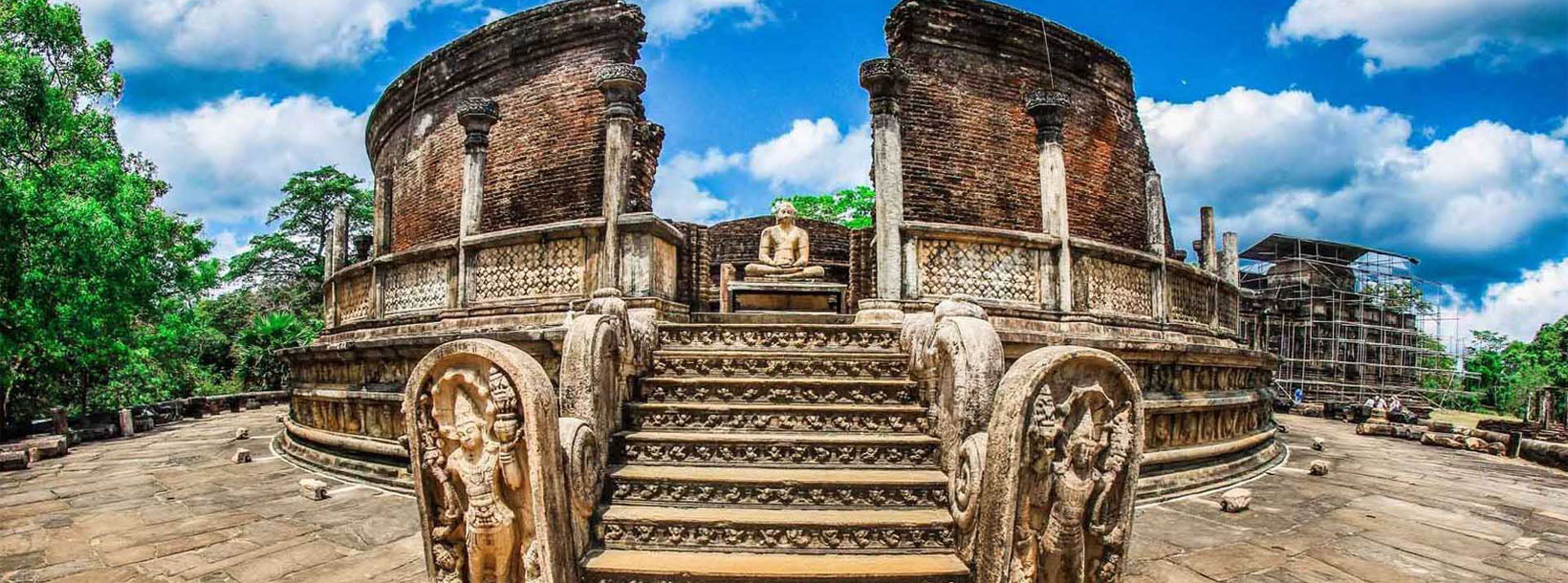
Polonnaruwa By
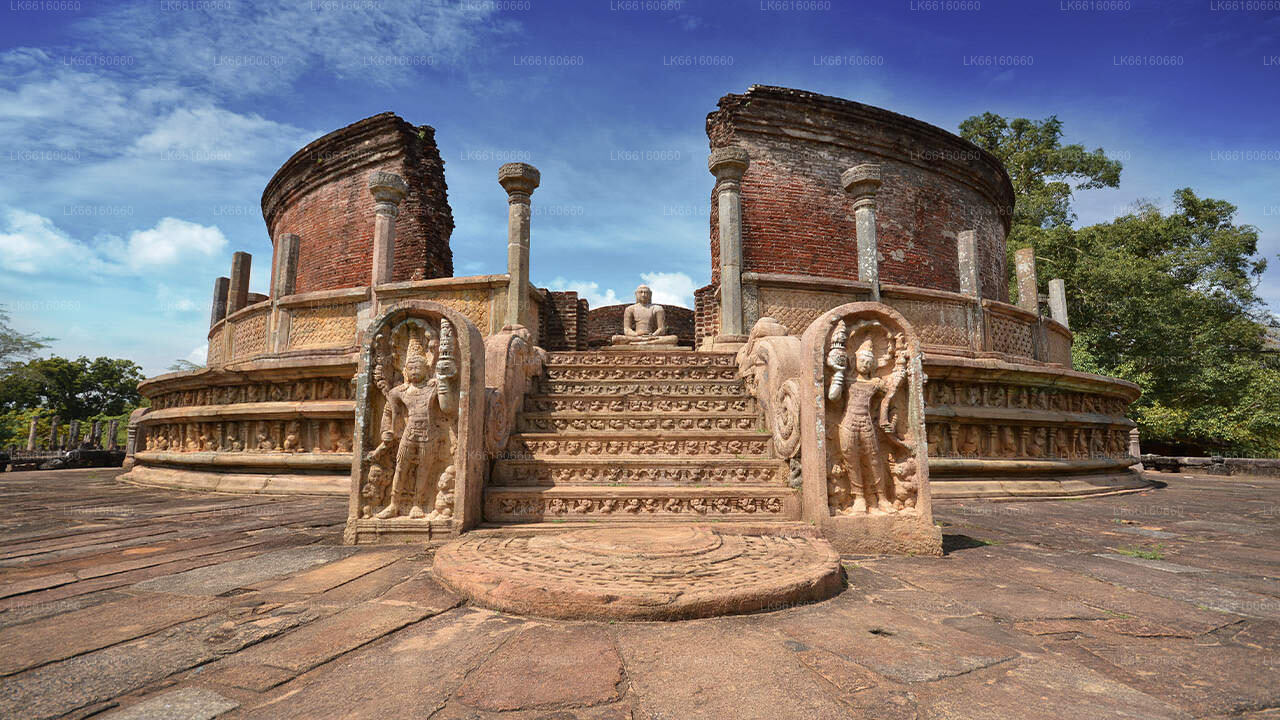
Polonnaruwa, a UNESCO World Heritage Site in Sri Lanka, was the country's medieval capital (11th-13th century). Renowned for its well-preserved ruins, including the iconic Gal Vihara statues, it showcases impressive architecture, reflecting the grandeur of the ancient Sinhalese civilization.
Kiri Vehera Stupa
Kiri Vehera Stupa is an ancient Buddhist monument located in the historical city of Polonnaruwa, Sri Lanka. This sacred stupa, built during the reign of King Parakramabahu I in the 12th century, is one of the most important and well-preserved religious sites in the area. The name "Kiri Vehera" translates to "Milk Stupa," reflecting its pristine white appearance and its significance in Sri Lanka’s Buddhist heritage.
The stupa is renowned for its large, dome-shaped structure, which is surrounded by beautifully carved stone pillars and ancient ruins. It is believed to house relics of the Buddha, making it a major pilgrimage site for Buddhists. The surrounding environment, with its lush greenery and tranquil atmosphere, adds to the spiritual significance of the site, offering visitors a place of peace and reflection.
Visitors to Kiri Vehera Stupa can explore the site’s archaeological remnants, including stone inscriptions, smaller shrines, and ancient monastic complexes. The stupa’s serene setting amidst the cultural triangle of Sri Lanka makes it a popular destination for tourists and pilgrims alike, offering a glimpse into the island’s rich Buddhist history.
The best time to visit Kiri Vehera Stupa is during the dry season, from December to April, when the weather is ideal for sightseeing and exploring the ruins of Polonnaruwa. The site is easily accessible from the city, providing a meaningful experience for those interested in Sri Lanka’s ancient Buddhist architecture and history.
Om Polonnaruwa-distriktet
Polonnaruwa er den næststørste by i den nordlige centrale provins i Sri Lanka. Den gamle by Polonnaruwa er blevet erklæret som et verdensarvssted af UNESCO. Polonnaruwa har en lang historie med erobringer og kampe og udgør med rette det tredje element i den kulturelle trekant. Polonnaruwa, der ligger omkring 140 km nordøst for Kandy, tilbyder timevis af endeløs fornøjelse for historie- og kulturelskere, da der er mange betydningsfulde seværdigheder.
Mange af de fysiske ruiner, der står i dag, tilskrives Kong Parakrama Bahu I, som brugte mange kongelige ressourcer på byplanlægning, herunder parker, bygningsværker, kunstvandingssystemer og så videre. Perioden under hans regeringstid betragtes som en guldalder, hvor kongeriget trivedes og havde fremgang under en visionær hersker. Parakrama Samudra er en gigantisk tank og opkaldt efter dens beskytter. Det populære kongelige palads, audienshallen omgivet af smukt udskårne stenelefanter og badebassinet afspejler datidens overlegne ingeniørmæssige evner.
Om Nord-Centralprovinsen
North Central Province, som er den største provins i landet, dækker 16% af landets samlede landareal. North Central Province består af to distrikter kaldet Polonnaruwa og Anuradhapure. Anuradhapura er det største distrikt i Sri Lanka. Dets areal er 7.128 km².
North Central Province har adskillige potentialer for investorer til at starte deres virksomheder, især landbrug, agrobaserede industrier og husdyrsektoren. Mere end 65% af North Central Provinces befolkning er afhængig af basal landbrug og agrobaserede industrier. NCP kaldes også "Wew Bendi Rajje", fordi der er mere end 3.000 mellemstore og store tanke placeret i provinsen. Sri maha bodiya, Ruwanweli seya, Thuparama dageba, Abayagiri Monastry, Polonnaruwa Rankot wehera og Lankathilake er bange.